Philosophy
The Calumny of Being a Philosopher
Abdolhossein Khosropanah's article 'The Philosophy of Knowledge' wavers in its use of basic terms and concepts and amounts to little more than a collection of unreflective quotations: a critique of the epistemology section of the book 'Second-Order Philosophies'.
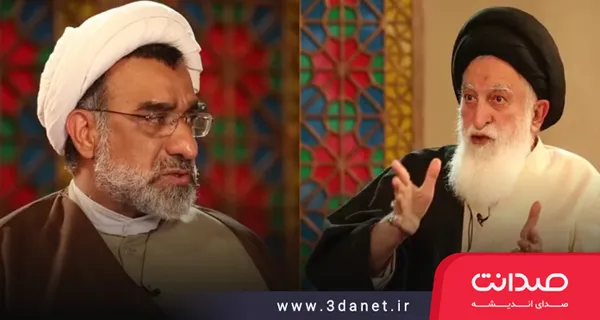
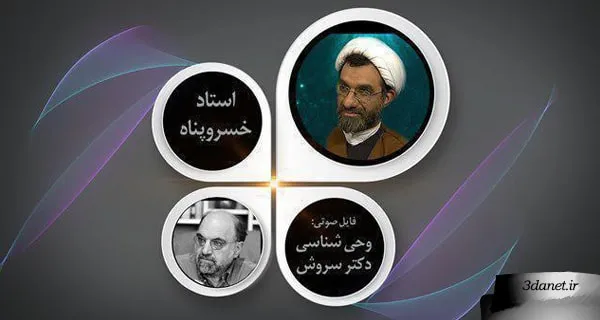
Abdolhossein Khosropanah is a well-known figure in the political world. He is also called a philosopher and theorist, and claims to have founded certain sciences. One of the issues to which he devotes great attention is “secondary philosophies.” Through his efforts, the two-volume book Secondary Philosophies has been published. He himself wrote the article “The Philosophy of Knowledge” in this book. In this piece, I will only critique this article. I will go on to show that Khosropanah uses some of the most central terms of his article carelessly and recklessly; in many instances, his article is nothing but the product of unreflectively juxtaposing fragments quoted from others; he is unfamiliar with certain basic philosophical concepts; and what he calls his own contribution to the discussion of the philosophy of knowledge in no way meets the criteria for being a philosophical contribution. At the end, I will bring a short section as a concluding word. (The page numbers that follow are all page numbers of this article: Khosropanah, Abdolhossein, “The Philosophy of Knowledge,” in Secondary Philosophies, edited by Abdolhossein Khosropanah, Publishing Organization of the Research Institute for Islamic Culture and Thought, 1394 [second edition], pp. 311-365.)
1- Vacillation in the Use of Some of the Most Central Terms of the Discussion
Upon reading the article, one can easily see that the author is unclear about the most central terms and concepts of the discussion. There is probably no dispute that the most important terms in the text are “philosophy of knowledge” and “knowledge.” I will show below that Khosropanah has not used these two terms consistently. 2-1 “Philosophy of knowledge” is/is not the same as epistemology: The author has repeatedly noted that he considers the philosophy of knowledge to have two parts: the ontology of knowledge (ontology of ʿilm, philosophical study of knowledge) and epistemology. The former deals with the existential aspect of knowledge and the latter with its representational aspect. (See, e.g., 313 and 332). He specifies that the discussion of the existence and quiddity of knowledge, its being abstract or material, and the like are parts of the ontology of knowledge. (See, e.g., 321). But you would be mistaken if you think the author always adheres to this distinction. He very soon forgets that this is the case and writes, for example, that “epistemology seeks to identify cognitions. It is also the precise identification of the existence and quiddity of knowledge” (314). That is, the cognition of the existence and quiddity of knowledge, which was earlier and later called a part of the philosophical study of knowledge, is counted as part of its counterpart, i.e., epistemology. This vacillation is evident throughout the text. In many cases, when the author speaks of “epistemology,” he means what he earlier or later calls “philosophy of knowledge.” For example, just before the section titled “The chosen theory of the structure of the philosophy of knowledge,” he writes: “We will state the proposed structure of epistemology as follows” (355). Or consider this sentence: Another characteristic of the Islamic philosophy of knowledge in its historical course is that the discussions of this science have had a serious connection with the ontology of knowledge (347). Since the ontology of knowledge, according to the author, is itself a part of the philosophy of knowledge, in the latter sentence the author has practically said that the Islamic philosophy of knowledge has a serious connection with one of its own components. One could presumably say that a special characteristic of my house is that the walls of my house have a serious connection with my house. 2-2 Knowledge (=ʿilm) does/does not entail truth and justification: Suppose someone asks you: Is every justified true assertion justified and true? I guess you thought there was a typo in the previous sentence. But that is not the case. Apparently, this question has greatly preoccupied the author, and, astonishingly, he has practically answered it in the negative many times. Let me explain. Khosropanah says that knowledge means “justified true assertion” (318). Elsewhere he has called knowledge justified true belief (356). We need not have advanced from the ABCs of contemporary epistemology to its XYZ to realize that all epistemologists consider truth and belief necessary for knowledge, and most of them consider justification necessary as well. Of course, there is also more or less a consensus that belief, justification, and truth are not sufficient conditions for knowledge. This is where Khosropanah differs from the vast majority of epistemologists, because he also considers belief, justification, and truth to be sufficient conditions for knowledge. But this is not the issue I want to emphasize. If, like the author, we accept that knowledge is justified true belief/justified true assertion, we encounter difficulty in understanding many sentences in the text. For example, consider these sentences: - “Does certain knowledge corresponding to reality exist?” (313) - “By what criterion can correct knowledge be distinguished from incorrect knowledge?” (314) - “If the philosophy of knowledge discusses in such a way that ... it provides a criterion for discovering correct and unsound knowledge ... it has spoken in the same way as the epistemological claims of Islam.” (318) - “But sometimes human knowledge ... is unjustified.” (324) If knowledge/ʿilm is justified true assertion, and “correspondence to reality” means being true, and “being correct” and “being unsound” also mean being true and being false respectively, the above sentences mean the following: - Does certain, justified true assertion that is true exist? - By what criterion can a true justified true assertion be distinguished from a false justified true assertion? - But sometimes human justified true assertions ... are unjustified. But these translations I have provided of the text’s sentences are either clearly false statements, or questions whose answers are tautologies. I suspect the author has conflated the definition of “ʿilm” in one part of the Islamic tradition, on the one hand, with other parts of the Islamic tradition and the tradition of contemporary epistemology, on the other. In one part of the Islamic tradition, it appears from the outward wording that what is meant by “ʿilm” also includes false assertion. In this sense, one can also speak of “false ʿilm.” But in parts of the Islamic tradition and the entire tradition of contemporary epistemology, what is meant by “ʿilm” entails truth.
The author has failed to recognize this clear difference in usage. In my view, this problem has arisen because the author has collected disparate material from various sources without even attempting to standardize the terminology. I will discuss this shortcoming of the article further in the next section.2- Excerpts from Philosophy Books, and Nothing More
While reading many parts of the article, one feels as though one is reading something akin to press clippings; that is, material quoted from here and there and placed side by side without passing through the sieve of reflection. Let me offer two examples: One- Early in the article, the author states: The science of epistemology, or the theory of knowledge, cognition science, theory of cognition, and epistemology, has been defined with various expressions, including: the science of knowing the tools of thought, a branch of philosophy that examines the nature, limits, developments, and foundations of knowledge and assesses the reliability of knowledge claims; a science that discusses human cognitions, evaluates their types, and determines the criteria for their truth and error. In other words, the theory of cognition is the science of the justification of belief. (312) As can be seen, the author has quoted different definitions of epistemology from various sources. So far, there is no problem. But in the last sentence of the quoted passage, he writes: "In other words, the theory of cognition is the science of the justification of belief." However, what he brings after "in other words" is by no means a restatement in different terms of the aforementioned definitions of epistemology, but rather a new definition, which is, of course, also quoted incorrectly. In the footnote, reference is made to Dancy's book, and if you consult the text of that book, you will find that Dancy considered epistemology to be the study of knowledge and the justification of belief, not "the science of the justification of belief." Two- Also, consider this part of the article: Condillac defined philosophy as "human sensation" and Mulla Sadra defined it as "the perfection of the human soul through knowing the truths of existents as they are, by means of demonstration." From these very two definitions, one can understand the importance of cognition. Because both definitions have defined philosophy as the study of the world through sensation, cognition, and rational order. (314) It is clear that these two definitions share nothing in common. One emphasizes only human sensation, and the other, demonstrative cognition. The author has apparently transcribed two different definitions of philosophy from two sources and has not reflected for a moment on what he has transcribed. The high frequency of such instances shows that the author has, without reflection, brought his note cards into the article and, in many cases, has arbitrarily glued them together with phrases such as "in other words" and "therefore."
3- The Author's Unfamiliarity with Philosophical Terms and Concepts
It is evident from the text that the author has failed to grasp many philosophical concepts. In what follows, by way of example, I will address his misunderstanding of moral relativism and nominalism. He has repeatedly characterized relativism in ethics as arising from erroneous epistemology or skepticism (see, e.g., pp. 316 and 317). But relativism in ethics is a doctrine concerning the truth conditions of moral claims. The relativist in ethics holds that moral judgments do not possess truth independent of, say, societies. In the relativist's view, just as "Hasan is taller" lacks a truth value, so too does "Theft is wrong" lack a truth value. The latter sentence is completed and expresses a proposition only when, for instance, the society in question is also specified. Just as "Hasan is taller than so-and-so" has a truth value, "Theft is wrong in such-and-such a society" also has a truth value. This semantic doctrine is, of course, neutral with respect to the correctness or falsity of epistemological theories, including skepticism about the external world, and even skepticism about ethics. One who is skeptical in the domain of ethics rejects the possibility of knowledge/justified belief regarding moral judgments. Such a person can be either a relativist or an absolutist in the semantics of moral judgments. Similarly, being a relativist or an absolutist in ethics does not, in itself, entail anything about being a skeptic or not in ethics. These are not points that may permissibly escape the notice of even a first- or second-semester undergraduate philosophy student. Khosropanah's understanding of nominalism is also mistaken. On page 363, the author has counted nominalism among the approaches of the philosophy of knowledge. But nominalism is a metaphysical doctrine about properties, not an epistemological one. Nominalists deny the existence of universals. They either say properties do not exist or consider them to be nothing more than a collection of particulars. Whether I consider yellowness to be a universal or a collection does not, in itself, say anything about the possibility or impossibility of knowledge. One can be a nominalist and not a skeptic, and one can not be a nominalist and be a skeptic. It appears Khosropanah has compiled a list of philosophical "vices" that includes relativism, idealism, nominalism, anti-realism, and skepticism, and thinks that any philosophical approach characterized by one of these vices in one domain also possesses all those other vices in every philosophical domain. For example, if someone is an anti-realist about universals, they are both a relativist about ethics and a skeptic about the external world. Constructing such a slapdash list of philosophical goods and vices indicates that the author is not given to philosophical reflection. Another sign that the author is not given to reflection is that he writes at great length without actually saying anything important. In the next section, I will address this affliction.
4- How to Write a Lot While Saying Almost Nothing
Khosropanah fills pages in various places throughout the text without saying anything substantial. Let me give two examples. One- Khosropanah devotes fewer than ten pages to the “History of the Philosophy of Knowledge in Islam” (338-48). In these pages he deals with the views of al-Kindi, al-Farabi, Avicenna, al-Ghazali, Averroes, Suhrawardi, Fakhr al-Din al-Razi, Ibn Arabi, Nasir al-Din al-Tusi, Mulla Sadra, Mulla Hadi Sabzavari, Muhammad Husayn Tabatabai, Morteza Motahhari, and Muhammad Taqi Jafari. That is, the views of fourteen individuals are examined in fewer than ten pages. Bear in mind that at least a quarter of these ten pages is devoted to footnotes and references. It is obvious that one cannot say anything substantial about the thoughts of these figures in such a short space. In many instances, the author has not even used this limited space to say anything useful. For example, this is all he says about Fakhr al-Din al-Razi: Fakhr al-Din al-Razi, in all his works, has paid attention to epistemological points. The instruments of knowledge, the inner sense, the intellect and the levels of the intellect, ways of preventing sensory error with the aid of the intellect, ways of preventing intellectual error with the aid of self-evident truths, primary self-evident truths as the source of knowledge, self-evident conceptions, self-evident assents, etc., are discussed and examined comprehensively in the works of Fakhr al-Din al-Razi. He sometimes devoted an independent heading to epistemological discussions. His extraordinarily powerful mind and intelligence led him to raise numerous objections to the sciences. (343) One must frankly say that reading these lines tells the reader almost nothing more than that Fakhr al-Din al-Razi addressed certain epistemological issues. Two- The author devotes about five pages (350-5) to the “Structure of the Philosophy of Knowledge according to Islamic Sages.” But in this section you will find almost nothing except reports on the tables of contents of several books by Muhammad Husayn Tabatabai, Morteza Motahhari, Abdullah Javadi Amoli, and Muhammad Taqi Misbah Yazdi. For example, Khosropanah writes: Professor Misbah Yazdi, in his book Amuzish-e Falsafeh (Teaching Philosophy), after raising preliminary issues, has devoted lessons eleven through twenty to epistemology. The epistemological issues raised in these lessons are as follows: Lesson eleven includes the importance of epistemology, its history, cognition in Islamic philosophy, and the definition of epistemology; Lesson twelve – the manner in which philosophy requires epistemology, the possibility of knowledge (one of the fundamental issues of epistemology), an examination of the skeptics’ claim, and the refutation of the skeptics’ doubt; Lesson thirteen – types of cognition (the division of knowledge into knowledge by presence and acquired knowledge, the characteristics of knowledge by presence, and its levels). (355) And he enumerates the headings raised up to lesson twenty of the said book until the end of the paragraph. The problem becomes greater when we realize that Khosropanah considers this recounting of the tables of contents of a few books to be an “observation of the methods” of these thinkers and “extensive research” (355).
5- The Illusion of Philosophical Contribution
In the section “The Preferred Theory on the Structure of the Philosophy of Knowledge” (pp. 355–364), Khosropanah presents material that is meant to be the fruit of the author’s extensive investigations and an opportunity to set forth a new theory on the structure of the philosophy of knowledge. Unfortunately, this section is also highly confused. Let me point out just a few examples of this confusion. One—The author promises to deliver the preferred theory of the structure of the philosophy of knowledge. This structure has several parts: “1. Generalities of the Philosophy of Knowledge” (p. 355), “2. Analysis of Knowledge” (p. 356), “3. Divisions (Pillars) of Knowledge” (p. 357), and so on. Yet one of the sub-sections of the first part of the structure of the philosophy of knowledge, i.e., the Generalities of the Philosophy of Knowledge, is the structure of the philosophy of knowledge. That is, the structure of the philosophy of knowledge is one of the sub-sections of one of the parts of the structure of the philosophy of knowledge. Two—The author is very interested in the issue of the relation between knowledge and mental existence. This topic appears in various parts of “The Preferred Theory on the Structure of the Philosophy of Knowledge.” This issue appears both as clause (a) of “Analysis of Knowledge” (p. 356), as one of the sub-sections of clause (b) of “Analysis of Knowledge” (p. 356), and as one of the sub-sections of “Types of Knowledge” (p. 360). Three—Clause (d) of “Analysis of Knowledge” reads as follows: Theories of Meaning 1. Referential (denotative or extensional) 2. Ideational (John Locke) 3. Behaviorist 4. Picture theory of meaning 5. Use theory of meaning 6. Pragmatism 7. Hume’s theory 8. Frege’s theory 9. The preferred theory (p. 357) Reading this clause reveals that: - The author does not know that theories of meaning are not part of the philosophy of knowledge. - Let us suppose that examining theories of meaning is part of the philosophy of knowledge. In that case, it must be said that the author, for reasons not disclosed to us, has deemed some important theories of meaning unworthy of examination, for instance, the theories of meaning of Grice and Davidson. - But the ninth item is far more interesting: “the preferred theory.” I understand this to mean that Khosropanah is saying that after examining different theories of meaning, one must also state the correct theory of meaning. Yet he says nothing in the text about the content of this theory and has contented himself with stating that a preferred theory must also exist in the proposed structure. It emerges from the text that Khosropanah, up to now, knows only the name of the preferred theory: “the preferred theory.” Perhaps you might say a lapse occurred here. The author wrote “the preferred theory” in the initial draft so that he could later replace this phrase with a theory he himself had formulated or considered correct, but he forgot to do so. However, “the preferred theory” or “the chosen view” is present in other places in the section “The Preferred Theory on the Structure of the Philosophy of Knowledge” where it is merely announced. Below I bring further examples where the author mentions “the preferred theory” or “the chosen view” in his proposed theory of the structure of the philosophy of knowledge. 2. Analysis of Knowledge ... b. Views - The views of Western and Islamic thinkers on the definition of knowledge; - The chosen view (p. 356) 10. The origin of the emergence and multiplicity of knowledge - Conceptions (various views, the chosen view, etc.) - Assents (various views, the chosen view, etc.) (p. 362) (From the last quoted fragment, it appears that besides the various views and the chosen view, there are also other views which are summarily indicated by “...”.) I do not think anyone would dispute the futility of such an undertaking: to provide a list of the problems and answers of the philosophy of knowledge, or any other discipline, and at the end of each problem insert the phrase “the chosen theory,” without saying anything about its content, and then “announce” that after extensive investigations we have produced a new theory according to which the structure of the philosophy of knowledge, or any other discipline, is as follows.
6. Conclusion
In this section, I will confine myself to noting two points. First, I must caution the reader that my writing is not a mirror in which the shape and form of Khosropanah’s article is accurately reflected. I have, according to the requirements of writing an article, given order and structure to the discussion and have limited myself to bringing up only some of the problems in the text. Therefore, I have been unable to show the strange confusion, tedious verbosity, and numerous inaccuracies of his article as they truly are. Second, I think many people in philosophy would agree with me that such an article, even if written for an undergraduate philosophy course, would not receive a passing grade. With this in mind, I doubt that Khosropanah’s unfamiliarity with philosophy is not obvious to anyone who has a hand in philosophy and has read a page of his works. But apparently, some people in politics are under the impression that he is one of the philosophers of the age and a source of pride for the seminary and the university. Perhaps he is suitable for certain administrative or promotional positions, but this notion that he is capable in philosophy is a false notion.
.
.
The Calumny of Being a Philosopher
Author: Kasra Panahi
Source: Shargh Daily - 24 February 2018
.
.




Discussion15 comments
گر حکم شود که مست گیرند در شهر هر آنچه هست گیرنداکثر استادان کپی پیست های غیر حرفه ای هستند آقای خسروپناه هم نمونه ای از این تولیدات بومی است وقی الله المسلمین شرها من بعدها
سلام آیا نقد و نقد نقد (دفاع) اصول و قواعد و چار چوب تعریف شده دارد اینکه میگوییم نقد و دفاع، اخلاقی باشد، بیشتر پرداخته به اینکه چگونه نباشد. آیا به این هم پرداخته شده که چگونه باشد ؟ من به عنوان خواننده بیطرف که رشته ام هم فلسفه نیست مطالب هردو طرف (نقد و دفاع ) را خواندم و همه کامنتها، و دو نقد دیگر را هم، هردو کمی ایراد داشتند مثلا در اینجا گفتند (توهم مسامهت فلسفی) آیا توهم مسامهت فلسفی تعریف مشخصی دارد ؟ یا دوستی گفته بودند که (سانسور گر حرفه ای باش) این درخواست این معنا را هم دارد که گوینده خود، به این امور تسلط کامل دارد. سپاس از توجهتون امیدوارم در آینده گفتگوهای زیبنده تری را شاهد باشیم.
جناب آقا یا سرکار خانم گفت! بله بنده به عنوان یک ناظر بیرونی ،نظر شخصی خودم را در مورد وضعیت حال فلسفه تحلیلی در ایران بیان کردم ،البته دوستانی که رشته ریاضی و یا فنی و مهندسی خوانده اند،به خوبی می دانند که دانش آموخته گان این رشته ها اذهان طبقه بندی شده ایی دارند و به همین دلیل برای رشته فلسفه تحلیلی مناسبتر هستند. بنده سرکارخانم لیلی را نه نقد کردم و نه دفاع !!فقط نظر شخصی خودم را به عنوان یک ناظربیرونی بیان کردم. واما در مورد سوال شما : اگر ما نقد را بعنوان ابزاری برای پیشرفت و رشد یک جامعه در نظر بگیریم بدون شک ارزیابی منصفانه یعنی بیان خوبیها و مزایا در کنار بیان ضعفها و کاستیها میتواند زمینه رشد و پرهیز از انحراف و کجروی را در جامعه فراهم کند و این تعریف، نقد را در حوزه اخلاق قرار میدهد و با این تعریف میتوان مدعی وجود اخلاق نقد بود. بداخلاقی و شتابزدگی در دفاع از خود نه تنها باعث رفع سوءتفاهم نمیشود بلکه دیگران که تماشاگر این مناظره هستند این بد اخلاقی را نشانه ضعف و ناتوانی شخص در دفاع از خود تصور میکنند و خود به خود مخاطبین حق را به جانب منتقد داده و عصبانیت و بداخلاقی شخص نقد شده را سرپوشی برای نقصها و عیوب او تصور خواهند کرد و قطعا این عصبانیت و بد اخلاقی از شأن یک انسان فرهیخته به دور است و حتی اگر انتقاد از او بی جا و بی مورد باشد با این روش نادرست، عملکرد خود را زیر سؤال میبرد. خوشبختانه ما اساتید فرهیخته در فلسفه(تحلیلی-قاره ایی-اسلامی) زیاد داریم،که عده ایی بازنشسته شده اند ویامتاسفانه به دلایلی خانه نشین شده اند. به نظر بنده تا زمانی که فلسفه درگیر بازیهای کودکانه سیاسی در کشور باشد هیچ وقت جان تازه ایی نخواهد گرفت.
یه سؤال از همه لطفا اگه میدونید بفرمایید کسری پناهی اسم مستعاره دیگه؟ هیچ خبری توی اینترنت ازش نیست!!! کسی میدونه پشت سر این اسم ساختگی چه کسی قایم شده؟
که چی بشه؟
سرکار خانم شهره با سلام و احترام به شما تبریک میگویم که دیگر قصد تحصیل فلسفه تحلیلی در ایران ندارید. من واقعا قصد نداشتم که شما را از تحصیل فلسفه تحلیلی در ایران منصرف کنم، اما خوشحالم که کامنتهای سانسورشده من چنین نتیجه فرخنده و زیبایی داشت. بهتر است به همان ریاضیات ادامه دهید یا در کشورهایی که دانشکده های فلسفه مجموعه ای از خانه تیمیهای صمیمانه و حیاط خلوتهای ازلی ابدی نیست، فلسفه تحلیلی بخوانید. در مورد تعبیر خاصتان یعنی «شان بانوی ایرانی» باید عرض کنم که تعبیر بسیار غیراخلاقی و نامناسبی است. من فمینیستم و احساس میکنم این تعبیر بار سکسیستی دارد و تلویحا میگوید اموری در شان بانوی ایرانی است که با شان غیربانوی ایرانی (مثلا آقای ایرانی یا ترانس ایرانی) تفاوت دارد. اما دلیل من صرفا به خاطر مبانی فمینیستی ام نیست. احساس میکنم جدا از آن مشکل٬ تعبیر شما تلویحا میگوید شان بانوی ایرانی از شان بانوی غیرایرانی متفاوت است. این نکته ضمنی بسیار زننده است. بانوی افغانستانی با بانوی ایرانی و بانوی آلمانی هبچ تفاوت فاندامنتال اخلاقی ندارد. خوشحالم که تعابیر صریح و نقدهای عریانی درباره یک حیاط خلوت شبه فلسفی داشته ام و پروای امر دروغینی مثل شان بانوی ایرانی را نداشته ام.
سرکار خانم لیلی عزیز بنده مدتی است که از خواندن فلسفه تحلیلی در ایران منصرف شده ام .دلیلش هم شما نیستید بلکه آقایانی هستند که خود را استاد منطق و فلسفه می دانند ولی چنان بی ادبانه و غیر محترمانه با یک خانم و یا آقا برخورد می کنند و با نگاه عاقل اندر سفیه، همه را از بالا می بینند. بله با شما موافق هستم .خواندن فلسفه تحلیلی در ایران برخی از اشخاص را دچار توهم " علامه دهر" بودن می کند. و اما در مورد فمنیست بودن سرکار عالی،، بنده فمنیست نیستم .بنده فقط انسان بودن را می شناسم فرقی نمی کند که شما یک بانوی ایرانی باشید یا یک خانم و یا آقا در هر نقطه دنیا،مهم برای من ارزشمند بودن و اخلاقی بودن انسانهاست. از اینکه تعبیر بانوی ایرانی را بکار بردم ،دلیلش این است که در طول تاریخ ایران یک خانم و بانوی ایرانی حرمت برخی از مسائل اخلاقی را دربه بکار بردن الفاظ و کلام به طور ذاتی و درونی رعایت می کرده است واین تقریبا در بین بانوان شرقی عمومیت دارد. به هر حال آرزوی موفقیت برای شما و دوستان فلسفی را دارم. موفق باشید.
با سلام خدمت سرکارخانم لیلی لاجوردی و دیگر اساتید فلسفه متاسفانه رشته دانشگاهی من فلسفه نیست،رشته من ریاضی کاربردی است .من تصمیم داشتم برای دکترا رشته فلسفه غرب وتحلیلی بخوانم ،منصرف شدم. وقتی کامنتهای کسانی رادر"سایت خوب صدانت" می بینم که منطق و فلسفه را عالی می دانند ولی متاسفانه ادب و احترام را نمی دانند واقعا تاسف می خورم .که چرا؟؟مگر نه اینکه ما فلسفه می خوانیم که معنی انسان بودن را بدانیم .آیا در فلسفه تحلیلی ادب و احترام در نقد رعایت نمی شود؟! بنده دو تا از کامنتهای شما را خواندم در ابتدا به عنوان یک خانم به خودم بالیدم که چه عالی!یک خانم فیلسوف و توانمند که این قدر جرات بیان دارد که می تواند در مقابل اساتید فلسفه دیگران را نقد کند ،از طرفی لحن شما در نقد در قسمتهایی متاسفانه در شان یک بانوی ایرانی نبود . سرکار خانم لیلی لاجوردی ، علیرغم دانش شما در فلسفه ،لحن و نقد شما زیبا و شایسته یک بانوی ایرانی نیست. از جامعه فلسفه ایران انتظار می رود که حداقل از لحن زیبا و اخلاقی در بیان نقد یکدیگر استفاده کنند .برای پیشرفت یک جامعه علاوه برعلم و دانش فلسفه به اخلاق هم نیاز هست ،ولی متاسفانه به دلایل مشکلات سیاسی و اقتصادی،، ایران جزئ عصبانی ترین مردم دنیا شناخته شده است. به هر حال با خواندن برخی از کامنتهای توهین آمیز دوستان صاحب ادعا در منطق و فلسفه در قسمتهای متفاوت سایت فرهنگی صدانت ،خواندن فلسفه تحلیلی و غرب را، عطایش را به لقایش بخشیدم و به همان آموختن حکمت متعالیه ملاصدرا بسنده کردم. لطفا این کامنت بنده را به عنوان یک درددل دوستانه در نظر بگیرید. به امید روزی که همه ماانسانها زیبا زندگی کنیم و زیبا بیاندیشیم و زیبا بمیریم.
شما مرزهای توهین را جابجا کردید. اگر بگوییم خسروپناه بیسواد است یا علت ناکامی ماست یا کوتاه قد است، توهین نیست. اما همین محمولات با موضوع وحید یا صایمی یا موسویان توهین است. ثانیا اگر بخشهایی از آن هفت صفحه کامنت بریده میشد درمی یافتم که یک سانسورچی خبره اید اما اکنون که کل کامنتها را ریاکارانه سانسور کردید همگان دریافتند که سانسورچیهای آماتورید و برای بسط توتالیتاریزم وحیدساخته هنوز در آغاز راهید. امیدوارم شجاعت تردید در دگمهای خود درباره توهین را داشته باشید یا لااقل سانسورچی حرفه ای تری شوید.
حدود ده کامنت طولانی من در این سایت کاملا سانسور شد. این کامنتها تنها در نقد کارنامه نظری و عملی گروهی مدعیان فلسفه تحلیلی در ایران بود نه همه آنان. به صدانت برای این درجه از نقدپذیری و رواداری تبریک میگویم. همچنین این سانسور نشان داد که جامعه تحلیلی وحیدساخته چقدر ناتوان است و چقدر از دیدن و ارزیابی خودش میهراسد
کامنتهای توهین آمیز نسبت به اشخاص حقیقی حذف میشوند.
تواضع و همدلی با دیگران نشانه هایی است برای ما که احتمالاً محتوای بیان یک فرد وزین است . با توجه به این که نقد ارائه شده مانند دیگر موضع گیری هایی از این دست فرد مورد نقد را تحقیر می کند. سئوال:"نخست این که باید به خواننده گوشزد کنم که نوشته من آیینهای نیست که شکل و شمایل مقاله خسروپناه به درستی در آن منعکس شده باشد." اگر مقاله بدرستی گزارش نشده پس چگونه تبیین شده؟ نادرست؟ و یا ناقص؟
جامعه فلسفه تحلیلی سخن گفتن درباره فلسفه را از سوی هیچ کس تحمل نمی کنند. با نظر به لحن کلام مطلبی را متوجه می شویم که شاید از طریق توجه به محتوای بیان به سختی روشن شود. تکرار این نوع نگاه حتی اگر همراه با ارائه برهان باشد نشاندهنده گرایش به تمامیت خواهی است.
سلام علیکم لطفا به کتاب های دیگر دکتر خسروپناه که تفصیلی تر هیتند رجوع کنید ناقد محترم لطفا به کتاب فلسفه شناخت دکتر خسروپناه و معرفت شناسی صدرایی رجوع کنند تا پاسخ خود را بگیرند
پاسخ ایشان به نامه ی رییس فرهنگستان علوم را از دست ندهید.