Political Science
The caravan leader sounds the departure drum, O sleeping one ...
The reform movement declined as its epistemic dimension faded and it focused on identity symbols and the pursuit of power. Today, a return to epistemic striving and addressing fundamental questions is the way out of despair and the path to distinguishing itself from purely protest-oriented currents.
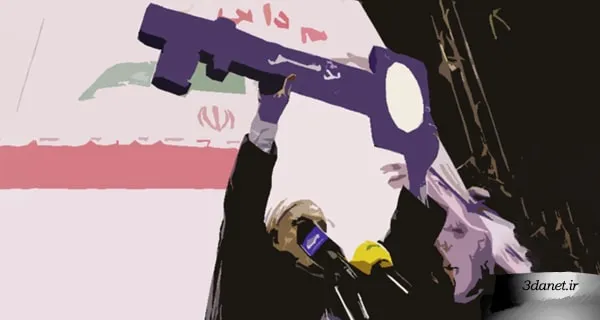
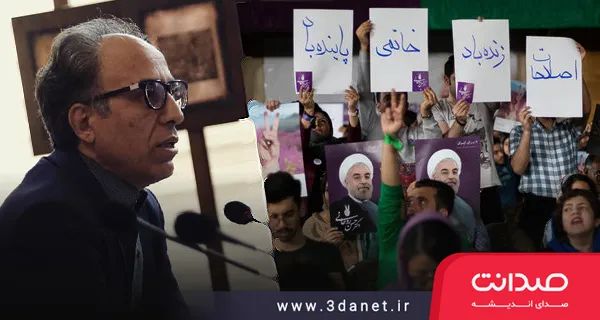
The final hours of Ordibehesht 1396 (May 2017), though emerging from days fraught with tension and breathlessness, had seemingly brought with them the auspicious hoopoe from Sheba, bearing tidings of pleasant times that would once again place the so-called reformist current atop the country's political equations after success in four electoral contests. Victories achieved after several years of this current's complete exclusion and despite intense pressures and filtering by governing institutions, and for this reason, they carried a doubled sweetness.
But perhaps in those days, few imagined that a few months later, these sweet tastes would turn bitter and the atmosphere full of electoral hope and passion would veer toward despair and hopelessness. Nevertheless, the reality unfolded such that in the autumn of that same year, the mask of triumph was gradually removed from the face of the reformist current, and with the revelation of its internally decayed core, it disappointed a great many. So much so that today we witness the emergence of currents that, by separating their line, are advancing new protests across the country and adding to the scope of existing domestic turmoil.
Now, the important question that arises is: What calamity has befallen the reformist current?
Any current that rises from within society can possess three key and highly important facets:
1. The Epistemic Facet
2. The Identity Facet
3. The Salvific Facet
1. The Epistemic Facet:
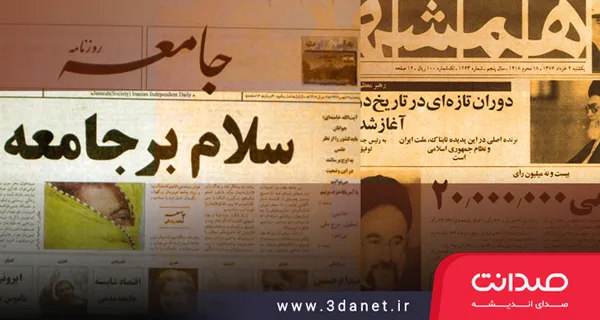
The second of Khordad 1376 (May 23, 1997), although considered a turning point in the country's political history, derived the bulk of its power and credibility not from election day but from the robust intellectual foundations that had gradually formed in the years before and after the revolution, continued their evolutionary process, and raised and maintained the banner of intellectualism and new thinking in this country. The emergence of new readings of jurisprudence and religion, theorizing in the fields of politics and sociology, considerable contemplations in philosophical and metaphysical matters, the artistic community's alignment with and adaptation of the culture of other nations, and issues of this kind—all were auspicious developments that became a firm support for the Second of Khordad current. In fact, the Second of Khordad was merely the external tip of an iceberg that emerged after years of epistemic striving and its dissemination throughout society, constituting the important content of this current.
2. The Identity Facet:
Although many people, in a common error, use the term identity in place of episteme and do not distinguish the identity-based and epistemic weaknesses of currents, it must be noted that identity is an existential matter and can form independently of episteme. In fact, identity is the overall conception an individual has of themselves and their affiliations, by which they can be defined and distinguished from others.
From a concrete perspective, the reformist current, especially after its victory in the 2001 elections, gradually diminished and further diminished its epistemic facet and fueled its identity facet. So much so that it gradually acquired specific symbols, and personalities within it grew more prominent than individuals. An example of this can be seen in the year 2009 with the Green symbol and the tragic heroism of Mir-Hossein Mousavi, which, after his house arrest, became the principal criterion of the reformist current. As if for years, the primary demand and identity-forming component of the reformists consisted of lifting the house arrest, and an individual who wanted to align themselves with this current would prove their fraternity by uttering this slogan and be considered an insider.
Of course, the instances of this facet are not limited to these symbols. It suffices to take a brief look at the walls of student offices, the social media pages of reformist activists and their sympathizers, and anything with which one can express their identity, to frequently encounter various charismatic political faces. From Mosaddegh and Bazargan to Montazeri, Taleghani, Beheshti, and so on...
3. The Salvific Facet:
One of the important functions of any current is that individuals, by clinging to it, strive to secure their salvation from the clutches of the calamities of the age. This holds true both for conservative currents, which see their salvation in preserving the status quo, and for reformist currents, which express salvation as contingent upon change.
In the early 2000s, a group declared their salvation lay in moving beyond Khatami and boycotting elections. In 2009 as well, a large part of the reformist current, after casting doubt on the integrity of the election, saw the salvific element in street protests and explicit, transparent, popular demands. But after the decisive crackdown by the establishment, four years later, they devised another salvific tool and, by forming a coalition with the so-called moderate forces, found the remedy in reclaiming power and engaging in dialogue with the establishment. So much so that today, even within the student and youth base of the country, the majority of struggles and efforts are aimed at obtaining positions and offices and connecting to the system of power; and if yesterday this was done in secret and, if revealed, was spoken of as a disgrace, today it is stated openly and without any fear, and perhaps it is even purified and sanctified, and introduced as the correct, realistic path, far from idealistic illusions. It suffices, for example, to look at the internal disputes and conflicts of organizations. You will see that the root of many disagreements is neither epistemological nor identity-based. Rather, it is for the seizure of the scant power that can determine the future of a group.
But the noteworthy point here is that a new current has also emerged today and, as it happens, plays a prominent role in the political and social news of society these days. A current that neither possesses a coherent epistemological foundation (and often even mocks thinkers) nor can a specific identity aspect be attributed to it. This current's sole point of commonality is the word 'overthrow,' and it merely carries one of the three important components of currents, namely the salvific aspect, and sees it solely in 'opposition to everything' and defense of 'any opponent of anything.'
It seems that for a current to properly take shape and traverse its evolutionary path, it must first possess a rich epistemological aspect. Then, without abandoning or separating from epistemological striving, it must endeavor towards identity-formation, and if it succeeds in this as well, while preserving and continuing the aforementioned path, it should advance a third aspect under the title of the salvific aspect.
Therefore, today, when the reformist current is deeply suffering from epistemological weakness and its younger generations are also going through a disappointing trajectory in this regard, it is incumbent upon all reformists (especially the student base and particularly the Islamic Associations) to once again resume epistemological striving and aid in enriching this neglected aspect.
In this regard, 8 important axes that must be evaluated and questioned in the epistemological aspect, and according to the answers each reformist party gives to them, they should pursue a path and approach (unlike today, where the distinguishing feature of reformist parties is nothing other than their personalities, and no significant, codified difference can be identified among them), are stated:
1. Relationship with Rationality:
The reformist current must place itself before the question of where the limits of rationality lie and to what extent it can be introduced into categories such as religion.
For example, with individuals moving beyond individual reason (which merely guarantees personal interests and is morally restrictive) and entering collective reason, issues such as rational freedom and, consequently, freedom of expression and collective freedom are also raised.
2. Relationship with Will:
The reformist current must contemplate its relationship with humanism, human will, and subjectivity, and consider dualities such as right-orientedness and duty-orientedness, in order to thereby determine the limits of individuals' freedoms. Something that can be briefly referred to as humanism.
3. The Limits of Religion:
The reformist movement within our religious society must exert considerable effort and evaluate the various interpretations that have been proposed under the rubric of the "perfection of religion." For example, it must examine whether perfection in religion is equivalent to its comprehensiveness. Can religion enter the domain of the sciences (especially the human sciences, which today face a massive onslaught from the seminary institution)? To what extent can we be independent of religion, and to what extent are we in need of it?
4. Eclecticism:
In this section, the task of reform is to investigate the possibility or impossibility of introducing a foreign element into religion and to place before itself the question of how serious the issue of purity in religion is and how additions might be made to it.
For example, is this volume of philosophy's entry into religious teachings a blessed event? Or, as Khaqani said, have Muslim philosophers placed the worn-out lock of Plato and the mythical bolt of Aristotle on the door of the best of religions?
5. Guardianship (Wilayat):
Undoubtedly, this issue, especially considering the type of government before us, is one of the serious matters for any movement that seeks to play a role in the country's political developments. The reform movement must examine the element of guardianship in religion, its limits and boundaries, the source of the guardian's legitimacy, the duality of charisma and system, and issues of this kind. For determining a stance on this subject can play a very significant role in society's trajectory toward democracy or dictatorship.
6. Modernity:
Although characteristics of modernity were implicit in the previous items, reform in general must place itself before this question: in the contemporary world and amidst the relentless onslaught of modernity's manifestations, what position does it adopt towards it? Does it rise to fight it and adopt traditionalism? Does it accept it and advance itself in conformity with it? Or does it propose a third way?
7. Priority: Inner Substance or Instances?:
For example, another question facing reform is whether it considers religion to contain a sacred inner substance and deems everyone's duty to be the defense of these principles, training and reforming Muslims in the direction of this struggle (even at the cost of their sacrifice), or whether it gives priority to Muslims and undertakes the reform of religion in the service of them?
8. The Type of Reform:
Finally, the method and approach of this reform, based on the preceding questions, must be specified. For example, is our reform a pruning reform, and should we move towards ever greater simplicity in religion, aligning with Salafi intellectual currents (not in its negative, excommunicative sense) and adopting an Abu Dharr-like Islam? Or, conversely, should we strive towards ever greater enrichment and self-sufficiency of religion and adorn it?
These are all key questions that, without answering them, a successful movement cannot be advanced. It must also be noted that these questions and answers should never be interrupted, for as soon as this happens, the movement stagnates, disintegrates from within, and places a bitter fate before us, where, with the mask of triumph removed, our true, hollowed-out face is revealed.
If today reform and its leaders do not pay attention to this matter and leave it alone with this disposition of covetousness, position-seeking, and power-lust, tomorrow they will see greater catastrophes before them and will find the society whose leadership they should bear upon their shoulders far, far ahead of them.
.
.
PDF file of this article
.
.
The caravan leader sounds the departure drum, O sleeping one
Arise and go quickly, for the caravan is departing
Author: Sadra Masoumzadeh
March 2018
.
.

Discussion1 comments
وقتی که جمعی که اندیشه ای خطا را برگزیده و هیچ گاه اشتباه خود را نمی پذیرد نتیجه انداختن تقصیر بر گردن پیشروان موقتی آن خواهد بود. نه این سران اصلاح طلب نیستند که بر خطا رفتند این خود اصلاحات است که واقعیات ایران و اسلام را نمی تواند هضم کند