اندیشهفلسفهخردگفتگوحکمتمعناپرسشفرهنگ
Religion
“What Became of a People in This Snare…” by Sadra Masoumzadeh
The one-sided recording of historical narratives in religions has made it impossible to understand the condition of the prophets' opponents and has led followers into simplistic thinking. This neglect causes the faithful to play the role of the infidels, oblivious to the fact that 'unbelief begins with declaring the other an unbeliever.'
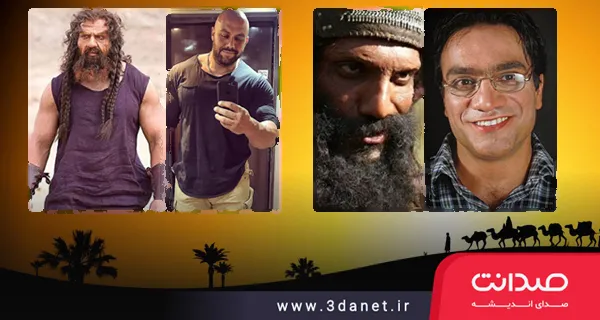
"And they say, 'Are we to forsake our gods for a mad poet?'
And they said, "Shall we abandon our gods...
(Our intellectual traditions...
The opinions of our scholars and religious authorities...
Our rulers and leaders...
Years of our theologians' hypotheses and theories...
Our order, security, and resources...
The structures of our lives and our accumulated stores... )
For the claim of a mad poet?"
One of the afflictions present in religions and sects (especially the Abrahamic religions) that has ensnared many believers in error is the one-sided recording of the majority of their historical narratives. Perhaps even with a thousand efforts and investigations, one cannot find a person who narrates the circumstances of early Islam from the mind of Walid ibn al-Mughira, and who puts to pen what passed through his soul and being and prevented him from accepting Muhammad's (PBUH) claim.
No one depicted the story of the killing (or attempted killing) of Jesus (PBUH) from Herod's perspective.
No one inquired into the inner state of Azar, when he saw the fruit of his life's work in enmity with the traditions of his people and the breaking and desecration of his gods.
No one brought to mind the disturbed and troubled imaginings of Ham or Canaan when he consented to drowning but did not board his father's vessel...
And no one much inquired into what befell Yazid when he resolved to eliminate Hussein ibn Ali (PBUH), or Umar ibn Sa'd at the moment he coveted the kingdom of Ray, or Shimr as he stepped forward in sincere obedience to the decree of the caliph of the time, and so on.
Such matters led the majority of followers of religions and sects to oversimplify issues in their minds and, through "other-stupidifying," to imagine they are faced with a clear and straightforward story, and that if certain individuals in history did not believe and engaged in enmity with the person of the Prophet or the Saint or others, it indicates the unreachable depths of their stupidity.
They did not realize how difficult, strange, and arduous a situation it is to accept the claim of a fellow human being, sometimes even one sharing the same language and culture, when that person suddenly opens their lips to strange claims, subjects many traditions and beliefs to criticism, and rises in rebellion against them.
Thus, these raw conceptions, one-sided narratives, and lack of deep reflection on the circumstances of the opponents led, over time, to such religious people themselves playing the role of the infidels, but under the illusion of defending religion against unbelief. Such that when we turn the pages of human history, these scenes seem to appear before our eyes repeatedly:
A vast spectrum of followers of various religions have put thousands of reformers to the sword without seeing any resemblance between their own behavior and that of the opponents of their Prophet or Imam; and even if one of their own points out this fact, they become agitated and, with hostility, resort to ridicule and dissociation. For they imagine a vast distance between themselves and those others.
They consider Walid ibn al-Mughira immersed in a stupidity that led to his disbelief, yet imagine themselves as zealous soldiers of religion who, unlike the deviants they see as self-styled reformers, have not fallen into stupidity and have remained steadfast on their path.
They do not heed the point that disbelief begins with declaring the opponent an infidel. They travel the path in reverse. They blow into the horn from the wide end. They imagine that in the external world there exists a real thing called disbelief from which one must dissociate. They do not understand that the infidels were those who opened their tongues to declare the reformers infidels and drove them away with labels like madman, Kharijite, rebel, ill-omened, and so on. They have hidden themselves in the illusory safety of the structures of their ancestors and elders and have fallen into the cycle of imitation.
In this way, large segments of society became imitators of certain individuals and confined themselves to them, while those individuals were themselves imitators of their predecessors, restricting themselves within the boundaries of their opinions, and self-righteously and out of benevolence (whether maliciously or out of negligence) summoned the people to these very traditions.
وَأَقْبَلَ بَعْضُهُمْ عَلَى بَعْضٍ يَتَسَاءَلُونَ
And they will turn to one another, questioning.
قَالُوا إِنَّكُمْ كُنْتُمْ تَأْتُونَنَا عَنِ الْيَمِينِ
They will say: "You used to come at us from the right, with claims of good faith."
قَالُوا بَلْ لَمْ تَكُونُوا مُؤْمِنِينَ
They will answer: "[Do not cast the entire burden of blame upon us,] rather, you yourselves were not believers.
وَمَا كَانَ لَنَا عَلَيْكُمْ مِنْ سُلْطَانٍ بَلْ كُنْتُمْ قَوْمًا طَاغِينَ
And we had no authority over you; rather, you were a rebellious people.
فَحَقَّ عَلَيْنَا قَوْلُ رَبِّنَا إِنَّا لَذَائِقُونَ
So the decree of our Lord has been realized against us [as it has against you]; we shall indeed taste [the punishment].
فَأَغْوَيْنَاكُمْ إِنَّا كُنَّا غَاوِينَ
[If] we led you astray, it was because we ourselves were astray.
فَإِنَّهُمْ يَوْمَئِذٍ فِي الْعَذَابِ مُشْتَرِكُونَ
So, on that Day, they will be sharers in the punishment.
N.B.: All verses are taken from Surah As-Saffat.
.
.
What Became of a People in This Snare…
Sadra Masoumzadeh
.
.


Discussion3 comments
تاریخ صدر اسلام را بیشتر از گزارش اهل سنت داریم. تاریخ دان، داده های تاریخی را بررسی می کند، بعد انتظار تربیت اسلامی را هم بررسی می کند، اگر این داده ها و رفتارها با هم سازگار نبود، دنبال تحلیل می رود که چه شد عمر سعد در اردوگاه پسر پیامبر قرار نگرفت و فلان نویسنده در فلان اردوگاه قرار گرفت و تاریخ را چنان برداشت کرد.
سلام خدمت دوستان مسئول، پیشنهاد داشتم که اگر ممکن باشه برای تلگرام تان instant view بسازید تا در دستیابی به تفصیل مقالات سهولت بیشتر ایجاد گردد. پیشاپیش تشکر.
اتفاقا همین الان اقای معظمی در شبکه سه داره در مورد نقش حرمله توضیح میده