Religion
Ali Zamanian's essay 'Shariati Was an Exception': a report on a friendly gathering with Mostafa Malekian
Malekian sees Shariati as an exception among intellectuals, one who connected with the masses—a connection that never took shape after the revolution. He attributes this to the conditions under the Shah, the avoidance of fundamental questions, and Shariati’s singularity.
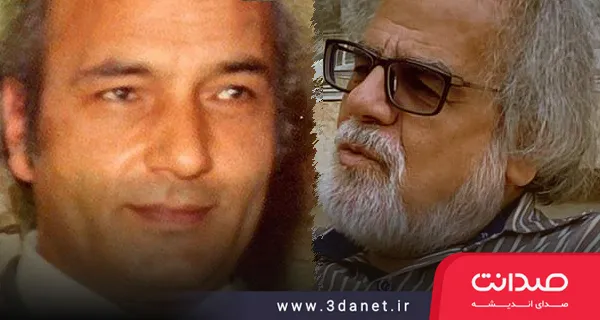
Shariati Was an Exception
A Report on a Friendly Gathering with Mostafa Malekian
A Conversation on the Relationship Between Religious Intellectuals and the People
Ali Zamanian
June 17, 2020
In 2014, I went with a small group of like-minded friends to visit Professor Malekian. In this session, which lasted two hours, we raised three topics with him and sought his views. First, the relationship between sorrow and spirituality was discussed, and after that, we inquired about the relationship of religious intellectuals with the masses and their success or lack thereof in this regard. The report on the first part, namely Sorrow and Its Relationship with Spirituality, was published in 2018.
And so the second part of the conversation began with this question:
Why were religious intellectuals, like the late Shariati, unable to gain significant influence among society and social classes, and why was an effective and broad relationship not established between them and the masses? If this assumption is correct that religious intellectuals did not have adequate success in connecting with society, then the question of why also arises.
What follows is Professor Malekian's response and his view. With the caveat that the professor's oral expression has been slightly edited, in a way that does not harm the original point, to take on the garb of written form.
Considering the presented discussion and the past relationship of intellectuals with society, Professor Malekian responded as follows:
"I don't think you can give another example for this statement of yours besides Dr. Ali Shariati. That is, I think you are comparing intellectuals other than Dr. Ali Shariati—whether religious, secular, Marxist, laic, socialist, or liberal—on one side, and Dr. Shariati on the other. I don't think you can find a second example like Dr. Shariati. Dr. Shariati had several differences from the rest of the intellectuals. These differences are partly related to the circumstances in which Shariati emerged, and partly related to Dr. Shariati's own personality and character. Six causes and factors came together and made Dr. Shariati an exception (and as you pointed out), he penetrated into the hearts of the people and became one of the beloved spokespersons of the people. And not spokespersons who speak on behalf of the people, but with whom the people currently have little emotional connection.
The six reasons that made Shariati an exception are as follows:
1_ Firstly, Dr. Shariati emerged during the Shah's time. At that time, the religious intellectual was one of several rivals to the Shah's regime. Therefore, the Shah's regime had to divide the degree of opposition it had toward intellectuals into several parts. Then, one share of that opposition would go to religious intellectualism. That is, it would direct one share of its violent and coercive force toward religious intellectuals. Just as it pressured Dr. Shariati, it also pressured Dr. Mostafa Rahimi, Dr. Haj Seyyed Javadi, Bagher Momeni, and Shayegan, and so on.
Our government’s only rival is religious intellectualism, and therefore all its pressure is directed solely at religious intellectualism. Because it knows that if it is to have an alternative—whether we like it or not, whether we approve or not—that alternative will be the religious intellectuals. Of course, I do not consider myself a religious intellectual. If it has an alternative, it must be someone like Dr. Soroush, someone like Dr. Kadivar, or Mujtahid Shabestari, and the like. It is for this reason that you see the ruthlessness they show toward these individuals, they do not show a tenth of it toward others. Because, in the regime’s own estimation, these individuals are considered the alternative. But whether the regime itself is actually correct in this estimation is another story. Ultimately, however, our regime’s perception is that it has only one alternative. And this alternative must be destroyed. From this perspective, you see that they have shown the greatest brutality toward the Freedom Movement, which is the most oppressed and peaceful party in the country. Because they understand who my successors are. Hence, Bazargan, Sahabi, Soroush, and Dr. Shabestari become important to them. Therefore, religious intellectuals should not be measured against Shariati. During the Shah’s regime, Shariati was one of those who suffered blows, and Shariati’s rivals suffered more blows than Shariati. But now it is not like that. Now all the force and coercive power and violence is directed at religious intellectuals or the national-religious forces. Hence, the freedom that Shariati himself had under the Shah’s regime, Susan Shariati does not have now.
2_ The second reason is that Shariati did not much correct the country’s religious forces. The most he would do was to aggrandize certain figures like Hussein, Abu Dharr, and Zahra. But he did not demand a fundamental change from the people. He would say that Ashura was misinterpreted, or that the uprising of the Prophet of Islam was misinterpreted. He did not want to create a fundamental change. The most he wanted to do was to save religion from the clutches of the clerics. But when Dr. Soroush wants to speak to the people, the people see that Soroush thinks very far ahead. For example, whether there is an Imam of the Age or not. Whether our Imams were infallible or not. The post-revolution religious intellectual thinks somewhat more radically. Apart from condemning the mullahs and apart from saying that the mullahs misinterpreted a few concepts, the rest of religion was valuable to Shariati. Did Shariati ever speak on the question of, for example, whether the Quran has historical authenticity or not? Does revelation have epistemological authority or not? Hence, people could converse with Shariati more easily. Compare this with people sitting down to listen to someone who says the prophetic experience is repeatable. Or that it is not clear whether Gabriel descended, and whether revelation is the same as mystical experience or something more than mystical experience? And it is not clear whether this Quran is the word of God or the word of Muhammad. For example, to say the Quran is the narration of the Prophet’s dreams. To the people, these words are very strange. These things were not in Shariati, but they are present in the post-revolution intellectuals.
3_ The third reason is that at that time, Shariati was “unique” among religious intellectuals. Shariati in his time was like Ayatollah Boroujerdi in his time of ijtihad. Ayatollah Boroujerdi was Boroujerdi because he was one. Immediately after his departure, fifteen other people took his place. It is obvious that Boroujerdi’s followers were divided among fifteen. Shariati too was truly unique in his time. But after the revolution, several intellectuals emerged who, whether strong or weak, jostled against one another. If after the revolution we had only one Dr. Soroush, the situation would have been different. Now the forces supporting religious intellectualism are themselves in several camps. We have the Kadivar camp, we have the Mujtahid Shabestari camp, we have the Dr. Soroush camp
4_ The fourth factor, which I think is important, is that after the revolution, because of the 35-year actions of this regime, people have not even preserved their interest in religion itself as they did in the past, to then say let us go to the new interpreters.
At present, there is no country in the Islamic world more irreligious than Iran. Stand at the door of a mosque in Istanbul, Turkey, and see how many people come out at noon prayer time. You will see that four or five thousand people emerge from each mosque. And more important than the number of worshippers in the mosque is their age: over 60 percent of them are under forty years old. Now go and look at our own mosques, which have a capacity of, say, two thousand people. But you see the mosque is empty, with only one or two rows formed. And then look at the congregation—not even 10 percent of them are young. And that 10 percent of young people are members of that mosque's Basij. Interest in religion itself has truly declined as well. The reason for this is solely and exclusively the malfeasance, ill intentions, and mismanagement of the clerics who came to power. When sweets are bad for me, I do not go into a confectionery to choose sweets. When I consider religion harmful to myself, I do not choose among individuals; I set all of them aside. Do not think that young people have scattered from around Soroush; our young people have become very disinterested in religion itself. Many years ago, Dr. Kadivar told me that he had gone to the Amir Abad dormitory in Tehran during Ramadan that year and was leading the noon prayer. He said that one day, when his talk was finished, a number of young people said to him, 'Dr., come down and talk on the ground; don't soar so high up there. Right now, on this Ramadan afternoon, let us go and randomly open the doors of ten dorm rooms. If nine out of those ten are not busy eating, then say whatever you want.' Not even one-tenth of the students are fasting. I replied, 'Let me tell you something: I myself was in this very University of Tehran dormitory in the years fifty-two and fifty-three. I said that when Ramadan came, the Marxists and leftist forces would gather ten people in one person's room and cook food there, so that the smell of food came from only one room and not from ten rooms. They would gather, eat quickly, and each would go back to their own room. This was to be considerate of us religious kids. One person who was a Marxist said,
6_ Another characteristic of Dr. Shariati, also tied to his personality and disposition, was that Shariati was, above all, an orator. I mean that he played with the feelings, excitements, and emotions of his audience. But post-revolution intellectuals are more teachers and instructors. Even in their lectures, they teach. When you listen to a lecture by Dr. Ali Shariati, you experience a great deal of feelings, emotions, and excitements; you are stirred. You say he is right, bravo and hurrah... But when his lecture ends, if someone asks you what the essence of Dr. Shariati's lecture was, you then see that, like a fish slipping through your fingers, you have nothing in your grasp. You cannot say, for example, that the lecture had an introduction, three premises, a claim, and two reasons. Because he was an orator. He was from the region of Khorasan, and in that region we had masterful orators. Like Fakhreddin Hejazi. "Much ado about nothing." God rest his soul, but whenever I think of him, I recall Shakespeare's saying, "Much ado about nothing."
Shariati was an orator, and I mean that in the sense of the Aristotelian rhetoric of the five arts. That is, he dealt with excitements, feelings, and emotions. But when you sit and listen to the post-revolution intellectuals, your feelings, emotions, and excitements are not engaged, and you must constantly think about what their reasoning was. Dr. Soroush is a very good teacher, not a very good orator. He does not deal with excitements; he makes a claim, strong or weak, and argues for it. Although now Dr. Soroush sometimes recites a poem. But Mojtahed Shabestari is dry, and 'Kadivar' is even drier. What I said is not a criticism; it means that these individuals are teachers. That is, they engage the audience's mind, they reason, they put forward claims, they critique the arguments of opponents, and they seek to strengthen their own reasoning. Do you know of any lecture by Dr. Shariati where he says, 'In this lecture, I have two claims'? The first claim is supported by one reason, and the second claim by three reasons. You cannot find a single instance in all of Shariati's lectures where this is the case.
Religious intellectuals are good teachers. And then we see that people and their audiences gradually begin to yawn and become restless. This means that if someone wants to be drawn to them, they must be much more cultivated. But Shariati's audiences were all staring at the speaker, attentive with open mouths and eyes. That is, even a villager could sit and listen. It was as if he was performing a ta'zieh.
I think those four social factors and these last two factors caused Dr. Shariati to become unparalleled, and I think he will have no equal in the future either. I think that as we move forward, rationality will increasingly overcome feelings, emotions, and excitements, and naturally, those who wish to speak emotionally will have no place in the future.
Discussion11 comments
جوونهای دانشگاهی رو شماها بی دین کردید نه حکومت! وقتی با اون همه کبکبه و دبدبه میاید میگید وحی خواب بود و جبرییل تصورات پیامبر بود شریعتی منبری بود دین به در نمیخوره و عقلانیت و معنویت جایگزینه دولتهای فشل هم دولتهای اصلاحات واعتدال بودند حالا کاسه هاتون رو فقط سر حکومت نشکنید
بنظرم آقای ملکیان در جای دیگری هم چند سال پیش نیکو گفت که شریعتی گناهش این بود که آب در چاه ریخت و دلو برداشت و داد زد که آی ایها الناس من آب آوردم. او بعد اجتماعی ئی که دلش میخواست را به دین افزود و آن را فروخت. دکتر شریعتی هم ادیب بود هم معلم هم مبلغ و هم سخنران. در حالیکه یکی از این چهار کافی است که انسان را پر گو کند. بله شریعتی مهم بود و پلی ساخت اما ای کاش ادیب میماند که بهحق ادیب خوبی میشد.
درباره انتقاد هایی که به طور تلویحی و ضمنی به روحانیت فعلی گفته شد: همه اعتراضها و انتقادها بیهوده است. (قدرت سیاسی) و (روحانیت) هیچ تغییر جدی و محسوسی در رویه خود نمیدهند و تا اکثر قریب اتفاق مردم دینگریز و بیزار از دین نشوند، دست برنمیدارند. جناب خمینی میگفت حتی کمونیست ها در نظام ما آزادی بیان دارند، ولی حالا مجری اخبار، به خاطر نام آوردن خواننده مورد علاقهاش از کار بیکار می شود. دیگر یک اپسیلون اعتماد به این ساختار ندارم. متاسفانه و متاسفانه و متاسفانه
کامنت بالا به هیچ وجه ناظر بر سخنان جناب آقای ملکیان بزرگوار یا جناب آقای زمانیان بزرگوار نیست. اما تلاش داشته تا یک تصور تاریخیِ دستساز و ژورنالیستی، و یک نمونه از اسطورهسازیای را به خوانندگان گرامی معرفی کند که کاملا بدیهی انگاشته میشود.
من در سال ۱۳۴۸ پای سخنرانیِ دکتر شریعتی نشستهام. از سال ۱۳۵۱ به بعد دکتر شریعتی "بت" من بوده است تا حدود اوایل دههی ۱۳۶۰. شهادت میدهم که ایشان اصلا در میان مردم شناخته نبود، حتی تا سال ۱۳۵۸. به همین دلیل، احساس تنهایی همیشه با من همراه بوده. حتی در بعد از ۲۲ بهمن ۱۳۵۷. بحثهای ایشان فقط در میان بخشی از دانشجویان مطرح بود، یعنی دانشجویانِ سیاسی-مذهبیِ فعال. نمونهی این افراد، بخشی از خط فکری دانشجویان خط امام و کسانی بود که چند سال سن بالاتر از دانشجویان در حال تحصیل سال ۱۳۵۷(همه طرفداران همزمانِ شریعتی، سازمان مجاهدین وجدیدا رهبر کبیر انقلاب) داشتند. در سال ۵۶ اولین تجدید چاپ جزوات دکتر در نمایشگاه کتابِ دانشجوییِ دانشگاه آریامهر به فروش رفت. بعد از آن در سال ۱۳۵۷ در "کتابفروشی آذر" جزوات او باز نشر شدند. فقط در اینجاها بود که صفِ خریداران جوان تشکیل شد. بعد از آن کتابهای ایشان پر فروش شدند. اما این کتابها را فقط اهل سواد میخریدند و بیخودی انبار میکردند و نمیخواندند. اهل سوادی که نسبتشان به عامهی مردم، همیشه بسیار بسیار ناچیز بوده. در روز ختم درگذشت آقای شریعتی، در تیرماه ۱۳۵۶ در مسجد ارک، کل جمعیتی که مسجد را پر کرده بودند (اعم از حدود بیست نفر روحانی و نزدیکان آقای بازرگان و جوانان) و در خیابان ایستاده بودند، حداکثر به هزار نفر میرسید. بیشتر از آن نبودند. این بود کل بقیهالسیفِ سپاه دکتر شریعتی. در تظاهراتِ رسمی و آزادانهی روزهای تاسوعا و عاشورا (آذر ۱۳۵۷) برای اولین بار بود که عکسهایی در دست بعضیها به هوا رفت: اول از همه عکسِ آقای خمینی، بعد هم آقای شریعتی، آقای طالقانی و بعد هم عکس چهار رضایی، و عکسِ بنیانگذاران سازمان مجاهدین (حنیف و بدیع و محسن). این عکسها را دانشجویانِ هوادار شریعتی و سازمان هوا کرده بودند، نه مردم. مردم چیزی جز آقای خمینی به گوششان نخورده بود، آنهم به تازگی. رژیم سابق دهانها را بسته بود. تنها کسانی که برای دانشجویان مذهبیِ تا سال ۵۶ مطرح بودند، آقای شریعتی و اعضای سازمان مجاهدین و آقای طالقانی بودند و جدیدا هم فقط و فقط آقای خمینی و به عنوان روحانی مبارز بزرگ و زنده به آن سه اضافه شده بود (بعد از مصاحبهی ایشان با روزنامهی لوموند). متاسفانه عادت کرده ایم که به داستان سازیها و داستانسراییها گوش بدهیم. سیل ۲۲ بهمن که آمد و هلاکتِ حرث ونسل را درافکند، شریعتی دوستان (همان جوانان دانشجو) در رسانههای مملکت نفوذ پیدا کردند. اصلا در همهجا نفوذ پیدا کردند و همین ها بودند که کارها را راه میانداختند و راه یاد میدادند. همینها با وجود تمام احتیاطی که روحانیت غالب میکرد تا با شریعتیِ محبوب این دانشجویان دیپلماتیک برخورد کند، میتوانستند گهگاهی در رسانهها اسم شریعتی را مطرح کنند. اما این شریعتی باز هم برای تودهی مردم چیزی بود بیگانه. وقتی بیگانه میگوییم، یعنی این که مردم برای روضهشان یا برای ختمشان به آخوند مراجعه میکردند، یعنی آخوند را برای این کارها میشناختند. کارکرد او را میدانستند. شریعتی به مثابه یک اسلام شناس یا کنشگر اجتماعی برای مردم هیچ کارکردی نداشت، مثل صدها روشنفکر یا چریک جدا از مردم، از قبیل آل احمد و شاملو و اسماعیل خویی و جزنی و احمدزاده و پویان و ... . حلقههایی که او را میشناختند و برایاش اهمیت قائل بودند خیلی تنگ بود و تنگ ماند. برای باقی روشنفکران و چریکها هم حلقههای طرفداران خیلی تنگ بود. اشتباه می کنیم که تصورات خودمان را بر واقعیت تحمیل میکنیم: مثلا ما همین که امثال دکتر شریعتی را در عرصهای مهم میدانیم، تصور میکنیم که او واقعا در نظر همهی مردم هم همان قدر مهم است، غافل از آن که درست است که او برای ما مهم است، اما "برای مردم" چیزهای دیگرند که مهم اند. دین آقای سروش، دین آقای مجتهدی، دین آقای فیرحی و دین طبقهی بالا و پایینِ روحانیون دولتی و غیر دولتی و ضد دولتی با دین مردم عادی کاملا متفاوت است. دین این گروه اهل کتاب، در کتابها بحث میشود، اما دین مردم عادی، سینه به سینه و بهشکلی "شِبْه غریزی" در زندگیشان جاری است. دین و دنیای شریعتیْ دین و دنیای اهل کتاب بود. مردم هم اهل کتاب نبوده و نیستند.
اشکال کسانی که برای انکار پیروزی جامعه مخالف خود دست و پا می زنند این است که موبیلیزیشن ملی را oversimplified می کنند و طبق تبیین آن ها همه چیز طبق نگاه آن ها بوده اما خلاف جریان طبیعت انقلاب مردمی شده. البته رسانه های با اصطلاح آزاد ، دانشگاه، روشنفکر متنفر از ملت و دین خود، دانشگاه یاری رسانان انان بوده اند.
آفرین! صادقانه و مبتنی بر شواهد قابل بررسی
چقدر از ملکیان مطلب می ذارید. شورش را در اوردید. این ادم واقعا جدی نیست.
دکتر شریعتی دانش فلسفی اش کم بود ,, چرا که اگر فلسفه می دانست هیچگاه ابوذر را با ابن سینا مقایسه نمی کرد,, هیچگاه به فیلسوفان توهین نمی کرد. به نظرم یک روشنفکر دینی می بایست تسلط کافی به کلام , فلسفه, عرفان داشته باشد,چنانچه بخواهد در حوزه دین سخنی تازه و نو داشته باشد. درغیراین صورت گفتارش در حوزه دین فقط موجب تههیج افکار عمومی خواهد شد..
سلام و عرض ادب چناب ملکیان که الحق وانصاف سخنران زبردستی هستندمرحوم شریعتی را به درستی نمی شناسند و نخواهند توانست شناخت چراکه ایشان اهل فلسفه و ادله و برهان آوردن هستندو جنس و فصل مرحوم شریعتی را به جهت سوگیری های ناآگاهانه نخواهند توانست مدرک شوند؛از طرفی گفتمان ایشان را در یک دوره زمانی مشخص از نظرتان بگذارنید بعد متوجه خواهید شد که ایشان هماز صناعات خمس چون دیگران بهره می برند و از سویی دیگر ایشان در هرساحت و علمی به دلائلی که بر بندهکاملا مشخص است دخالت کرده و نظر خود را ابراز میدارند بی آنکه درآن علم و ساحت تخصص به حد کفایت داشته باشند... در مصاحبتی که با ایشان داشتم با اینکه بنده درحوزه مورد بحث مان متخصص بودم و ایشان تنها در مورد علم مورد مطالعه من مقاله نوشته بودند کلام حق را پذیرا نمی شدند... در هر صورت ایشان خطیب بزرگی هستند و بنده هم بسیار از ایشان تا به اکنون آموخته ام امابایدهمواره منصف باشیم و دراموری که مطلع نبوده و اشراف نداریم جانب احتیاط رارعایت کنیم.
سلام به نظر من اگه سایت خوب صدانت، پُستها رو پشت سر هم نذاره که خوانندگان بتونن مطالب و نظرات رو دنبال کنن بهتره. با تشکر