Religion
The Religion of Irreligion and the Tribulations of Its Promotion in the USSR
Beyond suppressing religion, the Soviet regime sought to replace religious faith with atheism; this book chronicles the Bolsheviks' attempt to fill the people's spiritual void and promote a 'religion of irreligion'—an effort beset by immense hardships.
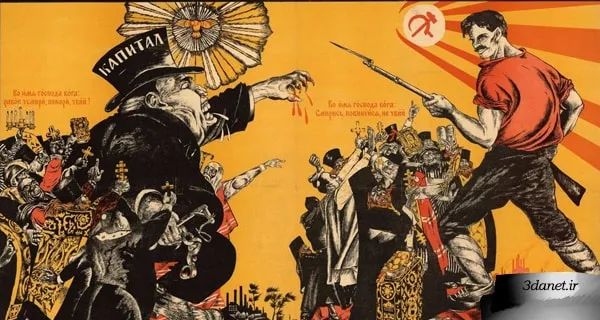
We all know that the communist regime of the Soviet Union was a totalitarian regime. We all know that this regime was hostile to religion and faith. Yes, Marx had said that "religion is the opium of the masses," and Lenin subsequently added that religion and the religious apparatus are a bourgeois business setup for exploiting the working class. We know that this regime also officially promoted atheism. And we know the end of the story: religion remained and the regime vanished—a tale recounted by Muslim and Christian clerics alike as a sign of divine victory. But what conception and expectation did the Soviet leaders have of atheism—as a political, ideological, and spiritual project—and what measures did they devise for spreading irreligion and competing with religion? I'm sorry, but here we don't know much. Contrary to popular belief, very few works have been published on this subject. This is precisely the topic of a book by the fascinating and highly readable Victoria Smolkin, which was published this summer.
The Bolsheviks who came to power with the 1917 revolution imagined they could create a communist world without religion. Knowledge and reason were to replace superstition, class morality was to replace religious morality, and a modern way of life was to replace old customs. The monopoly on power and truth was taken from the hands of the palace and the church, and both were bestowed upon the Communist Party. Nevertheless, the Soviet regime never banned religion. The Communist Party was officially atheist, the state was secular, and society was deeply religious. The Party embarked on a massive engineering project to turn everything upside down.
The Party had three fundamental problems with religion—particularly Orthodox Christianity as the dominant faith. The first problem was political: the wealth and organizational power of religion to mobilize and guide the masses was considered a serious threat to the regime. The second problem was ideological: religion was associated with superstition and backwardness, and the Party wanted to promote knowledge and progress; it believed that religious superstitions were a veil preventing the understanding of the sublime truths of communism. The final problem was spiritual: religious faith was woven into the soul and psyche of the Russians. How could the essence of this spirituality be extracted from people's beings and replaced with an atheistic spirituality? The Soviet regime grappled with these three problems until its last breath, and, as Smolkin shows in detail in her book, the relationship between state and religion during the Soviet era indeed had many ups and downs.
Smolkin begins the story with the October Revolution. It was not long before the new government went after the churches and confiscated their property and buildings. More than a thousand priests were killed, and several times that number were tried and imprisoned. The new regime suppressed and dismantled various religious communities and congregations, ultimately settling for religious life flowing only in the back rooms of homes and at the altars of the few remaining churches. Under the Party's wing, a new organization was founded called the League of Militant Atheists, whose mission was to convert society to the creed of irreligion through militant and violent methods. These measures severely weakened organized religion—fewer than a thousand churches remained out of the roughly 50,000 that existed at the start of the Russian Revolution—but did little to change people's religious beliefs. At Stalin's direct request, a question about religion was added to the 1937 census. The survey results astonished the communists; nearly 60 percent of the population still openly identified as religious. The outbreak of World War II completely changed the approach. The post-revolutionary state had failed to offer a seductive narrative of atheism that could move people to action, and now it needed religion to help stir patriotic fervor and mobilize the public. In 1943, Stalin laid down the law to the Party and ordered a reconciliation between religion and the state. A council consisting of 19 bishops was established to administer the affairs of the Russian Orthodox Church. Sixteen of these bishops were in prison and were released on the spot!
For about two decades the religious situation was calm and free of tension. The state and the party had given up on the forcible promotion of atheism, and as a result there was little sign of irreligion on display in public life. That lasted until Stalin died and Khrushchev came to power. Khrushchev wanted to erase the memory of the terror and the cult of personality of the Stalin era and restore communism to its original authenticity—as he announced in his famous secret speech at the Twentieth Party Congress. The promotion of atheism was part of this program of returning to an early, genuine communism. In July 1954 the Party Central Committee suddenly issued a decree sharply criticizing passivity in the face of religion and the cadres' neglect of spreading "scientific atheism." The Ministry of Education, the Komsomol (the Communist Youth League), and other party and state bodies were asked to launch a serious campaign to promote atheism and discipline religion. News of this decree, however, had an unintended consequence. People became frightened and, thinking that an era of repression had begun again, hurried to drink their fill from the wellspring of religion before it dried up. Suddenly the number of requests for baptism increased, church services became more crowded and thriving, and their income rose. That November the party issued a new decree entitled "Errors in the Promotion and Propaganda of Atheism in Society." The gist of it was that people should not be afraid; religion and the church were not enemies of the Communist Party and were not going to be repressed. There is no compulsion in religion, but religious ideology is incompatible with Soviet modernization, and we want to create a soft-power movement toward an atheistic monotheistic society!
One of the most fascinating parts of Smolkin's book is the account of the soft-power atheism movement in the Soviet Union of the 1950s and 1960s. An era when vast propaganda campaigns were launched to make people irreligious and enormous, sprawling apparatuses were put in charge of educating and promoting atheism, including the Academy of Social Sciences attached to the Party Central Committee and later the Institute of Scientific Atheism. The history of this era has gone untold and its documents have not been properly examined. One of Smolkin's strokes of luck during her research was being able to find and examine an untouched archive containing more than twelve thousand pages of documents from the institute's minutes and correspondence. These documents show us the confusions and difficulties that stood in the way of the promoters of atheism. They realized that up to that point their atheism had been negative: an attempt to refute and negate religion, but now it was supposed to have a positive aspect as well. This point was brought home to the heads of the Party Central Committee by Vladimir Tendryakov, the famous novelist and perhaps the most prominent atheist intellectual of his time, quoting an old Russian proverb: "A holy place never stays empty," if you empty the spiritual world of human beings of religion, you must fill it with something else.
Atheism needed an ideology and a worldview. The religion of irreligion had to formulate its own theology and articles of faith. These articles of faith could not be found in Marx's clinical texts. (He incidentally did not write much about religion.) The founders of the Russian Revolution, those early Bolsheviks, had not thought much about religion as a problem either. Worse still, they had not given much thought to atheism itself—what irreligion looks like, how it should be promoted, and how atheism is even performed in individual and collective rituals and rites. Their naive illusion was that religion is a superstructure, possessing no agency, and its existence depends on the political and economic base. So, once communism arrives, religion will automatically vanish and irreligion will take its place, as simple as that! The custodians of atheism had no choice but to roll up their sleeves, start from scratch, and grope their way forward. They gradually realized that to compete with religion, they had to use religious operations: missionaries of atheism had to be dispatched to all corners of the country, teachers had to give lessons in anti-religious education, we had to fight religion with the weapon of science, and master orators and prominent figures had to expound the sublime truths and benevolent aims of atheism in public assemblies and mass media.
Two categories of people were the cream of the crop among the missionaries of irreligion: one was apostate priests, and the other was scientists, especially cosmonauts—after all, this era coincided with the peak of Soviet technical and scientific advances, particularly space exploration. One of these was Gherman Titov, the second person to orbit the Earth. A sentence he uttered in 1962 during a visit to the American city of Seattle became famous worldwide: I went into space and saw neither God nor angels there. A year later, when Titov was invited as a speaker to the Central Committee conference on atheism, he complained that as a cosmonaut, he lacked sufficient skills to propagate atheism: "We don't know how to answer people and convince believers that there is no God." In Titov's view, the problem was that the missionaries of irreligion were completely illiterate in matters of religion. At that same conference, Titov suggested that cosmonauts be given the Bible to study so they could better hold their own in discussions with religious believers.
But this was not a problem that could be solved by reading the Bible. Evgraf Duluman, another missionary of irreligion, had previously taught in an Orthodox seminary and knew religious literature better than anyone. He and many other apostate priests were also bewildered and frustrated that their preaching and propaganda were not working. Duluman recounts his observations while a guest in a rural home in Ukraine: "They were a devout, believing family. Several icons hung on the wall of the house, under which, as it happened, they played cards every night." Duluman is astonished and asks the household, "How can you play cards [a sin] under these holy icons?" The household replies, "It's warmer and more comfortable there." Duluman asks, "Aren't you ashamed before the saints?" He receives the answer, "They've probably gotten used to us by now!" Then Duluman asks, "But you have had your children baptized?" They say: "Everyone does it, so we do it too." Duluman reads them a text about how baptism is a barbaric act. The host listens carefully and finally says: "That was very interesting, but everyone is a barbarian, and so am I." Duluman changes the subject: "How much money did you pay the priest for the baptism?" At this, the household starts cursing and badmouthing the priest behind his back, saying he is like a leech and pockets all the money himself, and finally they curse the priest, saying, "May the coins get stuck in his throat and choke him." Duluman changes the subject again and tries to stir paternal feelings, "How could you bring yourself to plunge the infant into cold water?" The father replies, "I arranged with the priest beforehand for the water to be lukewarm." Duluman talks about the water of baptism being contaminated and unhygienic, but the host interrupts him and asks, "Weren't you yourself baptized?" Duluman nods. The host says: "I was baptized, our entire Russian motherland has been baptized; look how well everything has turned out!" And he leaves Duluman speechless, his mouth agape.
Most preachers and propagandists of irreligion had run into the same closed door that Doluman had described. They could not convince ordinary people—who often lacked any firm faith—to renounce their religion and embrace the atheist creed. The Party realized very late that religion is something larger than a collection of institutions and ideologies; beyond these, religion is a tangled, intricate skein of meaning and emotion, it is tradition, it is community and local society, and its traces are visible even in personal affairs and circumstances. Most people, even when they were not particularly religious, still had their children baptized, buried their dead according to religious rites, and in moments of excitement or anxiety, religious invocations and prayers would flow from their tongues. The Party realized that it did not know society, and this had one benefit: the revival of the discipline of sociology in the USSR and a turn toward it. The early revolutionaries had thought sociology was one of the useless bourgeois sciences. But by the late 1950s, they saw that there was no alternative to collecting and analyzing social data and observations in order to combat religion and promote irreligion.
The heralds of godlessness still hoped to cleanse the spirit of Soviet subjects of religious rust. To this end, they resorted to new tricks. Among them was an attempt to present irreligion with a tinge of local customs and cultures. For example, Tendryakov wrote a series of short novels in the popular style of rural didactic tales. They even thought of inventing irreligious rites and rituals. Naturally, there was no ready-made template to use. Instead, we encounter a mass of public and private discussions and debates among members of the Party's specialized committees about who was qualified to invent rites and rituals, how they could be substituted, whether the process of their dissemination should be gradual or imposed from above, what communist values these rites and rituals should evoke, and so on. Gradually, however, new rituals such as the "Red Wedding" were introduced, which also appealed to some young members of the Komsomol who had always envied Christian wedding ceremonies. In the city of Moscow and later in dozens of other cities, buildings called "Palaces of Weddings" were constructed and decorated to evoke the splendor and glamour of church ceremonies for the bride, groom, and their families. The wedding of two famous Russian cosmonauts, Valentina Tereshkova and Andriyan Nikolayev, was held in this manner in 1963, and its news caused as much buzz in public discourse and Soviet media as the royal wedding of Prince Harry and Meghan Markle.
By the mid-1970s, it had become clear to all Party members, both cadres and the Central Committee, that the ship of irreligion's propagandists had run aground. More than anything, they were worried about the young generation, who were completely indifferent to the project of godlessness. How could one expect these young people to raise the next generation with communist values when they themselves showed no enthusiasm or motivation? The trend of religious reaction in countries such as Iran, Poland, and Afghanistan dissuaded the Party from promoting irreligion. The old narratives and tricks no longer answered the wave of the times. The Soviet ideological and political elite realized that their ambitious plan to create a new communist civilization had no devotees or buyers in society. At the same time, various crises had gripped the system: corruption, theft, narcotics, alcohol addiction, divorce, sexual exploitation, and so on. The Party could not cope with confronting all these problems and extended a hand of help to the Church. In April 1988, Mikhail Gorbachev met with the Archbishop of the Orthodox Church to celebrate the thousandth anniversary of the arrival of Christianity in Russia.
The reconciliation with religion was supposed to save the Soviet system from the calamities of the age, but it ended up weakening it. For seventy years, the Communist Party had claimed to be the exclusive proprietor of politics, truth, and spirituality, and had trumpeted atheism as the first principle of its religion in every street and alley. But now it was promising that it would no longer seek to bore into the human soul. According to Victoria Smolkin, “Atheism did not die in the USSR,” but was rather left to its own devices, in the hope that a burden would be lifted from the Soviet system’s shoulders and it could continue its existence. This did not happen, and God knows whether its collapse was a punishment for the denial of religion or an atonement for the belated denial of irreligion.
.
.
The Religion of Irreligion and the Tribulations of Its Promotion in the USSR
Author: Alireza Eshraghi
.
.

Discussion2 comments
سلام ایران داره همین کار رو برای ترویج یک قرائت خاص از دین انجام میده ولی جایگزین های زیادی داره حزب کمونیست مصطفی ملکیان و مولانا و اکهارت تله و ریچارد داوکینز و عبدالکریم سروش و اشو و...نداشت اما ما داریم و همه اینها جایگزین اسلام انقلابی هستند
ترس شما از انقلاب منجر به همان شکستی می شود که بر سر دیگران آمد