Philosophy
The Causes of Moral Decline in Iranian Society
Malekian considers the moral life in Iran to be difficult, and reads virtue ethics not as harder than other schools but as more acceptable. He enumerates the obstacles to “telling the truth” as the ideological nature of the system and the disparagement of rationality in the name of religion and mysticism.
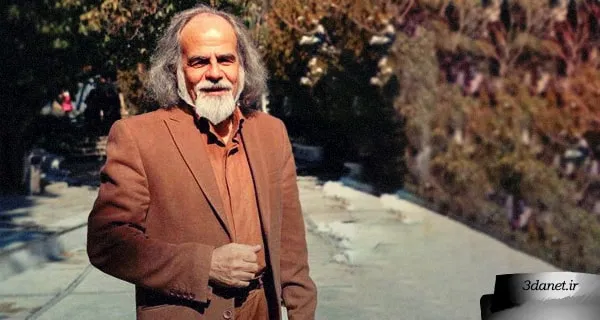
Interview of the Islamic Association of Zanjan University with Mostafa Malekian, titled The Causes of Moral Decline in Iranian Society
I will begin the first question with reference to your recent interview in Negah-e Aftab magazine.
The title of this interview is provocative. “I am a moral absolutist”
1. Considering the components of an intellectual in your view on the one hand, and considering your audience, who are the general public, on the other, how can the expectation of a virtue-oriented ethics be realized among the general public, who are generally of average condition and lack the capacity to follow a virtue-oriented ethics?
In my opinion, it is true that throughout history, one could say, and perhaps one can say, that we have no more than three major ethical schools: duty-based ethics, like Kantian ethics; consequentialist or result-based ethics, like the ethics of Jeremy Bentham and John Stuart Mill; and virtue-oriented ethics.
One could say that everyone who lives ethically, whether consciously or unconsciously, willingly or unwillingly, is in any case affiliated with one of these three ethical schools. However, the presupposition of your question is not acceptable; the presupposition is as if virtue-oriented ethics is more difficult than duty-based ethics and consequentialist ethics.
From this perspective, you say, your audience is the common people in the streets and bazaars, so how can you advocate for virtue ethics, as if virtue ethics is more difficult in terms of practical and theoretical commitment compared to its two rivals.
But in my view, this presupposition is a very incorrect one, meaning virtue ethics is not more difficult than the other two. Fundamentally, living ethically is difficult.
I accept this, which is why we use the term moral obligation. Obligation literally means to put into trouble, to put into hardship.
Yes, living ethically is fundamentally difficult, but I can never accept, and no reason has been provided, that among these ways of living ethically, one of which is virtue ethics, the theoretical and practical commitment to it is difficult.
The upshot of my words is this: living ethically is a difficult task, and in a society like ours, ethical living is far more difficult.
But this difficulty does not increase in intensity when you are committed to virtue ethics.
The second point is that I myself am an advocate of virtue-centered ethics, but this never means that I have any compulsion for others to also be advocates of virtue ethics. I express the strength of this ethical school relative to its two rivals; whoever accepts my exposition becomes an advocate of virtue ethics, and whoever does not accept it will be an advocate of duty-based or consequentialist ethics. For me, the ethicality of society, the becoming ethical of society, and the remaining ethical of society is important, not necessarily that society be an advocate of virtue ethics. Society can have any ethics; I have expressed my own view. I have said that virtue ethics is more acceptable than other ethical positions; otherwise, what is important is living ethically.
Second question
In your talks and interviews, you have frequently referred to the duties of the intellectual, which are “the articulation of truth and the reduction of suffering.” Please tell us some points about the relationship between the existing moral decline in society and the reduction of suffering.
I think that in our society, the intellectual faces problems both in terms of articulating truth and in terms of reducing suffering.
In terms of articulating truth, the greatest problem for an intellectual in our society is the ideological nature of the political system governing society. An ideological political system has two presuppositions, both of which are scandalously erroneous, and these two presuppositions prevent the articulation of truth.
The first presupposition is that the ideological political system believes in the theory of the obviousness of truth.
That is, it believes truth is obvious. It is clear, and whoever does not accept this must certainly be hostile to the truth, and then they go a step further and say, he must have lost his innate human and divine nature, or been of illegitimate birth, or consumed impure sustenance. Because they believe in the obviousness of truth! So whoever opposes the obviousness of the truth they believe in, they say he is hostile to the truth.
The second presupposition, which is also scandalously wrong to the point that, as the Arabic speakers say: "It makes a woman whose child has died laugh," is that, the obvious truth is precisely what we believe in and nothing else!
The people's culture must be cultivated so that everyone believes, firstly, that truth is not obvious, and secondly, that through diligence, effort, striving, and collective participation we might approach a particle of the truth, and because it is not obvious, there is no truth for those who believe truth is with us.
So as long as we consider ourselves seekers of truth and not possessors of truth, the task will be easier than when we have to deal, in expounding the truth, with those who consider themselves possessors of truth.
Those who say we know how events stand, what the human being is, where the human being came from, where the human being is going, we know the human being, the animal, nature, the supernatural, social problems, the solution to social problems, and... everything.
Now, someone whose duty is to expound the truth confronts this group and a thousand other dangers.
The second problem concerning the expounding of truth is a culture that has disparaged rationality in the name of certain things; here too, expounding the truth is difficult.
I do not claim every religious person, but throughout history, the vast majority of the religious, in the name of faith, devotional submission, and religiosity, have disparaged reason. Again, not all Sufis and mystics, but a significant majority have disparaged rationality in the name of mystical experience. Many poets and writers have also belittled reason in the name of love.
In a society where reason is disparaged in favor of faith or devotion and religiosity, or in favor of mysticism and mystical unveilings and intuitions, or in favor of love, since the only means of expounding the truth is reason, the intellectual faces difficulties in this society. Because it simply does not have the status that reason should have.
Yes, in theory, the sole distinguishing feature of humans from animals is reason. The greatest gift God has given to humanity is reason, and it is said: "And We have certainly honored the children of Adam and carried them on the land and sea and provided for them of the good things and preferred them over much of what We have created, with [definite] preference"[1] refers to human reason.
Or it is stated in the Quran: "Indeed, we offered the Trust to the heavens and the earth and the mountains, and they declined to bear it and feared it; but man [undertook to] bear it. Indeed, he was unjust and ignorant"[2]
They have said this divine trust mentioned in the Quran is reason. All of this has been said, but only in theory. As soon as we want to use this trust in practice and say, let us employ this reason, they say no! It is like me giving you a scale and saying: This is the most sensitive scale in the world, and the moment I want to use this scale, you say: No! You cannot use this scale; come, ask me for the weight.
This is a farce, because the expounding of truth is only achieved through reason and rationality!
But regarding the reduction of suffering, let me also mention that the problem concerning the reduction of suffering involves two major difficulties.
The first problem is that governments and states, due to the immense expansion they have found in administering and managing social affairs, bear a tremendous responsibility in reducing human pain and suffering.
When the governing system becomes incapable of this, or does not desire to reduce suffering, the efforts of individuals take a very long time to bear fruit. In a society where systems either lack diligence or their diligence is unsuccessful, we must each take matters into our own hands.
Secondly, not all of people's suffering has material origins; much suffering is mental and spiritual in nature. People's problems are not just food, clothing, housing, etc. Much suffering arises because people are afflicted by a public culture, a public culture of deviance in which attention is paid neither to psychology nor to ethics.
The second problem is that, in the mental and psychological dimension of people's suffering, all those who block people's paths to awareness of the humanities, especially psychology and ethics, do not merely block paths to awareness; they, consciously or unconsciously, increase suffering.
The point is that unless the humanities advance, much of our suffering will remain. In simpler terms, a portion of people's suffering is alleviated by the culture of society becoming more spiritual, but if some say,
The important question, which could be said is the most important question of this interview, is: what are the causes of the moral decline of today's society, given the high volume of moral exhortations from the clerical institution?
I will say, citing the words of the Prophet of Islam, who said: "Invite people to the truth, but not with your words and speech, rather with your actions."
The greatest cause of moral decline in our society is that some have thought that morality is promoted and developed through speaking, not through action! They have thought that through preaching, society can be made moral; through giving advice and counsel, people can be made moral. Even if we do not heed the judgment of reason, at least the Prophet of this very religion said to invite people to be moral with your actions, not with your words and speech!
The error of the clerics is that they have thought the moralization of society, and its development and deepening, is achieved through advice, counsel, preaching, taking to the pulpit, and reproaching and addressing people from the pulpits. Especially when people are certain that the speaker's words do not agree with his actions! If the speaker's words agreed with his actions, even then his actions would have an impact, not his words, let alone when words and actions are inconsistent.
The second point is that, until people's "physiological needs," as Maslow termed them—meaning the necessities of life—are met, living morally is almost impossible for people. In a society where the ruling political system has failed to provide for the basic necessities of people's lives, we should not expect people to live morally. First, needs such as food, clothing, shelter, sexual gratification, sleep, etc., must be met, so that one can speak of second- and third-order needs and beyond. In Maslow's hierarchy of needs, the base of this pyramid is these physiological needs.
Therefore, the second problem is that people's essential life needs are unmet; how can you expect people to live morally?
The third point: in a society where people enter a battlefield every day for their basic needs and return home at night exhausted and wounded from the field of battle, this notion (of living morally) is certainly a laughing matter. Someone who earns their daily bread with difficulty, someone who sleeps in a grave, someone who must obtain bread through helplessness and entreaty to others—you want them to be moral?
Did you not narrate from the Prophet that he said poverty almost leads to disbelief? Of course, there are human beings who, in the utmost material misery, do not violate moral rules, but they are so rare that they prove the rule.
The fourth point: when you do not have enough jobs for the number of people seeking work, then morality is weakened.
Suppose five of us are sitting here, and each of us, according to our abilities, can do a job. Suppose society employs me, you, and the third and fourth gentlemen; we then have no motivation to live immorally.
But if five of us are job seekers and there is work for only one person, if I find that one job, you lose it and are deprived, and if you obtain it, I am deprived; you will try to push me aside from obtaining the job through immoral means.
Through slander, sabotage, bribing the judge of the competition!
If you build a society where everyone, according to their passion, interest, and education, can find a job, people will not clash with each other, but if the issue of the struggle for survival arises, morality disappears.
The fifth point: as long as we think that our actions must be identical with and conformed to jurisprudential regulations, morality declines, because I have been taught that even if you commit a thousand immoral acts, if you can observe a vigil on one Night of Qadr, if you can make your way to the Jamkaran Mosque, if you can go on pilgrimage to the Holy Shrines in Iraq, you can hope that all your corrupt deeds will be forgiven. That is to say, religious rituals—which, according to the opinions of jurists, are not even obligatory but recommended—I overcharge, I do shoddy work, I give bribes and embezzle, and I commit a thousand other acts, and I believe that once I have paid my religious dues and visit the shrine of Imam Reza once a year, these things are detrimental to morality.
Having love for Ali resolves the matter; just have love for him, and no evildoer will harm you! If you love Ali, no evil deed will harm you, and if you harbor enmity toward Ali, no good deed will avail you.[3]
This has subordinated ethical living, placing it beneath not jurisprudence, nor religious rituals, but beneath the recommended religious rituals.
Rituals and rites are a prelude to ethics, not ethics a prelude to rituals and rites!
The sixth point: it is in the interests of some for there to be division in society, on the principle of "sow division and rule." Society is managed this way, and without cause, we human beings who once viewed each other positively are made pessimistic toward one another, and excommunication and declaring others sinful are prevalent. Once you have consciously created a schism, people look upon one another as enemies.
These numerous boundary-markings in society—between men and women, between Muslims and non-Muslims, creating a decisive boundary between Shia and Sunni, between supporters of various groups, between dissidents and conformists, and so on—do not introduce people as citizens; rather, they view each other as enemies, and people are far slower to observe ethical standards with an enemy.
.
.
[1] Al-Isra, 70
[2] Al-Ahzab, 72
[3] "The love of Ali, peace be upon him, is a good deed with which no evil deed can cause harm, and hatred of him is an evil deed with which no good deed can bring benefit."
.
.
PDF file of the interview: The Causes of Moral Decline in Iranian Society
.
.
Interview by the Islamic Association of Zanjan University with Mostafa Malekian
Titled: The Causes of Moral Decline in Iranian Society
Question design and editing: Amir Reza Tha'bani
Source: Haghighat Channel
10 Esfand 1395
.
.
Discussion3 comments
معلم اخلاق ، پیامبر(ص)هستند که اخلاق را در عمل هم نشان می دهند.آیا پیامبر پس از فتح مکه تمام دشمنان را نبخشیدند؟ معلم اخلاق امیرالمومنین هستند که در پاسخ عده ای که روش های نا درستی را پیشنهاد میکنند ، آن حضرت می فرمایند : آیا ازمن می خواهید پیروزی را با ستم بر کسانی که بر آنان ولایت دارم بدست آورم؟ معلم اخلاق حضرت فاطمه(س) هستند که لباس نو خود را به درخواست کننده صدقه میدهند. معلم اخلاق حضرت امام حسن(ع)هستند که با رفتار کریمانه خود دشمن نا آگاه را به سرعت تبدیل به دوست مینمایند. معلم اخلاق حضرت امام حسین(ع) هستند ...... معلم اخلاق.......
به قول بزرگان ؛ اثبات شی نفی ما عدا نمیکنه پیامبران و خصوصا حضرت ختمی مرتبت و اهل بیت طاهرینشون خود از بزرگترین معلمان اخلاق برای بشریت بوده اند اما دلیل نمیشود که یگانه معلم اخلاق بشر معصومین باشند...
هسته مطلب این است که ما آنچه که "میگوییم" نیستیم، آنچه که "میکنیم" و "انجام میدهیم" هستیم.اخلاقی زیستن آسان نیست. به قول شاعر بزرگ شاملو، "انسان دشواری وظیفه است."