Philosophy
The Concept of Time in Human Thought: A Conversation with Mohammad Zaimaran
In ancient myths, time possessed a qualitative essence and derived its meaning from events. A conversation with Mohammad Zimaran on the evolution of the concept of time from myth to modernity, and an examination of finite and infinite time in Iranian and Greek mythology.
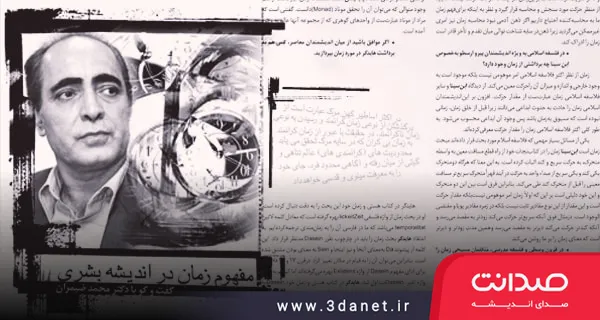
Time, referred to as Temps in French and Time in English, is derived from the Latin root Tempus. Some trace the origin of time from a mythological perspective to the myth of Chronos. Before I present some points, it is worth noting that in the most ancient myths and legends, which are a manifestation of the vision of humanity at the dawn of history, time possessed a specific meaning and nature and differed greatly from time in its modern sense, and its reckoning bore no relation whatsoever to quantitative time in the present. Mythological time possessed a qualitative essence and acquired its meaning in encounter with mythological events, and therefore in this vision, nothing—including time and space—had meaning in and of itself...
.
The Concept of Time in Human Thought: A Conversation with Mohammad Zaimaran
Note:
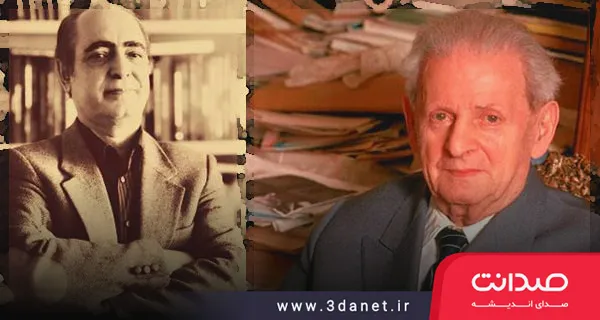
To enter into the discussion of the relationship between time and art, it is necessary to take a brief look at the concept of time from when mythological thought gave meaning to the world and existence for humanity until the era when philosophical thought endeavored for several thousand years, relying on human reason, to explain this subject, and to examine the various perspectives on this matter. Hence, we decided to engage in a conversation with Dr. Mohammad Zaimaran, author of the book The Transition from the World of Myth to Philosophy, and become acquainted with his views on the transformations of the concept of time from the mythological period to the modern age.
-To enter into the subject of time, if you agree, as a first question, please tell us: fundamentally, what is time, and what necessity is there for thinking about it?
Time, referred to as Temps in French and Time in English, is derived from the Latin root Tempus. Some trace the origin of time from a mythological perspective to the myth of Chronos. Before I present some points, it is worth noting that in the most ancient myths and legends, which are a manifestation of the vision of humanity at the dawn of history, time possessed a specific meaning and nature and differed greatly from time in its modern sense, and its reckoning bore no relation whatsoever to quantitative time in the present. Mythological time possessed a qualitative essence and acquired its meaning in encounter with mythological events, and therefore in this vision, nothing—including time and space—had meaning in and of itself.
Because all matters and phenomena only gained meaning in relation to the single divine origin. In Greek mythology, Kronos, the god of time, was the son of Uranus (Sky) and Gaia (Earth); therefore, he must be counted among the lineage of the primordial gods and prior to Zeus and the other Olympian gods. He alone assisted his mother in taking revenge on his father, and with the sickle his mother provided him, he castrated his father and thus hastened to rule over the world. He then married his sister Rhea, and because he had heard from his parents that he would be deposed from rule by one of his children, as soon as each of his children was born, he dismembered and devoured them. Rhea, his wife, who was enraged by this act, departed for the island of Crete at the birth of Zeus and gave birth to Zeus there, and wrapping a piece of stone in cloth instead of the child, handed it to Kronos, and Kronos, without noticing, swallowed it. When Zeus reached maturity, with the help of Metis, one of the daughters of Oceanus, he gave Kronos a potion to drink, and he brought forth again all the children he had previously swallowed.
در اینجاست که زئوس همراه برادارن خود به کرونوس اعلام جنگ میدهد و سرانجام وی را زندانی میکند اما کرونوس در نتیجه ازدواج با فیلیرا (philyra) صاحب فرزندی به نام خایرون شده که عمری جاودانی پیدا میکند. بنابراین آنچه از این روایت اساطیری برمیآید این است که کرونوس (ایزد زمان) نخستین پادشاهی است که بر آسمانها و زمین حکومت کرده و در دروان حکومت او مردم روزگار نیکبختی را سپری کردهاند. به عبارت دیگر وجود زمان یا کرونوس به عنوان فرمانروای زمین و آسمان، انسان را در حیطه کرانمندی قرار داده و با عنایت به تناهی و کرانمندی مزبور، آدمی به ناچار زندگی را ارج نهاده و کوشیده از هر دم بهره جوید و التذاذ را سرلوحه عنایات هستی خویش قرار دهد.
-در اساطیر تمدنهای شرقی چه برداشتی نسبت به زمان وجود دارد؟
در یکی از اساطیر سومری آمده است که این جهان حاصل نبردی آغازین بین هیولاهای تاریکی به سرکردگی تیامات (Tiamat) و خدایان روشنایی به رهبری نیتورا (Nitura) میباشد. به روایتی دیگر قهرمان خدایان بابل، مردوک (Marduk)، تیامات (الهه آبهای شور) را در نبردی سخت به دو پاره تقسیم نموده و نیمی از پیکر او را بر فراز آبهای آسمان و نیم دیگر را بر روی آبهای زیر زمین قرار داده و از همین دوران، زمان آغاز میشود.
در اساطیر مزدیسنا، با ظهور نخستین انسان یا کیومرث که طبعاً نخستین پادشاه هم بوده است زمان آغازین متبلور میشود. بنابراین کیومرث که در فرهنگ پهلوی گیومرته خوانده میشود و از دو جزء گیه به معنای هستی، زندگی و جان و مرتن به معنای میرنده و فناپذیر ترکیب یافته است نمود برداشت زمان متجلی گردید به این معنا که اولین انسان روی کره زمین خود، هم نمود زندگی و هستی است و هم سرانجام با میرندگی و فنا و مرگ دست به گریبان میشود. مرتن در فرهنگ کهن ایران به فرجام انسان بر روی زمین اطلاق شده است از این رو میتوان گفت که گیومرتن در گستردهترین معنای خود به زمانمندی انسان در گیتی هم دلالت دارد و هم از این روی نسبت زمان کرانمند و آغاز آن را در مناسبت با انسان معلوم میدارد. در اوستا چندین بار کلمه گیه بدون مرتن به کار رفته است و در چندجا از جمله در فروردین یشت در بند 145 از وی به عنوان نخستین بشر روی زمین یاد شده است. بنابراین کیومرث در فرهنگ اساطیری ایران مؤسس تمدن بشری و نیز نمود میرندگی بشر بر روی زمین است و بنابراین اراده معطوف به زمان و مرگ را بر انسان گوشزد میکند. کیومرث با گام نهادن بر صحنه گیتی و از دست دادن فرزند دلبند خویش سیاوش به آستانه مرگ آگاهی قدم میگذارد و در مواجهه با هستی در برابر نیستی به زندگی خویش معنا میبخشد و به همین نام کیومرث در ادب فارسی تمثیلی است از زمانمندی هستی و تحقق سودای جاودانگی در پیشگاه عدم. با دقت در اسطوره کیومرث به عنوان انسان آغازین مفهوم زمان آغازین در این فرهنگ نیز معلوم میشود. افزون بر این در فرهنگ ایران واژه بندهش به معنای جستوجوی پیگیر در جهت یافتن بنیاد وجود و در نتیجه فهم زمان آغازین است و اسطوره کیومرث خود مظهری است از تلاش در جهت معرفت نسبت به بندهش؛ چرا که اسطوره همواره ضمن روایت ساخت و بافت نیروهای مینوی، امور گیتی مدار را نیز حول همین محور به آدمی گوشزد میکند.
-ارتباط زمان کرانمند و ناکرانمند در اساطیر ایرانی چگونه است؟
نیروهای خودپاینده مینوی در گذر زمان و در چارچوب مکان، ماهیتی عینی به خود گرفته و بنابراین در تجسم اساطیری زمان بیکران (ژروان) را به زمان کرانمند پیوند میدهند. زمان بیکران با ازل ارتباط داشته و زمان کرانمند دارای ماهیت و گوهری حادث است به این معنا که مسبوق به عدم محسوب میشود. به تعبیر دیگر در بینش اساطیری ایران باستان زمان دارای دو صورت بوده است: یکی زمان اکرانه به معنای زمان بیآغاز و انجام و دیگر زمان کرانمند. میتوان گفت زمان کرانمند به وجهی پژواک و بازتاب زمان اکرانه در عالم امکان است. ایرانیان کهن زمان کرانمند را دوازده هزار سال، متشکل از چهار دوره سه هزار ساله قلمداد میکردند.
در سه هزار سال اول، بندهش یعنی آفرینش انجام پذیرفت. در سه هزار سال دوم، اراده اهورا در صحنه گیتی دامن گسترد اما در سه هزاره سوم، نیکی اهورایی با زشتی اهریمن درهم آمیخت و در دوره چهارم سرانجام اهورا بر اهریمن چیره شد و رستاخیز اهورایی بر گیتی پرتوافکن شد.
-Do such concepts exist in this form in Greek mythology?
In this regard, one can mention Homer's Odyssey. In this book, it is stated that Odysseus goes to visit the land of the dead and reveals its secret. In his interpretation, the land of the dead, meaning the abyss of non-existence, encompasses a vast darkness where the spirits of ancient Greek heroes wander in search of life anew. Thus, in the fourth book of the Odyssey, the meeting place of pure and redeemed souls, or Elysium, is mentioned. Elysium can be considered the promised paradise of Greek mythology, a place where heroes continue their immortal life and have left behind finite time, which is specific to the earthly world. In general, after death, the righteous are dispatched to that realm by Zeus, the god of gods.
-In this context, what relationship do death and time have with each other?
In general, in most ancient mythologies, death is the passing from a kind of finite time and arriving at a kind of infinite time. In truth, by crossing from finite time to infinite time, which is realized in the shadow of death, the limitations (finitude) of the world of finitude and the material universe vanish, and the individual's limited awareness gives way to divine and sacred knowledge.
-How is time rendered in the view of Indian mythology?
In the Rig Veda, time is the generator and creator of all things, including Brahma, and this same time is also considered the source and origin of the destruction and non-existence of beings. Therefore, it can be inferred that in the Hindu vision, and especially according to the Rig Veda, time plays a decisive role both in the genesis and in the end of life, and it is time that transforms the circle of infinitude (the infinite) into a finite line. Hence, it can be said that in Hindu cosmology, time is omnipotent and governs the existence of beings.
-In ancient Greece, what was the understanding of time among pre-Socratic thinkers?
With the collapse of mythological thought and the emergence of philosophical thinking, the concept of time gradually departed from the form of mythological narratives and slowly took on a rational and philosophical nature. The Pythagoreans claimed that the universe (Kosmos) is a living being that, like other beings, breathes and continues its life, and the moment it reaches the finitude of its existence, it ceases to breathe. Outside the cosmos, only infinite beings are established, and therefore, when these infinite beings draw their breath inward (exhalation), they impose the boundary of existence upon finite beings. Among the infinite beings, time exists. Therefore, it is possible that the process of exhalation is interpreted as necessitating the creation of limitation in the realm of time, because it is in this very process of exhalation that we translate existence into number. In Aristotle's works, this Pythagorean conception plays an undeniable role. But Heraclitus is the only philosopher who has implicitly and allusively raised the issue of time, in the sense that he claimed everything is in flux and a person cannot step into the same river more than once, and elsewhere he says we both step and do not step into the same river. We both are and are not, and elsewhere, immortals are mortals, and mortals are immortals. The life of the latter is the death of the former, and the death of the former is the life of the latter. Therefore, from this interpretation of Heraclitus, it can be concluded that from his perspective, time is something eternal and is always alternating between death and life. That which dies heralds a new life, and the end of life is non-existence. Thus, Heraclitus interpreted time as an eternal process, without beginning or end. In other words, in his opinion, the finite and the infinite are constantly transforming. Here, it is necessary to recall that one of Plato's followers, Plotinus, claimed that time is the endless, dynamic energy and work of the world-soul, which has taken on a material form and reached its existential totality and perfection.
-What is Aristotle's conception of time?
I should first mention that Plato adopted this very Pythagorean meaning of time, expanded and developed it, and added to it the concept of the lifespan of the aion. Thus, Plato employed time in calculating the lifespan of the world, but he offered a new interpretation of it, in the sense that he spoke of cosmic time, by which he meant the revolutions of the celestial bodies. Plato believed that time is the likeness of things according to their number and the moments concentrated in a single system. Hence, it can be said that Aristotle and Plato placed time and motion in a reciprocal relationship, meaning that, in the view of both, there is a kind of proximity between time and motion, and therefore it can be said that these two philosophers believed in the cyclical motion of the universe in the dimension of time. Aristotle, in his book Physics, defined time as the calculation of motion with respect to before and after. Therefore, although time is not synonymous with motion, it must be measured and calculated from the perspective of motion, and considering that to understand time we need a calculator, if the human mind did not exist, the calculation of time would also become impossible, because the mind, through the recognition of the succession between before and after, is capable of perceiving time.
-In Islamic philosophy, especially among scholars who followed Aristotle, particularly Avicenna, what understanding of time exists?
According to most Islamic philosophers, time is not an illusory matter but exists as an external entity, and its measure and extent are determined by motion. From the perspective of Avicenna and other Islamic philosophers, time is considered originated through inventive origination, because before the creation of time, there was no time that could be preceded by time; thus, its existence is deemed inventive. In general, most Islamic philosophers have defined time as the measure of motion. One of the very important issues discussed by Islamic philosophers is the subject of time. Avicenna, in his book al-Najat (The Salvation), proved time through the traversing of a specific distance by a moving body, using fast and slow motion. This means that whenever two moving bodies, one slow and one fast, set out from a single starting point, the faster moving body will inevitably traverse a specific distance before the slower one. Therefore, there is a difference between these two moving bodies, and this itself is proof that, firstly, time is not an illusory matter but is the measure of motion, and this measure is not of the fixed type of quantities but belongs to the category of dynamic and contingent quantities. In the above example, the one that moves faster reaches the destination sooner, and the one that moves slower reaches the destination later, and it is in this duration of sooner and later that the meaning of time becomes clear to us.
-In the Middle Ages and Scholastic philosophy, how did Christian theologians interpret and describe time?
Augustine, the fourth-century philosopher who is considered one of the most famous Christian theologians, claimed that he only knows the nature of time when no one asks him about it, and as soon as he is asked about time, he becomes perplexed. He goes on to say that what we truly know about time is that time is in the depths of our being, and it is only in our soul that time can be measured.
-What understanding of time do modern thinkers have?
Modern thinkers generally consider time to be one of the most important components of the human empirical system, and for this reason, from the era of Descartes onward, they have always placed time at the forefront of their philosophical discussions. In their view, time is the substrate within whose expanse events are distinguishable in terms of precedence and succession, or beginning and end. Accordingly, that which determines the beginning and end, the inception and termination of affairs, and originates from change, is called time. Thus, it can be said that time is the measurable dimension of moments and instants. In other words, time is the irreversible succession of moments and events that creates linear movement. Kant, the German philosopher, considered time to be the infinite chain of experience that has been brought to intuition; in other words, the a priori form in whose shadow the flow of movement becomes experienceable. In the view of contemporary thinkers, time is a perception of the now that itself encompasses the past and the future. In other words, time is a successive chain of states of events and consecutive occurrences that are inseparable. Therefore, its comprehension is only possible in the light of intellectual intuition. Some, like Kant, claim that the assumption of time independent of our experience and consciousness is a fictitious and illusory matter, and individuals like Leibniz believe that time is the order of successive existence, which can be considered the actualization of the Monad. It is worth mentioning that the Monad refers to the essential units from whose totality the universe has come into being.
-If you agree, among contemporary thinkers, let us also touch upon Heidegger's conception of time.
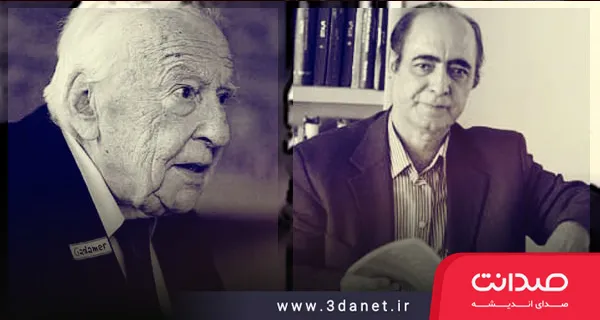
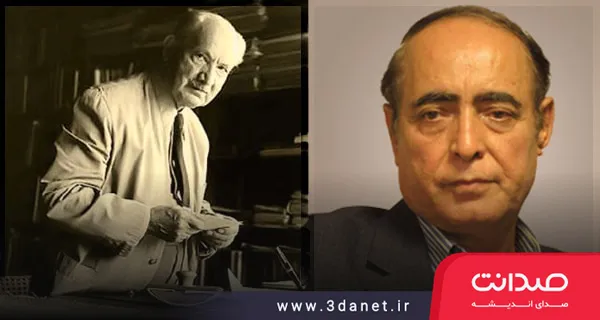
Heidegger has carefully pursued this discussion in his book Being and Time. In his discussion of time, he utilized the philosophical term lickeitzeit, which is equivalent to the Latin word temporalitat, which we have translated into Persian as temporality (zamānmandi). According to Heidegger, the discussion of time must be considered within the framework of the situatedness of Dasein. This word is derived from the prefix Da, meaning there and also here, and Sein, meaning being. Therefore, it can be interpreted as standing forth in a place. In the 17th and 18th centuries, philosophers used the word Existens to grasp the concept of Dasein, but gradually Dasein became common in place of the latter term. In his Being and Time, Heidegger used Dasein in two senses: 1) meaning the human being; 2) meaning the being and existence that is situated in this world. Generally, in the German language, the word Dasein cannot be pluralized, and in instances where Heidegger used Dasein, his meaning is being in this world. In Being and Time, Heidegger says that every human being is generally considered Dasein, but in his later writings, he separates Dasein from the human being and claims that Dasein is the relationship that the human being finds with Being, and sometimes loses it; therefore, Dasein is a state that is adjudicated between the human being and God. Heidegger says that Dasein stands forth in the structure of time and thus moves in a chain between past, present, and future; it is for this reason that he refers to being-temporal with the term ekstatisch, and by it he means standing forth and being situated in a state of emergence and manifestation. In Greek, ekstasis means to shake, to set in motion, and to be in an intense emotional state, and by it is meant being beside oneself and going out of oneself.
When Dasein is placed in time, it goes out of its own self and is thrown into the space of boundless possibilities. Therefore, it can be said that the being of Dasein in time is nothing other than falling out of itself and being situated in the realm of unlimited probabilities and possibilities. In Heidegger's view, time and space are not two sides of a single equation; rather, time takes precedence over space, meaning that the temporality of Dasein makes its spatiality possible. In an interpretation, it can be said that Dasein perceives Being according to its own temporality, and therefore, the analysis of the essence of Dasein within the expanse of time is what makes the ground for the philosophical understanding of existence possible. Thus, the relationship between time and space provides a framework for us that enables us to measure all beings according to these two categories and identify their status in the chain of existence.
In closing, while thanking you for your responses, if I may express my own understanding of your words, I must say that the perception of Being in relation to time, in the era when humanity lived with myths and mythical thought, was something that was pushed aside with the advent of philosophy and philosophical thought. We know that at the beginning of philosophy in ancient Greece, Plato, following his master Socrates—who was ridiculed by one of the Greek playwrights—harshly attacked the poets. He himself had a poetic talent, but after Socrates, the era of philosophical thought in the West begins. Philosophers leveled sharp criticisms at the tragic poets of ancient Greece who lived in the age of the decline of myths. The mythical age is manifested in the epic poetry of ancient Greece, and the emergence of dramatic poetry in the form of tragedy and comedy occurred when myths had lost their power; thinkers in this age possessed a poetic thought, who became known as the pre-Socratic sages. Socrates is the starting point of philosophical thought, and gradually the age of the human self replaces the poetic imagination of the mythical age. From this point onward, the phenomenon of time takes shape within a philosophical category, and for over 2,500 years, the question of philosophers has been whether time is an objective reality or an illusion. In the twentieth century, the rationality of modernity was severely doubted after the occurrence of two devastating world wars. Heidegger refers to philosophy as the history of the oblivion of Being (Sein) and preoccupation with beings (Seiende). He returns to the pre-philosophical age, seeking the meaning of Being among the pre-Socratic sages. It is for this reason that the link between Being and time is raised once more, and once again the meaning of time is revealed in the myth of Kronos (the god of time), who began the creation of the world's beings after dismembering his father (Uranus). I thank you once again.
I also thank you.
.
.
Time in Human Thought: A Conversation with Mohammad Zaimaran
A Conversation between Fatemeh Shahroudi and Mohammad Zaimaran
Download the PDF file of Part One from Server One | Server Two
Source: / Monthly Magazine / Ketab-e Mah-e Honar / 2003 / Issues 61 & 62, Mehr & Aban 1382/08/00
.
.

Discussion0 comments
No comments yet; let yours be the first voice.