Philosophy
The First Series of the 3:59 Programme
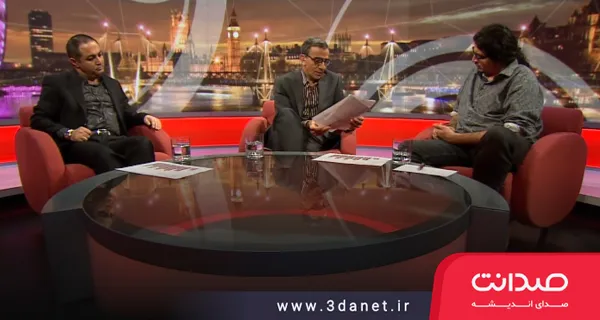
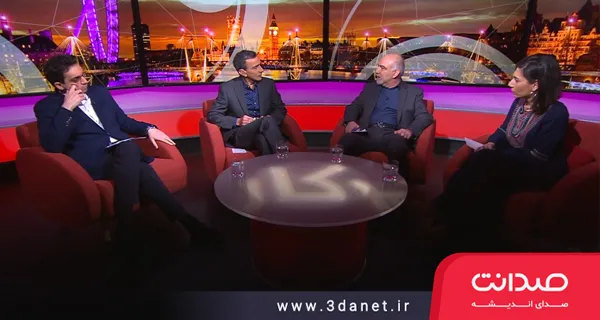
The 3:59 Series, in an age of short attention spans, is an attempt to go deeper and spark curiosity. Thinkers explain topics such as the oil curse, the history of Iranian food, and the treatise One Word in three minutes and fifty-nine seconds.

In an age when the average attention span is a few seconds and a few words, the 3:59 programme series is an attempt to go deeper. To connect those whose work is teaching with those who want to learn. To spark an idea in the mind and raise a question. 3:59 is a starting point. Its aim is to provoke curiosity, not to provide definitive answers. It wants to open a window onto sights we do not see every day. In each segment of the 3:59 series, contemporary thinkers, researchers, writers, and intellectuals explain a topic of their own choosing to the audience in three minutes and fifty-nine seconds. These ten programmes constitute the first 3:59 series. The next series is on its way.
.
.
What is the Oil Curse?
Parvin Alizadeh (Professor of Economics, Boston University, London Study Centre)
Watch this video on Aparat
In the mid-1990s, two economics professors from Harvard University, in a quantitative comparative study of countries around the world, concluded that the economic growth of countries whose exports consist of raw materials is lower than that of countries without such exports. This means that the existence of easy oil revenue has diminished the need for serious economic reforms, technological growth, industrialization, and genuine economic progress in these countries.
We should, of course, note that oil revenues, especially after the creation of the international OPEC cartel, played a very significant role in Middle Eastern countries. Between 1962 and 1972, Iran was one of the model examples of economic growth—in the Middle East, and among developing countries. That is, if we want to say in which period Iran progressed economically, it is precisely that interval from '62 to '72. Even South Korea wanted to follow Iran's example at that time. In 1974, things suddenly went wrong, because the Shah adopted a programme that was unfeasible. The country did not have the capacity for industrialization in three or four years. In that era, the Shah decided personally, and paid absolutely no heed to the economic managers who intended to correct this programme.
Another of the oil curses is the absence or scarcity of democracy in oil-rich countries. This scarcity or absence of democracy can be defined in this way: the governments of oil-rich Middle Eastern countries are not very dependent on the tax revenues of the people. The government has an income by itself, thanks to oil. And this income allows the government to distribute various services among citizens: including free or very cheap education and healthcare, and other services like subsidies. This causes the government to assume a paternalistic role and not be accountable to citizens. Instead of accountability to citizens, it provides cheap services.
Another oil curse is foreign intervention in oil-rich countries. A clear example of this is the West's role in the 1953 coup d'état in Iran during the premiership of Dr. Mosaddegh—which was the West's reaction to the nationalization of oil under Dr. Mosaddegh. Another example is the occupation of Iraq, whose horrific effects on the daily lives of the Iraqi people continue to this day.
Of course, the oil curses are not inevitable. Norway is also an oil-rich country and has oil exports, yet it is a very democratic country. A better example is Chile. Over 50 percent of Chile's exports are copper, which is not dissimilar to oil exports. Also, during Allende's time, a coup d'état took place that was not unlike the coup against Mosaddegh in Iran. Nevertheless, today Chile is a democratic country that, due to its successful economic and political conditions, has joined the developed nations.
Therefore, we must not think that the oil curses are inevitable. With proper management and the development of countries' economic-political structures, these curses can be overcome.
.
.
An Introduction to Iranian Cuisine
Houchang Shahabi (Professor of History and International Relations, Boston University)
Watch this video on Aparat
If you ask me which element of Iranian culture is shared by all Iranians, I would say food culture: whether left or right, monarchist or supporter of the Islamic Republic, Turk or Persian, everyone loves chelow kebab. The history of a country is not confined to its wars and its sultans. To know what a nation has been through, we must also be aware of that nation’s daily life. Of its different classes, of its different regions. The trouble is that we do not have many documents. That is, we have to read hundreds of pages to come across, for instance, what kind of music they listened to or what food they ate.
The combination of foods is always evolving. Today, potatoes and tomatoes are a very ordinary part of Iranian cuisine. Whereas these tomatoes and potatoes are entirely recent. It was in the early Qajar era, the early nineteenth century, that tomatoes and potatoes came to Iran.
Or today, if you ask a foreigner familiar with Iran, “What is the characteristic of Iranian cooking?”, they will say rice. Because the art of cooking chelow in Iran is completely unique. But what is interesting is that until very recently, until just forty or fifty years ago, rice was not the daily food of Iranians. We even had an expression: polo-khori clothes. These were special clothes one wore on particular days, on holidays and the like, the day one ate rice. That is, in reality, rice was a luxury item. And the main source of calories for Iranians residing on the Iranian plateau was bread. The main food that Iranians ate for lunch and dinner was āsh. In Persian, we idiomatically call someone who cooks an āshpaz (āsh-cook), not a polo-paz, not a chelow-paz, not a khoresh-paz.
In traditional Iranian houses, there was no specific room for eating. Wherever the host wished to eat, a sofreh would be spread, and they would sit around the sofreh and eat. The idea of a room being dedicated to eating is a relatively recent one. Early on, it was called a sofreh-khāneh, later it became the nāhār-khori (lunch-eating) room.
Iranians, like other nations of the West Asian region, ate most foods with their hands. The custom was to take a piece of bread in your right hand and eat the food with it. The use of forks, spoons, and knives became customary in Iran from the Qajar period. Naser al-Din Shah invited certain diplomats and Europeans residing in Tehran, and they taught the use of spoons and forks to the Iranian courtiers. Gradually, eating with the hand became obsolete among the elite class. Following the elite, the middle class and then the lower class ate with metal utensils.
Of course, this cultural exchange in the field of foodstuffs has always been two-way. Iran is on the communication route between continents, and for this reason, many foodstuffs or fruits that were first cultivated in Asia entered Europe through Iran. The best example is the peach. The peach is a fruit that was first cultivated in China. It came from China to Iran and entered Europe through Iran. And in fact, the word “peach” shares a root with Persia. The best example of this can be seen in the Dutch language, where they call a peach perzik – whose Iranian origin is clear.
.
.
The Treatise of One Word
Parvin Alizadeh (Historian and Writer)
Watch this video on Aparat
One Word is the name of a famous treatise by Mirza Yusef Khan Mostashar al-Dowleh, which had a brilliant impact on the intellectual developments in Iranian society during the Qajar period. What is meant by One Word is law. Mostashar al-Dowleh explains in the text of the book why he says One Word. He wants to say that the way to save the country of Iran is one word, and that is law.
Let us not forget that this book was written nearly 36 years before the Constitutional Revolution. And 26 years before the assassination of Naser al-Din Shah. These words were no joke in that era. This kind of voice, that someone should say “the consent and acceptance of the nation is the basis of all governmental measures,” means that he is, in reality, putting forward the idea of national government. That all governmental measures must be accepted by the nation means that it is, in fact, the nation that is the legislator.
Or, for instance, the ideas that are current in the civilised world today. That the executive branch must be separate from the legislative branch. These were important points that had been accepted as part of the rights of man and citizen in the preamble to the French Constitution, and Mostashar al-Dowleh translates them, and then reconciles them with Islamic laws and Sharia laws, in his own words, so that no one can say these laws are contrary to Islam.
It was right there that the seed of many contradictions was sown in the bed of Iranian intellectualism. That is, you bring secular laws, which are man-made and devised for administering a society, to Iran, you reconcile them with Quranic verses and hadiths, and you say these are all Islamic. They broached these matters in a somewhat evasive, roundabout way. From the very beginning, they created an illusion regarding concepts.
Fath-Ali Akhundzadeh writes a critique of this treatise. He says, this idea you speak of is a good one. This thought you have brought belongs to the Westerners. But they do not want it with these words you are saying. You have brought these with verses and hadiths; verses and hadiths are not the solution. We must see what transformations occurred in the history of the West behind this thought.
For this reason, up to the present day, Akhundzadeh's thought and the continuation of Mostashar al-Dowleh's thought still dominate the intellectual and ideological destiny of Iranian society like a pre-written fate. Religious intellectuals, quasi-religious ones, and others, have all emerged from under Mostashar al-Dowleh's cloak.
But let us not forget, he performed the most important historical task of that period. He was the first to raise the issue of human rights. He raised the issue of law. That is, the significance of the treatise 'One Word' is that it is the first treatise written and published that speaks of the rights of the people, of human rights, of freedom of the press, of the freedom to strike, of freedom of assembly, of personal liberty, and the like. Well, this had a very brilliant impact. That is, 'One Word' is not merely a political work. It is an important political-cultural work that was carried out in that period.
.
.
Machiavelli
Ramin Jahanbegloo (Director of the Mahatma Gandhi Centre for Peace, Jindal University)
Watch this video on Aparat
No political thinker has been as poorly defined and interpreted as Machiavelli. Machiavelli's name has become synonymous with power-seeking, with cunning, with lying, and fox-like slyness. But this is the worst interpretation one can offer of a thinker of Machiavelli's calibre. Why? Because Machiavelli is perhaps the most important modern political thinker who was able to speak about the separation of the political from the sacred.
Machiavelli is a global political thinker; he wants to open his intellectual, economic-political, and social sphere to cultures and to the world he is discovering. We have scientific discoveries, represented by Copernicus, Kepler, and later Galileo. We also have new creativities in the field of art, represented by (a little after Machiavelli's era, of course) figures like Leonardo da Vinci and Michelangelo. And especially in the matter of politics, we have individuals like Machiavelli himself who speak of the modern state, who speak of a modern sovereignty. They created a complete break with medieval thought, which is God-centred thought.
Perhaps the greatest mistake made about Machiavelli throughout the ages is that Machiavelli is an immoral thinker. But this is not so. Machiavelli directly and explicitly fights against the (influence of) Christian ethics or religious ethics in political matters. His gaze is turned towards ancient Rome and the civic ethics of ancient Rome – that which we know as the Roman Republic. His model comes from there. For Machiavelli, ethics in politics is an important matter. Solidarity and empathy among the people, and solidarity and empathy between the ruler and the people, are formed on the basis of this civic ethics.
One of the problems we have in interpreting and defining Machiavelli or Machiavellianism is that we think Machiavellianism means a dictatorial disposition, or something in which the people have no presence. In fact, in the Discourses, it is the people who play the leading role. The model Machiavelli has in mind is the brief period of rule by an individual named Savonarola. Savonarola is someone who, in the era before Machiavelli, sought to establish the rule of Christ—that is, a theological government—with the help of the people. Three years after the formation of the government, those same people kill Savonarola.
Machiavelli concludes from this that the political cannot possess stability and continuity when its primary foundation is not politics itself but something else—whether that be an aesthetic matter or a sacred one. He says the basis of political work and politics must be politics itself. It must determine its own limits and boundaries. Naturally, when the question of the limits and boundaries of politics is raised, as it is in Machiavelli's works, the next question is what kind of action can be taken in the public sphere, what rights the ruler has vis-à-vis the people, and to what extent he can maintain the status quo.
This is the very thing that later thinkers such as Hobbes, Rousseau, and Spinoza refer to as the social contract. Machiavelli does not speak of the social contract, but he does speak of a pact that must be formed between the ruler and the people. All these points are part of Machiavelli's Renaissance thought, which completely separates him from medieval thought (or, we might say, Platonic-Aristotelian thought) and makes him the founder and originator of modern political philosophy.
.
.
The Myth of Free Will
Arash Afraz (Neuroscientist, MIT)
Watch this video on Aparat
Do we have free will or not? This is a very good question. And it is a very old question. In fact, it is a branch of the ancient question of determinism and free will. And its problem is the same as the problem of determinism and free will: that if you believe in free will, in a sense, you can be said to practically not believe in causality.
Every time one of my muscles moves, a neuron in my brain has stimulated that muscle. And another neuron stimulated that neuron. There is a causal chain between these neurons. I cannot believe in causality between these neurons, and then believe that I can do whatever I want whenever I want.
Another argument (raised in response to this) is the statistical argument and indeterminacy. They say that one neuron firing and another neuron responding to it is not deterministic. Sometimes one fires and the other does not respond. And it has a kind of statistical distribution. That is, this event occurs somewhat randomly. But even if you accept this assumption, you are in fact choosing between being compelled or behaving randomly—which again leaves little room for free will in its traditional sense.
Many experiments have been conducted on this subject in neuroscience. Among the oldest are the experiments of Mr. Libet. The experiment goes like this:
You are given a lever and told to move this lever whenever you want. A very large clock is also in front of you, on which a luminous dot moves—so that you can report the time accurately. You must look at the luminous dot and remember the moment you decided to move the lever (and report that time at the end of the experiment). On the other hand, a clock is also placed under this lever that records the moment of its movement. And we know when you decided. We also record your brain activity. In fact, we can calculate when the motor command for that movement was issued in your brain. Well, the temporal sequence of these—if we consider it in the traditional way—would be: I willed, my brain issued the motor command, and then the lever moved. But when we look in practice, we see the order is reversed: the motor command is issued in the brain, I will—or think I will—and then the lever is moved.
Other work has also been done based on electrical stimulation of the brain. For instance, there are areas in the brain that, if stimulated, cause a muscle to move. And there are areas that, if stimulated, make me feel I want to move that muscle. The neuroscientists who conducted this experiment (such as Benjamin Libet) say, “Because I knew they were going to stimulate my brain to make me move my hand in one direction, I decided to act against this will.” They apply electrical stimulation, and he moves his hand in the very direction intended. They ask, “So why did you move your hand that way?” He says, “I don’t know. I changed my mind at the last moment. But I myself decided to do it.” Even though this decision was directly induced by electrical stimulation in his brain.
On the other hand, sometimes we make a movement toward which we feel no sense of will. Like in neglect syndrome, or hemispatial neglect, where the patient’s body muscles move, but they feel no sense of belonging toward half of their body. They think they are not moving their own body. Some of these patients, when they go to sleep at night, throw half of their body out from under the blanket. Or sometimes they fall out of bed, because they think it does not belong to them, even though they themselves are moving it.
The conclusion I want to draw is that free will in that traditional sense is an almost meaningless question. But where does this feeling come from, and why should it exist?
Because our brain must be able to coordinate itself with the external world—or with the sensory information coming from the external world. In fact, our nervous system makes these decisions, performs these movements, and part of the process is informing the rest of the brain that it has done this itself. The internal analogue of this feeling is that I think I have free will, I have done this. Well, by definition, I have done this, because I am nothing other than my brain. My brain has done this and thought it did it itself. With this interpretation, perhaps it is not a meaningless statement, but no more than that.
.
.
What Is Intersectionality?
Azadeh Kian (Professor of Sociology, Paris Diderot University – Paris 7)
Watch this video on Aparat
What is intersectionality, where did it come from, and what could its application be in our societies?
The intertwining of gendered, class-based, ethnic, religious, and sexual social relations, or intersectionality, is a theory, an epistemological approach, and a strategy for achieving social justice.
The term “intersectionality” of gendered, sexual, ethnic, religious, and racial social relations was first introduced in 1989 by Kimberlé Crenshaw, a legal scholar and professor at the University of California. But the intersectional approach dates back to the 1970s, in the midst of the feminist movement in the United States. It was there that Black feminist theorists involved in the movement told their white counterparts, who were from the middle and affluent classes of American society, that the experience of Black women, who are descendants of slaves, is very different from the experience of white women, who are, in fact, descendants of slaveholders in America. And that women are not fundamentally a homogeneous mass. And if we believe that power relations exist between men and women, power relations also exist among women themselves, depending on which social, religious, ethnic, or sexual groups these women belong to.
The analysis or approach of the intertwining of social relations and power relations also posits that we cannot settle for a single-axis analysis to explain where the oppression of women comes from, whether that analysis attributes oppression to private property, as Marxists proposed in those years, or to men’s domination over women’s bodies, or whether we seek the cause of these oppressions in institutions.
Because, in reality, individuals belong to different social, ethnic, religious, racial, sexual, and gendered groups, and this causes social relations to interact with one another. Consequently, the analysis must be multidimensional.
On the other hand, epistemologically, the intersectional approach also holds that objective knowledge does not exist in principle, because the knowing subject or scientist is situated in a particular social position, and consequently their knowledge of the world is tied to their social position and is not objective.
Intersectionality theory is a thoroughly political theory, seeking the abolition of the existing order. And naturally, affluent white feminists who benefit from this existing order are entirely opposed to the intersectionality advanced by minority women and attack it. But the question is whether we truly desire to achieve real equality or not. If we do, we must accept that gender equality cannot be attained while other social inequalities—such as racial, ethnic, religious, and class-based ones—persist.
Therefore, intersectionality is not merely a feminist theory. It is one of the most important achievements of feminist theorists, but as I said, it can also be extended to various sexual, gender, class, religious, and ethnic groups and strata.
.
.
Hafezian Ethics
Abdolkarim Soroush (Philosopher and Religious Intellectual)
Watch this video on Aparat
Hafez is an anthropologist, a scholar of life. And nowhere does he appear in the guise of a preacher; rather, he even critiques and belittles preachers: "Go about your business, O preacher, what is all this clamor? / My heart has slipped from my grasp, what has befallen you?" In effect, Hafez was telling the preachers: you are without pain. What has befallen you? You who have no pain.
Thus, one could say: Hafez was an existentialist. He had journeyed into the very depths of human existence, traversed it, and knew it. He could present the human being on a philosophical plane. That beautiful and famous verse of Hafez, "Last night I went to the tavern door, drowsy with sleep / My cloak soaked and my prayer-rug stained with wine / The Magian cupbearer came, lamenting / Saying: Wake up, O drowsy wayfarer," mentions two very prominent and distinct attributes of human beings. One, that humans are drowsy. The second, that their prayer-rugs are stained with wine.
Consider this: among our thinkers and poets in general, I believe Hafez is the only poet who was deeply sensitive to the category of sin. Not in its jurisprudential sense, but in its ontological sense. That is, he thought that sin plays a role in the structure of the universe, in the creation of humanity, and in the character of the individual. And a sinless society is inconceivable. Not only is it impossible, it may not even be desirable.
"Where the lightning of transgression struck the Adam of impurity / How does it befit us to claim sinlessness?" "My father sold the garden of paradise for two grains of wheat / I would be an unworthy son if I did not sell it for a grain of barley."
What he says and does, quite simply, is this: firstly, being joyful is not a sin. "Let Satan's sorrow do whatever it can, say and do / I have taken refuge with the wine-sellers from him" or "Why do you consume the sorrow of this base world? Drink wine / It is a pity for a knowing heart to be troubled." I am not concerned with the nature of Hafez's wine-drinking, but the idea that a knowing heart must not be troubled stands at the top of his list of ethical commands. That is the first point.
But the second point, which is even more important, is that Hafez engages in a taxonomy of sin. At the top of the sins Hafez recognizes are two sins, which he believes society must be cleansed of if it is to be purified: first, cruelty to people, and second, hypocrisy.
"O Hafez, drink, be a libertine, and be joyful, but / Do not make the Quran a snare of deceit like others." Do whatever you wish, but do not toy with sacred things, and do not traffic in religion and sanctimony through them.
But we have other sins, which are lesser sins. In truth, Hafez's point is that one must turn a blind eye to these sins. Or, in today's parlance, "Let's not hassle people."
Therefore, a Hafezian society, in my opinion, is a society like this: first, chivalry and tolerance flow strongly within it. Second, two very great and contaminating sins—namely, hypocrisy, dissimulation, and the oppression of people—are absent from it. And third, people commit minor sins—which, compared to hypocrisy and the like, are considered minor—and other people and the government should turn a blind eye to them.
“Upon this emerald portico, it is written in gold / That naught shall remain save the goodness of the noble.”
.
.
Comparative Sociology
Saïd Amir Arjomand (Professor of Sociology, State University of New York, Stony Brook)
Watch this video on Aparat
The principal founders of sociology in the late nineteenth and early twentieth centuries, one in Germany, Max Weber, and the other in France, Durkheim, both believed in comparative sociology. So much so that Durkheim even says that comparative sociology is not a branch of sociology, but rather that all sociology is, in fact, comparative sociology.
Max Weber paid even more attention to comparative and historical sociology than Durkheim. However, his influence becomes more apparent in the second generation of historical and comparative sociologists. The second generation of historical and comparative sociologists begins after the Second World War—mostly in America—with the work of Robert Redfield. Redfield’s aim was, in fact, to link social theory with area studies: Orientalism, Iranian studies, Indology, and so on. In this sense, he thought that by doing so, he could rescue social theory from being one-sided and Western.
But why did this current reach a dead end, not that it disappeared? The reason for its reaching a dead end, in my opinion, was mostly the advent of the Cold War, as a result of which the world was divided into the First World, the Second World, and the Third World. Whatever was advanced—democracy, capitalism, human rights, and the like—was placed in the First World. The Second World, which was the socialist world, was almost an imitation of it, and there were theories that these two were converging. But the Third World: whatever was tradition, superstition, religion, and so forth, was placed in this category. Therefore, in my opinion, this tripartite division caused the project of the comparative study of civilizations to suffer serious damage or even to disappear.
The third generation of comparative sociologists—which begins with Eisenstadt, and I consider myself as belonging to it—are trying to revive historical-comparative sociology. In this sense, Eisenstadt proposes two new concepts: one, axial civilizations, and the other, multiple modernities. This, in my opinion, has opened the way for a re-examination of civilizational analysis and comparative sociology.
The reason the world situation is favorable for the third generation is the global nature and globalization of this era. Of course, there are still obstacles: such as Islamophobia and things of this sort, which are undeniable and carry a very negative weight. Nevertheless, in my opinion, in the global age, the third generation of comparative sociologists has a far better chance of achieving its goals in this field.
.
.
The Fall of the Sasanians and the Cultural Continuity of Iranians
Parvaneh Pourshariati (Professor of History and Iranian Studies, New York City College of Technology)
Watch this video on Aparat
We have a narrative from the Sasanian period, from Sasanian history, that the Sasanians had a centralized government, until the late period of Khosrow Parviz—when Khosrow Parviz was removed from power around 628 CE, and in 632 CE, after the death of the Prophet Muhammad, the Arabs came and destroyed this powerful and mighty centralized Sasanian government, and the Islamic period of Iranian history began. We have been working with this narrative for about 70-80 years; we are all familiar with it. But this narrative is a false narrative.
These days we can draw on Armenian, Syriac, and Islamic sources written in Arabic, on the Khwaday-Namag, on sigillography, on numismatics, and the like, and we reach the conclusion that there were Parthian families who, throughout Sasanian history, especially from the reign of Yazdegerd I onward, governed alongside the Sasanian families.
For instance, there is a seal on which is written Shahrbaraz, Mihran. Consequently, this Shahrbaraz, who we know took part in the Byzantine wars and even sat on the throne for six months and became a Sasanian king, was from the Mihran family and considered himself a Pahlav. Or Tabari says that at the time the Arabs attacked, the people of Iran were divided into the people of Fars and the people of Pahlav and could not form a united front against the Arabs.
Alongside this incorrect narrative (that the Sasanians were centralized), we have another familiar narrative that is also incorrect: that the Arabs attacked and conquered Iran and the Sasanians fell. Part of this narrative is true. The Sasanians, the Sasanian family, fell. But the other part is wrong. That is to say, the entire Pahlav region, from Khorasan to Azerbaijan, remained under the control of the Parthian families. Not only during the era of the Rashidun Caliphs, when the Arab invasion had begun, but also during the Umayyad period.
Consequently, in this land we have a cultural continuity that in fact begins in the Arsacid period and continues into the Abbasid era. And the extension of this Parthian Iranian culture can be seen in the writing of the Shahnameh, precisely because the Pahlav families governed throughout the Sasanian period and even after the Umayyads came to power in Iran.
Therefore, if we set aside our political history and look at this history from the perspective of cultural, regional, and political conditions that do not originate from the center, this historical continuity of our culture is better seen and will be more apparent.
.
.
Intellectual Stagnation in the Era of Reza Shah
Mehrzad Boroujerdi (Professor of Political Science, Syracuse University)
Watch this video on Aparat
Did the autocracy of Reza Shah lead us to reach a period of intellectual stagnation as well? Or, in other words, did the caravan of thought in Iran, which had set out with the Constitutional Revolution, come to a halt?
My definitive answer to this question is "no." On the contrary, if we do not wish to look at it too strictly, that era should be viewed as one that brought about intellectual flourishing in many respects.
If during the Constitutional era the discussion of freedom took precedence, in that thirteen-year period between the shelling of the parliament and Seyyed Zia's coup, the events that occurred in the world and the events that specifically occurred in our country steered the gaze of many intellectuals in another direction. This time the primary issue became security, not freedom.
This thirteen-year period is the era when World War I occurs. It is an era when the Ottoman Empire next door to us collapses. It is an era when Iranian soil is occupied. I once counted that something like 36 cabinets came and went during that time.
In my opinion, what happened was that many enlightened thinkers of that era decided that being a dissident intellectual, like the model of the Constitutional Revolution, was no longer effective. This time one had to become an intellectual statesman.
Individuals such as Zoka-ol-Molk Foroughi, Ali-Asghar Hekmat, Teymourtash, Davar, Fakhreddin Shadman. How many intellectuals do we have in the twentieth century who are of the caliber of these individuals? These were not young, inexperienced people. Was the support of these individuals for the project that Reza Shah advanced because Reza Shah had put a gun to their heads and told them they had to think this way?
My point is not that Reza Shah was a democrat. Political despotism also prevailed. That is entirely correct. But let us remember that it is during this very era that socialist parties, nationalist parties, various groups, and different social associations take shape. Even when political despotism holds sway, individuals continue their cultural activities: like Dehkhoda, like Malek al-Sho'ara Bahar who turns to writing stylistics, like Pirnia who engages in historiography.
Why are Malkum Khan and Akhundzadeh and others important, but the figures of this period are treated unkindly? Why are the magazines and newspapers like Akhtar and Qanun so important to us, yet Iran-e Javan and the twentieth century and Iranian modernity and all that is the intellectual fruit of that era are treated unkindly?
These are, unfortunately, the dark and ambiguous points of our historiography. And those approaches that I call "selective" approaches. That is, we have unfortunately tried to deny the facts that contradict this prevailing view.
.
.


Discussion3 comments
بسیار خوب مفید مختصر اغلب خواننده مطالب شما هستم یک اطلاعات عمومی موثق و علمی بما میدهد
هر کدام از کلیپ ها به اندازه ی یک کتاب ِ «درآمدی بر...» موجز وبسیار مفید بود. واقعا جای خالی چنین پروژه های مدونی در سپهر فکری ایرانی خالی بود. با تشکر بی کران از صدانت به خاطر پیشرو بودن در نشر چنین برنامه هایی.
سلام بهحق یکی از بهترین وبسایتها و کانالهای تلگرامی مربوط به صدانت است. پاینده مانید و توانا