Philosophy
The Gist of Mind and Cosmos
Mind and Cosmos argues that the neo-Darwinian materialist understanding of nature is mistaken because the physical sciences cannot explain consciousness; the solution is to accept mind as a fundamental aspect of nature—naturalistic but non-materialist.
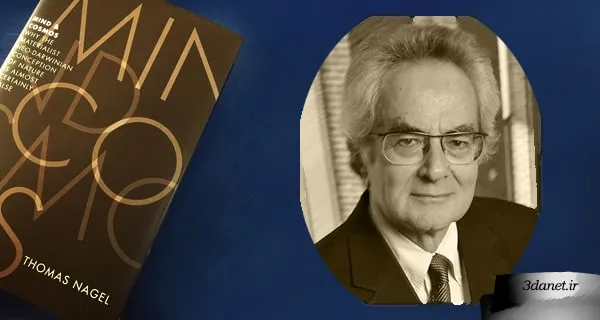
This article is a summary of the views I have defended at greater length in my book, "Mind and Cosmos: Why the Materialist Neo-Darwinian Conception of Nature Is Almost Certainly False," published last year by Oxford University Press. Since then, the book has attracted considerable critical attention, which is not surprising given the deep entrenchment of the worldview it attacks. I thought it would be useful to offer a brief summary of the central arguments discussed in the book.
The scientific revolution of the 17th century, which led to extraordinary progress in understanding nature, relied from the outset on a key limiting step: excluding phenomena related to the human mind, such as consciousness, meaning, intention, and purpose, from the study of the physical world. Since then, the physical sciences, in their development, have, with the aid of mathematics, described the elements of which the universe is composed and the laws governing their behavior in space and time.
We ourselves, as physical beings, are part of this same universe and are made of the same basic constituents as other entities. Recent advances in molecular biology have greatly enhanced our understanding of the physical and chemical basis of life. Since life, and our minds, as far as we can tell, depend on our physical existence, and particularly on the functioning of our central nervous system, it seems natural to think that the physical sciences can, in principle, also provide the foundations for explaining the mental and psychological dimensions of reality: that physics might ultimately hope to achieve the aspiration of being a final, all-encompassing theory.
I believe, however, that the conditions that defined the physical sciences from the beginning preclude this possibility. The physical sciences can explain the structure and behavior of entities like ourselves in space and time, as part of the objective spatiotemporal order, but they cannot explain the subjective experiences of these entities or account for how the world appears from their particular, distinct perspective. Purely physical descriptions can be given for the neurophysiological processes leading to an experience, as well as for the physical behaviors typically associated with that experience. But such descriptions, however complete, miss the subjective essence of the experience and cannot explain what this experience is like from the subject's point of view, without which it would not fundamentally be a conscious experience.
Therefore, the physical sciences, despite their extraordinary success within their own domain, inevitably leave an important aspect of nature unexplained. Moreover, since the mental arises from the development of animal organisms, a complete understanding of the nature of these organisms is not possible by relying solely on the physical sciences. And finally, since the long process of biological evolution is responsible for bringing conscious beings into existence, and since a purely physical process cannot explain their existence, biological evolution must be something more than a merely physical process, and the theory of evolution, if it is to be able to explain the existence of conscious life, must become something more than a purely physical theory.
This means that if the scientific outlook is to achieve a more complete understanding of nature, it must be expanded to include assumptions capable of explaining the emergence of mental phenomena and their subjective character—assumptions of a fundamentally different kind from those we have seen so far.
There are two ways to resist this conclusion (argument), and each of these two ways is itself argued in two manners. The first way is to deny, in two manners, that the mental is an irreducible aspect of reality: the first manner is to claim that the mental can be identified with an aspect (dimension) of the physical, such as behavioral patterns or patterns of neuronal activity (nerve cells), and the second manner is to deny fundamentally that the mental is part of reality at all and to consider it merely a kind of illusion (which itself raises the question: an illusion for whom?). The second way is to deny the necessity of a scientific explanation of the mental through a new understanding of the natural order, with one of these two arguments: either to regard the mental as an accident, a stroke of luck, and an unexpected added feature of certain physical organisms, or to believe that the mental is explicable, but that this explanation belongs not to the domain of science but to the competence of theology. In other words, to think that mind was added to the physical world through divine intervention in the evolutionary process.
Each of the four aforementioned positions has its adherents. In my view, the popularity of the first position, namely the view of psychophysical reductionism, among philosophers and scientists, is due not only to the high prestige of the physical sciences but also to the feeling that it is considered the best defense against the alarming fourth view, that is, the view believing in an interventionist God. But one who finds the first and second views evidently mistaken and the third view completely unreasonable is not obliged to accept the fourth view, for there is no requirement that the scientific understanding of nature be limited to physical hypotheses about the objective spatiotemporal order. The rational task is to seek a broader understanding that, while encompassing the mental, also retains its scientific character, in other words, a hypothesis about the pervasive and intrinsic order of nature.
In my opinion, this is the solution that has the highest probability of success. Although the theistic view, in some of its interpretations, is compatible with existing scientific evidence, I do not believe in it. Instead, I incline toward a naturalistic, yet non-materialistic, alternative. In my view, mind is not an inexplicable accident or a divine and exceptional gift, but a fundamental aspect (dimension) of nature that we will not be able to understand until we overcome the limitations embedded in contemporary scientific traditions. I should add that this could even be acceptable to some theists, for just as they consider God the creator of the laws of nature, they can remain committed to the view that ultimately it is still God who is the creator of this more encompassing order of nature.
.
.
The Core of ‘Mind and Cosmos’
By Thomas Nagel
This is a brief statement of positions defended more fully in my book “Mind and Cosmos: Why the Materialist Neo-Darwinian Conception of Nature Is Almost Certainly False,” which was published by Oxford University Press last year. Since then the book has attracted a good deal of critical attention, which is not surprising, given the entrenchment of the world view that it attacks. It seemed useful to offer a short summary of the central argument.
The scientific revolution of the 17th century, which has given rise to such extraordinary progress in the understanding of nature, depended on a crucial limiting step at the start: It depended on subtracting from the physical world as an object of study everything mental – consciousness, meaning, intention or purpose. The physical sciences as they have developed since then describe, with the aid of mathematics, the elements of which the material universe is composed, and the laws governing their behavior in space and time.
We ourselves, as physical organisms, are part of that universe, composed of the same basic elements as everything else, and recent advances in molecular biology have greatly increased our understanding of the physical and chemical basis of life. Since our mental lives evidently depend on our existence as physical organisms, especially on the functioning of our central nervous systems, it seems natural to think that the physical sciences can in principle provide the basis for an explanation of the mental aspects of reality as well — that physics can aspire finally to be a theory of everything.
However, I believe this possibility is ruled out by the conditions that have defined the physical sciences from the beginning. The physical sciences can describe organisms like ourselves as parts of the objective spatio-temporal order – our structure and behavior in space and time – but they cannot describe the subjective experiences of such organisms or how the world appears to their different particular points of view. There can be a purely physical description of the neurophysiological processes that give rise to an experience, and also of the physical behavior that is typically associated with it, but such a description, however complete, will leave out the subjective essence of the experience – how it is from the point of view of its subject — without which it would not be a conscious experience at all.
So the physical sciences, in spite of their extraordinary success in their own domain, necessarily leave an important aspect of nature unexplained. Further, since the mental arises through the development of animal organisms, the nature of those organisms cannot be fully understood through the physical sciences alone. Finally, since the long process of biological evolution is responsible for the existence of conscious organisms, and since a purely physical process cannot explain their existence, it follows that biological evolution must be more than just a physical process, and the theory of evolution, if it is to explain the existence of conscious life, must become more than just a physical theory.
This means that the scientific outlook, if it aspires to a more complete understanding of nature, must expand to include theories capable of explaining the appearance in the universe of mental phenomena and the subjective points of view in which they occur – theories of a different type from any we have seen so far.
There are two ways of resisting this conclusion, each of which has two versions. The first way is to deny that the mental is an irreducible aspect of reality, either (a) by holding that the mental can be identified with some aspect of the physical, such as patterns of behavior or patterns of neural activity, or (b) by denying that the mental is part of reality at all, being some kind of illusion (but then, illusion to whom?). The second way is to deny that the mental requires a scientific explanation through some new conception of the natural order, because either (c) we can regard it as a mere fluke or accident, an unexplained extra property of certain physical organisms – or else (d) we can believe that it has an explanation, but one that belongs not to science but to theology, in other words that mind has been added to the physical world in the course of evolution by divine intervention.
All four of these positions have their adherents. I believe the wide popularity among philosophers and scientists of (a), the outlook of psychophysical reductionism, is due not only to the great prestige of the physical sciences but to the feeling that this is the best defense against the dreaded (d), the theistic interventionist outlook. But someone who finds (a) and (b) self-evidently false and (c) completely implausible need not accept (d), because a scientific understanding of nature need not be limited to a physical theory of the objective spatio-temporal order. It makes sense to seek an expanded form of understanding that includes the mental but that is still scientific — i.e. still a theory of the immanent order of nature.
That seems to me the most likely solution. Even though the theistic outlook, in some versions, is consistent with the available scientific evidence, I don’t believe it, and am drawn instead to a naturalistic, though non-materialist, alternative. Mind, I suspect, is not an inexplicable accident or a divine and anomalous gift but a basic aspect of nature that we will not understand until we transcend the built-in limits of contemporary scientific orthodoxy. I would add that even some theists might find this acceptable; since they could maintain that God is ultimately responsible for such an expanded natural order, as they believe he is for the laws of physics.
Thomas Nagel is University Professor in the Department of Philosophy and the School of Law at New York University. He is the author of “Mortal Questions,” “The View from Nowhere,” “The Last Word” and other books.
.
.
The Gist of Mind and Cosmos (referring to the book Mind and Cosmos)
Source: The Core of ‘Mind and Cosmos’
Author: Thomas Nagel
Translator: Yousef Maleki
.
.




Discussion2 comments
این کتاب ترجمه نشده؟
سایت شماعالیه سلام ودرود