Religion
The Hidden Life of Mother Teresa
Mother Teresa was a public icon of faith, but her private letters reveal that she spent nearly fifty years in the dark night of the soul, feeling the absence of God. A new book uncovers the inner struggle of the saint of the slums.
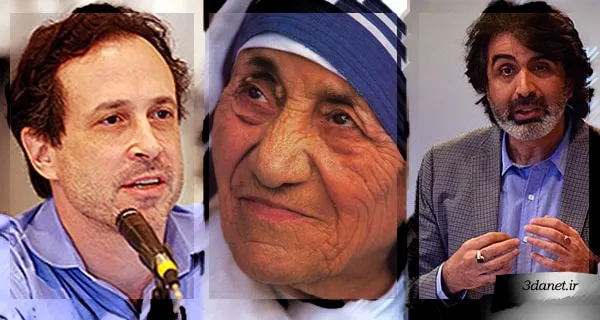
The Dark Night of the Soul: The Hidden Life of Mother Teresa ۱
On December 11, 1979, Mother Teresa, the “Saint of the Slums,” traveled to Oslo. She wore her usual sari with its blue-trimmed borders, and despite the sub-zero cold, she was in sandals. She who had once been named Agnes Bojaxhiu۲ claimed the world’s highest honor, the Nobel Peace Prize, that day. This simple-hearted woman had single-handedly founded the Missionaries of Charity۳ in Calcutta in 1949, which later became a model of love and self-sacrifice for the world. In the speech she delivered on the occasion of receiving the Nobel Prize, Teresa said the kind of things the world expected of her: “It is not enough for us to say, ‘I love God, but I do not love my neighbor.’” When God died on the Cross, He was hungry, naked, and homeless. “You and I must find that hunger of Jesus and satiate it.” She condemned abortion and lamented drug addiction among Western youth. And finally, she suggested that during the next Christmas holidays, we must remind the world that “radiance is real joy,” because Christ is present everywhere—“Christ in our hearts, Christ in the poor we meet here and there, Christ in the smile we give to one another.”
But less than three months earlier, in a letter she wrote to the Reverend Michael van der Peet۴, which has recently been made public, she spoke with equal intensity and fervor of another Christ, an absent Christ. “[But] as for me, the silence and the emptiness is so great, that I look and do not see,—Listen and do not hear—the tongue moves [in prayer] but does not speak… Pray for me—that I may have the grace to let God have a free hand.”
These two statements, made eleven weeks apart, stand in complete contrast to one another. In the first, she is the woman the world thought it knew. But in the second, it is as if she had been wandering in a kind of existential turmoil and struggle since the 1950s. These two statements, placed side by side, yield an image of an inner conflict—one of the most prominent human figures of the last hundred years, whose extraordinary works were deeply linked to her closeness to God, and whom those close to her, as well as film cameras, found daily in apparent silence and tranquility engaged in prayer and worship, was living a completely different spiritual life in the privacy of her soul; her soul was a desert land from which God had departed.
And this appears to be the reality of the matter. A recently published book titled Mother Teresa: Come Be My Light۵, which primarily contains correspondence exchanged over more than 66 years between Teresa and her confessors and superiors, reveals another facet of a life known mostly through her works. Many of these letters were preserved against Teresa’s wishes (she had requested that they all be destroyed, but her church denied this request). These letters show that for almost the entire last half-century of her life, she experienced absolutely no presence of God—to use the phrase employed by the book’s compiler and editor, the Reverend Brian Kolodiejchuk۶—“neither in her heart nor in the Eucharist.”
It seems that this absence began almost exactly when she dedicated her life to the poor and dying in Calcutta, and this experience of absence, except for five weeks in 1959, never left her. Teresa was always cheerful and good-humored among people, but the Teresa of those letters lived with a very deep and chronic spiritual pain. In more than 40 letters (many of which have never been published before), she laments the “wilderness,” “darkness,” “loneliness,” and “torture” she was undergoing. She considered this experience like hell, and at one point says that it drove her so far as to doubt the existence of heaven and even God. She is completely sensitive and aware of the distance between her inner states and her outward face. She writes: “The smile is a mask or a cloak that hides everything.” And, bewildered, she asks herself whether her tongue is deceiving others. Addressing her spiritual director, she writes: “I spoke as if my own heart were immersed in the love of God—a tender and personal love.” “If you had been [there], you would have said, ‘What hypocrisy!’” The Reverend James Martin, editor of the American Jesuit magazine America and author of My Life with the Saints (a book that, in 2003, reported Teresa’s doubts in a much more concise manner), says: “I have never known such intense spiritual darkness in the life of any saint. No one knew what immense suffering she was enduring.” Kolodiejchuk, editor of Come Be My Light, writes: “I read one of these letters to the sisters [of Teresa’s Missionaries of Charity], and they were all stunned. These letters add a completely new dimension to people’s perception of her.”
This book is by no means the work of a group of nosy, anti-religious journalists who rummaged through the trash to discover Teresa’s correspondence. Kolodiejchuk is a prominent member of the Missionaries of Charity and a devotee of Teresa, and it is he who has put forward the request to declare Teresa a “saint” and is gathering the necessary documents for it. (So far, Teresa has been recognized by the Pope as someone who has received special divine favor; the next stage is her official declaration as a “saint.”) The letters collected in this book are part of this process.
The Church considers periods of spiritual blockage to be normal. Saint John of the Cross, the 16th-century Spanish mystic, coined a specific term to express this particular state that occurs in the stages of growth and development of some of the great figures of the spiritual world: the “dark night” of the soul. Among all the spiritual giants for whom evidence of their states is available, Teresa may have experienced the longest period. (The “dark night” of the soul of Saint Paul of the Cross, the 18th-century mystic, lasted 45 years.) Nevertheless, Kolodiejchuk, in agreement with Saint Paul of the Cross, considers this experience a darkness within the framework of faith. From the early 1960s, Teresa was somehow able to come to terms with this darkness, without abandoning her faith or ceasing her work. Kolodiejchuk considers this book an honest testimony to that faithful struggle, a struggle that, in Kolodiejchuk’s eyes, was Teresa’s most heroic spiritual endeavor.
Two other Catholic figures also consider this book a milestone. The Reverend Matthew Lamb, chair of the theology department at the conservative Ave Maria University in Florida, believes that Come Be My Light, as an autobiographical account of a spiritual journey, will sooner or later rank alongside the Confessions of Saint Augustine and Thomas Merton’s The Seven Storey Mountain. The Reverend Martin, editor of America magazine, which is a far more liberal institution, considers this book “Mother Teresa’s new religious service,” “a written service through her interior life,” and adds: “This religious service will probably be considered as important as the service she rendered to the poor. This book is her service to those who have experienced doubt and the absence of God in their own lives. Do you know who these people are? All of us. Whether atheist, skeptic, seeker, or believer—all of us.”
Of course, many atheists and skeptics disagree with this view. The statements of Colodiej Chook and Martin are based on the assumption that Teresa's inability to feel Christ in her life does not mean that Christ was not present in her life. In fact, in their view, this absence was part of the very divine grace that enabled her to perform those extraordinary works. But for the staunch leaders of anti-religious movements in America, this argument is irrelevant. In their view, the Teresa of this book more closely resembles the quintessential woman from that Western country song who is still waiting for her husband, who went out thirty years ago to buy a pack of cigarettes and never returned. Christopher Hitchens9, author of The Missionary Position (a sharp and scathing critique of Teresa) and the more recent book God Is Not Great10 (an atheist manifesto), says: “She was as capable as anyone of recognizing that religion is a man-made construct, and the religious practice she employed was a shop opened by religion, whose only benefit was to drag her deeper and deeper into the hole she had dug for herself.” Meanwhile, those familiar with the extraordinary will of this smiling mother might claim that this particular state of hers, rather than stemming from divine grace, was an unconscious effort to break herself in the most severe way possible: she shattered herself in this crippling manner to compensate for the impact of that immense success.
Come Be My Light is a strange phenomenon, a posthumously published autobiography that could completely alter the image of this beloved figure—whether positively or negatively. This book prompts us to serious reflections on God and faith, the very things that are the driving force behind great achievements and the continuity of divine and human love. Of course, the book was not designed for this purpose; rather, it is a chaotic concoction of despairing notes that were never meant to be made public. And, as it happens, this very fact convinces readers all the more of their authenticity—these notes shockingly and honestly unveil the inner life of a modern saint.
Prelude: On the Threshold of a Passionate Union
[Jesus:] Will you refuse to do this for me?… You have become my spouse out of love—you have come to India for my sake. The thirst you had for souls has brought you this far—are you afraid to take one more step for the sake of your spouse—for me—for the sake of souls? Has the generosity of your soul grown cold? Do I no longer hold that importance for you?
[Teresa:] Jesus, my Jesus—I am only yours—I am so ignorant—I do not know what to say, but do with me as you will—as you will—and as long as you will. [But] why can't I—here—be a perfect Loreto nun—why can't I be like the others.
[Jesus:] I want the Missionaries of Charity and the Indian nuns to be the fire of my love among the poor, the sick, the dying, and the little children… I know you are the most incapable person—weak and sinful, but precisely for this reason, you are the one I want—I want to use you for the service of my glory. Will you refuse?(Part of a spiritual dialogue recounted to Archbishop Ferdinand Périer, January 1947)
On 10 September 1946, at the age of 36, after 17 years of teaching in the community of the Loreto Sisters11 (a mixed community with educational activities, headquartered in Ireland), Mother Mary Teresa travelled 400 miles (645 km) by train to Darjeeling. She had worked herself to the point of death, and her superior had ordered her to rest during her annual retreat in the foothills of the Himalayas. She reports that on the return journey, Christ spoke to her. Christ asked her to abandon teaching and instead work in the city’s “slums,” directly with the “poorest of the poor”—the sick, the dying, beggars, and street children. Christ told her: “Come, come, carry Me into the holes of the poor.” The aim was both material and religious—in the words of Kolodiejchuk, the goal was “to help them live their lives with dignity [and also] to come to know God’s infinite love, to know Him, to love Him, and to serve Him in return.”
This was an extraordinarily audacious aim—a solitary crusade, without any capital, to help each individual among the poorest of the poor in a city that, as a result of riots, was in an extremely difficult situation, according to their individual needs. (Teresa had stipulated that she and her nuns would share in the benefits of poverty and began the work alone.) The Archbishop of the area, Ferdinand Périer, was initially hesitant. But Teresa’s letters to him, which have been preserved, clearly attest to two of her traits—extraordinary tenacity and a deep personal bond with Christ. When Périer expressed his doubts, Teresa, while calling herself a “little nothing,” bombarded him with notes, suggesting he refer her request to a long list of authorities—from local religious officials and the Mother Superior to the Pope. And when she felt all paths were closed, she finally revealed her spiritual revelation: a dramatic (and indeed overly dramatic) dialogue with a “voice.” She later disclosed the secret that the voice had been Christ’s. At the end of that dialogue, Jesus had emphatically repeated His call to her: “I know you are the most incapable person—weak and sinful, but that is precisely why you are the one I want—I want to use you for My glory. Will you refuse?”
Mother Teresa also had visions, including one in which she conversed with Christ on the cross. Her spiritual director, Father Celeste Van Exem12, her confessor, concluded that her mystical experiences were genuine and authentic. “Her union with Our Lord was continuous and so deep and strong that she did not seem far from reaching the state of ecstasy.”
Finally, on 6 January 1948, after consulting with the Vatican, Périer gave Teresa permission to answer the second call she had received. And Jesus took her with Him once more.
The Beginning
Lord, my God, who am I that You should forsake me? I was the child of Your love—and now I am the one You love least—I am the one You no longer want, cast aside, fallen from Your sight. I cry out, I cling to everything, and I implore—and no one answers me—there is no one to cling to—no one, no one. I am alone… What has become of my faith—even in the deepest layers of my soul there is nothing but emptiness and darkness—My God—how terrible is this unfamiliar pain—I have no faith—I dare not utter the words and thoughts that clamour in my heart—and this plunges me into indescribable suffering. So many unanswered questions seethe within me that I dare not reveal—for I fear blasphemy—If there is a God—please forgive me—When I try to raise my thoughts to Heaven—I am met with such undeniable emptiness that those very thoughts return like drawn daggers and pierce my soul.—They tell me God loves you—and yet this darkness, cold, and emptiness is so immense that nothing touches my soul. Did I err in blindly answering the call of that Sacred Heart?
(Addressed to Jesus, on the advice of a confessor, undated)
In the first half of 1948, before setting out alone onto the streets of Calcutta, Teresa took a course in first aid. She wrote at this time: “My soul is now filled with joy and perfect peace.” Kolodiejchuk also quotes her deeply moving description of her first day’s work: “An old man was lying on the pavement—abandoned—utterly alone, sick and dying—I gave him Carborsone and water, and the old man was deeply pleased and grateful… Then we went to the Taltala market, and there was a very poor woman who seemed to me to be dying more from hunger than from tuberculosis… I gave her something to help her sleep.—I don’t know how long she will last.” But Kolodiejchuk’s documents show that two months later, shortly after Teresa managed to secure a place as her base of operations, her condition was deeply unwell. She writes at this time: “What a torturing loneliness. I wonder how long my soul can endure this suffering?” This lament can be seen as her first reaction to the loneliness and anguish that would surge through her later letters.
The more Teresa’s successes grew (and about six months later a large number of young women joined her, forcing her to move once again), the worse her condition became. In March 1953, she writes to Périer: “Please pray especially for me that I may not spoil God’s work, pray for me that God may show Himself to me—for within me there is such a terrible darkness that it is as if the dust of death has been scattered over everything. Since I began ‘the work,’ my state has been more or less like this.”
Périer probably ignored that expression of despair and hopelessness. He wrote back to her in a brotherly fashion: “Dear Mother, God is your guide. You are not in as much darkness as you think… The external signs sufficiently indicate that your work is blessed by God… Feelings are not a necessary condition of the way and are, in most cases, misleading.” And yet feelings—or rather the lack of feelings—became the hidden torment of her life. How can you be aware of your Beloved’s attachment when He withholds His voice, His caress, and His presence from you? The problem became more complicated when Teresa could no longer even articulate her state. She reported on several occasions that she had invited a confessor to visit her, but then found she could not speak. Finally, one of those priests suggested she write down her problem, and she did so. She writes to Périer in 1955: “The more I want Him, the less He wants me.” A year later she seemed shattered and broken: “This great longing for God—and … the rejection—emptiness—no faith—no love—no zeal.—[Saving] souls holds no attraction for me—Heaven means nothing to me—please pray for me that despite all this I may smile at ‘Him.’”
On the advice of a confessor, she wrote down her anguished supplication (the very passage I quoted at the beginning of this section). In this writing, she examined the worst possible consequences of her predicament. That letter and another written in 1959 (“Why do I carry this heavy burden? If there is no God—there can be no soul—if there is no soul, then Jesus, You too are not true”) are the only letters in which traces of doubt about God’s existence appear. But she constantly lamented that she could not pray: “I utter the words of the prayer of union—and I try my utmost to savor the sweetness each word can offer from its heart—but as soon as I come to myself, my prayer has vanished—I am no longer praying.”
As the Missionaries of Charity took root and flourished, gradually drawing the attention of her Church and the world, Teresa moved from one confessor to another, like a patient going from one psychoanalyst to the next. Van Exem gave way to Périer, who in turn gave way in 1959 to His Excellency (and later Cardinal) Lawrence Picachy,13 who finally yielded his place in 1961 to His Excellency Joseph Neuner.14 By the 1980s, this succession also included figures such as Bishop William Curlin15 (of Charlotte). Over the years, in conversation with these confessors, she gradually coined concise terms to refer to her pain and suffering; she simply spoke of “my darkness,” or referred to Jesus as “the Absent One.” Yet there was a reprieve. In October 1958, Pope Pius XII died, and special funeral rites were held for him throughout the Catholic world. Teresa prayed to the late pontiff to “show her in some way that God was pleased with their group.” And right “at that moment and in that place,” she suddenly experienced an expansion, and “that long darkness… that strange suffering of 10 years suddenly vanished.” Unfortunately, five weeks later she reported being back “in that abyss.” And although, as we shall see, she found a way to accept this absence, she never again experienced such a flight. Five years after receiving the Nobel Prize, a Jesuit priest in the province of Calcutta wrote: “Mother came… to speak of the killing darkness of her soul. It was not a passing state, but had taken up residence in her soul for years and years.” In a 1995 letter, Teresa again spoke of her “spiritual wilderness.” She died in 1997.
Explanations
Tell me, Father, why is there so much pain and darkness in my soul?
(To His Excellency Lawrence Picachy, August 1959)
Why did Teresa’s union with Jesus, so fresh and vibrant until months before the founding of the Missionaries of Charity, suddenly vanish? Interestingly, religious and secular explanations ran parallel for some time. Both groups believe that becoming one with the widespread suffering of Christ on the cross, and taking upon oneself the atonement of humanity, is a fundamental aspect of spiritual life in Catholicism (though only one of those groups finds this aspect praiseworthy). Teresa told her nuns that material poverty gives one such a sense of compassion that one “dedicates oneself” to the suffering poor and forges a stronger bond with the redemptive suffering of Christ. In 1951 she wrote that she only wanted to share in the suffering Jesus experienced in life: “I want to … only [emphasis hers] drink from the chalice of His suffering.” And so she did, although all evidence suggests she experienced this suffering in a way she absolutely did not expect.
As Teresa overcame the overt doubts of her Church [about launching the “Missionaries”] and found an effective way to answer Jesus’s call, the springs of spirituality in her soul were drying up. Kolodiejchuk sees the hand of God in this fact. In his view: “Teresa had a very strong personality. And a strong personality needs a stronger purification to ward off the poison of pride.” To show how effective this antidote was in Teresa’s soul, he cites remarks she wrote in the 1960s, after receiving an important award in the Philippines: “This prize is utterly worthless in my eyes, because I do not have ‘Him’ in my heart.”
اما دکتر ریچارد گوتلیب۱۶ ، استاد انیستیتو و انجمن روانکاوی نیویورک که درباره کلیسا می نویسد و نسخه ای از آن کتاب توسط مجله تایم در اختیارش قرار گرفت، می گوید: “اما پرسش این است: چه کسی مسؤول آن رهاشدگی ای است که وی می آزمود؟ آیا ممکن است که او خود این وضعیت را بر خویش تحمیل کرده باشد؟” روانکاوان مدّتهاست که دریافته اند افرادی از یک تیپ شخصیتی خاص همیشه با موفقیتها و دستاوردهای عظیمشان مشکل دارند، و می کوشند به طرق گوناگون خود را تنبیه کنند. از نظر گوتلیب نباید بلندپروازی شگفت انگیز ترزا را در اجرای رسالتی دینی که بر دوش خود احساس می کرد، از یاد ببریم. او و کولودیج چوک هر دو مجذوب این عبارت ترزا هستند: “من می خواهم عیسی را چنان دوست بدارم که هیچ کس هرگز پیش از این او را چنان دوست نداشته است.” کولودیج چوک معتقد است که “این ادعای بسیار جسورانه ای است.” با این همه نامه های او سرشار از کشمکشهای درونی اوست درباره موفقیتها و دستاوردهایش. کولودیج چوک می گوید که وی به جای آنکه تمام افتخار این دستاوردها را به خداوند نسبت دهد و خود را خلاص کند، مدام رنج می کشید که “هر نوع افتخاری که از این راه برای خود قائل شود- حتّی اگر در ته دل باشد- گناه است.” و بنابراین، شاید لازم باشد که بهای این غرور را بپردازد. کولودیج چوک می گوید که یک نمونه غیردینی مشابه اما خفیفتر این است که مدیر یک مؤسسه درست در آستانه ارتقاء مقام مرتکب یک خطای اجتماعی فاحش شود. در مورد ترزا “خرده وجدی که به او دست داد به مصیبتی عظمی انجامید”، و موفقیتهای بعدی وی این مصیبت را ماندگار کرد.
گوتلیب هم معتقد است که احتمالاً آغاز رسالت دینی ترزا “نقطه عطفی در رابطه اش با عیسی بود”، در آن لحظه ترزا در وضعیتی بود که سرانجام می توانست تقاضاهای فوری عیسی را اجابت کند. به اعتقاد گوتلیب ترزا از اینکه نقش فعالی را برعهده بگیرد به هراس افتاده بود، و در نهایت تنها شیوه ای که توانست آن کارهای عظیم را انجام دهد احیاناً این بود که برای همیشه خود را در نقش کم خطرتر یک عاشق مردود اما وفادار قرار دهد.
موضع ملحدان ساده تر است. در سال ۱۹۴۸، هیکنز جسورانه اعلام کرد که ترزا سرانجام از خواب غفلت بیدار شده است، هرچند که هنوز نمی تواند این حقیقت را اذعان کند. او ترزا را به کمونیستهای غربی سرسخت اواخر دوران جنگ سرد تشبیه می کند: ” [در آن ایام] قرائن فراوانی [دالّ بر شکست کمونیسم] وجود داشت. آنها با خود می گفتند که “عیسی، یعنی اتحاد جماهیر شوروی، شکست خورده است، اما من نباید اینطور فکر کنم. برای اینکه معنای آن این خواهد بود که زندگی من بی معناست”. آنها بالاخره طوری زندگی را سرمی کردند، اما فنر اصلی دررفته بود. و به نظر من وقتی که فنر اصلی دربرود دیگر نمی توان آن را تعمیر کرد.” و می افزاید که وضعیت ترزا هم همین طور بود.
بسیاری از خوانندگان دین باور کتاب نامه های ترزا با این رأی مخالفند، و هر نظریه دیگری را هم که نهایتاً ترزا را مسؤول بدبختی خود معرفی می کند نادرست می دانند- حتّی قبول ندارند که آنچه او می آزمود به معنای واقعی کلمه “مصیبت” یا بدبختی بوده است. مارتین، در پاسخ به کسانی که ترزا را زنی تصویر می کنند که به عبث در انتظار شوهر گمشده اش نشسته بود، می گوید که او مانند همسری بود که قهرمانانه نسبت به شویش وفاداری ورزید. ” فرض کنید که شما ازدواج کرده اید و عاشق همسر خود هستید، و با تمام وجود معتقدید که ازدواج پیوندی مقدس است. و همسر شما، خدای ناکرده، سکته می کند و به کما می رود. و شما دیگر هرگز از نعمت عشق او بهره مند نمی شوید. این مثل آن است که ۵۰ سال کسی را دوست داشته ای و دل نگرانش بوده ای، اما هر از گاهی هم از دستش به راهنمای معنوی ات شکایت می کنی. اما ته دل می دانی که او، علی رغم سکوتش دوستت دارد، و این به آنچه می کنی معنا می بخشد. مادر ترزا می دانست که آنچه می کرد معنا داشت.”
به یکپارچگی رسیدن
I cannot express the depth of gratitude I owe you for the kindness you have shown me—for the first time in … these years—I have come to love the darkness—for I now believe that this darkness is a very, very small part of the darkness and suffering that Jesus experienced on earth. You taught me to accept this darkness [as] the “spiritual side of your work” (as you put it)—today I truly felt a deep joy—I felt that Jesus could not have suffered more—but now He wants to experience that suffering through me.
(To Neuner, around 1961)
One can face catastrophe in two ways: either cling to it with all its force and intensity and remain overwhelmed by it, or, without needing to “overcome” it, gradually dissolve and absorb it day by day. It seems that after more than a decade of suffering from that bloody wound, Teresa was gradually regaining her spiritual balance with the help of a very astute guide. Teresa met His Excellency Joseph Neuner in the late 1950s and several times in the years that followed. Neuner was already a renowned theologian, and when Teresa sought his help to cure that “darkness,” he apparently found it necessary to share three points with her: first, that there is no human remedy for this condition (meaning, she should not hold herself responsible for this affliction); second, that feeling Jesus is not the only way to perceive His presence, and her immense longing to reach God is “conclusive proof” of His “hidden presence” in her life; and third, that the absence is in fact part of the “spiritual side” of the work she has done for Jesus.
Undoubtedly, this guidance lifted an enormous burden from Teresa’s shoulders. She had always had a great longing to share in the Passion of Jesus, but she never imagined that what would befall her was that particular moment when Jesus on the cross said, “My God, my God, why have you forsaken me?” The thought that she was experiencing not an empty void but an absence that might be the very divine trial she had asked of the Lord, the thought that her perseverance in the midst of this trial was an echo of the faith that Jesus carried safely with Him to His death on the cross, the thought that this darkness might be a divine grace that strengthened her spiritual calling, suddenly gave meaning to her suffering. Neuner later wrote, “It was a healing experience in Teresa’s life to realize that the night of her heart was her special participation in the Passion of Jesus.” She was immensely grateful to Neuner: “I cannot express the depth of gratitude I owe you for the kindness you have shown me—for the first time in … these years—I have come to love the darkness.”
This is not to say that the experience ceased to torment her. Years later, referring to the ecstasy and rapture some of her nuns had experienced through an encounter with Jesus, she wrote bitterly to Neuner, “My lot is to enjoy no experience—I am even deprived of the consolation of perceiving the real presence of the Lord [in the Eucharist].” She likened her soul to an “iceberg.” Yet she was aware of the distinction Neuner had drawn. She writes: “I accept the will of God not in my feelings, but with my will—I submit to His will.” Of course, she still occasionally worried that she might “in this painful darkness turn into a Judas to Jesus.” But as the years passed, that absence was transformed from a shattered orb into a kind of rough-hewn cornerstone. As a psychoanalyst, Gottlieb says: “The remarkable thing is that she so absorbed and assimilated that suffering that she was able to make it the organizing center of her personality, a lantern for her daily spiritual life.” Without doubt, she knew this condition was so central to her life that it would play a role even after her death. She wrote in 1962: “If I ever become a saint—I will surely be the saint of ‘darkness.’ I will remain absent from the Kingdom of God—to light the lamp of those left in darkness on earth.” Theologically, this statement is somewhat strange, for the most orthodox form of Christianity holds that the Kingdom of God is precisely the eternal divine presence, and at that heavenly feast, the absent are not entertained. But according to Kolodiejchuk, this is Mother Teresa’s most shocking statement, for it demands an infinite sacrifice. He writes: “When Teresa wrote that ‘I am ready to suffer… for all eternity, if this were possible,’ I said in amazement: How extraordinary!”
He believes these letters show she was holier than others had imagined. The efforts Teresa made for Christ were extraordinary, but these efforts and achievements seem all the more astonishing when we consider that she accomplished all this under conditions where Christ was not present to her—somewhat akin to someone believing they cannot walk yet winning the Olympic 100-meter dash. Kolodiejchuk goes even further. Catholic theologians distinguish between two types of “dark night”: the first is “purgative,” meaning it purifies the individual’s interior for “final union” with Christ; the second, however, is “illuminative,” and persists even after such a union has been attained, enabling the person to rise to a degree of purity and selflessness closer to the state of Jesus and Mary (who, without committing any sin, suffered solely for the redemption of humanity). Kolodiejchuk concludes, “All the evidence suggests that Mother Teresa’s experience was of the second type.” And this experience places her in the company of the very elect.
A New Religious Mission
[Lord,] if this brings You glory—if it brings souls to You—I will, with the utmost contentment, endure all of this for the rest of my life.
(Addressing Jesus—undated)
But many believe that the book Come Be My Light has broader implications that are perhaps more important than placing Teresa among the Catholic saints: if she could carry on for half a century without having God in her heart and mind, then perhaps those who are not so far along the path of holiness can cope with milder forms of that predicament. An illustrative example of this occurred a long time ago. Malcolm Muggeridge17, the English writer and later filmmaker, visited Teresa in 1968. Muggeridge was an outspoken and unabashed agnostic, but when he arrived in Calcutta with a film crew, he was entirely in the mood of a spiritual seeker. Teresa’s activities and her holiness deeply impressed him. But beyond that, in 1970, Teresa wrote him a letter about his doubts. “Your longing for God is so deep, and yet He keeps Himself away from you—and how heavy and difficult this must be for Him—because He loves you so much—the personal love Christ has for you is infinite—but the small difference you have with your church is finite—overcome this finite with that infinite.” Apparently, Muggeridge did just that. He became an ardent defender of Christianity and converted to Catholicism in 1982. The film he made in 1969, titled Something Beautiful for God, and the subsequent publication of a book by the same title, made Teresa beloved in the hearts of people worldwide.
At that time, Muggeridge was a special case. The son of a well-to-do family who achieved a modest fame. He can hardly be counted among Teresa’s primary audience. Now, after the publication of Come Be My Light, we can all try Muggeridge’s experience. Kolodiejchuk believes that this book can be an antidote to a cultural predicament. He says: “In our spiritual lives, and in our broader conception of love, we think that our feelings are the only thing that matters.” And “so it seems to us that the whole affair of love is summed up in our feelings. But if you truly love someone, you must be committed and faithful to them, and sensitive and vulnerable towards them. Mother Teresa did not ‘feel’ Christ’s love, and she could have given up right there. But for the sake of Jesus, she got up every day at 4:30 a.m., and still wrote to him: ‘Your happiness and joy are all my desire.’ This is a very compelling and effective example, even if you don’t speak of it exclusively in religious language.”
Martin, the editor of the American magazine, is particularly keen to use religious language. He says: “Average believers also experience, to a large extent, all the things she experienced. I know many people who feel that God has abandoned them, and have doubts about God’s existence. And this book expresses that experience in a very stunning way, but at the same time, it also reveals her ultimate trust and confidence.” Martin takes a deep breath and asks: “Who would have thought that the one considered the most faithful woman in the world was going through such struggles of faith?” “And who would have guessed that the one considered the most passionate of believers could be the saint of skeptics?” Martin has long considered Teresa an embodiment of the dwellers of the realm of selfless love. He says that he now bears witness to this woman’s extraordinary faith in the face of that great silence to show how doubt is a natural part of all our lives, whether we are an average believer or a renowned saint.
In the Light of Day
Please destroy all the letters and everything I have written.
(To Picachy, April 1959)
Teresa was in a constant battle with her own pride, and the reason she concealed her personal correspondence was that “I want the ‘work’ to remain only for ‘Him’.” She explained to Picachy that if these correspondences were made public, “people would think more about me—and less about Jesus.”
Holy people, like all of us, may misjudge the workings of history—or, if you prefer, divine providence. Teresa considered God's conspicuous absence in her life the most shameful secret of her existence, but she ultimately learned to see it as a gift alongside and in continuation of that divine address. If her anxieties about the publication of this book also prove to be misplaced—if this collection of hurried and confused notes happens to smooth the spiritual path for thousands of eager seekers, then she should not be ashamed that her judgment was once again in error—but on the contrary, she should be glad that she was mistaken in thinking herself mistaken.
Notes:
1– This article was originally published under the title “Her Agony” in Time magazine, dated September 3, 2007, pp. 36-43.
2- Agnes Bojaxhiu
3- Missionaries of Charity
4- Rev. Michael van der Peet
5- Mother Teresa: Come Be My light (Doubleday)
6- Rev. Brian Kolodiejchuk
7- Rev. Matthew Lamb
8- Thomas Merton
9- Christopher Hitchens
10- God Is Not Great 11- The Loreto Sisters
12- Celeste Van Exem
13- Lawrence Picachy
14- Rev. Joseph Neuner
15- William Curlin
16- Dr. Richard Gottlieb
17- Malcolm Muggeridge



Discussion0 comments
No comments yet; let yours be the first voice.