Religion
The House of Clay, the House of the Heart: A Discourse on Hajj from the Mystics' Perspective
Religious rites and rituals serve the spiritual wayfarer in four capacities: expressive, protective, identity-forming, and instrumental—from outwardly manifesting inner states to safeguarding the core of faith experiences amid the currents of everyday life.
Religious rites and rituals play at least four fundamental roles for the wayfarer on the path, though adherence to them is also accompanied by certain pitfalls.
Religious rites and rituals play at least four fundamental roles for the wayfarer on the path: the expressive role, the protective role, the identity-forming role, and finally, the instrumental role. Among these, the expressive role of these rites and rituals is of greater importance for those who have attained union, while their instrumental role is more significant for wayfarers.
The first role of religious rites and rituals is their "expressive" role. It is narrated from Imam Ali that faith has three pillars: affirmation by the heart, affirmation by the tongue, and affirmation through action. The believer first experiences a profound transformation of state within their being. This deep inner experience fills the believer's existence and, by its very nature, overflows from within to without, prompting them to verbally express and affirm certain truths, and consequently transforms their way of life. In this respect, the experience of faith resembles the experience of love. The lover first finds a particular state or experience within their being, then sooner or later shares the secret of their heart with the beloved and indeed with the world, and finally demonstrates that love in action. The expression of love is an inseparable part of being in love, and the lover, by their very nature, desires to fulfill the beloved's wish. The outward manifestation of that inner state reveals itself on the lover's tongue and limbs. The matter of faith is more or less the same; that is, what transpires in the heart inevitably finds an outward translation and flows onto the individual's tongue and limbs.
On this basis, the divine and spiritual human being (for example, the Prophet) first undergoes a profound and transformative experience, then bears witness with the tongue to these states and the content of that experience, and at the next stage, that inner belief and experience manifests upon their limbs and takes on an outward form. The repetition of those outward manifestations gradually becomes institutionalized in the form of religious rituals and rites. Therefore, religious rituals and rites can be seen as the outward, institutionalized manifestation and translation of the states that occur in the heart of a prophet or divine saint. These rituals convey news of the inner secret of that divine saint and unveil their belief in the truth that has occurred within their heart. In the words of Rumi:
This prayer, this fast, this pilgrimage and holy war
Are all a giving witness to one's belief.
Deed and word are witnesses to the inner heart,
From these two, draw inference about your inward state.
What is this witnessing? The revealing of the hidden,
Whether by word or deed or otherwise.
This mark does not remain upon the touchstone,
The gold remains, of good name and free from doubt.
This ritual prayer, this holy war, this fasting,
Do not remain either; the soul remains, of good name. (Masnavi, Book Five, verses 180, 236, 246, 248, 249)
Worship for the Prophet is an acknowledgment by the tongue and an action by the limbs. It is like joy that finally finds outward manifestation in a smile, like a fruit that naturally appears on the branch of a tree. It is as if the inner being is a seed. When spring arrives, that seed grows, sprouts, and blossoms. This greenery, flower, and freshness are, in truth, the translation of that seed's secret. When we plant a seed, we do not know if it is a red rose or an apple tree; but the seed naturally reveals its secret, that is, what it holds within its heart, in the springtime.
When the seed becomes hidden in the earth,
Its secret becomes the verdure of the garden. (Masnavi, Book One, verse 177)
The second function of rites and rituals is shell-like. That is, just as a shell preserves the pearl within its heart from the harm of blights, rites and rituals also secure the pearl of faith experiences within their heart. It is good to once again compare this situation with the experience of love: the role of amorous behavior is not merely to express the love within the lover, but also to keep the fire of the lover's love warm and blazing. Laughter is not only the expression of a pleasant inner state, but also makes the flame of joy blaze brighter in the heart. Spiritual states are very elusive and fragile. Rumi likens these subtle states to the
Therefore, the Muslim of today is the inheritor of a historical tradition institutionalized in the realm of religious rites and rituals. This tradition has flowed like a river through the history of the Islamic community and has now reached the current generation of believers. The contemporary Muslim can enter into the existing and ongoing tradition of religious rituals through two gateways:
A group of them, in the parlance of the mystics, belong to the category of the "enraptured" (majdhūbān), meaning water gushes forth for them from a well they have not dug. These individuals, by virtue of their exceedingly subtle and sensitive spirit, ignite with the slightest warmth from the sun of meaning, and find themselves sharing, to the extent of their own capacity, in the spiritual states and inner ecstasies of the Prophet himself. In Rumi's words, for them, following the Prophet is not following his religious law (sharīʿa), but following his spiritual ecstasies, that is, the experience of the Ascension (miʿrāj):
Ascend to the heavens, if you are of the Prophet's kin,
Kiss the moon's face, since you are upon a lofty roof.
One who becomes a partaker of the Prophet's tastes (sharīk al-adhwāq) and participates in his spiritual states develops a specific relationship with religious rites and rituals that is closer to the Prophet's own relationship with those rituals. For him, religious rites and rituals are, above all, the expression of his inner longing. The Prophet would eagerly rise from sleep in the middle of the night to soothe his inner yearning through secret communion with his Beloved. In his experience, worship was not a heavy burden on the shoulders, but the weightlessness of flight. The enraptured mystic, following the Prophet's experience, also rises to worship out of the purity of his nature and at the call of his inner longing. Therefore, for believers endowed with experience, worship is not a "duty" (taklīf), meaning it is not a difficult task that one must inevitably undertake, even with hardship and reluctance. A lover who cannot bear separation from the Beloved takes wing to converse with Him, and blossoms in His presence, like a joyful spirit that involuntarily bursts into laughter. Thus, for the enraptured mystic who shares in the Prophet's spiritual experience, worship wells up from within and flows outward. That is, worship primarily plays an expressive role.
However, many believers, at least at the beginning of the path, cannot keep pace with the Prophet in the vast expanse of the world of meaning. For this second group, religious rites and rituals are a constraint imposed upon them from the outside. Worship for them is a difficult task, of the nature of a "duty" (taklīf). In fact, adherence to religious rites and rituals is considered a way to ascend to loftier inner experiences. The individual disciplines and orders their outward self in a specific way through the constraint of those rites, in the hope that this outward discipline will transcend the exterior and seep into their interior. For the wayfarer on the path, the rule is this: one must strive, with arduous effort and patience, to tame and discipline one's rebellious and wild spirit by performing actions that weigh heavily upon them. For this group, acts of worship play a more instrumental role. In the first steps, the wayfarer finds these rites and rituals to be heavy duties that do not go beyond the level of outward appearances and bodily limbs. But gradually, that outward order seeps inward and imparts a specific hue and order to their spirit. This situation is akin to a sorrowful and dejected person forcing themselves, even artificially, to laugh. This laughter is initially feigned, but it is entirely possible that this forced laughter gradually transforms their state, and the person begins to laugh at their own laughter, and becomes genuinely happy. The experience of spiritual teachers was also that a person's inner states are influenced by their outer states. Therefore, one of the methods for changing the inner self is for the individual to change their outer self. For example, the Quran commands: "And do not walk upon the earth exultantly" (al-Isrāʾ/37), meaning do not walk haughtily on the earth, lower your wings and walk humbly. Because this outward humility can gradually penetrate the inner self and render it soft and humble. Or, as another example, in spiritual wayfaring, it is obligatory for a wealth-loving person to give charity from their wealth, even if this is difficult for them. Because this practice of generosity and munificence can gradually seep from the exterior into their interior, and diminish the love of wealth in their heart to some extent. Therefore, worship, when accompanied by insight and presence of heart, can, through a kind of outward discipline, lead to a kind of inner elevation.
Of course, adherence to religious rites and rituals is also accompanied by certain pitfalls.
The most significant pitfall of devotional practice is hypocrisy, in the sense that the individual performs those rites not for the purification of the inner self and nearness to the Beloved, but to captivate people and gain fame and livelihood.
The second affliction is formalism. Sometimes wayfarers and religious practitioners become stuck in forms. That is, they do not go beyond the outward form of acts of worship, and become entirely heedless of the meaning and ultimate purpose of worship. Of course, in the realm of religious customs and rituals, forms are important, but forms must be in the service of meanings. If this relationship is severed, the form turns into a shell that is worthless from the perspective of spiritual wayfaring. The value and sanctity of the form are subordinate to the value and sanctity of the content. The inner dimension of worship is desirable and valuable in its essence, but the outer dimension of worship is respected and valuable only insofar as it serves the inner dimension.
The third affliction is "ennui." One of the most important characteristics of rituals is their repetitiveness. But formal repetition gradually turns worship into habit, and as a result, worship loses its grace and charm. It is for this reason that teachers of religion and mysticism have striven in various and creative ways to prevent worship from becoming habit. For example, they recommended that those praying recite diverse verses from the Quran in their prayers, or change their place of worship from time to time, or sometimes make their obligatory acts more delightful by performing supererogatory acts. Some mystics also considered listening to music, dancing, and ecstatic movement (samāʿ) to be effective methods for refreshing the spirit, a freshness that would also keep the wayfarer's soul agile in canonical prayers and rituals.
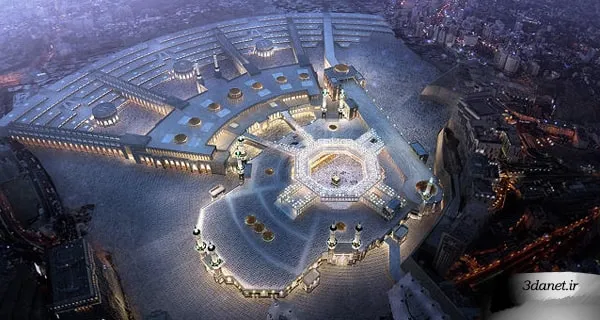
Among the collection of rituals prevalent in the Islamic tradition, the Hajj rite, more than any other, symbolically unveils the essence of Islam's central doctrine, namely tawḥīd. It is therefore fitting that we take a look at the symbolic foundation of this religious rite.
The mystics have drawn a distinction between two types of Hajj: first, the Hajj intended for the alley of the Friend, and this is the Hajj of the common people. Second, the Hajj that is the desire for the face of the Friend, and this is the Hajj of the elect. One group goes to visit the house, and another group goes to visit the Master of the house.
In the expression of the mystics, we have two Kaabas: the Kaaba of clay and the Kaaba of the heart. The Kaaba of clay has value when it brings the wayfarer to the Kaaba of the heart. The Kaaba of clay is the qibla of creation, and the Kaaba of the heart is the locus of manifestation for the Real. The Kaaba of clay is the house of God, and the Kaaba of the heart is the Lord of the house. The former is the pilgrimage to the house of the Friend (Khalīl), and the latter is the pilgrimage to the sanctuary of the Majestic. Rumi also points to this distinction in his expressions:
The Hajj is visiting the house,
The Hajj of the Lord of the House is manly work.
Traveling to the house of God is an easy task, but seeing the God of the house is a monumental feat. In the words of some mystics, we have two types of pilgrims: some go to circumambulate the Kaaba and become Ḥājjīs; a group are visited and circumambulated by the Kaaba and become Ḥājjīs.
When the Kaaba comes toward me, I do not go toward the Kaaba
My moon has come to earth, I shall not intend for Saturn.
You are not that, O master, that the Kaaba should come to you
It says, "Come to us, if you are our pilgrim."
The Kaaba is the heart of the Hajj rites. One of the most important characteristics of the Kaaba is its being the qibla. The symbol of the Kaaba as the qibla reminds the faithful that religious life is directional. Of course, all human beings face a qibla; their difference lies in the number and type of their qiblas. In the words of Rumi:
The Kaaba of Gabriel and the souls is a Lote-tree,
The qibla of the belly-worshippers is a tablecloth.
The qibla of the gnostic is the light of union,
The qibla of the discursive intellect of the philosopher is fantasy.
The qibla of the ascetic is the Bountiful God,
The qibla of the greedy is a purse of gold.
The qibla of those dwelling in the inward is the Possessor of Graces,
The qibla of outward-worshippers is the face of a woman.
Thus, the symbol of the Kaaba reminds spiritual human beings of two principal messages:
First, the spiritual human being must unify their qibla and become single-hearted. One whose heart is pledged to a thousand beloveds and who considers themselves indebted to a thousand claimants is pulled from a thousand and one directions, and as a result, remains exactly where they are. In the Masnavi, Rumi recounts a story of Majnun that speaks to this very meaning. He says that when Majnun mounted a she-camel to go and see Layli, this she-camel had a foal left behind, and she could not bear being separated from her young. Majnun, riding this she-camel, went into the middle of the desert. Midway, however, sleep overcame him, and the she-camel turned back the way they had come, toward her foal. As soon as Majnun awoke, he drove the she-camel toward Layli again. But sleep overcame him once more, and the she-camel retraced the path they had traveled. Rumi says that in this back-and-forth, Majnun swayed like a pendulum in the desert for years. Neither did he reach Layli, nor did the she-camel reach her foal. Finally, Majnun threw himself down from the she-camel to go on foot toward Layli, and as it happened, as soon as he fell from the she-camel, his leg broke. But he said to himself, with this broken leg I will reach Layli sooner than riding this she-camel. In this story, Majnun symbolizes the human spirit that yearns for the heights, and the she-camel symbolizes his body, which inclines toward the depths. A human being who surrenders themselves to these two contradictory claimants will, of course, remain stuck in the middle:
He said, "O she-camel, since we are both lovers,
We are two opposites, so we are unworthy fellow-travelers.
These two companions waylay one another;
Astray is that soul which does not descend from the body.
The soul, from separation from the Throne, is in a state of want;
The body, from love of the thornbush, is like a she-camel.
The soul spreads its wings toward the heights;
The body has dug its claws into the earth.
Therefore, spirits that have a longing for the heights must make their qibla one.
Second, the symbol of the Kaaba carries another message: it is true that the life of the wayfarer on the path of Truth must have direction, but not every direction leads them to the goal. The wayfarer must choose the qibla of the Real. The soul must turn its face toward the Throne to be freed from the bonds of the earthly expanse and attain union with the Beloved.
It is for this reason that the Kaaba is, in the precise sense of the word, the symbol of tawhid. That is, in this world, there is only one object of worship and one qibla, and that is God, and at this level, no beloved is on the same plane as God.
But beyond these, the Kaaba is also the symbolic house of God. This symbolic aspect must be considered the heart of the symbolism of the Hajj rites. The life of a believer is always centered upon God. The focal point of the believer's life is the house of God. But where is the "house of God"? It is narrated from the Prophet of Islam that: "al-qalbu baytu al-rabb" (The heart is the house of the Lord): the true house of God is the human heart. When someone asked him, "O Messenger of God, where should we seek God, in the heavens or on the earth?" he replied, "In the heart of the believing servant." Therefore, the Kaaba is a symbol of the house of God, and according to the Prophet's teaching, the house of God is the heart of the believer. From these two premises, one can conclude that the Kaaba is a symbol of the heart of the believer or the friend of God, a heart that has been delivered from darknesses and joined to the light.
In the Masnavi, Rumi teaches this very meaning in the form of a sweet story: When Bayazid Bastami, the famous mystic of Khorasan, resolves to undertake the Hajj journey, along his way, as was the custom of the Sufis of that era, he hastens in every city to visit the great figures and ascetics of that land. Finally, in a city midway, they tell him that there is a pious old man in this town whose visitation is obligatory for the people of the heart. Bayazid goes to meet the old man and finds him to be, in truth, a luminous elder of good character, who, by the decree of fate, has a family and is very destitute. The old man asks Bayazid, "Where are you going?" Bayazid says, "I intend to make the Hajj journey." The old man asks, "How much money do you have with you?" Bayazid says, "Two hundred dirhams." The old man looks at Bayazid and says, "Give that money to me and circumambulate me seven times, and your Hajj will be accomplished!" Bayazid, astonished, does so. But he also asks the old man the secret of that claim. The old man replies, "Did you not want to go for the visitation and circumambulation of the house of God? My heart is the house of God; from the moment God fashioned my heart, He has not left it for an instant, and yet, from the moment He built that house of clay (the Kaaba), He has not set foot in it for an instant:
The Kaaba, though it is the house of His piety,
My creation too is the house of His mystery.
Until He made that house, He did not enter it,
And into this house, none but that Living One has gone.
When you have seen me, you have seen God,
And have circled the Kaaba of true sincerity.
Service to me is obedience and praise of God,
Lest you think that the Truth is separate from me.
Open your eyes well, look upon me,
That you may see the light of Truth within a human being.
Rumi's message is that if you seek the house of God, strive to find a pure, loving, and faithful heart. The house of God is the heart of the believer. And this is a house that has never been empty of God's presence. Of course, go and circumambulate the Kaaba, but do so to see the Owner of the house. Thus, from Rumi's perspective, the Kaaba is a symbol of the believer's heart, a pure heart overflowing with the light and presence of God.
Shams Tabrizi, in his Maqalat (Discourses), also offers a wise and delightful point about the mystery of the Hajj rituals and the philosophy of praying towards the Kaaba, which is entirely relevant to our discussion here. Shams says: suppose you are standing in prayer in the Masjid al-Haram, and the congregation of worshippers are all praying towards the Kaaba, but suddenly the house is removed. What would happen then? In that case, it would become apparent that all the worshippers were prostrating towards one another. It is as if the Kaaba has created a focal point so that through it, human beings—like the angels at the creation of Adam—might prostrate towards that divine essence entrusted to the human constitution, and honor that truth. Therefore, praying towards the Kaaba can be seen as honoring the human being and that divine spirit which was breathed into humanity. This spirit, or sacred drop, which makes a person worthy of veneration, is what the mystic calls the
You went on Hajj, but the camel that carried you to Mecca became a Hajji, and you did not! That camel learned to eat thorns, to endure hardships, and to bring benefit to others, but you went on Hajj and returned more insolent, more covetous, and more unkind.
.
.
The House of Clay, the House of the Heart (A Discourse on Hajj from the Mystics' Perspective)
PDF file of the article The House of Clay, the House of the Heart
Author: Arash Naraghi
.
.



Discussion0 comments
No comments yet; let yours be the first voice.