Sociology
The Scent of School Days Returns
This article challenges the modern education system through the perspectives of freedom, the nature of childhood, and the role of play by examining the views of Peter Gray and Abdolhossein Vahabzadeh. The author shows how these two thinkers emphasize the necessity of returning children to experience, curiosity, and free learning.

Aref Ebadi
Author“A society that does not wish to suffer spiritual and fundamental bankruptcy must devote its greatest efforts to the education of its children.”
Mahmoud Sanaei
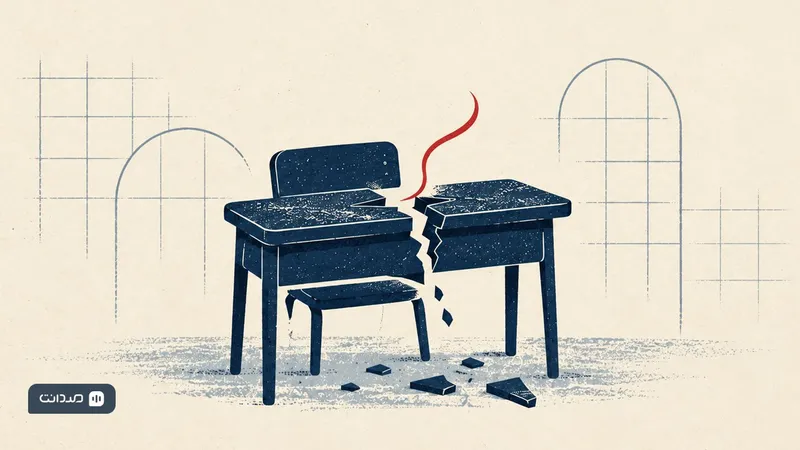
We are gradually approaching Mehr and the beginning of the school season; a time of year that is filled with sweet and cherished memories for many. For me, however, Mehr has always been a hateful and painful time. I never liked school or the classroom and was always eager to escape from them. My childhood memories are nothing but nine months of school torment and three months of freedom and joy during the summer holidays. Throughout all these years, it was constantly implied that school was a natural and unavoidable part of childhood; a place where one had to sit, listen, learn, obey, and adapt oneself to a predetermined order. But the more I read about childhood and the evolutionary foundations of learning in the human animal, the more seriously I ask myself whether what we call “education” is truly compatible with the nature of the child and their fundamental needs?
Apparently, two weeks ago I was asked to read the latest work by the renowned American psychologist Peter Gray, titled Restoring Childhood: How to Set Kids Free in the Age of Anxiety, and to express my opinion if I found it worthy of acquisition by the museum library. The book is scheduled to be published two weeks from now, and the copy I have is a pre-publication edition. Although this is not the first work I have read by Gray, while reading this book I was struck by the similarity between his ideas and arguments and the points that Abdolhossein Vahabzadeh has repeatedly emphasized over several decades and apparently presented in a systematic form in his book The Empire of Childhood.
Here, I want to show that examining the views of Peter Gray and Abdolhossein Vahabzadeh together reveals a coherent perspective in the critique of the modern education system. Despite their different geographical and cultural origins, these two thinkers converge in a shared intellectual project: exposing the imprisoning nature of modern schools and the necessity of reclaiming children’s natural right to autonomy and freedom.
One of the most fundamental points of convergence between these two thinkers is their formulation of the physical and psychological nature of school as an institution that deprives children of freedom. Drawing on the criteria of wildlife psychology, Peter Gray argues that compulsory schools possess all the characteristics of a captive environment or even a high-security prison; an involuntary setting in which physical movement is restricted, basic survival needs are managed, and individual identity is worn away through a constant process of surveillance and domestication. Gray believes that in such an environment, schools impose “learned helplessness” on children instead of cultivating agency. Vahabzadeh likewise compares the condition of children under the domination of formal education to “a lion in the narrow cage of a zoo”; a lion that, although it has retained its yellow skin and outward mane and appearance, has lost its roar, vitality, and wild instincts under the burden of excessive care and total adult supervision. Both thinkers believe that adults, under the pretext of education, have usurped “the free and unrestrained empire of childhood.”
This structural captivity has left profound pathological consequences for the mental and physical health of the new generation. Gray draws a direct connection between the decline of opportunities for free play and psychological crises such as anxiety, depression, and suicide among children. Citing statistical evidence, he shows that rates of psychological trauma among adolescents rise sharply with the beginning of the school year, and he considers “school refusal” not a psychological disorder but a natural defensive response by a dynamic organism against the school cage. He even regards labels such as ADHD as products of schools’ attempts to pathologize the natural and energetic behaviors of children in an incompatible environment. Vahabzadeh also considers the early insistence on memorized academic knowledge, test-taking concerns, olympiads, and exhausting competition in gifted schools to be deadly poisons for the mental health of the new generation. Moreover, he believes that contemporary parents’ obsession with sterilizing everything and depriving children of playing with soil and mud weakens the immune system and paves the way for allergies and autoimmune diseases.
The fundamental conflict between the modern school system and human nature is also evident in the way learning is defined. Based on evolutionary psychology, Gray believes that children are naturally equipped with motivational drives such as curiosity, playfulness, and sociability, enabling them to educate themselves without direct adult intervention. Formal schooling, by forcing children to learn the same content at the same time, suppresses these instincts and reduces the desire for knowledge to “compulsory, outcome-oriented work.” Vahabzadeh also considers formal education a clear example of “blowing the trumpet from the wrong end.” In his view, classical schooling imposes the most rigid answers on children without first planting questions or needs in their minds. He believes that children should not be subjected to direct formal education until the age of 11 or 12; rather, they should first freely explore the physical world so that questions can arise within them, and then they themselves should turn to books, reading, and writing in search of answers. In fact, both thinkers affirm the principle that the valuable things in life are not learnable through instruction but are discovered and experienced, and that imposed education suppresses children’s pure creativity.
This experiential and exploratory process lies at the heart of both theorists’ philosophies and takes shape through free play. Gray considers play a voluntary, process-oriented activity in which the “right to fail without consequences” creates a foundation for creativity. He particularly defends risky play and sees it as an evolutionary tool for managing fear and regulating emotions. A child who encounters the fear of heights while climbing a tree will be better prepared to face their fears in adulthood. Similarly, Vahabzadeh considers play the “child’s main occupation” and insists that its setting should be nature and interaction with natural elements: soil, stones, mud, water, and trees. From his perspective, concepts such as patriotism or environmental protection cannot be instilled in children through textbooks and within the four walls of a classroom; a deep love for one’s land takes shape when a child wanders through ancient ruins, gets their body covered in mud, is stung by a bee, and hears the song of the wind among the leaves of trees. These sensory and tactile experiences will form the foundation of later awareness.
Another structural flaw of modern schools, according to both thinkers, is the separation of children by age; an artificial and non-evolutionary phenomenon that is incompatible with the natural course of human development. Gray explains that throughout human evolutionary history, play has occurred in mixed-age groups. This multi-age coexistence provides the natural setting for the emergence of “scaffolding”; that is, when older children act as role models, raising the level of play and language of younger children while also practicing leadership and caregiving skills themselves. In contrast, same-age classrooms intensify toxic competition and bullying. Based on the same logic, Vahabzadeh structures his ideal nature schools around the presence of children of different ages, from 3 to 12 years old, in a single space. In his view, multi-age interaction reduces bullying because the presence of younger children awakens protective instincts and compassion in adolescents, and many conflicts are resolved without direct adult intervention.
Ultimately, accepting these principles leads to a redefinition of the role of adults; that is, a shift from an authoritarian supervisor to a non-intervening observer. Gray compares the role of adults in restoring free play to that of a “lifeguard”: someone who monitors only physical safety but does not interfere in the process of play, establishing rules, or resolving disputes, allowing children to practice social adaptation themselves. Likewise, Vahabzadeh replaces the position of the traditional teacher with the concept of the “facilitator.” His golden rule of facilitation is the principle of “minimum action and minimum speech.” The facilitator does not teach lessons, give lectures, or manage play; rather, they create a safe environment so that the child can experience, experiment, fail, and learn on their own. He believes that the facilitator must possess the quality of “childlikeness”; that is, the sense of wonder must still be alive within them so that they can experience the world through the eyes of a child.
Examining these perspectives together shows that both thinkers, with different languages but the same foundation, call us to reconsider the relationship between childhood, education, and freedom. Perhaps the approach of Mehr provides an opportunity to pause before accepting as self-evident what we have called “education” and “upbringing” for years, and ask ourselves: Is it possible that what we consider obvious today is merely one of the possible ways of raising a child?


Discussion0 comments
No comments yet; let yours be the first voice.