Religion
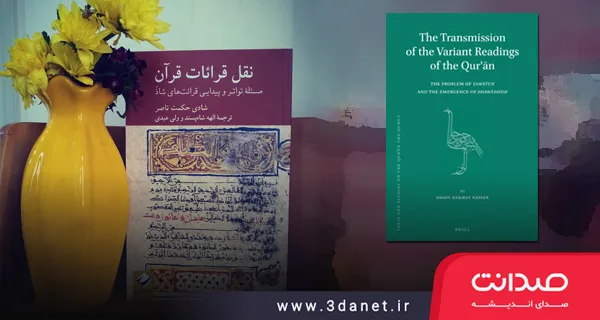
The Transmission of the Variant Readings of the Qurʾan: The Problem of Tawātur and the Emergence of Shawādhdh, by Shady Hekmat Nasser
The book The Transmission of the Variant Readings of the Qurʾan by Shady Hekmat Nasser critically examines the authenticity of the seven and ten canonical readings using modern methods. Through an analysis of early Arabic poetry and the concept of mass transmission, the author offers answers for recovering the original text of the Qurʾan and understanding the emergence of non-canonical readings.
In the early fourth century AH, the Baghdadi Qurʾan reciter and scholar Abū Bakr Aḥmad ibn Mūsā, known as Ibn Mujāhid, wrote a book titled al-Sabʿa fī al-Qirāʾāt (The Seven Recitations), in which he compiled and declared authoritative the recitations of seven reciters: Ibn Kathīr of Mecca, Nāfiʿ of Medina, Abū ʿAmr ibn al-ʿAlāʾ of Basra, Ibn ʿĀmir of Damascus, and ʿĀṣim, al-Kisāʾī, and Ḥamza, all three of Kufa, as the Seven Recitations.
Several centuries later, in the early tenth century AH, a Shāfiʿī scholar from the Levant named Shams al-Dīn Abū al-Khayr Muḥammad ibn Muḥammad ibn Yūsuf al-Jazarī, known as Ibn al-Jazarī, wrote a book titled al-Nashr fī al-Qirāʾāt al-ʿAshr (The Dissemination of the Ten Recitations), in which he added three reciters to Ibn Mujāhid’s list: Yazīd ibn al-Qayqāʿ of Medina, Yaʿqūb ibn Isḥāq of Basra, and Khalaf ibn Hishām of Baghdad, thus forming the Ten Recitations in total. Each of these ten recitations was transmitted by narrators, two of whom were recognized as authoritative for each reciter, making a total of twenty transmissions from the ten recitations that came to be trusted by Muslims. The remaining recitations and transmissions were deemed anomalous (shādhdh) and marginalized.
As we know, during the caliphate of ʿUthmān ibn ʿAffān, the scattered and incomplete copies of the Qurʾan, some of which were written on palm fronds or camel shoulder blades, were compiled into a single codex, and the Qurʾan, in its current form and arrangement, came into being as the ʿUthmānic Codex. Of course, prior to this, other copies and codices, such as the codex of Ibn Masʿūd, also existed, but for various reasons, the ʿUthmānic Codex gradually became the sole official codex of the Islamic world, and the other codices disappeared. At that time, five copies were made from the ʿUthmānic Codex and sent to the five major cities of the Islamic world: Mecca, Medina, Basra, Kufa, and Damascus. One of the accepted and well-known arguments for justifying the existence of variant readings traces back to the absence of diacritical marks and vowel points in the ʿUthmānic Codex, which led to differences in reading the Qurʾanic text and the emergence of variant readings.
If we accept the above justification, the question arises: which of these recitations, in the sense of being the very Qurʾan revealed to the Prophet, is authoritative, and how can its authority be established? This is where the famous ḥadīth of the “seven aḥruf” comes into play. The ḥadīth of the seven aḥruf refers, in brief, to a ḥadīth attributed to the Prophet, according to which the Prophet of Islam stated that the Qurʾan was revealed in seven aḥruf. Some, drawing on Ibn Mujāhid’s book, have said that the seven reciters mentioned therein represent those very seven aḥruf referred to in the ḥadīth. This view, however, does not have many proponents among scholars of the science of Qurʾanic recitation and is more popular among the general public.
Some have attempted to bring the discussion of chains of transmission into the matter, tracing the chains of teachers of the Seven or Ten Reciters back, through one or more intermediaries, to the Successors and the Companions of the Prophet. The point, however, is that none of the Seven or Ten Reciters are authenticated in the biographical evaluation literature; they are generally described as individuals of average standing. Another approach is to resort to the concept of tawātur. In the terminology of the science of legal theory, a ḥadīth or report is deemed mutawātir when it is transmitted by numerous individuals who were unaware of one another’s circumstances, such that the possibility of their collusion in a false report is deemed inconceivable. But are these Seven or Ten Recitations mutawātir according to the above definition? Although some have tried to demonstrate tawātur by showing the large number of narrators for these reciters—for instance, Ibn al-Jazarī counts 34 narrators for Nāfiʿ, 30 for Ibn Kathīr, and 56 for Ḥamza—the reality is that in early texts, the number of these narrators was far smaller, such that Ibn Mujāhid mentions only 17 direct narrators for Nāfiʿ, 3 for Ibn Kathīr, and a mere 2 for Ḥamza. Moreover, even the transmissions of these narrators are not identical; for example, it is well known that the two primary narrators of ʿĀṣim, namely Ḥafṣ and Abū Bakr Shuʿba, each transmitted the Qurʾan from ʿĀṣim based on a separate codex: Ḥafṣ transmitted the Qurʾan based on the ʿUthmānic Codex, while Shuʿba transmitted the Qurʾan based on the codex of Ibn Masʿūd. On this basis, none of the existing Seven or Ten Recitations can be called mutawātir. So, on what basis did scholars like Ibn Mujāhid deem these recitations authoritative, and fundamentally, how can the authority of these recitations be demonstrated? And if these recitations cannot be considered authoritative, how can one access the text of the Qurʾan as it was revealed to the Prophet, given that the currently existing Qurʾan is not found outside of these Seven or Ten Recitations?
Dr. Shady Hekmat Nasser, Assistant Professor of Classical Arabic Studies at Harvard University and a researcher in the field of Quranic studies, in his book The Transmission of the Variant Readings of the Qurʾan: The Problem of Tawātur and the Emergence of Shawādhdh, first published in 2013 by Brill, attempts to answer the above questions. He employs modern methods in scriptural research, and, for example, in analyzing the tradition of the aḥruf, he takes into consideration the method of Harald Motzki, the contemporary German Islamicist.
The book The Transmission of the Variant Readings of the Qurʾan: The Problem of Tawātur and the Emergence of Shawādhdh is organized into five chapters. The first chapter deals with the differences in readings and the tradition of the seven aḥruf. The second chapter discusses Ibn Mujāhid. The third chapter is dedicated to the problem of defining the Qurʾan and the discussion of tawātur. The fourth chapter, entitled “The Transmission of the Canonical Readings and the Emergence of the Shawādhdh,” is devoted to the solitary chains of transmission (āḥād reports) that became known as anomalous readings (shādhdh). In the final chapter, the fifth, the author attempts to open a new path and, through the analysis of some differences in readings and the analysis of ancient Arabic poetry via the Mufaḍḍaliyyāt collection dating to the second century AH, and by comparing these two, find an answer to the above questions.
.
.
Book Introduction: The Transmission of the Variant Readings of the Qurʾan: The Problem of Tawātur and the Emergence of Shawādhdh
The book The Transmission of the Variant Readings of the Qurʾan: The Problem of Tawātur and the Emergence of Shawādhdh by Shady Hekmat Nasser, translated by Ms. Elaheh Shahpasandi and Mr. Vali Abdi, was published by Kargadan Publications under the Islamology series in 1398 (2019/2020).
Author of the introduction text: Vahid Hallaj
.
.
PDF file of the Introduction, Table of Contents, and Preface of this book
Download from Server One | Server Two
.
.

.webp)
.webp)
Discussion1 comments
اگر فرض کنیم پیامبر با دستان خود تمام کتاب را نوشته باشند حال چه چیز عوض میشود