Philosophy
The Vice and Virtue of Intellectualism by Mostafa Malekian
Intellectualism is neither a profession nor a hobby, but a form of generosity and ethical living aimed at reforming the inner lives and culture of citizens; an analysis of the nature, ethics, and manners of this social activity and its pathologies in society.
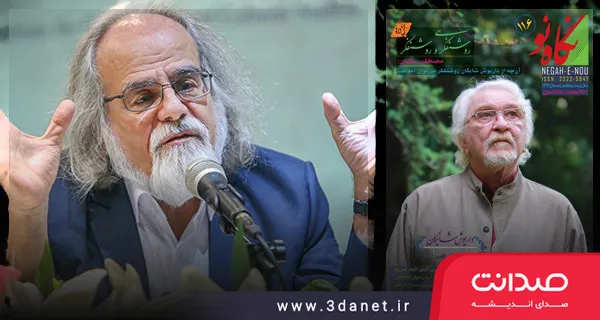
The Vice and Virtue of Intellectualism
In memory of Mostafa Rahimi, an intellectual who sat crooked but spoke straight.
In the essay “The Vice and Virtue of Intellectualism,” I will first clarify the nature of the social activity called “intellectualism”; then, I will address the ethics of intellectualism, that is, the moral precepts and rules to which intellectuals must adhere; next, I will recall the etiquette of intellectualism, meaning the factors that guarantee / facilitate the intellectual’s success; and finally, I will point to some of the afflictions that intellectualism has suffered in our society.
1- The Nature of Intellectualism
Where is the boundary between intellectualism, as a type of social activity, and other similar social activities, such as the activities of scholars, researchers, and university professors, or politicians and political activists, or technocrats, and what gives intellectualism its specific dignity, determination, and distinction? Answering this question depends on attention to the following points:
1-1. It can be said that all voluntary actions that a human being performs throughout life fall, in terms of their ultimate end, into three categories:
a) Occupation / Profession[1], meaning all tasks performed directly or indirectly to earn income. In order to continue living, and because living morally requires one’s independence—and one of the most important aspects of independence is material and financial independence, i.e., self-sufficiency from others—a person has no choice but to earn income, and to earn income is compelled to engage in an occupation / profession. And to be able to take on an occupation / profession, there is no escape from specializing in a science, technique, or art, and therefore, one must be trained in a science, technique, or art. This training is also, indirectly, for earning income and falls within the category of tasks of the occupation / profession type.
b) Pursuing interests, meaning all tasks performed to satisfy the desires and/or needs of the person themselves, and in this respect, are egoistic. Each of us has many kinds of interests, which, by virtue of the fact that no two individuals’ personalities and characters are exactly alike, differ more or less from the types of interests of anyone else. Pursuing interests not only does not earn a single penny of income, but consumes a more or less large portion of everyone’s income.
c) Giving freely, meaning all tasks performed to satisfy the desires and/or needs of other beings, apart from the acting person themselves, and are, therefore, altruistic. Someone who, without considering any benefit for themselves, gives financial help to a poor person, or goes to the aid of an oppressed person, or gives water to a thirsty animal, or prunes a tree, or dredges a stream, has engaged in giving freely. Living morally and behaving morally, in the precise sense of the word—that is, distinct from behaviors performed according to other normative sources (behaviors in accordance with law, religious rites and rituals, customs, habits, and conventions, and expediency)—is an instance of giving freely.
2-1. Altruism, that is, ethical life and conduct, as noted, is directed toward fulfilling the desires and/or needs of others, including fellow human beings. But altruism toward fellow human beings in general, and compatriots in particular, can be realized in two ways: one, changing and reforming their external environment, i.e., changing and reforming their social or natural environment; and the other, changing and reforming their inner domain, i.e., changing and reforming their beliefs, feelings and emotions, or desires. If you build a road for impoverished villagers, or create a water supply system, or drain a marsh and turn it into farmland, you have brought about a change and reform in their natural environment; and if you alter and improve, for example, the arrangements and regulations of the institution of the family, or the institution of the economy, or the institution of politics, or the institution of law, so that the citizens of your society suffer less pain, suffering, torment, and harm, you have brought about a change and reform in the social environment. Both of these types of change and reform have taken place in the external environment of human beings, and if, in undertaking these changes and reforms, your sole intention was to benefit them, and not yourself, your action is an instance of altruism and ethical living. But if, solely with the intention of improving the condition, situation, and affairs of the people, you set about changing and reforming their beliefs, or feelings and emotions, or desires—because you have diagnosed that at least part of the badness of their days and times is due to their beliefs that do not correspond to reality, or their inappropriate feelings and emotions, or their unreasonable desires—in this case, you have created a change and reform in the inner domain of human beings, and, again, your action is an instance of altruism and ethical living. The result is that altruism is made possible either through reforming the natural environment, or through reforming the social environment (both of which are reforms of the external environment), or through reforming the cultural domain (which is a reform of the inner domain).
3-1. Intellectualism is neither a job/profession, nor a hobby. Intellectualism is a type of altruism and ethical living, the type that deals with reforming the inner domain, that is, with reforming the culture[2] of each and every citizen of society. In every society, there are those who, not by the dictate of a job or profession, nor out of hobbyism, but with the motivation of ethical living and altruism, set about reforming the natural environment or the social environment of human beings; and there are those who, with the same motivation of ethical living, set about reforming the inner domain, and not the external environments, of human beings. All three groups are ethical, but only this last group are intellectuals.
4-1. An important presupposition of intellectualism is that at least a more or less large part of the pain, suffering, torment, and harm that human beings endure stems from their own culture, that is, arises from their own false beliefs, inappropriate feelings and emotions, or unreasonable desires. The intellectual, with this presupposition, while in no way denouncing the altruists who set about reforming the external environment of humans, whether their natural environment or their social environment, believes that even with the full-fledged reform of the external environment of human beings, the affairs of humans will not be set in order and their burden will not reach its destination; for humankind is not merely a victim of external circumstances, but rather, its inner condition and state has also brought it to ruin. To eliminate the misery and misfortune that has gripped human life, one must reform both its external environment and its inner domain. The intellectual, themselves, undertakes the reform of the inner domain.
5-1. One can, by using the techniques of medicine, engineering, and management, devote oneself to reforming external environments, both natural and social, and if those who have such devotion do so neither by the dictate of a job or profession nor out of hobbyism, they have fulfilled their ethical duty toward their fellow human beings and compatriots. And, nevertheless, we are still left with the reform of our inner domain, which the ethical intellectuals undertake.
In this respect, intellectualism is conceptually distinct from both technocracy and politicking and political activity, even though it is not impossible for an intellectual to also be a technocrat or a politician and political activist in practice, just as mathematics and painting are conceptually quite distinct, but it is not impossible for someone to be both a mathematician and a painter. For an intellectual to be at the same time a technocrat or a politician and political activist means that they attend both to the reform of the external environment and to the reform of the inner realm. Nevertheless, the intellectual, insofar as they are an intellectual, is preoccupied with the reform of the inner realm of human beings.
6-1. At the same time, the intellectual cannot believe in the primacy of politics, that is, believe that the sole problem of society, or the greatest problem of society, or the cause of all causes of society's problems, is the political system governing society (a major tendency in liberalism); just as they cannot believe in the primacy of economics, that is, hold the view that the sole problem of society, or the greatest problem of society, or the cause of all causes of society's problems, is the nature and quality of the economic relations governing it (a major tendency in socialism). For if they believed in one of these two propositions, they would naturally consider their moral duty, before and above all else, to be the reform of the institution of politics or the institution of economics. With all this, there is also no necessity for the intellectual to believe in the primacy of culture, that is, to consider the sole problem of society, or the greatest problem of society, or the cause of all causes of society's problems, to be the culture of the individual citizens of that society, meaning their beliefs, feelings, and desires.[3] It suffices that they consider a significant share of the problems and afflictions of people's lives to be caused by their own inner selves.
7-1. The result is that the intellectual believes that human beings suffer many of their pains and failures because of the falsity of some of their beliefs and/or the inappropriateness of some of their feelings and emotions and/or the unreasonableness of some of their desires, and, therefore, one must strive to reform their beliefs, feelings and emotions, and desires.
Now the question arises: firstly, how has the intellectual discovered that the inner/psychical/subjective state of people affects external/apparent/objective circumstances, and, secondly, how have they realized which beliefs are true/false, which feelings and emotions are appropriate/inappropriate, and which desires are reasonable/unreasonable, and, thirdly, through what means have they learned the way to change and reform false beliefs, inappropriate feelings and emotions, and unreasonable desires? The answer to all three questions is: with the aid of the latest achievements of the human sciences and knowledge.
In fact, the intellectual puts the latest achievements of the human sciences and knowledge at the service of reducing the pains and sufferings of the citizens of their society, and this means that the intellectual, insofar as they are an intellectual, does not seek knowledge for the sake of knowledge; they want knowledge for the sake of transformation. Scholars, researchers, and academics may seek to know the universe merely for the sake of having known the universe, or in other words, solely motivated by truth-seeking or the satisfaction of scientific and theoretical curiosity; but intellectuals are by no means like this. They seek to know the universe only so that, through this, they can transform the inner state of human beings, or in other words, solely motivated by benevolence. The intellectual places truth in the service of the good. They seek truth so that, by finding it, they can do good.
8-1. Since the intellectual seeks the transformation of the state of human beings, it can be said that intellectualism is a craft, not a science, nor an art. Science, by definition, is knowledge for the sake of knowledge; craft is knowledge for the sake of betterment, that is, change in the direction of the good and beneficence; and art is knowledge for the sake of beautification, that is, change in the direction of beauty and aesthetics. The intellectual uses their knowledge to better the condition and circumstances of people; just as the physician, engineer, and manager (technocrat) also utilize their knowledge to better the condition and circumstances of people, with the sole difference that physicians, engineers, and managers better people's external environment, while intellectuals better their inner realm.
9-1. As has been indicated, technique requires science. Hence, just as a physician needs sciences such as biophysics, biochemistry, biology, physiology, and anatomy, and an engineer needs sciences such as mathematics, physics, and chemistry, and a manager needs sciences such as psychology, sociology, economics, and statistics, the intellectual, too, needs (certain parts of) philosophy, psychology, sociology, theology, mysticism[4], and world literature. But, just as, for example, a physician does not need to be a specialist and expert in biophysics, biochemistry, biology, physiology, and anatomy, and it suffices that they obtain and adopt the latest achievements of the specialists and experts in the sciences relevant to medicine, only to the extent that they relate to the art of medicine (this statement holds exactly true for engineers and managers as well), the intellectual, too, does not need to be a specialist and expert in philosophy, psychology, sociology, theology, mysticism, and world literature (nor is it possible), and it is enough that they take from the specialists and experts as much of these fields as serves the work of changing and reforming the inner lives of human beings. Therefore, the intellectual, by virtue of being an intellectual, is not a scholar, researcher, or academic, but uses the achievements of scholars, researchers, and academics, to the necessary and sufficient degree, for the cultural change and reform of the people (of course, as was also mentioned earlier, it is possible for an intellectual to also be an academic).
10-1. Since the intellectual considers many of the people's beliefs, feelings and emotions, and desires to be incorrect and in need of correction, reform, and revision, they are in fact a judge of the people, not a representative or spokesperson for the people. It is a dangerously grave error if we suppose that the problems and afflictions of the people have nothing to do with the culture of each and every one of them and are solely caused by external circumstances, and that the intellectual is the spokesperson, representative, and defense attorney of the people, seeking and striving to obtain justice for the people from those who have caused their external circumstances. I do not wish to say that no institution or person is responsible for the misery and misfortune of the people and for disordering and disrupting their external circumstances. Far be it. Such a statement would mean denying undeniable realities. My point is that the intellectual performs a moral task aimed at removing the internal factors that have caused the people's misery and misfortune. Removing the external factors of misery and misfortune also requires activities that others, such as technocrats, political activists, economists, and jurists, undertake or should undertake, whether by the mandate of their job/profession or by moral motivation. The intellectual addresses that part of the people's disorders and distresses for which they themselves are the culprit, cause, and originator. That is, their beliefs, feelings and emotions, and desires.
It is a great pity that the deeds and words of Iranian intellectuals, from over a hundred years ago until now, have always, save for very exceptional cases, been such as if Iranians were a brave, aware, fair, self-sacrificing, faithful, freedom-loving, justice-seeking, and noble nation who, by the misfortune of fate, have always been dragged under the yoke of the oppression and injustice of malevolent, ignorant, corrupt, and incompetent rulers and statesmen, and it is the duty of intellectuals to represent and speak for these innocent oppressed people and, like defense attorneys, reclaim their rights from the oppressors and tyrants. The more-or-less oppression and injustice of rulers and statesmen is by no means deniable, but this flattery of the people is also both a denial of certainties, and contrary to truth-seeking, and it also misleads the people and causes them not to find their way to the ambush of one of their greatest enemies, namely their own inner selves, and is contrary to prudence and benevolence.
The reality is that when the individual members of a society, to varying degrees, harbor false, erroneous, delusional, and superstitious beliefs; possess fears, anxieties, angers, rages, withdrawals, melancholias, indifferences, hatreds, grudges, envies, dependencies, narcissisms, and misplaced hopes; and have unreasonable and escapist desires, goals, and ideals, one cannot expect or anticipate that merely by changing a corrupt political system or a set of unhealthy economic relations, everything in that society will turn toward good and well-being. Would it be an exaggeration to say that, fundamentally, that corrupt political system or the set of unhealthy economic relations is the outward manifestation of those very inner states? Is it possible for tens of millions of human beings who have true beliefs, appropriate feelings and emotions, and reasonable desires, and who in no way perceive themselves as benefiting, directly or indirectly, from the existing state of affairs, to be placed under the domination and rule of a few hundred oppressors and tyrants and not utter a word?
11-1. Thus, the intellectual is the arbiter and critic of the people's culture and seeks to transform this culture, not to ratify the beliefs, feelings and emotions, and desires of the people and act as their defender. If this is the case, the art of intellectualism is a kind of art of education. Therefore, all those parts of education whose aim is the transformation of the inner being of humans fall within the scope of the intellectual's work; including: mental education, which is concerned with the pursuit of truth and seeks to create human beings in whose minds, as far as possible, false beliefs do not enter and true beliefs do not depart; moral education, which is concerned with benevolence and seeks to cultivate human beings in whom love of goodness and the will to do good become firmly rooted; artistic education, which is concerned with the pursuit of beauty and aims to produce human beings who acquire the capacity to perceive beauties and to appreciate and value beauty; education concerning social relations, which is concerned with sociability and is engaged in cultivating human beings who understand the psychology, etiquette, and skills of social relations and manifest them in their behavior; education concerning friendship and love, which is concerned with other-directedness and teaches the ways of creating, maintaining, and fostering friendship and love among human beings.
13-1. Undoubtedly, anyone who is benevolent toward another will, as long as that other's desires and needs are aligned, strive to fulfill those desires and needs to the extent of their ability; but when that other has a desire for which they have no need, or its fulfillment runs counter to their needs, or when that other needs something but does not want it or wants its opposite—that is, in any case, their desire and need move in two opposing directions—the benevolent person prioritizes, gives precedence to, and prefers their need over their desire. The requirement of benevolence and love toward another is precisely this: in the event of a conflict between their desires and needs, we prefer their needs and disregard their desires. In other words, we sacrifice their desire or pleasure for their need or best interest (the assumption, of course, is that we have identified the other's need through an objective method. I, who am benevolent toward my child, during their illness, administer the medicine they need to regain their health, even if they do not want it, and I prevent them from eating a certain food that is harmful to their health, even if eating that food is pleasing to them.
As soon as we sacrifice someone's desire or pleasure for the sake of their need or interest, they feel violence from us (bearing in mind that "violence," in its broadest usage, means doing something contrary to another's pleasure). This violence, which can be called the "violence of love"—and is certainly not physical violence—is also a requisite of the intellectual's work, who does not sacrifice the interests of their society's citizens for their pleasures. As a citizen, I naturally like it when the intellectual does not subject my beliefs, feelings, emotions, and desires to criticism, refutation, and rejection, and, for instance, places the responsibility for all my problems and afflictions on the shoulders of rulers and statesmen, and does not hold me at fault in any way or from any direction; but the true intellectual, because they are my well-wisher, does not conceal or deny their own diagnosis, which is the destructive influence of my inner self on the well-being of my life, and therefore, I may well feel violence from them and become embittered. How far is this intellectual from that flattering, sycophantic "intellectual" of the people?
Fundamentally, demagoguery is nothing but sacrificing people's needs and interests for their desires and pleasures, and approving, endorsing, and presenting to them whatever the people find pleasing, without examining its compatibility or incompatibility with their interest, and not being concerned that their interest, that is, their long-term and ultimate benefit, may well be lost. The true intellectual is never a demagogue.
13-1. Likewise, they are never demophobic, meaning they pay no heed to people's negative (and positive) value judgments about themselves, and they do not let themselves be intimidated by negative public opinion about themselves, which arises from the criticism, refutation, and rejection of the people's culture, and thus, they are free from the shackles of public opinion. They are not subject to public opinion, but rather, are its critic and the discerner of its correct and incorrect aspects from one another.
14-1. At the same time, part of the critique of the citizens' culture also consists in the intellectual making known to the citizens the ignorance, malevolence, corruption, and mismanagement of rulers and statesmen, which, due to their deceit, has not reached the people's awareness, and not allowing citizens to hold beliefs inconsistent with reality about the political system governing their society; and this is precisely the political dimension of intellectualism. In other words, if the intellectual is to correct people's beliefs, they must also correct their beliefs about the nature of their rulers' behaviors. Naturally, correcting these beliefs will also entail correcting people's feelings, emotions, and desires.
15-1. The result is that the intellectual is someone who, motivated by giving freely and fulfilling a moral duty, undertakes the change and reform of the inner and cultural affairs of their fellow human beings, with the belief and hope that the change and reform of inner affairs will, to a great extent, lead to the change and reform of their outer affairs and the reduction of their pains, sufferings, afflictions, and problems, and, for this cultural change and reform, draws upon the latest achievements of philosophers (especially in the fields of logic, epistemology, philosophy of language, philosophy of mind, philosophy of action, moral philosophy, philosophy of law, philosophy of value, philosophy of art, and social philosophy), psychologists (especially in the fields of personality psychology, psychology of belief, psychology of feelings and emotions, psychology of need, psychology of motivation, and social psychology), sociologists, theologians and mystics (especially in the fields of anthropology and ethics), and the great poets and writers of the world.
2- The Ethics of Intellectualism
The most important moral precepts and rules to which the intellectual, insofar as they are an intellectual, must adhere are as follows:
1-2. They should not conform to the crowd, nor desire that people necessarily hold positive value judgments about them and/or appear right in their eyes; rather, they should have courage and let flow from their tongue and pen what they themselves deem to be right, whether it pleases the people or not. In the creed of intellectualism, conservatism and flattering or dissembling with the people is forbidden.
2-2. As long as they deem themselves to be in the right, they should have steadfastness and stability, and not think of threats, enticements, punishment, reward, blame, or praise, and not fear confronting opponents.
3-2. At the same time, he should possess open-mindedness and intellectual receptivity, and not turn away from learning about the views of his opponents on any subject, issue, or problem, nor from giving them sufficient, thorough, precise, and deep attention. This means he should not declare the sufficiency of discussions or close the file on any subject, issue, or problem, and should keep himself ready and eager to hear and read new opinions, whether in agreement or disagreement. If he does not do this, he will fall prey to intellectual afflictions such as dogmatism, rigidity, prejudice, bias, and wishful thinking, and these four intellectual afflictions, while differing from one another, share a great and common role in harming society. Lacking open-mindedness is the greatest and most perilous manifestation of narcissism and intellectual vanity.
4-2. He should be an independent thinker with intellectual and theoretical autonomy; that is, he should not be prone to imitation, blind obedience, being impressed by titles, suggestibility, following public opinion, or the intellectual fashions of the time, and, most importantly of all, he should not surrender his heart, mind, spirit, and intellect to any ideology. Ideological thinking, in addition to indicating that a person is not rationally independent and has submitted to intellectual authority and guardianship, also signifies that a love of truth and a passion for it are absent.
5-2. He should consider himself fallible and subject to ignorance, negligence, oversight, and error, and therefore be both eager to learn from others and ready to cooperate with them. The eagerness to learn from others and to engage in intellectual and theoretical cooperation with them is a moral duty whose epistemological origin lies in the view of the non-obviousness of truth. According to this theory, which, besides its theoretical truth, is the most useful and blessed theory for guaranteeing the four values of justice, freedom, fraternity, and lasting world peace, the truth about no subject, issue, or problem is clear and evident, and one can only approach it step by step through a very difficult, slow, and collective process, expending the countless hours, energies, talents, and opportunities of a vast multitude of scholars, researchers, and thinkers. This theory of the non-obviousness of truth, which is incompatible with any kind of ideological thinking, makes a person aware of both his own fallibility and the necessity of learning from others and cooperating with them intellectually and theoretically. And who does not know that accepting one's own fallibility and accepting the need to learn from others and cooperate with them removes the greatest obstacle from the path to realizing justice, freedom, fraternity, and peace? Ideological thinking, according to one of the most precise definitions that can be given of it, is nothing but the denial of the principle of the non-obviousness of truth and the assertion that truth is not only not non-obvious, but was long ago discovered and proclaimed by the founder of such-and-such ideology. It goes without saying that since each ideology presents and offers that "obvious truth" in a different form, the arena of society and the world turns into a battleground where the most stubborn, irreconcilable, and violent combatants fall upon one another and show each other no mercy, because each of them considers the opposing party to be someone who opposes obvious truth and manifest right. Can one reconcile with someone who is in conflict with a truth as clear as daylight?
6-2. He should be hardworking, precise, and deep-thinking, for one cannot approach the non-obvious and elusive truth with laziness, carelessness, and superficiality.
7-2. He should struggle against cultural monophony. By the decree of that same principle of the non-obviousness of truth, the intellectual must be highly sensitive to the blockage of any channel through which a cultural voice could reach the ears of human beings, and seriously prevent this blockage. No society and no group has ever benefited from hearing only one cultural voice. Only when all voices, all the various treatments of a subject, all the solutions to a problem, and all the ways of resolving a difficulty step onto the threshold of people's awareness and are presented to the reason and moral conscience of all, can the strengths and weaknesses of each be illuminated, and the possibility of accessing the treatment, solution, or resolution that has the fewest weaknesses and the most strengths be provided.
8-2. In encountering opinions and views, and when judging the strengths and weaknesses of each, he should be fair, impartial, and avoid any one-sidedness. Fairness and impartiality are required both by the pursuit of truth and by benevolence. They bring me closer to truth and veracity, and they do not withhold goodness and kindness from the holders of various opinions and views.
9-2. Instead of caring about people's acceptance, he should care about their understanding. The intellectual must absolutely not seek for his opinions and views to enjoy people's acceptance, approval, and reception. If their rejection or acceptance gains value and importance for him, he descends and falls from the position of cultural judgment and the cultural education and training of the people to the position of representing and speaking for them, and, gradually, to the level of vulgarity and demagoguery. Instead, he must always seek for people to understand his opinions and views and to correctly grasp his intent and meaning, whether, after this understanding and grasping, they accept those opinions and views or reject them. And for this goal to be achieved, there is no alternative but to avoid, as much as possible, speaking in an ambiguous, equivocal, or obscure manner. If the members of a medical consultative commission, who have gathered at the bedside of a patient with a difficult illness to seek and find a way to treat him through collaboration, do not err in their diagnosis and treatment and prescribe and prepare a correct remedy, that patient will recover, even if he does not understand a single word of their speech, which is usually filled with medical terms and technical jargon; because the effect of the pill, capsule, injection, and syrup on the patient's body does not in any way depend on the patient's understanding of the doctors' words or his knowledge of the effects and properties of the medicines. But, and a thousand buts, cultural illnesses and pains are absolutely and utterly not like this. That is, if the citizens of a society do not understand and grasp the words of their intellectuals, who are akin to those members of the medical commission, even if those intellectuals have found the correct paths to treatment, still, the work, condition, situation, and times of the citizens will never change or improve one iota. The treatment of cultural illnesses and pains depends entirely on the people being fully informed of the diagnosis of the illness and pain and the prescription of the treatment and medicine, which has been the responsibility of the intellectuals. Not to mention that, as was said in the first part, the intellectual is, fundamentally and primarily, engaged in the art of education and training more than anything else, and it goes without saying that education and training become possible and succeed only if the learners and trainees correctly understand the words of the teachers and trainers. Therefore, both by the rule of ethics and by the rule of expediency, it is incumbent upon the intellectual to speak in such a way that his audience, who are the general citizens of society, understand his speech. And for this understanding, there is no alternative but for the intellectual to purge his speech of any ambiguity, equivocation, and obscurity, and to remove these three great obstacles in the path of the audience's understanding. Scholars, researchers, and academics have no choice but to use specialized, technical, and complex terminology in their writings and even their speech (although they, too, do not have the right to use ambiguity and equivocation), and therefore, they must utilize their own jargon. But the intellectual, by virtue of being an intellectual, is not a scholar, researcher, or academic, and his audience is not the students and scientists of a particular science, technique, or art, but rather the general citizenry. An intellectual whose speech is full of ambiguity, equivocation, and complexity is not a true intellectual and must know that "the market for self-display is elsewhere." The correct path is for speech, while preserving its authenticity and to the extent that this preservation of authenticity permits, to be clear, straightforward, and easy to grasp (as Einstein said, "Make things as simple as possible, but no simpler"). The intellectual must constantly repeat to himself this saying of Hugh Kingsmill: "The charlatan makes the clear obscure, and the thinker makes the obscure clear."
10-2. He should not expect or anticipate acceptance from the people, and fundamentally, he should lower the flame of any kind of expectation and anticipation from the people as much as he can. The true intellectual, while, out of compassion and love for human beings, presenting whatever he knows to be truth and in accordance with their best interests in the most comprehensible expression, does not await their acceptance, approval, and reception, and, therefore, does not turn from truth to falsehood and error, nor from the interests of human beings to their pleasures. The intellectual has come to give the people what he has (such as knowledge, understanding, experience, wisdom), not to take from the people what he does not have (wealth, power, fame, respect, reputation, popularity, and things of this sort).
As soon as the intellectual seeks to receive something from the people, the people, in return for giving that thing, also demand something from him, and in this ill-fated transaction, what is lost is truth and the people's interests. In place of truth, the people's opinions and beliefs take hold, and in place of their interests, their preferences. This absence of expectation, which grants the intellectual steadfastness and firmness and frees him from vacillation and indecision, is itself the result of contentment, in the precise sense of the word—that is, being satisfied with what one has and restraining and curbing one's excessive desires in the realm of social ideals.
As noted, these are the most important (though not all) moral precepts and rules to which the intellectual, insofar as he is an intellectual, must adhere. It goes without saying that the intellectual, insofar as he is a human being, must also observe numerous other moral precepts and rules.
3- The Etiquette of Intellectualism
The ethics of intellectualism was the set of precepts and rules whose observance enables the intellectual to preserve his moral character; but the etiquette of intellectualism is the set of precepts and rules adherence to which guarantees, or at least facilitates, the intellectual's success. The most important elements of intellectual etiquette can be stated as follows:
1-3. The intellectual must possess the ability to distinguish genuine problems from pseudo-problems, so as not to become entangled with pseudo-problems—which are not, in fact, the cultural problems of his society—and thus be prevented from addressing real problems. There are always people in society whose interests dictate that the people should not achieve cultural transformation and reform. These individuals will stop at nothing to prevent intellectuals from addressing the culture of their society; and one of their tactics is to present issues that are currently not problems for any society, or at least not for this particular society (though they may have been in the past or may become so in the future), as problems, thereby drawing the lives, energies, inner talents, and external opportunities of intellectuals toward the swamp of these pseudo-problems and submerging them within it. The intellectual's success depends on recognizing this trap, avoiding it, and addressing only those problems that have deprived the citizens of his own society of a good, pleasant, and worthwhile life. In this endeavor, among other things, the studies and research of social psychologists on human needs and the hierarchy of these needs can be of great assistance.
2-3. The intellectual must seek the proper mean between extreme holism and extreme particularism, so that seeing the forest does not make him oblivious to the precise observation of the trees, nor does seeing the trees prevent the perception of the forest. Both seeing the whole while remaining ignorant of the nature of each individual part, and becoming immersed in the parts without raising one's head to learn about the whole, jeopardize the intellectual's success. The two approaches of holism and particularism, if separated from one another, lead the intellectual's work to failure, and if they complement and complete each other, they facilitate his success.
3-3. The intellectual must avoid any kind of laxity and hastiness. Cultural and social issues and problems are so complex and convoluted that taking them lightly leads nowhere but to their remaining unresolved, and the solutions proposed for resolving them are influenced to such an extent by the various aspects of these issues and problems, as well as by the perspectives of those proposing them, that one must not be hasty in adopting and borrowing them. Any proposed solution may have overlooked other aspects of the issue and problem, and even that aspect which has not been overlooked may not have been viewed from other perspectives from which it could also be viewed. The intellectual must always be vigilant to the fact that every phenomenon has various aspects, and every aspect of every phenomenon can be viewed from different perspectives. Not all aspects of a phenomenon warrant the same judgment, nor do all perspectives from which a single aspect of a phenomenon is viewed arrive at the same inference and understanding. The intellectual's laxity and hastiness, which result from neglecting the various ontological aspects of a phenomenon (i.e., the subject, issue, or problem) and neglecting the different epistemological perspectives of those viewing each aspect, both cause issues and problems to be imagined as resolved when they are not, and naturally, they continually reappear in the path of society, and they also cause the intellectual to regard those who critique and reject that solution as hostile to truth and malevolent, and, unjustly and contrary to society's interests, to enter into conflict and strife with them, and consequently, to postpone and even render impossible their own success and that of other intellectuals, as well as the solving of people's problems; whereas attention to the various aspects of a phenomenon and the different perspectives of those viewing the numerous aspects of that phenomenon strengthens the spirit of mutual need among all intellectuals and the desire and inclination for cooperation and shared thinking with one another. That spirit and this desire and inclination, even if, hypothetically (a remote hypothesis), they do not lead to the resolution of the issue and problem, at least increase social solidarity.
4-3. The intellectual must not only strictly avoid creating new boundaries in society, but must also, with the aid of their power of reasoning and persuasion, shatter the long-standing and pre-existing boundaries. Intellectuals who, under the pretext of the highly ambiguous and unacceptable concept and idea of "collective identity," make racial, gender, ethnic, national, religious, sectarian, doctrinal, factional, or intellectual and theoretical boundaries more distinct and robust, and who ascribe value to the inevitable social groupings that have emerged by virtue of the division of labor and/or the diversity of interests and/or the variety of gratuitous social endowments, do not serve humanity, but rather betray it; let alone intellectuals who, each by creating an idol of themselves, found a new cult of personality and add a newly emerged sect to the multitude of previous sects, and not only add a new boundary to the old ones, but practically endorse and reinforce the inauspicious idea of sectarian thinking. Conversely, the intellectual whose endeavor is directed towards ever-greater boundary-removal not only increases the number of their audience, but also achieves ever-greater success in resolving cultural and social issues and problems, because they both emerge from the narrow circle of their disciples and devotees, who have neither the desire nor the power to critique them, and are exposed to the critique of a vast multitude of people, and they also enjoy and benefit from the cooperation and shared thinking of that vast multitude, and both of these are to their own benefit and to the interest of society. The true intellectual must hope for the coming of a day – and strive their utmost for its coming – when, if anyone is asked, "What identity do you hold for yourself?" they will answer: "I am a truth-seeking human being, a citizen of the world," without any reference to race, gender, ethnicity, nation, religion and sect, doctrine, faction, thought and opinion, or any social group in which they involuntarily hold membership.
3-5. The intellectual must possess perseverance and diligence, and having resolved to live ethically and to give freely of themselves through a form of education and cultivation, they must pursue this in practice and strive hard at it. For such perseverance and diligence to be possible, certain conditions must be met, the most important of which is simple living. If the intellectual abandons simple living and contentment with life's necessities, turning instead to a life of luxury, then in order to earn the income needed to provide such a life, they must spend—and in fact, waste—the greater part of their life, energy, talents, and opportunities in their job and profession. For such an intellectual, there remains no leisure or opportunity to diligently pursue their intellectual vocation.
3-6. The intellectual must be prepared to endure pain, suffering, hardship, and bitterness, and through mental-psychological exercises, continually increase this readiness within themselves. Fundamentally, anyone who wishes to be a servant of the people, not their master, must convince themselves that people submit to any external change or reform more readily than to change and reform within themselves. Blaming others is very pleasant and alleviates the pangs of conscience. Conversely, self-blame is exceedingly bitter and unpleasant, and drives a person to self-reproach and self-condemnation. For this reason, people resist someone who holds them, above all else and everyone else, responsible; and this resistance can make the arena difficult for the intellectual, especially since those who stand to lose from the inner and cultural transformation of the people—and who usually possess political and economic power as well—strive hard to constrain the intellectual and do not refrain from resorting to motivating and coercive forces to force the intellectual's retreat.
3-7. At the same time, the intellectual must know that they themselves can, and should, in no way seek help except from persuasive forces. The intellectual has nothing to do with motivating forces—which, by resorting to promises, threats, intimidation, enticement, punishment, and reward, incite people to perform an act in whose rightness they do not believe—nor with coercive forces, which, with the aid of brute force, compel people to perform the aforementioned act. The intellectual must advance their work solely through persuasive forces, that is, the power of their own reasoning and rational persuasion. Their only weapon is rationality and argumentation, and this weapon is irreplaceable and without substitute. Cultural change and reform are possible neither through deception nor through violence.
3-8. The intellectual must always strengthen their spirit of skepticism and their spirit of critique, for without keeping these two spirits alive, they can neither feel the need for argumentation nor acquire skill in reasoning. One who readily believes claims and cannot see the weaknesses in proofs—what need could they have for argumentation, and what skill in reasoning could they possess?
3-9. And the intellectual must not only not fear their own intellectual and theoretical evolution, but welcome it. Attributing positive value to intellectual and theoretical fixity is a baleful legacy of ideologies, both religious and non-religious, and is irreconcilably incompatible with truth-seeking. Fundamentally, one who values human ideals is not the guardian of a static and permanent identity; rather, they desire a fluid and dynamic identity. In other words, one who considers their identity a finished product, rather than an ongoing, evolving process, cannot lead a life of idealistic striving.
4. The Afflictions of Intellectualism
The most important afflictions that can beset the intellectual are as follows:
4-1. That the intellectual considers themselves the representative and spokesperson of the people (presumably in opposition to the ruling power) and, naturally, the guardian of their beliefs, attitudes, and values. The good and welfare of the people lies in their being encouraged and urged towards constant re-examination of their beliefs, attitudes, and values, and the true intellectual is merely their teacher, mentor, and guide on this path, nothing else.
2-4. The intellectual seeing themselves as a political activist and, naturally, gradually and more or less yielding to the requirements of this activism, including entering into political factions and parties. Political activism, whether undertaken as a matter of profession and career, out of passionate attachment, or as a voluntary service, is of course a very beneficial and unavoidable task, but not all beneficial and unavoidable tasks are the responsibility of the intellectual.
3-4. The intellectual, instead of seeking to be a servant of the nation, pursuing being esteemed by the nation. For someone to be a servant of humanity, they must only seek to fulfill their needs and interests, whether those human beings become aware of it or not, whether they like it or not, and whether they are appreciative of this work or not; however, for someone to be esteemed and respected in the eyes of people, it suffices to fulfill their desires and pleasures and, of course, to somehow inform them that they have done so. There have been no shortage of political figures and statesmen who, in order to be esteemed by the people, have betrayed them, not served them. Service, in the precise ethical sense, means compensating for and remedying the incapacity and deficiency of someone who is on the path to fulfilling their own needs and interests, not helping someone who is striving in the direction of fulfilling desires and pleasures contrary to their needs and interests.
4-4. The intellectual covering up their errors, whether calculative errors or moral errors, striving to conceal them, and not confessing to them. No human being is infallible and without error. A person who sincerely and diligently wants to live a life free from error, of course, practically never fully achieves this desire, meaning they occasionally fall into error, and this is forgivable. What is unforgivable is the failure to confess to error. In other words, one should not expect any ethical person to never err, as this is not a realistic expectation, but one can and must expect that if they do err, they confess to it. Failure to confess to error, besides being unethical because it contradicts truth-seeking and benevolence, is also not expedient, as it destroys the trust others have in the person; and it goes without saying how immense the intellectual's need for the people's trust is, as a teacher and educator of the people. Fundamentally, the first prerequisite for success in education and upbringing is the trust of the learner and the one being brought up in the teacher and educator.
5-4. The intellectual having their heart set on a specific ideology and not wanting and/or not being able to step outside the framework of that ideology. The essence of intellectualism rests on rationality and reasoning, and this in no way aligns with ideological thinking and considering the words of a person or persons as unquestionable.
6-4. The intellectual considering themselves an academic and seeking to acquire an academic image and standing. As mentioned in the first part, an intellectual can, in addition to being an intellectual, also be an academic, and in many cases, this is so; but, in any case, being an intellectual is one role and being an academic is another, and a requirement of intellectualism is not being an academic. Since, today, in almost all societies, being a scholar, researcher, and academic carries great social standing and esteem, the intellectual might be tempted to also adopt the persona of a scholar, researcher, and academic, and there is no doubt that for this purpose, one must submit to certain requirements and necessities. The point is that this submission prevents the intellectual, insofar as they are an intellectual, from attending to their own work. For instance, such an intellectual must publish articles in the world's scientific-research journals, or their speeches and writings must indicate that they study only in one or two specific fields of knowledge, or be filled with technical terminology customary among scholars. These and other things draw the intellectual's life, energy, talents, and opportunities onto other paths which, of course and most certainly, are appropriate and necessary for academics, but have nothing to do with intellectualism.
7-4. That the intellectual be obscure in speech and writing, as if speaking and writing for fellow intellectuals or for academics. Everyone, whether an intellectual or otherwise, in the capacity of speech and writing, must clarify their position regarding whom they consider their audience; otherwise, their speech and writing will lack one of the most important components of discursive rationality. No one is forced to speak and write for the people; but if one decides to consider the people as their audience, they are rightfully expected to speak and write in such a way that the people understand. The irony is that many intellectuals earnestly desire the people to accept their words, yet, at the same time, through their obscurity in speech and writing, they create the impression that they are not much concerned with the people's understanding. The true intellectual behaves in precisely the opposite manner: through simplicity in speech and writing, they show that their concern is the people's understanding, while, at the same time, they are not eager for the people to necessarily accept their words.
8-4. That the intellectual only refers to the social sciences, such as sociology, politics, and economics, and neglects or overlooks the immense and profound knowledge and wisdom resulting from the meticulous observations and deep reflections of the sages, mystics, founders of religions and denominations, theologians, philosophers, poets, novelists, and great psychologists of history. While in confronting these great and profound achievements, one must not relinquish an iota of rationality and, therefore, must maintain a skeptical and critical stance as vigorously as possible, one must know that turning one's back on these treasures indicates nothing but folly and has no consequence other than deprivation and loss[5].
I wish and hope that a day will come when both intellectuals fulfill the noble moral duty they have undertaken ever better and more successfully, and citizens realize what a share intellectuals have in the happiness and well-being of their lives. So be it, and so may it be!
.
.
Endnotes
[1]. Sociologists of work draw distinctions between considering the work we undertake as a job or a profession. Hence, I have differentiated between job and profession. Of course, for the purpose of this writing, those distinctions make no difference.
[2]. Esteemed readers know that one of the most difficult problems in the social sciences and the branch of philosophy known as "philosophy of culture" is defining or delimiting the boundaries of culture. In brief, it must be said that "culture" has three main usages:
a) Culture versus nature. In this sense, any phenomenon that existed before the emergence of humankind is a natural phenomenon, and any phenomenon that came into existence after the emergence of humankind and by human hand is a cultural phenomenon. Stone, water, air, the cypress tree, and the butterfly are natural phenomena, while language, script, the institution of the family, the institution of the economy, the institution of politics, science or technology or art, ethics, education, and love are cultural phenomena.
b) Culture versus civilization. In this sense, any phenomenon made by humankind either has a material embodiment, such as a chair, spoon and fork, automobile, ship, airplane, and telephone, or does not have a material embodiment, such as language, script, ethics, and love.
The phenomena of the first group belong to the civilization of a society, and the phenomena of the second group belong to the culture of a society.
c) Culture versus society. In this sense, human-made phenomena that lack material embodiment are either constructed in the external environment of humans, such as language, script, and ethics, or in their internal realm, such as love. The phenomena of the first group are social, and the phenomena of the second group are cultural. Of these three usages of the word "culture," the third usage is nested within the second, and the second usage is nested within the first. My meaning of "culture" in this writing is the third sense of "culture," that is, what emerges and takes shape within the interior of each individual. "Culture" in this sense has three instances: beliefs, feelings and emotions, and desires.
[3]. Of course, the author himself considers the greatest problem of society to be the culture of each and every citizen.
[4]. The reference to theology and mysticism is solely because, throughout history, theologians and mystics, in various religions and denominations, have conducted vast and profound investigations and inquiries into the origins of human pain and suffering. Referring to these investigations and inquiries, of course, does not mean accepting all the views and theories of theologians and mystics on every subject, or even on this very subject of the origins of human pain and suffering.
[5]. In this article, the author has only mentioned in passing what he has presented in the following two writings:
A) "Expounding Truth and Alleviating Suffering: The Ethical and Tragic Face of Intellectual Life" in A Path to Liberation: Essays on Rationality and Spirituality, first edition, Negah-e Moaser Publishing, 1381, pp. 9-33
B) "Intellectualism: Cultural Representation or Cultural Judgment" in Enduring Affection: Essays in Ethics, third edition, Negah-e Moaser Publishing, 1391, pp. 335-8.
.
.
The Vice and Virtue of Intellectualism
Source: Negah-e No Quarterly, Issue 116, Winter
Author: Mostafa Malekian
.
.
PDF file of this article
.
.
Related content:
Intellectualism: Detachment and Compassion; Mostafa Malekian's Response to Fakhreddin Azimi
The Reign of Science in the Realm of Conscience; An Essay on Intellectualism, Ideology, the People, and Malekian's Conceptions
.
.


Discussion3 comments
بسيار عالی بود. فکر کنم اگر تمام روشنفکران در ایران این قواعد را بکار برند,چقدر در ايران شاهد خودشکوفایی خواهیم بود. البته یک شرط دیگر به نظرم اینکه, خودِ روشنفکران با خودشان رابطه دوستی و همکاری داشته باشند.
بینظیر بود . لذت بردم واقعا ...
فوق العاده بود...