Iranian thinker
Abolfazl Khatibi
Abolfazl KhatibiShahnameh Studies, Epic Literature, and CodicologyIranian1960–2023

Life and Thought
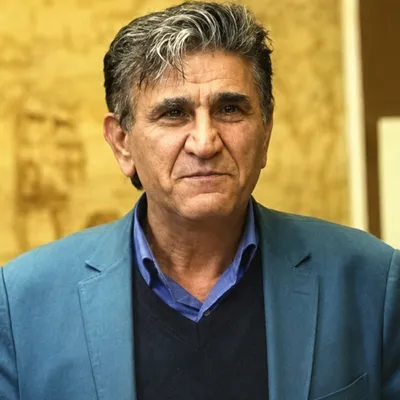
Abolfazl Khatibi was an Iranian researcher of Persian language and literature, a Shahnameh scholar, and a faculty member of the Academy of Persian Language and Literature. The bulk of his research was devoted to the Shahnameh, epic literature, codicology, and the identification of spurious verses and passages, and he collaborated with Jalal Khaleghi-Motlagh on the edition of the seventh volume of the Shahnameh.
Abolfazl Khatibi was born on May 15, 1960, in the village of Emamzadeh Ali-Akbar, near Aradan, in Garmsar County. After completing his primary and secondary education, he entered Shiraz University in 1979 to study history and received his bachelor's degree in 1986. He then completed a master's degree in Ancient Iranian Culture and Languages at the Institute for Humanities and Cultural Studies, and years later, he finished his doctorate in Persian Language and Literature at the same institute.
Khatibi's doctoral dissertation, titled "A Critical Examination of the Most Important Spurious Passages and Verses of the Shahnameh," reflected his primary method in Shahnameh studies: reliance on codicology, collation of manuscripts, and historical criticism of the text to distinguish authentic verses from the additions of scribes and Shahnameh reciters. In his research, he repeatedly demonstrated that certain famous verses attributed to Ferdowsi, including a number of misogynistic verses, do not exist in the oldest and most authoritative manuscripts of the Shahnameh.
Since 1989, Khatibi worked at various research centers, including the Center for the Great Islamic Encyclopedia, the University Publishing Center, and the Academy of Persian Language and Literature. At the Academy of Persian Language and Literature, he was a faculty member and deputy head of the Lexicography Department, and he wrote numerous articles on the Shahnameh, Iranian history, epic literature, and lexicography. He also collaborated with Jalal Khaleghi-Motlagh on the seventh volume of the critical edition of the Shahnameh.
Among his important works and research are "Selected Articles from Nashr-e Danesh on the Shahnameh," collaboration on "Notes on the Shahnameh," the edition of the "Great Faramarz-nama," the edition of the "Shabrang-nama," and the book "Did Ferdowsi Satirize Mahmud of Ghazni?" He also conducted research on the Khwaday-Namag, the Iranian epic tradition, the Parthians and Sasanians in the national epic, and issues concerning the authenticity of Shahnameh manuscripts.
One of the prominent features of Khatibi's work was his sensitivity to the attribution of statements and verses to Ferdowsi. He believed that to judge Ferdowsi's views, one must first distinguish between the original text of the Shahnameh and the additions of later manuscripts, and then separate the words of the narrator, the story's characters, and the poet's historical source from one another. This approach is evident in his studies on the misogynistic verses, the satire attributed to Ferdowsi, and the spurious passages of the Shahnameh.
Abolfazl Khatibi passed away on January 11, 2023. His scholarly legacy is linked above all to the textual criticism of the Shahnameh, codicology, and the effort to purify Ferdowsi's text from later additions.