Iranian thinker
Ali Hasouri
Ali HasouriLinguistics and Shahnameh StudiesIranianb. 1937
In their times
Open in the Timeline of ThoughtLife and Thought
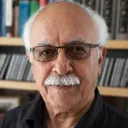
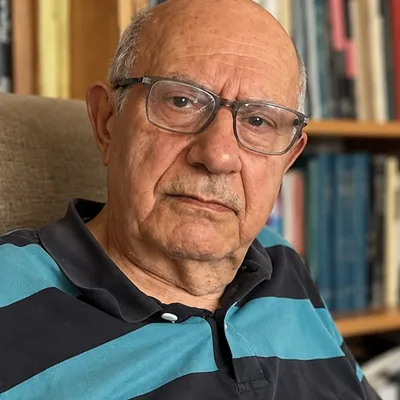
Ali Hasouri is an Iranian linguist and scholar who for years taught at the Asia Institute of Shiraz University and served as editor of its research journal. He is known for works such as his critical edition of the Nowruznameh, "Hafez from Another Perspective," and a study of the myth of Zahhak, situated within classical Persian literature and Iranian mythology.
Ali Hasouri was born in 1937/38 (1316 in the Iranian solar calendar) in Iran. Over the course of his academic career he taught at the Asia Institute of Shiraz University and, for a period, served as editor of the institute's research journal. He has spent a significant part of his life, and continues to reside, in Sweden.
Hasouri's research centers on classical Persian literature, Iranian mythology, and premodern texts. Among his notable contributions is a critical edition of the Nowruznameh (attributed to Omar Khayyam), whose textual re-examination has contributed to a better understanding of this ancient treatise. He has also written "Hafez from Another Perspective," in which he offers a reading of Hafez's poetry that departs from conventional interpretations.
Another area of Hasouri's interest is the study of the myths and epic figures of the Shahnameh, including a book devoted to analyzing the myth of Zahhak, in which — in line with a view also expressed by Ahmad Shamlou in his lectures — he treats large portions of the Shahnameh as predominantly mythological rather than strictly historical narrative. His other works include "Javanmardan dar Tarikh" (on futuwwa and Sufism in Iran), "Safarnameh-ye Haji Mohandes," and "The Beauty of Persian Calligraphy."
Overall, Hasouri is a figure who, largely outside the mainstream of Iran's official academic institutions, has approached classical Persian texts with an independent and at times provocative methodology, and his works continue to draw interest among those engaged in Shahnameh studies and Hafez scholarship.