Literature
Pargar Debate on Hafez Studies
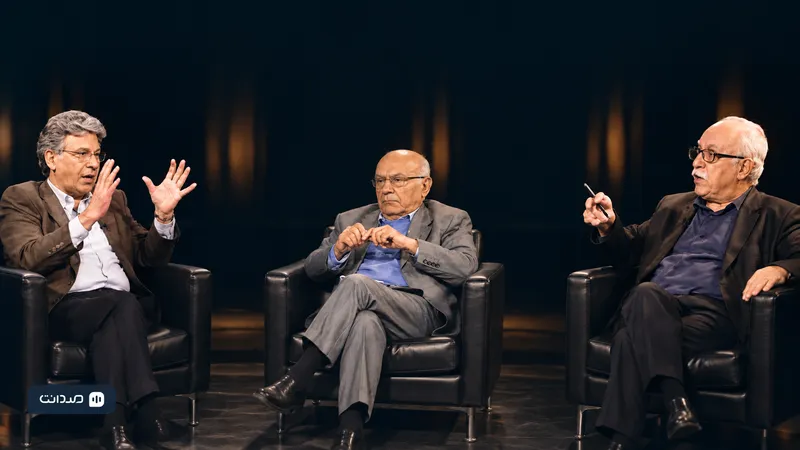
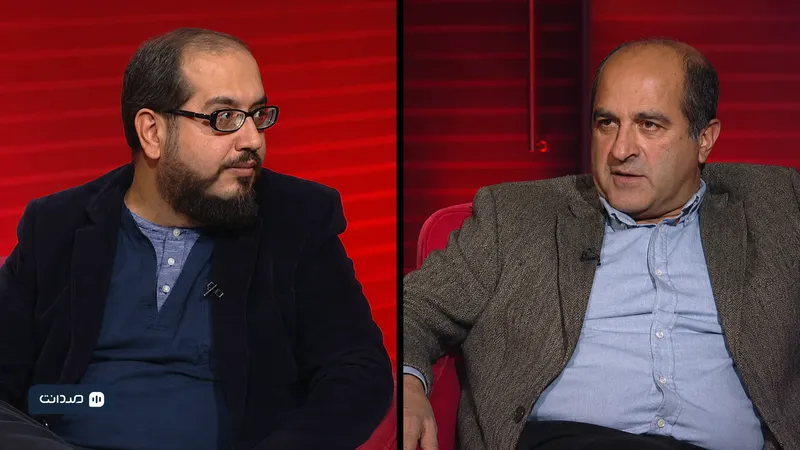
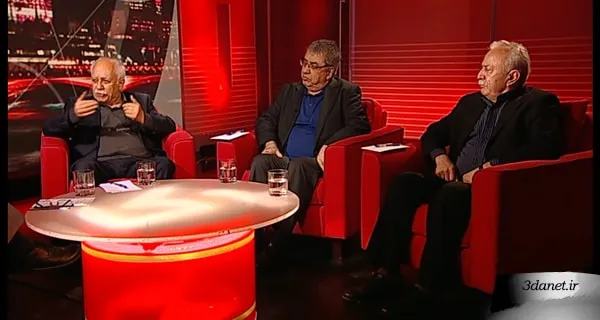
The “Hafez Studies” debate on the program Pargar, featuring Dariush Ashouri, Ali Housouri, Bahman Solouti, and Mahtab Danesh, explored two different approaches to understanding Hafez: a historical and social reading on one side, and a mystical and intertextual interpretation on the other. This discussion shows how Hafez’s poetry, caught between history, mystical tradition, language, and human experience, continues to remain a subject of debate and reflection.
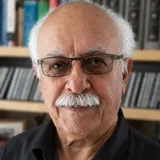
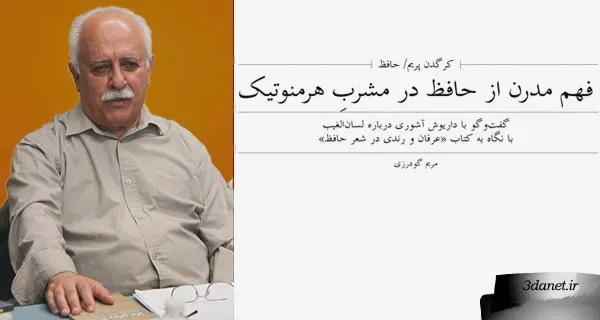
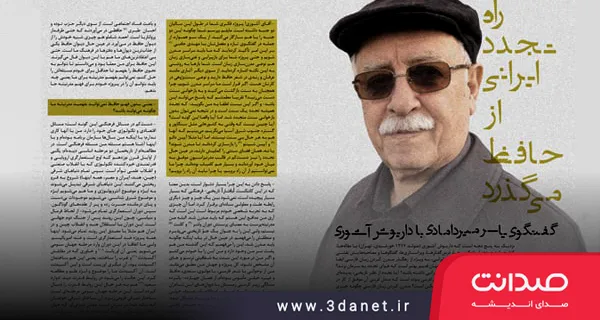
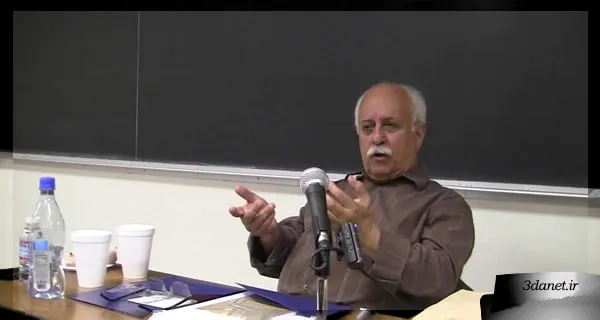
Daryoush Ashouri
شرکت کننده در مناظره
Ali Hasouri
شرکت کننده در مناظره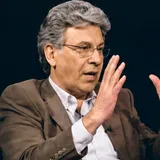
بهمن صولتی
شرکت کننده در مناظره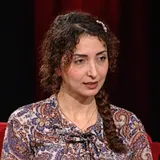
مهتاب دانش
شرکت کننده در مناظرهThe “Hafez Studies” debate on the Pargar programme, held in February 2011 with Daryush Ashuri, Ali Hosuri, Bahman Solti, and Mahtab Danesh, revolved around an old yet still vital question: to understand Hafez, should one begin with his history and life, or with the mystical tradition and the network of texts that preceded him? On one side stood Ali Hosuri, who described Hafez as a life-affirming, historically minded poet and an outspoken critic of hypocrisy, and regarded the mystification of his poetry largely as the product of later readings. On the other, Daryush Ashuri spoke of “the mysticism of rendi”: a branch of Iranian mysticism that places Hafez not outside the Sufi tradition, but at the height of its transformation. Bahman Solti, too, defended the connection between love, rendi, and nazarbazi in Hafez’s poetry, while Mahtab Danesh cautioned against reducing the poet to a single persona or interpretive system.
The programme opened with a ghazal that itself presents the debate’s two central possibilities: should the “muhtasib” and the “bloodthirsty age” be understood as political signs of Shiraz in Hafez’s time, or can the same language also contain a mystical layer?
“Though wine is heartening and the breeze scatters flowers,
Drink no wine to the sound of the harp, for the muhtasib is alert.
If a wine flask and a companion come into your hands,
Drink wisely, for these are times of sedition.
Hide the cup in the sleeve of your patched cloak,
For, like the eye of the wine flask, the age is bloodthirsty.”
Hosuri: The Priority of History, Geography, and the Poem’s Original Situation
From the outset, Ali Hosuri stressed that viewing Hafez as a mystic owes more to biographical dictionaries and readings from later centuries than to the poet’s own time. In his view, the first step in interpreting Hafez’s poetry must be to restore it to its own historical and geographical setting. When Hafez speaks of “times of sedition” and the “muhtasib,” before offering any other interpretation, one must ask in which phase of the conflicts of fourteenth-century Shiraz the poem was composed, and how it relates to Amir Mobarez al-Din, Shah Shoja, or Shah Mansur.
Hosuri did not take this priority to mean that any mystical reading was impossible; his point was that mystical interpretation should not replace an examination of the text’s original situation. In his view, if one is to read a poem mystically, one must employ the criteria of the mystics themselves, rather than immediately assume that every word connected with wine, cupbearer, tavern, or rend is a mystical symbol. The poetic language of the time was saturated with such terms, and Hafez could use them in the service of satire, social protest, and an earthly experience of love and joy.
Hosuri’s second argument concerned Hafez’s relation to the fundamental concepts of mysticism. He maintained that Hafez repeatedly raises doubts about established Sufi concepts and about the official image of God; for that reason, he cannot easily be placed within the mould of a conventional mystic. In Hosuri’s view, Hafez’s severe criticism of the Sufi, the ascetic, the mufti, and the muhtasib is not merely an attack on a few hypocritical individuals; it signals his distance from the system in which these figures stand together. A well-known example of this language is:
“The Sufi set his trap and began his trickery;
He laid the foundations of deceit with the trickster sky.”
Hosuri also relied on his own research method. He made clear that he had not dated the entire Divan, but had selected ghazals whose approximate date of composition could be established through historical evidence. In his view, these poems show that Hafez’s language and atmosphere changed along with political transformations and the stages of his life. One cannot therefore infer a fixed mystical system throughout the Divan from a handful of apparently mystical expressions.
In this view, Hafez is neither an ordinary poet nor merely a chronicler of events. Rather, he is a great poet who turns the experience of his time, music, beauty, and protest into ghazal. Responding to the question of why Hafez has remained so enduring if he is only a narrator of history, Hosuri said that Hafez was first a musician and then a poet; but the secret of his endurance also lies in the fact that the hypocrisy and mechanisms of power he described remain familiar to Iranian readers.
Ashuri: Hafez in Dialogue with the Mystical Tradition
Daryush Ashuri approached the discussion from a different direction. In his view, “mysticism” has no single, fixed meaning, and Hafez must be understood within a centuries-long dialogue with Persian mystical texts and language. He spoke of an intertextual method: no literary text falls from the sky; every text enters into dialogue, agreement, or conflict with earlier works and with the language and culture of its age. On this basis, Ashuri considered the connections between Hafez’s Divan and works such as Kashf al-Asrar and Mirsad al-Ibad to be important—texts in which the story of creation and the relation between Adam and the angel are interpreted mystically.
In Ashuri’s account, early Sufism, which was more strongly grounded in fear, asceticism, and adherence to religious law, was transformed in the Persian language into a love-centred and beauty-oriented mysticism. He referred to Ahmad Ghazali, Attar, Rumi, and then the tradition of Fars, regarding Hafez as the heir and final synthesis of several centuries of transformation in this language. Thus Hafez’s criticism of the cloistered Sufi or the hypocritical ascetic is not evidence of his estrangement from mysticism; it may instead indicate his preference for a form of mysticism without the khanqah, opposed to hypocrisy and grounded in love.
The key to this reading was the concept of the “rend.” Ashuri argued that in older usages rend could refer to rogues and people of vice, but that its semantic charge changed within the Sufi tradition. Hafez elevates this word to the status of his ideal character: one who refuses outward piety and stands against the ascetic. Ashuri explained this opposition through a mystical interpretation of the creation story: the ascetic resembles an angel devoted to praise and unquestioning obedience, whereas the rend is linked to sinful, earthly Adam. From this perspective, the following couplet is not merely a declaration of carefree living, but a joining of the poet’s “I” to the archetype of the human being:
“I am a lover, a rend, and a gazer upon beauty, and I say it openly,
So that you may know how richly I am adorned with such arts.”
In response to Hosuri’s insistence on earthly love, Ashuri argued that in the rend-like mysticism of Fars, human love and divine love are not incompatible poles. Earthly beauty can be a site for the manifestation of divine beauty; thus the experience of earthly love is not emptied of sacred meaning. This point was explained by reference to the transformation of the relationship between humanity and God in Persian mysticism: a relationship that, in Ashuri’s account, moved from the model of the worshipper and the worshipped, founded on fear, towards the language of lover and beloved. In defence of this layer, Solti cited the following couplet during the programme:
“No sight exists that is not illumined by the radiance of your face;
No eye exists that is not indebted to the dust at your threshold.”
Three Central Knots in the Discussion
The first knot concerned the meaning of “rend” and “tavern.” Hosuri insisted that later meanings of these words should not be imposed upon Hafez without reason; he connected rend with denial and irreligion, and regarded the tavern as a real place of pleasure-seeking. Ashuri stressed the semantic transformation of such words and their function in Sufi language, arguing that these transformations make Hafez’s rendi intelligible.
The second knot concerned Hafez’s relation to pre-Islamic Iran. Hosuri spoke of the possible survival of ancient signs and terms, including in the discussion of the “lines of the cup,” and considered them important for reading Hafez. Ashuri replied that the language of the Magi, the Pir-e Moghan, and the mogh-bacheh had appeared in Persian poetry before Hafez, and that one could not treat it each time as evidence of Hafez’s direct familiarity with the religions of ancient Iran. The disagreement here was not over the existence of the words themselves, but over how they should be explained in Hafez’s poetry.
The third knot concerned the relation between history and myth. Hosuri defended a reading that first examines poetry in relation to the political and social history of Shiraz and the stages of the poet’s life. Ashuri accepted that Hafez was affected by the events of his time, but reminded the audience that people in the fourteenth century did not understand the world solely through the concepts of modern history; their world still found meaning within the horizon of myth, divine will, and religious interpretation. For Ashuri, then, history and myth were not incompatible interpretations, although in practice each challenged the other’s priority.
Solti and Danesh: Resisting the Reduction of Hafez
Between these two poles, Mahtab Danesh emphasised the problem of selection: how can one move from a limited number of historically datable ghazals to a general judgement about the entire Divan? She also drew attention to the interweaving of Hafez’s language with the Qur’an and to the distinctive quality of his expression. Her question to Hosuri was this: if all mystical and symbolic allusions are reduced to everyday experience, what account can be given of Hafez’s profound and enduring influence in Iranian culture?
Bahman Solti, too, did not see Hafez as merely a “rend,” and referred to a couplet that brings together the three dimensions of love, rendi, and nazarbazi. In his view, love is the centre of Hafez’s poetry, and nazarbazi is the insight that distinguishes sincerity from hypocrisy. In discussing love, Solti regarded God as Hafez’s supreme beloved and held that reducing this language to physical love overlooks an essential dimension of the poetry. Hosuri, in response, maintained that earthly love should not be called “metaphorical” or treated as inferior; he described Hafez’s beloved as a living human being present in the poet’s world.
In this part of the discussion, the following couplet became a symbol of the disagreement: is the “speech of love” in it merely a human experience, or a sign of a mystical horizon?
“I have seen no sweeter sound than the speech of love,
A remembrance that endures beneath this revolving dome.”
What the Debate Clarified
The debate neither reached a definitive judgement about Hafez’s identity nor regarded such a judgement as possible. Its value lay chiefly in revealing the difference between two methods. Hosuri warned that hasty mystical readings efface Hafez’s history, social language, and critical boldness. Ashuri warned that a purely historicist approach detaches Hafez from his extensive dialogue with the mystical tradition and the symbolic language of Persian.
Perhaps the enduring outcome of this conversation is that Hafez can be opened neither with a single key nor by discarding all other keys. In his poetry, the “muhtasib” can be a sign of the power of his age and, at the same time, a figure of outward piety within the horizon of interpretation; “wine” can be the drink of a gathering and can also acquire another meaning in the poetic tradition. Yet this simultaneity is not itself the final answer: every reading must show what evidence from the text, history, and literary tradition supports it. For all its sharpness, the Pargar debate remains an eloquent example of this methodological contest in Hafez studies.

Discussion0 comments
No comments yet; let yours be the first voice.