Foreign thinker
André Comte-Sponville
André Comte-SponvilleEthics and Secular SpiritualityFrench
One can be without religion; but one cannot live without solidarity, without fidelity, and without love.
Life and Thought
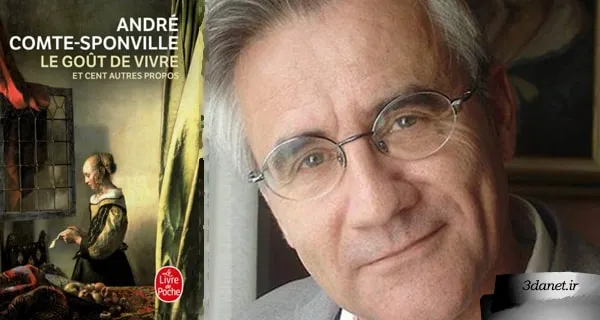
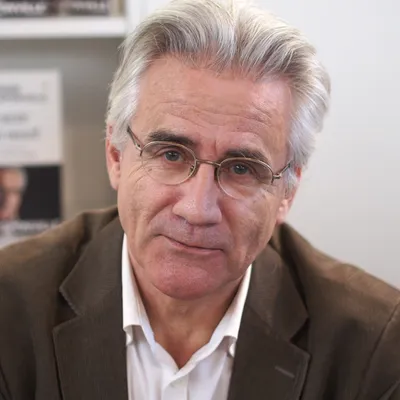
André Comte-Sponville, a contemporary French philosopher born in 1952 in Paris, is one of the well-known figures of public philosophy in France. Through works on virtue, ethics, happiness, materialism, atheism, and spirituality without God, he has sought to present philosophy as an art of living clearly, ethically, and humanely. Books such as A Small Treatise on the Great Virtues and The Spirit of Atheism are among his major works.
André Comte-Sponville was born on March 12, 1952, in Paris. He studied at the École Normale Supérieure in France, attained the 'agrégation' in philosophy, and received his doctorate from the University of Paris 1 Panthéon-Sorbonne. Comte-Sponville taught at universities for many years and then increasingly devoted himself to writing, lecturing, and public dialogue about philosophy.
His widespread fame was cemented above all by the book A Small Treatise on the Great Virtues, a work in which he examines virtues such as politeness, fidelity, courage, justice, compassion, humility, tolerance, humor, and love from a philosophical perspective and in connection with everyday life. In this book, rather than constructing an abstract system, he understands ethics as an exercise in living and cultivating human character.
Comte-Sponville considers himself a materialist, rationalist, humanist, and atheist philosopher, but his atheism does not mean the negation of spirituality. In the book The Spirit of Atheism: An Introduction to a Spirituality Without God, he defends the possibility of a secular spirituality; a spirituality that is not dependent on God, revelation, or the church, yet still values love, fidelity, solidarity, truth, and the experience of openness to the world.
Among his other important works are Impotence and Happiness, Love, Solitude, Value and Truth, Is Capitalism Moral?, The Little Book of Philosophy, and A Philosophical Dictionary. His thought is influenced by traditions such as Epicureanism, Stoicism, Montaigne, Spinoza, Pascal, and Alain, and his main goal is to connect philosophical clarity with practical, ethical, and humane living.