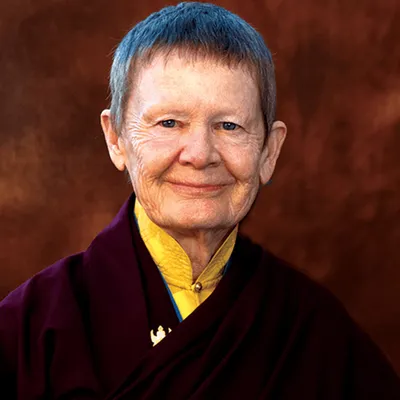
Foreign thinker
Pema Chödrön
Pema ChödrönTibetan Buddhism, spirituality, and meditationAmericanb. 1936
We do not meditate to become good meditators; we meditate to become more awake in our lives.


Life and Thought
Pema Chödrön is an American Tibetan Buddhist nun, author, and teacher. Using accessible and experiential language, she explains the practices of meditation and compassion and teaches mindful ways of facing fear, suffering, and uncertainty for contemporary audiences.
Pema Chödrön, born Deirdre Blomfield-Brown on July 14, 1936, in New York City, was raised in a Catholic family. She studied English literature and earned a master’s degree in elementary education. Chödrön worked as a schoolteacher for a time and turned to Buddhist teachings in her thirties after undergoing personal crises. She first studied with Lama Chime Rinpoche and later with Chögyam Trungpa Rinpoche, becoming one of Trungpa’s prominent students.
She became a novice Buddhist nun in 1974. In 1981, she took full monastic vows, becoming the first American woman in the Vajrayana tradition to receive full ordination. At Trungpa’s request, Chödrön helped establish Gampo Abbey in Nova Scotia, Canada, and became its director in 1986. Gampo Abbey was the first Tibetan Buddhist monastery in North America for Western women and men.
Chödrön’s teachings focus primarily on facing fear, loss, anger, pain, and instability without avoidance. She connects ideas such as mindfulness, compassion, bodhicitta, freedom from attachment, and acceptance of impermanence with the tangible experiences of everyday life. Her major works include The Wisdom of No Escape, Start Where You Are, When Things Fall Apart, The Places That Scare You, and How to Meditate.
For Chödrön, difficult experiences are not merely obstacles to peace. When approached with awareness and compassion, they can become paths toward awakening and freedom from habitual patterns of mind. Her clear and intimate style has brought her work to an audience extending far beyond the Buddhist community.