Life and Thought
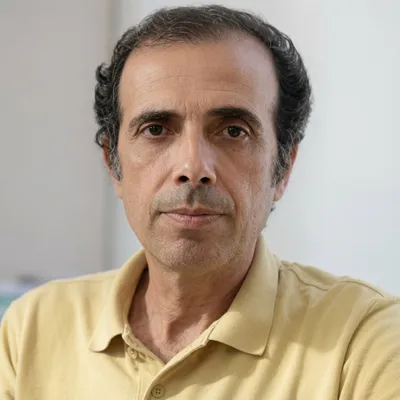
Arvin Sedaghatkish, born in 1974 in Tehran, is an Iranian researcher, music critic, teacher, and composer. He is considered one of the most prolific figures in music criticism and research in Iran, and his writings have been published in various fields.
Arvin Sedaghatkish, born in 1974 in Tehran, is an Iranian researcher, music critic, teacher, and composer. He is considered one of the most prolific figures in music criticism and research in Iran, and his writings have been published in areas such as music criticism, music theory, contemporary Iranian classical music, Western avant-garde music, and the cultural and social dimensions of music.
Sedaghatkish studied music under masters including Shahrokh Khajeh-Nouri in electronic music, Manouchehr Sahbai in orchestral conducting, Alireza Mashayekhi in composition, and Joachim Heintz in electronic music. His educational and intellectual path is a blend of Iranian classical music, new music, electronic music, and the philosophy of music criticism and analysis.
Since 2005, he has collaborated with the Yarava Music Group as a researcher and composer, playing a role in shaping part of the theoretical discourse surrounding contemporary Iranian music. Sedaghatkish has also maintained a continuous presence in specialized music and research journals, serving as a member of the editorial board or scientific advisor for publications such as Farhang o Ahang, Goftogu-ye Harmonic, Ayene-ye Khial, Ketab-e Sal-e Sheyda, the biannual Mehregani, and the quarterly Zangar. In educational and research profiles, his main areas of work are cited as music criticism, the philosophy of contemporary criticism, music theory, and the analysis of Iranian classical and Western avant-garde music.
Sedaghatkish's significance in Iranian music criticism becomes more prominent because he views music criticism not merely as reportage or subjective judgment, but as an interdisciplinary field; a field dependent on history, form, aesthetics, theory, sociology, and the language of writing. The book Dars-goftar-ha-ye Naghd-e Musiqi (Lectures on Music Criticism) also emerged from this path and is the product of his classes and course materials on the nature and method of music criticism.
Alongside research and criticism, Sedaghatkish has also composed music. Among his published or performed pieces are Chahar Zanguleh on the album Abr-ha (Clouds), the piece "...va dar in pa'iz" (...and in this autumn) in the collection Shab-e Irani 4 (Iranian Night 4), Dogah for Electronics, Kantata ba Bach (Cantata with Bach), Hasadat dar Shahr (Envy in the City), Duet and Trio for Harp and Iranian Instruments, and Piece No. 8 for Solo Flute.
He has also served on juries and scientific committees for various music and book events, including the Iran Music Websites and Blogs Festival, the Book of the Year Award of the Music House, the Book of the Year Award of the Islamic Republic of Iran, the Shiraz International Music Festival, and the Fajr Music Festival.
In recent years, his book Musiqi-e Kelasik-e Irani (Iranian Classical Music) has been published; a work that addresses the issue of naming and understanding Iran's radif-dastgahi music within the framework of the concept of "Iranian classical music," and is an attempt to more clearly explain the position of this musical tradition over the past one hundred years.