Iranian thinker
Farshad Momeni
Farshad MomeniDevelopment Economics and Institutional EconomicsIranian
Life and Thought
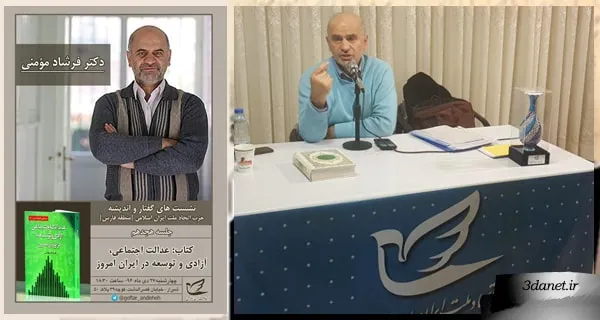
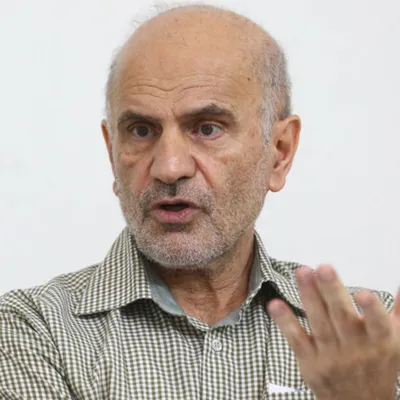
Farshad Momeni, an Iranian economist and professor of economics at Allameh Tabataba'i University, is a well-known figure in the fields of development economics, institutional economics, and the political economy of Iran. His works and talks focus on equitable development, the role of institutions, social justice, national production, and the critique of economic policies incompatible with public welfare.
Farshad Momeni, born May 24, 1955, in Tehran, is an Iranian economist and researcher. He received his master's degree in economics from the University of Tehran and his PhD in economics from Allameh Tabataba'i University, and for many years has taught and conducted research as a faculty member and professor of economics at Allameh Tabataba'i University.
Momeni is among the economists who examine the issue of development in Iran not merely from the angle of numerical economic growth, but from the perspective of institutions, social justice, the quality of policymaking, production, education, corruption, poverty, and societal capability. In his approach, economics is not a discipline separate from culture and society; rather, it is intertwined with history, public ethics, institutional structure, and the fate of people's daily lives.
Among his works are "The Political Economy of Development in Contemporary Iran," "Iran's Economy During the Era of Structural Adjustment," "Social Justice, Freedom, and Development in Contemporary Iran," "The Knowledge-Based Economy," and "Iran's Economy During the Era of the National Government." He has also played a role in translating and introducing topics in institutional and developmental economics and has served as the head of the Institute for the Study of Religion and Economics.
Momeni's intellectual significance in Iran's cultural sphere lies in his transformation of economics into a public and human question: that development without justice, production, knowledge, and sound institutions is not sustainable. From this perspective, his works are suitable for readers who wish to understand more seriously the relationship of economics with ethics, society, culture, and Iran's future.