Iranian thinker
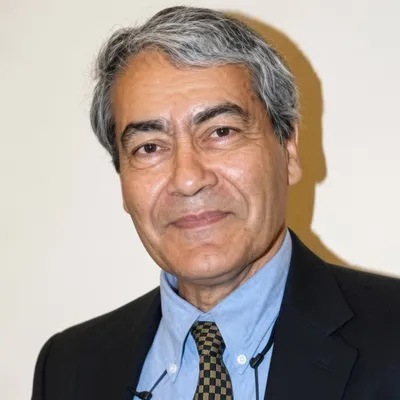
Majid Tehranian
Majid TehranianCommunications, Development, and Peace StudiesIranian1937–2012


Life and Thought
Majid Tehranian was an Iranian scholar of international communications, political economy, development, and peace studies. He earned his PhD in political economy and government from Harvard University and taught for many years as a professor of international communications at the University of Hawaiʻi at Mānoa. Through his works on global communications, development, democracy, and peace, Tehranian is considered an influential figure in bridging communication studies and global politics.
Majid Tehranian was born on March 22, 1937, in Iran. After studying at Dartmouth College, he completed a master's degree in Middle Eastern studies and a PhD in political economy and government at Harvard University. Over the course of his academic career, Tehranian taught and conducted research at institutions including Harvard, Oxford, the University of Tehran, UNESCO, and the University of Hawaiʻi.
His primary fields of work were international communications, the political economy of culture, development, democracy, and peace. In Iran, he was among the founders and directors of institutions related to communications and development, and later served as a professor of international communications and director of the Spark M. Matsunaga Institute for Peace at the University of Hawaiʻi at Mānoa. Tehranian was also the director of the Toda Institute for Global Peace and Policy Research.
Among his major works are "Technologies of Power: Information Machines and Democratic Prospects," "Global Communication and World Politics: Domination, Development, and Discourse," "Restructuring for World Peace," and "Bridging a Gulf: Peacebuilding in West Asia." In these works, he examined the relationship between communication technologies, power, development, domination, democracy, and the possibilities for global peace.
Tehranian's significance lies in the fact that he did not view communications merely as a tool for transmitting messages, but analyzed it within the context of power relations, development, culture, and the world order. His research on communications and the Iranian Revolution, global communications, the dialogue of civilizations, and human security has secured his prominent place among theorists of communications and peace.
Sedanet articles about Majid Tehranian