Foreign thinker
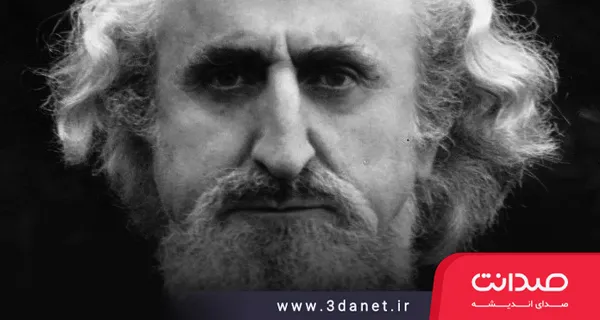
Frithjof Schuon
Frithjof SchuonTraditionalism, Comparative Mysticism, and Perennial PhilosophySwiss
Every religion is a world for its adherents; but every religion is only one form of the absolute Truth.
Life and Thought
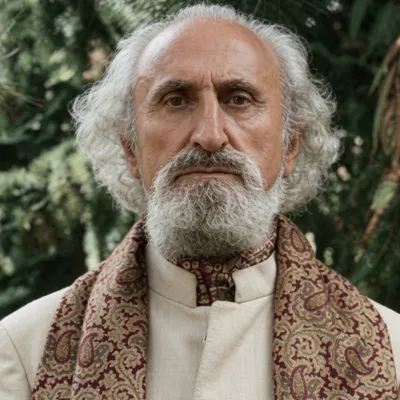
Frithjof Schuon (1907–1998) was a prominent Swiss philosopher, mystic, poet, and painter, and a pioneer of the Traditionalist School and Perennial Philosophy. By formulating the concept of the 'transcendent unity of religions' and critiquing modernism, he played a foundational role in comparative religious studies and mystical theology.
Frithjof Schuon was born in 1907 in Basel, Switzerland, into a family of German descent. From his youth, he studied Eastern sacred texts, particularly Hindu, Buddhist, and Islamic scriptures. In France, he became acquainted with the works of René Guénon, the founder of the Traditionalist School, from whom he learned the fundamental concepts of critiquing the modern world and returning to authentic tradition. He later traveled to North Africa and, in Algeria, joined the Shadhili order, embarking on the path of Islamic mystical practice.
His scholarly masterpiece and first major book, "The Transcendent Unity of Religions" (1948), is recognized as one of the most important works of the twentieth century in the fields of philosophy of religion and comparative religious studies. In this work, Schuon distinguished between the 'exoteric' form and the 'esoteric' truth of religions, arguing that while different religions diverge at the level of outward forms and law, they point to a single, transcendent truth in their inner, gnostic dimension.
Among his other prominent works are "Archetypal Perspectives," "Unveiling the Veiled in Religious Traditions," and "Understanding Islam." Throughout his life, in addition to writing dozens of philosophical and mystical books and articles, Schuon also composed subtle poetry and painted mystical works. He spent the final decade of his life in the United States and passed away in 1998.