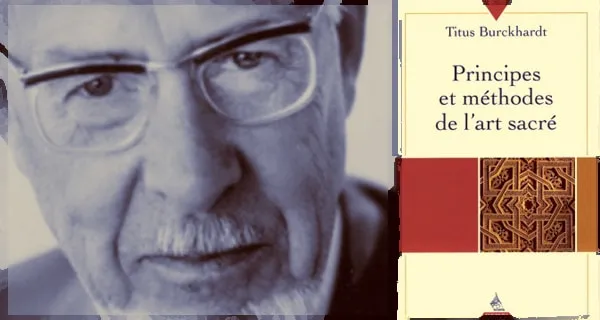
Foreign thinker
Titus Burckhardt
Titus BurckhardtTraditionalism, Islamic Art, Mysticism, and Perennial PhilosophySwiss
Sacred art is an instrument for recollecting the sacred and returning man to his own center.
Life and Thought
Titus Burckhardt was a prominent Swiss-German spiritual researcher, traditionalist, and art scholar of the 20th century. He is considered one of the main figures of the Traditionalist (Perennial Philosophy) school and played a significant role in introducing Islamic art, architecture, and mysticism to the Western world.
Titus Burckhardt was born in 1908 in Florence, Italy, into a cultured Swiss family. He was the son of the prominent Swiss sculptor Carl Burckhardt and a relative of Jacob Burckhardt, the renowned historian of art and the Renaissance. In his youth, Burckhardt studied art history, Orientalism, and Eastern languages, and his numerous travels to North Africa, especially Morocco, changed the course of his life and thought; there, he gravitated towards Islam and adopted the name 'Ibrahim Izz al-Din'.
Burckhardt spent a significant part of his life researching the wisdom, art, and mysticism of the world's great traditions, particularly the Islamic tradition. He worked for years as the director of the prestigious Olten publishing house in Switzerland and published numerous key works on Perennial Philosophy and traditional art. Due to his deep understanding of the historical fabric and Islamic architecture, he was also selected as a senior advisor to UNESCO for the restoration and preservation of the historic fabric of the ancient city of Fes in Morocco.
Burckhardt's outstanding works can be divided into several categories: his works on Islamic art include the brilliant books 'Art of Islam: Language and Meaning' and 'Sacred Art in East and West'. In the field of mysticism and Sufism, the book 'Introduction to Sufi Doctrine' and his important translations of the works of Ibn Arabi (such as Fusus al-Hikam) and Abd al-Karim al-Jili are noteworthy. Burckhardt's central thought was based on the belief that sacred art is not merely an aesthetic expression, but a luminous manifestation of metaphysical truths and an embodiment of the sacred in material forms.