Foreign thinker
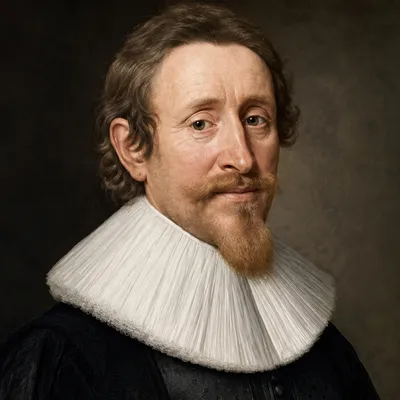
Hugo Grotius
Hugo GrotiusInternational law and philosophy of lawDutch1583–1645


Life and Thought
Hugo Grotius was a Dutch jurist, philosopher, theologian, and diplomat, and one of the founders of modern international legal thought. His major work, On the Law of War and Peace, systematically articulated natural law and legal rules governing war, peace, and relations among states.
Hugo Grotius, whose original name was Huig de Groot, was born on April 10, 1583, in Delft in the Dutch Republic. A precocious scholar, he entered Leiden University as a teenager, where he studied classical languages, history, philosophy, and law. In addition to his legal scholarship, Grotius wrote on theology, history, poetry, and drama, and is regarded as an important figure of Dutch humanism.
Amid the religious and political conflicts of the Dutch Republic, he defended tolerance in matters of belief. This position led to his arrest and imprisonment in Loevestein Castle. In 1621, with the help of his wife, he escaped from prison and spent important years of his intellectual life in exile in France. He later served as Sweden’s diplomatic representative in France.
In The Freedom of the Seas, Grotius defended the possibility of free access by nations to the seas. His principal fame, however, rests on On the Law of War and Peace, published in 1625. In that work, he sought to provide principles for natural law, rights, property, agreements, just war, and conduct in war—principles capable of ordering relations among individuals and states beyond local customs.
He connected natural law with reason and the social nature of human beings, and stressed the moral obligation to keep agreements and the limits that should govern conduct in war. His theory contributed to the development of modern international law and to later debates about natural rights, state sovereignty, and the law of nations. Grotius died in Rostock on August 28, 1645.