Foreign thinker
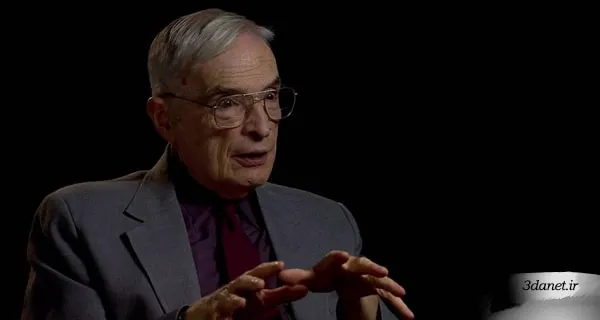
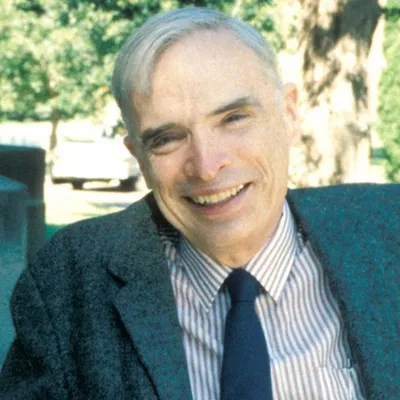
Ian Barbour
Ian BarbourRelationship between Science and Religion, Philosophy of Religion and PhysicsAmerican
Science shows us how the world works, but theology helps us understand why the world exists and what it means.
Life and Thought
Ian Barbour (1923–2013) was a prominent American physicist, theologian, and philosopher recognized as the founder of the modern field of 'Science and Religion'. By presenting a fourfold typology of the interaction between science and religion (Conflict, Independence, Dialogue, and Integration), he developed a methodological framework for examining the relationship between scientific discoveries and religious beliefs. Barbour won the prestigious Templeton Prize in 1999.
Ian Graeme Barbour was born in 1923 in Beijing, China (to American parents who were university professors). He began his higher education in physics and received his PhD in physics from the University of Chicago, where he conducted research under great physicists such as Enrico Fermi. However, his deep interest in ethical and theological issues led him, after several years of teaching physics, to go to Yale University and also earn his divinity degree. He then spent many years teaching and conducting research as a professor of physics and a professor of religion at Carleton College in Minnesota.
Barbour's greatest achievement was organizing and methodizing the dialogue between science and religion. His groundbreaking book, Issues in Science and Religion (1966), officially established this topic as an independent academic field of research. In his later works, especially the book Religion in an Age of Science, he presented his famous fourfold model for categorizing the relationships between science and religion: 1) Conflict, 2) Independence, 3) Dialogue, and 4) Integration.
Barbour was also an advocate of 'Critical Realism' in both science and theology; meaning he considered both scientific laws and religious propositions to be metaphorical descriptions that nonetheless refer to an independent reality. In the philosophy of religion and theology, he was influenced by Alfred North Whitehead's 'Process Philosophy' and sought to present a conception of God compatible with the findings of evolution and quantum physics. Ian Barbour passed away in 2013.