Life and Thought
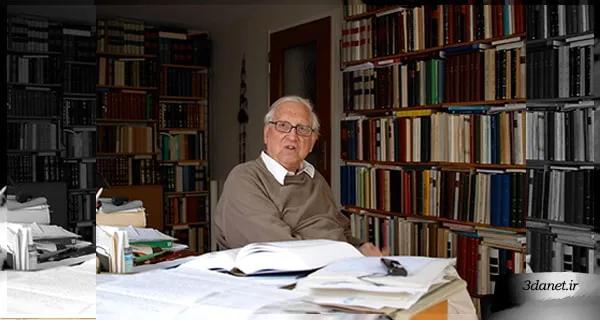
Josef van Ess (1934–2021) was a German Islamicist and one of the most eminent scholars of the history of Islamic theology in its formative period. His six-volume work Theologie und Gesellschaft im 2. und 3. Jahrhundert Hidschra (Theology and Society in the Second and Third Centuries of the Hijra) is considered the most comprehensive study of early Islamic religious thought. He was for many years Professor of Islamic Studies and Semitic Languages at the University of Tübingen.
Josef van Ess was born on 18 April 1934 in Aachen, Germany. After studying at the Universities of Bonn and Tübingen, he graduated in 1959 with a dissertation on Islamic mysticism. From 1968 to 1999, he was Professor of Islamic Studies and Semitic Languages at the University of Tübingen and continued his research after retirement. Van Ess died in Tübingen on 20 November 2021.
His most important work is the six-volume collection Theologie und Gesellschaft im 2. und 3. Jahrhundert Hidschra: Eine Geschichte des religiösen Denkens im frühen Islam (Theology and Society in the Second and Third Centuries of the Hijra: A History of Religious Thought in Early Islam) (1991–1997), which reconstructs, with unparalleled precision, the early theological currents, personalities, debates, and the links between theology, society, and politics. This work remains the primary reference for research on the formative period of Islamic theology.
Van Ess also published works on the Mu'tazila, Islamic heresiography, mysticism, and comparisons between Islamic theology and Christian and Jewish traditions. The book The Flowering of Muslim Theology makes a selection of his achievements available in English. His method was based on the meticulous examination of early Arabic sources and the historical reconstruction of thought, and it has had a profound influence on contemporary Islamic studies.