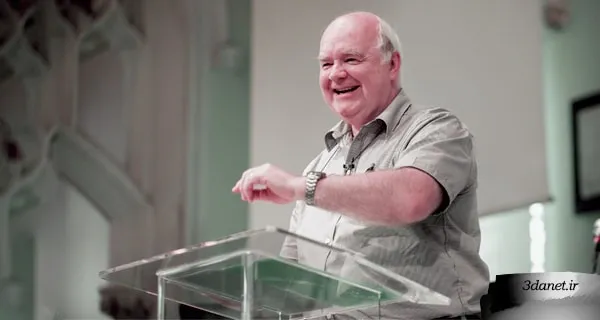
Foreign thinker
Lawrence M. Krauss
Lawrence M. KraussTheoretical physics, cosmology, and science communicationCanadian-American
Every atom in your body came from a star that exploded. You are all stardust.
Life and Thought
Lawrence Krauss (born 1954) is a theoretical physicist, cosmologist, and prominent science communicator. He is best known for his bestselling book A Universe from Nothing and his staunch defense of scientific rationality and critique of theology.
Lawrence Maxwell Krauss was born in 1954 in New York and raised in Canada. He received his PhD in theoretical physics from the Massachusetts Institute of Technology (MIT) and subsequently served as a professor and researcher at prestigious universities such as Yale, Case Western Reserve, and Arizona State University. His scientific research has primarily focused on early-universe cosmology, dark matter, dark energy, and particle physics.
Beyond his specialized academic work, Krauss is considered one of the most prominent science communicators and defenders of critical thinking in the twenty-first century. Through numerous popular books, he has sought to explain complex concepts in physics and cosmology to the general public. Among his most important works is A Universe from Nothing, in which he draws on quantum physics and modern cosmology to explain how the universe could arise from 'physical nothing.'
He has also participated in numerous debates and discussions with theologians and philosophers of religion, defending naturalistic and atheistic viewpoints. His other work, The Physics of Star Trek, was also widely embraced by audiences.