Foreign thinker
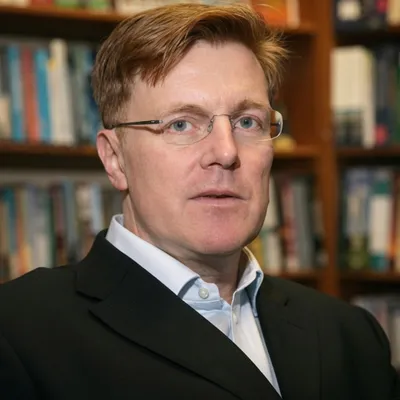
Nigel Warburton
Nigel WarburtonPhilosophy and the Promotion of PhilosophyBritishb. 1962
Protecting free speech maximizes the chance of truth emerging from its collision with error and half-truth.

Life and Thought
Nigel Warburton (born 1962) is a British philosopher and one of the best-known popularizers of philosophy in the English-speaking world. Through bestselling introductory books such as Philosophy: The Basics and A Little History of Philosophy, as well as the popular podcast Philosophy Bites, he has made philosophy accessible to general audiences. Warburton has also published academic works in aesthetics, applied ethics, and free speech.
Nigel Warburton was born in England in 1962. He received his BA from the University of Bristol and his PhD in philosophy from Darwin College, University of Cambridge (supervised by Hugh Mellor). After teaching at the University of Nottingham, he joined the Philosophy Department at the Open University in 1994, where he worked as a Senior Lecturer until 2013.
Warburton is best known as a popularizer of philosophy. His introductory books, such as Philosophy: The Basics, Philosophy: The Classics, and Thinking from A to Z, are very popular among students and philosophy enthusiasts. The bestselling A Little History of Philosophy (2011) offers an engaging and concise narrative of the history of philosophical thought. He has also written books on free speech (Free Speech: A Very Short Introduction), art (The Art Question), and a biography of the modernist architect Ernő Goldfinger.
In 2007, together with David Edmonds, he launched the Philosophy Bites podcast, which features short interviews with leading philosophers from around the world and has been downloaded millions of times. Warburton also runs the Virtual Philosopher blog and serves as the philosophy editor for the Five Books website and a consulting editor at Aeon. He writes a weekly 'Everyday Philosophy' column for The New European newspaper.
His thought focuses on making philosophy accessible, the importance of logical reasoning, critical thinking, and the defense of free speech. He sees philosophy as an activity that progresses by asking fundamental questions and analyzing concepts through logical argument.