Foreign thinker
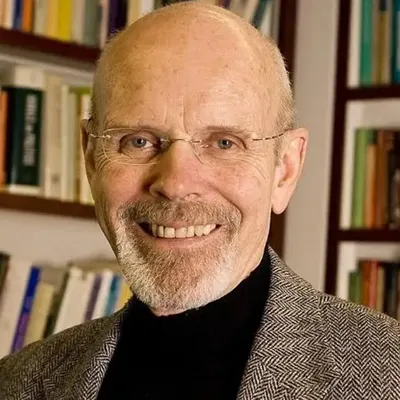
Philip Pettit
Philip PettitPolitical Philosophy and Republican TheoryIrish
A person is not free whenever someone has the power to interfere in their life, even if that power is not exercised.
Life and Thought
Philip Pettit is an Irish philosopher and political theorist, born in 1945, one of the leading figures in contemporary political philosophy and a professor at Princeton University. His primary significance lies in reviving the republican tradition and formulating the concept of "freedom as non-domination"; a conception that understands freedom not merely as the absence of interference, but as emancipation from the arbitrary power of others.
Philip Pettit, full name Philip Noel Pettit, is an Irish philosopher and one of the most important contemporary political theorists. He studied in Ireland and received his doctorate from Queen's University Belfast. Pettit has worked at various universities and academic institutions, including the Australian National University and Princeton University, and has produced significant works in the fields of political philosophy, ethics, philosophy of mind, action theory, and social ontology.
Pettit's main renown stems above all from his book "Republicanism: A Theory of Freedom and Government." In this work, he reinterprets the republican tradition against two common conceptions of freedom: negative freedom as the absence of interference, and positive freedom as self-mastery. In his view, a person is free when they are not under the domination of another's arbitrary power, even if that power is not currently being exercised.
In works such as "The Common Mind," "A Theory of Freedom," "On the People's Terms," "Just Freedom," and "The State," Pettit has sought to explain the connections between mind, action, social institutions, democracy, and political justice. He has also, in discussing collective agency, particularly in the book "Group Agency" co-authored with Christian List, defended the possibility and conditions of the agency of groups and institutions.
Pettit's political thought rests on the idea that the task of the state and democratic institutions is not only to prevent direct interference, but also to build structures that protect citizens from humiliating dependency and the arbitrary power of individuals, corporations, or the state itself. In this respect, his philosophy is considered one of the important formulations of neo-republicanism in contemporary political philosophy.