Foreign thinker
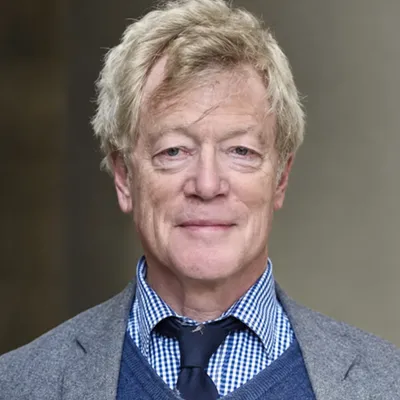
Roger Scruton
Roger ScrutonPolitical philosophy and conservative aestheticsBritish1944–2020
Beauty is never optional; it is part of a fundamental human longing for meaning in the world.


Life and Thought
Roger Scruton was a British philosopher, cultural critic, and writer, and one of the most prominent figures of contemporary philosophical conservatism, whose work in political philosophy, aesthetics, and the philosophy of art and architecture sparked extensive debate. He is known for his reasoned defense of tradition, social institutions, and classical aesthetics against modernism and academic leftism.
Roger Scruton was born on February 27, 1944, in Buslingthorpe, England. He studied philosophy at Jesus College, Cambridge, and later taught at Birkbeck College, London, and Boston University. His experience of the Paris student unrest of 1968 was a turning point in the formation of his conservative views; he later wrote that those events pushed him away from what he saw as leftist cultural permissiveness and toward a defense of order, tradition, and legitimate authority.
Scruton was a prolific writer who published more than forty books over his lifetime, spanning political philosophy, aesthetics, the philosophy of art, architecture, music, and cultural criticism. His well-known works include The Meaning of Conservatism, The Aesthetics of Architecture, and writings on the philosophy of music and sexual love. In the 1980s, he founded The Salisbury Review to advance conservative viewpoints, and during the era of communism in Eastern Europe, he secretly maintained contact with dissident intellectuals in Czechoslovakia, helping teach philosophy in their underground seminars.
At the center of Scruton's thought lies a defense of tradition, belonging to place and community, and the importance of beauty as an objective value rather than merely a matter of personal taste. Criticizing cultural relativism and modernism in art and architecture, he argued that beauty and social order are interdependent, and that the loss of one leads to the erosion of the other. Scruton was knighted by the British monarch in 2016 and died on January 12, 2020.