Foreign thinker
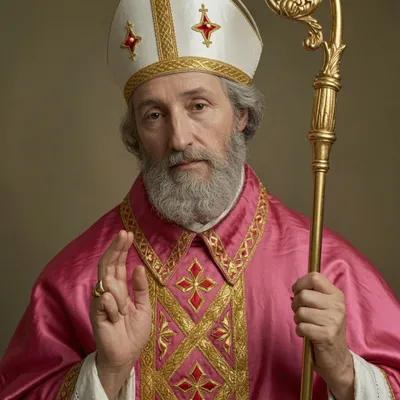
Saint Anselm
Saint AnselmChristian Theology and Philosophy of ReligionItalian
I believe so that I may understand.
Life and Thought
Anselm of Canterbury (1033–1109) was a philosopher, theologian, and Archbishop of Canterbury known as the "Father of Scholasticism." By proposing the "ontological argument" for the existence of God and linking faith and reason, he played a foundational role in the history of medieval philosophy.
Anselm was born in 1033 in Aosta (in present-day northern Italy). In his youth, he joined the Benedictine monastery of Bec in Normandy and studied theology and logic under his teacher Lanfranc. Anselm later succeeded Lanfranc and eventually became Archbishop of Canterbury in England; an appointment that embroiled him in intense political and theological struggles with the English kings of the time over the independence of the Church.
Anselm's most important philosophical achievement is the formulation of the "Ontological Argument" in his famous work, the Proslogion. He defined God as "that than which nothing greater can be conceived" and argued that such a being cannot exist merely in the mind but must also exist in reality. His other major work is the Monologion, in which he presents rational and a priori arguments for the attributes of the divine essence.
Anselm's philosophical outlook was founded on the famous motto "I believe so that I may understand" (Credo ut intelligam). He did not see reason as a tool for denying or replacing faith, but rather believed that faith is the starting point of rational understanding and that reason's task is to explicate and clarify the content of faith. Anselm's thought paved the way for the development of Scholastic philosophy in the Middle Ages and had a profound influence on later philosophers, from Thomas Aquinas to Descartes and Kant.




.webp)