Foreign thinker
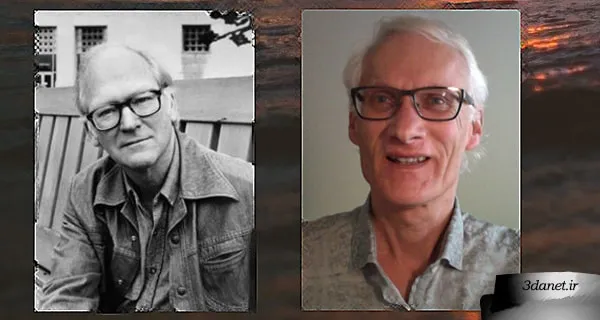
Saul Kripke
Saul KripkePhilosophy of Language and Modal LogicAmerican
It really is a nice theory. The only defect I think it has is probably common to all philosophical theories. It's wrong.
Life and Thought
Saul Aaron Kripke (1940–2022) was an American philosopher and logician and one of the most influential figures in 20th-century analytic philosophy. Through foundational works such as Naming and Necessity, he advanced the causal-historical theory of reference and the concept of the rigid designator, bringing about a profound transformation in the philosophy of language, metaphysics, and modal logic. Kripke demonstrated his genius in logic from adolescence and remained a central figure in these fields until the end of his life.
Saul Aaron Kripke was born on November 13, 1940, in Bay Shore, Long Island, New York. His father was a rabbi and his mother wrote Jewish educational books. He showed extraordinary genius in mathematics and philosophy from childhood; during high school, he wrote a paper on the completeness theorem in modal logic, which was published in 1959 (while he was studying at Harvard).
He received his B.A. in mathematics from Harvard in 1962 and subsequently taught at Rockefeller University and then, from 1976 to 1998, as a professor of philosophy at Princeton University. From 2003 until the end of his life, he was a Distinguished Professor at the Graduate Center of the City University of New York (CUNY). In 2001, he received the Rolf Schock Prize in Logic and Philosophy.
His most important work is Naming and Necessity (based on lectures given at Princeton in 1970 and published in 1980), which challenged the descriptivist theory of reference of Frege and Russell and replaced it with the causal-historical theory of reference. He introduced the concept of the "rigid designator" and showed that proper names and natural kind terms refer to the same object in all possible worlds. This work had profound consequences for the metaphysics of necessity, identity, and the a priori/a posteriori distinction.
His other important works include papers on intuitionistic logic, set theory, and the book Reference and Existence (based on the John Locke Lectures at Oxford). Kripke also offered an important critique of the standard interpretation of Wittgenstein on rule-following. He died on September 15, 2022.