When the rate of return on capital exceeds the rate of growth of output and income, as it did in the nineteenth century and seems quite likely to do again in the twenty-first, capitalism automatically generates arbitrary and unsustainable inequalities.


Life and Thought
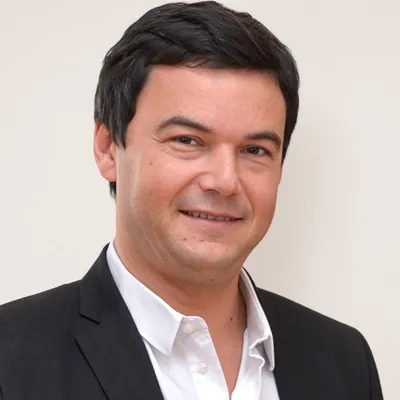
Thomas Piketty is a French economist and one of the most important contemporary researchers on income, wealth and capital inequality. He gained worldwide fame with Capital in the Twenty-First Century, showing that the concentration of wealth in modern societies is a historical, political and institutional issue rather than merely a natural outcome of markets. His works lie at the intersection of economics, history, politics and social justice.
Thomas Piketty, born on 7 May 1971, is a French economist and a leading researcher in political economy. He has worked on economic inequality, the distribution of income and wealth, the history of capitalism and the role of political institutions in shaping social justice.
After studying economics, Piketty taught and conducted research in France and at leading international academic institutions. His scholarly standing rests above all on the collection and analysis of long-term historical data on income, wealth, taxation, inheritance and capital—data that have challenged conventional understandings of economic growth and wealth distribution in modern societies.
His most important work is Capital in the Twenty-First Century, a book that examines the history of inequality in Europe and the United States and shows that the return on capital has in many periods exceeded the rate of economic growth, which can lead to an increasing concentration of wealth. He later explored the links between inequality and ideology, politics, the tax system, education and the welfare state in works such as Capital and Ideology and A Brief History of Equality.
Piketty’s thought rests on the premise that inequality is neither natural nor inevitable, but the product of political decisions, legal structures and the narratives societies construct to justify their economic order. For this reason he emphasizes progressive taxation, asset transparency, the expansion of public education and the strengthening of democratic institutions as means of restraining the concentration of wealth.