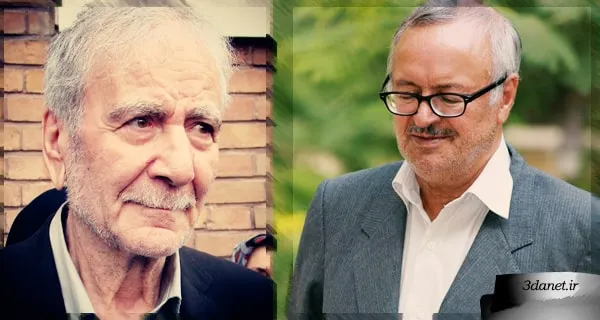
Iranian thinker
Yahya Yasrebi
Yahya YasrebiIslamic Philosophy and MysticismIranian
Life and Thought
Yahya Yathribi, born in 1942 in Cheragh Tappeh-ye Sofla in Takab County, is a retired professor of Islamic philosophy and theology at Allameh Tabataba'i University. He is a prolific researcher in Islamic philosophy and Islamic mysticism, and is particularly known for his critical approach to Transcendent Theosophy, Sufism, and the relationship between religion and mysticism.
Seyyed Yahya Yathribi was born in 1942 in the village of Cheragh Tappeh-ye Sofla in Takab County. He completed his primary education in his birthplace at traditional schools and then studied the preliminaries of Islamic sciences, including Arabic morphology, syntax, and logic, at the Zanjan Seminary. From 1958 to 1967, Yathribi studied philosophy at the Qom Seminary, learning under masters such as Mohammad Hossein Tabatabai, Hossein-Ali Montazeri, and Jafar Sobhani.
He then continued his studies in Islamic Philosophy and Wisdom at the University of Tehran, up to the doctoral level. From 1971, Yathribi taught Islamic philosophy in high schools and teacher training centers, after which he became a faculty member and the head of the Islamic Philosophy Department at the University of Tabriz. He served for a time as the president of the University of Kurdistan and later joined the Philosophy Department at Allameh Tabataba'i University.
Yathribi's thought has primarily developed in the fields of Islamic philosophy, Islamic theology, and Islamic mysticism. He is a serious critic of Transcendent Theosophy and certain foundations of theoretical mysticism. In his works, he has strived to distinguish between religion and mysticism and to reread the philosophical and mystical heritage of Muslims with an analytical and critical approach.
Among his works are 'Practical Mysticism in Islam', 'Theoretical Mysticism', 'The Philosophy of Mysticism', 'Peripatetic Philosophy', 'Suhrawardi's Illuminationist Wisdom', 'The Touchstone of Critique', 'Transcendent Theosophy', 'A Critical Analytical History of Islamic Philosophy', 'A Study on the Relationship Between Religion and Mysticism', 'The Deception of the Mirage', 'The Day's Exegesis', 'The Qalandar and the Fortress', and 'The Philosophy of Imamate with a Philosophical and Mystical Approach'. His method emphasizes critique, rethinking, and avoiding the unquestioning sanctification of the philosophical heritage of the past.
Sedanet articles about Yahya Yasrebi