Political Science
Traces of Populism on the Road to Health
Populism has also encroached upon the field of healthcare, sacrificing scientific standards to win public favor. The spread of pseudoscience, prescriptions by non-specialists, false advertising, and the prioritization of appearance over genuine health are all manifestations of populism's infiltration into the medical system.
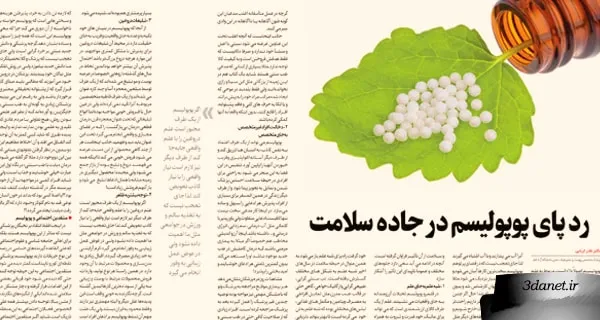
Populism is fundamentally a term belonging to political science, and even there it has numerous definitions, but insofar as it is useful for our purposes here, it refers to methods and attitudes whose sole aim is to win the hearts of the general public at any cost, and in this process, all manner of scientific, ethical, legal, and even religious standards are either disregarded or, if considered, are of secondary importance. Populism places great value on the unfulfilled desires and inclinations of the people, and since it cannot realize these desires, it resorts to promises; here, the promise plays the role of a mirage that the thirsty readily mistake for water and confuse with water, so it is no surprise that in the illusion-filled atmosphere of populism, the hardest tasks become easy and the most distant destinations seem very near. For instance, one can become an expert without literacy and a master without skill! Now, if we have such a conception of populism in mind, we can more easily step out of the realm of politics and observe the influence of this approach in other domains, such as the domain of health. At the outset, we must say that the domain of health has the potential, imperceptibly yet profoundly, to be influenced by a populist atmosphere. In our country, where for various reasons the ground is fertile for the maneuvering of populist currents, the land of medicine and health has been greatly affected by it. What follows attempts to reveal the various and generally invisible manifestations of this influence.
1. Pseudoscience in Place of Science
In the realm of populism, wishful fantasies take the place of realities. Science, on the one hand, is a valuable commodity that can bring power and wealth to its possessor; on the other hand, like any other commodity, it has a price that must be paid. Now, if a seeker is unwilling or unable to pay that price, they are forced to settle for a substitute for that commodity, especially if they are assured that their customers do not know much about the difference between the counterfeit and the genuine article. This is where, when the atmosphere takes on the hue of populism, the way is opened for pseudoscience. In the same vein, in the domain of health in recent years, pseudoscience has spread in various forms. The fads of traditionalism, naturalism, and organic-seeking, sometimes even in the guise of modern medicine, such as the extreme tendency to consume vitamins and dietary supplements, have been the various garments that pseudoscience has donned in order to better captivate. It is extremely necessary to clarify a point: the above sentences should not be construed as meaning that, in the author's opinion, alternative medicines such as traditional medicine or acupuncture are instances of pseudoscience; rather, it is when a semblance of them is presented in place of the original, without observing scientific criteria, that they become pseudoscience, although in practice, unfortunately, most claimants of such arts consciously or unconsciously tread this path.
Interestingly, what is often offered under these titles bears no relation to its origin and source and is merely a shop whose only goal is to sell, without regard for the quality of the goods. For example, many of those who claim traditional medicine may not have read even a single book on the subject by great figures like Avicenna and Razi, yet they only know how to ride the wave that has been created to advance their own ambitions and, relying on general and unsubstantiated statements, convince people without actually having helped them.
2. Intervention of Non-Specialists in Place of Specialists
Populism can, on the one hand, inject false self-confidence into people and, on the other hand, lower their threshold for being seduced and deceived. Breathing in this atmosphere leads to individuals in the health domain easily feeling like doctors and developing a desire to prescribe, while on the other hand, living in the same atmosphere makes accepting any claim easy and simple for many people. Here, the claimant's task is not difficult; it is enough to have a different yet believable claim with words like hydrotherapy, detoxification, energy healing, and so on. Here, the wishful thinking of the audience, especially if they suffer from a chronic illness for which a complete cure does not exist in modern medicine, makes them susceptible to accepting any pleasant and hopeful claim without the slightest reflection!
Everyday observations by physicians show that every patient, upon visiting a doctor, even when facing a significant problem, has first acted upon the advice of several non-physicians before seeing the doctor. Many individuals who lack sufficient qualifications even in traditional and alternative medicine have easily assumed the role of prescribers. It is frequently seen that people who have merely worked in a pharmacy for a short time or have been a doctor's secretary or assistant prescribe with great confidence, and occasionally interesting stories are heard of such individuals even setting up their own offices and clinics, which have also been very popular.
3. False Advertising
Since populism, in its foundations, relies on promises instead of reality and deception instead of truth, false advertising faces fewer obstacles to acceptance in its environment. In these cases, the bigger the lie, the greater the likelihood of its acceptance! For this reason, in recent years, medications, especially in the field of skin and hair, have been advertised that, on one hand, were touted by promoters as miraculous and multi-purpose, and on the other hand, were not endorsed by the vast majority of relevant specialists, yet nonetheless enjoyed good sales! The various advertisements carried out under titles such as the miracle of the century, definitive cure, and irreversible treatment, which take place in virtual and real spaces, must be seen and understood in this context. The interesting thing is that every so often, a product of this kind is introduced, sells well, until everyone realizes it was a lie and advertising, and it is withdrawn from the market, but then another product in a similar field is advertised with the same claims, and again, its sales are high!
4. Greater Attention to Appearance
If populism, on one hand, is forced to substitute false science for real science, on the other hand, it also needs to replace real needs with false ones. Therefore, it is no surprise that healthy nutrition and exercise are not given importance in societies like ours, but instead, cosmetic procedures are performed abundantly. Cosmetic creams are consumed to a great extent. There is a great demand for bodybuilding and its related products. In this regard, any type of production, import, or sale of products related to skin and beauty has become one of the most profitable businesses. Although the author is well aware that these phenomena have other, and certainly more important, causes and are not limited to Iran, one important cause is the dominance of populism over people's minds, which has made it much more pronounced and intense in our country than even in European countries.
The Impact of Populism on Conventional Medicine
Populism has also affected physicians and even medical students. A society under the sway of populism distances itself from rationality for various reasons. This is because submitting to reason requires accepting costs and hardships that populism, wittingly or unwittingly, avoids, as populism strives to make everything seem easy and simple. Although medicine and modern knowledge are based on rationalism, it is no surprise that our physicians and educated individuals, in general, learn modern knowledge but think in the manner of their ancestors. Physicians learn in their courses that matters must be based on work that has credible research backing, yet despite this, we see many physicians turning to traditional and alternative medicine in a way that, in terms of the unscientific nature of the method, is no different from ordinary people who have no commitment to scientific validity. And here, a satirical phenomenon occurs that perhaps few pay attention to: the conflation of the concepts of these two without considering the fundamental differences that exist between them. For example, if it is said, "treatment of diabetes with traditional medicine"; at first glance, this phrase is very pleasant and appealing, but perhaps few people, when confronted with it, ask themselves: was diabetes even discovered in the past?! Or was there anyone who knew that there is a type of sugar called glucose in human blood that, if elevated, causes diabetes?!
Social Critics and Populism
Here, it is not only the medical elite who are affected by this populism that come under criticism; for those in sociology and the social sciences, who presumably have sensitive receptors for observing such currents, medical populism is a blind and invisible spot. Social critics are rarely seen paying attention to this domain; at times, they themselves are even seen falling victim to some of these actions and suffering health problems! One of the author's motivations for the above text is to draw more attention, especially from social activists, to this dark area. Perhaps if social critics, who sometimes expend their energy in misplaced and fruitless confrontations with physicians, were to pay attention to this domain, and physicians, particularly those with greater concern for society, were to come to their aid, a groundwork would be laid for populism to lose this hidden and secure refuge of its own.
.
.
Traces of Populism on the Road to Health
Author: Dr. Nader Arbabi (Dermatologist and Faculty Member at Qom Azad University)
Source: Iran Newspaper
.
.


Discussion3 comments
تشکر می کنم از نویسنده ی محترم برای توجه به این بخش از شعبده های رایج بشر و دلسوزی برای روشن کردن و ابهام زدایی از فضای متوهم و فریبکارانه ی بازار. از دقت نظر پارسای گرامی هم خوشحالم. برای اطلاع بیشتر و پژوهش هایی جدی تر, نویسنده ی گرامی و خوانندگان عزیز را به کندو کاو عمیق و جدی در منابع زیر دعوت می کنم: برای اطلاع بیشتر: http://eco-literacy.net با سرچ کلمه ی ایلیچ یا پزشک و بیشتر مقالات این سایت بطور عام. http://notes.feizonline.com https://t.me/roozbehfeiz https://t.me/utopiamag و این نوشته ی مفصل که پراز منبع است: https://t.me/GahFerestGhKeshani/2476 با احترام.
پزشکی حقیقی, که نویسنده از آن دم میزند, خود بزرگترین تحرک پوپولیستی انسان مدرن است, تا جایی که میتوان آن را دینی نوین و آخرین دستاورد سازمانیافته متافیزیکی بشر نامید.. باور ندارید, استدلالی برایتان می آورم : بهترین دلیل در اثبات صحت این مدعا این است که: اگر دقت کرده باشید اکثر ایرانیان معتقدند که پزشکی در ایران از هر جای دیگر دنیا قوی تر است, تا جایی که می بینیم ایرانیانی زیادی از خارج از کشور برای تشخیص و درمان بیماری خود به ایران سفر میکنند.. به راستی چه شده است ؟؟ آیا معجزه ای اتفاق افتاده است, که کشوری که در اکثر فغالیتهای بشری از نظر کیفیت و موفقیت در انتهای لیست کشورهای دنیا قرار دارد, به یکباره در پزشکی بهترین است ؟؟؟ این پدیده خود نشان از میزان بی در و پیکر بودگی و بی حساب کتابی و عدم موفقیت آگاهانه در درمان, در رشته ی پزشکی دارد.. پزشکی بزرگترین دکان مسخ کننده گی و همزمان معنا ده, برای انسان مدرن است. البته این تقدیم معنا و معنا دهی, به شدت با عمل قابل احترام "تیغ زدن" همراه است. :-)
سلام دوست گرامی کامنتی لبریز از مغالطه و یاوه گویی!!! یعنی چه اصلا پزشکی بزرگترین تحرک پوپولیستی انسان مدرن؟! پزشکی حقیقی عوام فریبی میکند؟!! آخرین دستاورد سازمان یافته متافیزیکی؟!! تعریفتان از متافیزیک چیست؟!! تا آنجا که بنده واقفم ، در فلسفه ی علم به این قائلیم که علم چه در معنای اول خود به معنی دانستن در برابر ندانستن (knowledge) و چه به معنای دوم آن به معنای علوم بدست آمده از تجربه مستقیم حسی قابل تکرار (scince) که علوم تجربی نام دارد و پزشکی از شاخه های اوست سنخیتی با متافیزیک ندارد...علمیست طبیعی..متافیزیک را اگر بررسی هستی عریان و بدون قالب بدانیم و نه ماوراالطبیعه در فلسفه بحث میشود ! در مورد مراجعه ایرانیان خارج از کشور به ایران جهت درمان چه آماری دارید؟؟ گیرم که آنگونه که شما میگویید باشد خب ایراد از پزشکی است یا ذهنیت عوام ؟؟ بهتر است نگاهی به تاریخ علم طب از جالینوس تا قرن 21 داشته باشید