Political Science
What Makes a Good Politician?
The search for a selfless politician is futile, and the good politician does not exist; the choice is between the rational and the instinctual. The rational politician pursues their own interests only through means that make their interests conditional upon the common good.
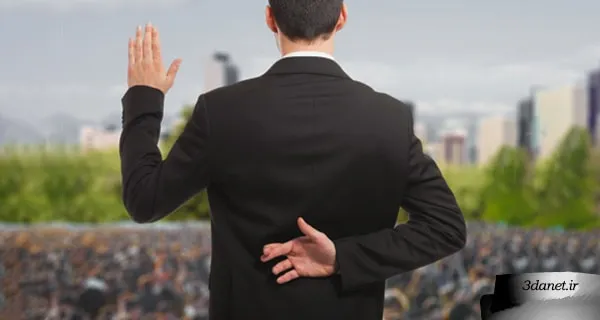
This is a serious question: whom should we vote for? The number of those we once voted for with great hope, but who broke the sanctity of loyalty and were drawn to poles of power and the crooked paths of wealth, is not small. The beautiful slogans that once captivated hearts, but shortly after the votes were counted turned out to be brightly colored seeds of a snare, meant for deception, are not few. Even now, some campaign billboards instill a feeling of being ridiculed in their not-so-gullible viewers. Just like a magician whose audience, even if they cannot understand or explain how he performs his sleight of hand, the moment he claims to hide a monster called the people's problems inside a wide hat, they realize by force of reason that he is talking nonsense. Perhaps it is this dead end that makes many people, who do not deny their minimal identity as citizens with a vote, cynical about professional politicians. One of the important goals of revolutions is not just mere change, but the redefinition of the political class. Revolutions generally seek to dismantle the apparatus of professional politicians, whose face is depicted in the manifesto of "The Prince," and to appoint in their place those who would be good politicians. A good politician, in such a view, is someone who does not revolve around power and wealth, feels a sense of duty towards the masses, especially the marginalized layers, purifies their intention to serve the people, does not elevate relatives and friends to high office, does not drive away the competent on the charge of being an outsider, and so on. But, as fate would have it, the more revolutions cultivate this sentiment, the more disappointing their response to it. Leaving aside rare exceptions that prove the rule, revolutionary figures, even if, like Robespierre, they have no weakness of financial corruption, sexual corruption, etc., in their record, have nonetheless been unable to escape the clutches of power, fame, and faction, even if under the mask of ideology. So, what is to be done? The classical political class, which has declared in its manifesto that the politician sometimes goes in a lion's skin, sometimes in a fox's, either tearing apart or deceiving, and in any case for their own enjoyment; the great heroes of history, who rose up with the intention of recreating humanity, devising a new plan, and changing the content of politics from power to service, also failed. Is this view, that the political positions of rival groups are different paths to common goals, not a repeated experience? In that case, is it not closer to the truth to drive politicians away from ourselves, from whatever front or faction they may be, and consider politics a forbidden zone from which one should cautiously keep one's distance, even if entering it is limited to writing a ballot paper? In my opinion, the answer to the first question is positive, but the positivity of the answer to the second question does not follow from it. Because the flaw in such reasoning lies in the baseless paradigm of the good politician. The good politician does not exist. A politician, even if not professional, even if from the marginalized, even if they have soared from the launching pad of thought, revolution, and reform... will eventually, sooner or later, even if they do not revolve around the scandalous manifestations of ego, will circumambulate its veiled manifestations. Therefore, there is no choice between a good politician and a bad politician; the choice is between a rational politician and an instinctual politician. Instinctual politicians are those who, to attract pleasure, profit, and power, by instinctually and uncalculatedly choosing the shortest path, never observe the extent of destruction to the natural environment and the social environment. They do not care how much loss of life, property, and character their gratification leaves behind. Their story is the story of that jackal in Kalila and Dimna who would eat the grapes that were sweet, and spoil those that were sour. But a rational politician is someone who is always seeking a balance whose minimal point is the most benefit for themselves and the least harm for others. Their primary intention is to attract personal power, wealth, and status, but for this purpose, they choose methods where, as much as possible, their benefit is conditional upon the collective benefit, or at least, not contingent upon its loss. That is all. The search for politicians who, by trampling their own desires, seek self-sacrifice for the people, diminishing themselves and adding to them, is one of those searches where the seeker is ultimately not a finder, or if they are, not in sufficient numbers; enough to form a political class with them. It is enough to seek to choose politicians who, with the power of rational calculation, pursue the fulfillment of their desires through paths that cause the least blight and damage.
برای بقای خود، از راه نابود کردن دیگران، برای ثروتمند شدن، از راه غارت دیگران، برای محترم شدن از راه تحقیر دیگران... نمی روند. به حکم تجربه و عقل از حکومت ناگزیریم. حکومت، شر کثیر است برای دفع شر اکثر، حکومت سیاست را به دنبال دارد و سیاست خواه ناخواه طبقهٔ سیاسی را. در دمکرات ترین سیستمهای سیاسی کسانی که برگزیده میشوند، به هر شکل منافع خود را دنبال میکنند. با تمسک به این دلیل، نمی توان از سیاست قهر کرد. از گزینش ناگزیریم. عقربهٔ این گزینش ناگزیر به سمت کسانی خواهد چرخید که عقلانیترند و سعی میکنند بیشترین هماهنگی را میان بیشترین منافع ایجاد کنند.
.
.
What Makes a Good Politician?
Author: Morteza Mardiha
.
.

Discussion0 comments
No comments yet; let yours be the first voice.