Philosophy
What significance and value does humanity hold in the boundless cosmos?
Human smallness in the boundless cosmos raises the question of our value and significance; an examination of the views of Bernard Williams and Guy Kahane on objective value and humanity's cosmic importance in eternity.
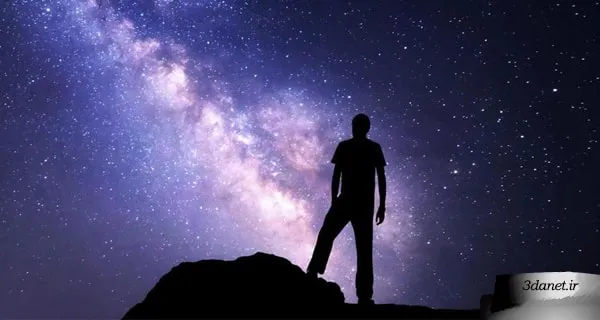
Reflection on the vastness of the cosmos, and our temporal and spatial smallness within it, often conjures up dark and gloomy images before our eyes. Can we not conclude, from the fact that the universe is so immense and we are so small and transient, that we humans are absolutely insignificant and worthless?
In a universe whose expanse and depth are unknown, humans occupy a very small part of it. If we travel through space at the speed of light (300,000 kilometers per second), it would take 100,000 years to cross the Milky Way galaxy. But even after traversing this distance, we would still not have gone very far. According to recent estimates, the Milky Way is only one of 2 trillion galaxies that exist in the observable universe, and crossing these galaxies would take 90 billion light-years. If you imagine the Earth as a grain of sand and visualize the ratio of this grain to the entire Sahara Desert, you still cannot conceive of what an infinitesimally small space we occupy in the entire cosmos. The American astronaut, Carl Sagan, said in 1994 regarding the photograph Pale Blue Dot taken by the Voyager 1 spacecraft: our planet is nothing more than "a mote of dust suspended in a sunbeam."
That was only from the spatial dimension. The observable universe is 13.8 billion years old. If we consider this time span as a single year, the Big Bang occurred at midnight on January 1st, and the first Homo sapiens (wise humans) appeared at 22:24 on December 31st. If it is now 23:59:59, humans may be extinct before midnight strikes, while the universe will likely continue forever.
For Sagan, the "Pale Blue Dot" (Earth) underscores our responsibility to treat one another with kindness. But reflection on the vastness of the cosmos, and our temporal and spatial smallness within it, often conjures up dark and gloomy images before our eyes. Can we not conclude, from the fact that the universe is so immense and we are so small and transient, that we humans are absolutely insignificant and worthless? Such a notion can lead one to nihilism. If we are this insignificant and if our existence is this worthless, how can we ourselves and our deeds (our successes and failures, our anxieties, sorrows, and pleasures, our aspirations and efforts, and in general all the things that make up our lives) be important? According to the American philosopher, Susan Wolf, reflecting on the individual's place in the cosmos means "grasping the possibility of reaching a perspective from which ... one's life is utterly meaningless."
This feeling that our lives are somehow insignificant is a common one. The French philosopher, Blaise Pascal, writes in his Pensées (1669): "When I consider the short duration of my life, swallowed up in the eternity before and after, and the little space which I fill, and even can see, engulfed in the infinite immensity of spaces of which I am ignorant, and which know me not, I am frightened, and am astonished at being here rather than there. The eternal silence of these infinite spaces frightens me." The Austrian-Israeli philosopher, Martin Buber, says of this passage from Pascal: he had perceived "the incomprehensibility of the universe" and consequently understood "the limitation, inadequacy, and temporariness of human existence." Even the optimistic Sagan was not immune to this pessimistic view and argued that the "Pale Blue Dot" challenges "our posturings, our imagined self-importance, the delusion that we have some privileged position in the Universe."
Thus, according to this pessimistic view, since we occupy a very small and transient place in the universe, our existence and our deeds are insignificant and worthless. But is this view correct? Are we insignificant and worthless? Even if so, should our response be despair and nihilism? These questions are deeply philosophical, yet contemporary philosophers have not paid much attention to them or have deemed them irrelevant.
Bernard Williams, the English moral philosopher, is one of those who consider these questions irrelevant. In his view, having importance from a cosmic perspective is the same as having objective value. Something has objective value when it is valuable not only for an individual but also independently of whatever people's judgments about that thing may be. In contrast, if something is valuable for someone, that thing has subjective value for that individual. According to Williams, under a naturalistic and atheistic view, nothing has objective value, and the only value that exists is subjective value. Williams concludes that since objective value does not exist, and having importance from a cosmic perspective is nothing other than having objective value, then cosmic importance also does not exist. In his words, such a belief is "a remnant of a world not yet fully disenchanted" (in other words, a world in which belief in God exists). Thus, in response to the question of whether human life is important or not, one can only say: "Important to whom?"
Guy Kahane, a professor at the University of Oxford, disagrees with Williams. In his view, philosophers like Williams have not correctly understood the meaning of having/not having importance. According to Kahane's argument, the importance of anything arises from two things: the value (or worthlessness) of that thing and also the extent to which that thing is worthy of attention. As the frame of reference becomes larger, the extent to which that thing is worthy of attention diminishes, and consequently, the importance of that thing within this framework is reduced. For example, what is important from the perspective of your personal life (e.g., the birth of your child) may be less important and less worthy of attention from the viewpoint of the city in which you live. The cosmic perspective is a framework that encompasses almost everything: the totality of space and time, from end to end, and from beginning to end. From this perspective, we are nothing but a vanishing point. According to Kahane's argument, it is this very fact that creates in us the feeling of being insignificant. Since the cosmic view encompasses many things and is extremely vast, the importance of each of its components is reduced, and as a result, we feel that within such a framework, we are not worthy of special attention.
Kahane argues that such a perception is incorrect. It should not be forgotten that "importance" is also linked to "value." The difference between the life of sentient beings and anything else is that it is itself the source of value, and consequently, even from a cosmic perspective, it is probably considered valuable. A piece of diamond placed on display in an empty warehouse may be small compared to its surroundings, but that does not mean it is insignificant and unworthy of attention. According to Kahane's argument, since the life of sentient beings is the primary source of value, our cosmic importance therefore depends on how many sentient beings exist in the cosmos. If the cosmos is teeming with such beings and we humans are just one of millions or billions of diamonds, then we are truly insignificant from a cosmic perspective. But if we are the only instances of sentient beings, then we are cosmically very important.
Is this argument correct? I think Kahane, like Williams and like-minded philosophers, has not correctly identified the issue. In the passages I cited earlier about our insignificance from a cosmic perspective, none of them made any reference to the fact that we are the only sentient beings in the universe. If this were the main point, it would at least have been mentioned. But the only issue raised is that the space we occupy is very small and the length of our lives is hopelessly very short. Whether the universe is teeming with various kinds of sentient beings or not has no effect on the feeling of being insignificant in this vast universe.
I think the correct diagnosis is that when we reflect on our place in the cosmos, we find that according to another scale of importance, our lives and actions are insignificant. To understand this point, consider that something can be important while at the same time not being valuable or worthless. Suppose a group of meteorologists, considering the presence of a moist air mass in the face of a tropical cyclone, conclude that a severe storm will occur as a result of their collision. Imagine their prediction turns out to be correct. When these meteorologists want to explain the events that occurred to the public, they will say that in the chain of events leading to the severe storm, the formation of the air mass was an important factor. Although the air mass is important, it possesses no positive or negative value. So what does its importance consist in? The obvious answer is that because this air mass was one of the causes of the severe storm, it is considered "causally" important. Causal importance is not necessarily accompanied by value. The causal importance of anything arises from the degree of its influence within a causal chain. The greater/lesser its influence, the more/less important it is.
Contrary to Kahani, I think it is this lack of causal, and not valuational, importance that creates in us a feeling of cosmic insignificance. Understanding that we occupy a very small space in the universe leaves us with no doubt that we lack causal power. Most of us know that we have no control over the universe, and since we are nothing more than a speck of dust, we will be destroyed by the slightest breeze, but the world will continue moving as if nothing had happened. If we consider causality, we are truly considered cosmically insignificant.
Why does realizing our causal insignificance give rise to pessimistic thoughts in us? First, even if we imagine we are the only intelligent beings in the universe, this feeling of insignificance does not change. But more importantly, the main reason for the feeling of cosmic insignificance seems to be that we occupy a very small space in the universe. Thus, one can imagine that if we were not this small, we would not feel so insignificant. The explanation based on causal power explains well why this perception gives rise to the feeling of insignificance.
Suppose instead of a situation where our causal power is constant and the size of the universe is variable, the size of the universe were constant and our causal power were variable. Then suppose we could control the course of distant stars and the future of vast galaxies; we could align the movement of the universe with our own goals. Would we still feel cosmically insignificant in this state? Such a notion is highly unexpected. In that state, we would probably be very happy and satisfied with our situation.
The explanation based on causal power can also explain the appeal of theism. Religious people sometimes say that faith makes their lives meaningful, and they consider life without God meaningless. This belief could be correct from the perspective that through devotion to an extraordinarily powerful being, they see themselves as sharing in his power – although perhaps theists would not limit themselves to this interpretation. Prayer and supplication, if effective, can extend an individual's causal influence beyond their limited physical sphere.
اما از نظر افراد بیدین، قدرت تأثیرگذاریِ علّیِ ما از منظر کیهانی بیاهمیت است. اما آیا این مسئله باید باعث ناراحتی شده و ما را به سمت پوچگرایی و ناامیدی سوق دهد؟ پاسخ من منفی است. برای این که علت این پاسخ را دریابیم، باید به مسئلهی ارزش بازگشته و تمایز دیگری ایجاد کنیم. برخی از چیزهایی که برای ما اهمیت دارند (مانند خوشبختی و شکوفایی انسان) ارزش «ذاتی» دارند. به عبارت دیگر، آنها به خودی خود باارزشاند. البته این به آن معنا نیست که آنها ضرورتاً ارزش عینی دارند (ما نمیدانیم که ارزش عینی دارند یا نه)، بلکه به این معنا است که آنها به خودی خود برای ما باارزشاند. اما تمام چیزهای باارزش، ذاتاً باارزش نیستند؛ برخی چیزها ارزش «ابزاری» دارند – یعنی به عنوان ابزار و وسیلهای برای رسیدن به یک هدف ارزش دارند. برای مثال، پول ارزش ذاتی ندارد بلکه ارزش آن ابزاری است، زیرا میتوانید از آن برای رسیدن به چیزهای باارزش استفاده کنید. اگر تصور رایج را بپذیریم، پول خوشبختی نمیآورد اما حداقل اسباب راحتی را فراهم میکند.
بنا بر گرایشِ غالب، قدرت امری با ارزشِ ذاتی است. ما به دنبال قدرت و در آرزوی داشتن آن هستیم، بدون در نظر گرفتن این که چگونه از آن میتوانیم استفاده کنیم یا چه چیزی میتوانیم به دست بیاوریم. تنها کافی است نگاهی به تاریخ رژیمهای تمامیتخواه بیاندازیم تا عجیبترین اَشکال این گرایش را ببینیم. اما قدرت ارزش ذاتی ندارد بلکه تنها ارزش ابزاری دارد – به عنوان ابزاری برای رسیدن به یک هدف است که باارزش است. این اهداف باارزش (مانند روابطمان، برنامهها و غایتهایمان، تجارب مشترکمان، عدالت اجتماعی، جستوجوی دانش، آفرینش و درک آثار هنری و ادبی)، خواه به طور عینی باارزش باشند و خواه نباشند، به توانایی کنترل ما بر گسترهی چشمگیر عالم هستی وابسته نیستند. ما شاید از منظر کیهانی قدرت بسیار اندکی داشته باشیم و در نتیجه به یک معنا بیاهمیت باشیم. اما در هر صورت، داشتن چنین قدرت و چنین اهمیتی هم تفاوت زیادی ایجاد نمیکند. افسوس خوردن به خاطر فقدان آن قدرت و دچار ناامیدی و پوچانگاری شدن صرفاً شکلی از خودشیفتگی است. مهمترین چیزها برای ما اغلب درست همینجا، بر روی کرهی زمین، قرار دارند.
.
.
انسان چه اهمیت و ارزشی در کیهان بیکران دارد؟
نیک هیوز پژوهشگر فلسفه در دانشگاه دوبلین در ایرلند است. آنچه خواندید برگردان بخشهایی از این نوشتهی اوست:
Nick Hughes, ‘Do We Matter in the Cosmos?,’Aeon, 29 June 2017.
برگردان: هامون نیشابوری
.
.




Discussion3 comments
اجرام که ساکنان این ایوانند ـ اسباب تردد خردمندانند هین تاسررشته خرد گم نکنی ـ آنان که مدبرند سرگردانند. خیام
به راستی انسانها در کشور خود دارای ارزش نیستند، در عمل انسانها، حتی در این کره ی خاکی هم فاقد ارزش اند .. بعد جالب است که عده ای، به دنبال اثبات ارزش انسان در کل کیهان هستند… به راستی که آدمیان فلسفیدن (خیال بافی) را دوست دارند... انسانی که از درمان یک “بواسیر” عاجز است، ببین به کجاها که نمی اندیشد :-D :-)
پارسا جان شما تفاوتی بین فلسفه و تخیل نمی بینی؟ از نظر شما این دو تا یکی هستند؟