اندیشهفلسفهخردگفتگوحکمتمعناپرسشفرهنگ
Philosophy
Why Are We Here? The Anthropic Principle and Its Philosophical Challenges
The entanglement of humanity and the cosmos is one of the most contentious topics in contemporary science and religion; for some, the fine-tuning of the universe is evidence of teleology and demands competing explanations. These challenges describe modern humanity's stake in the question, 'Why are we here?'
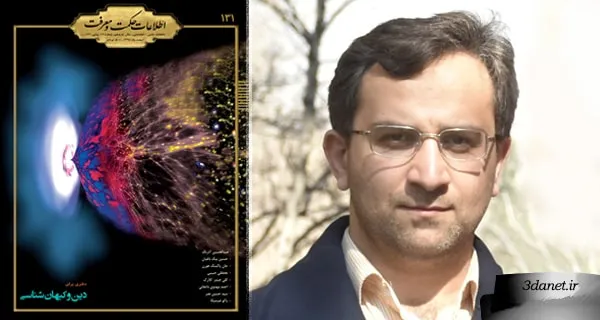
The claim of the "entanglement of humanity and the cosmos" or the "emergence of the cosmos for humanity" is among the contentious assertions in the contemporary interdisciplinary field of science and religion. Providing an overall picture and an overview of the philosophical aspects of this issue, with reference to opinions for and against—within the framework of contemporary empirical naturalist methodology—is the most important aim of this article. On one side is the view that considers the fine-tuning of the universe to be powerful evidence for the purposiveness of the cosmos; a view that holds appeal for theists. On the other side is the view that either does not consider the "situation" to require explanation in the first place, so as not to regard it as strong evidence in favor of purposiveness, or deems rival explanations superior to the teleological one. Examining these challenges is to step onto a path that describes a part of contemporary humanity's share in the question, "Why are we here?"
"Why Are We Here?"
The Anthropic Principle and Its Philosophical Challenges
Hamed Safaeipour[1]
To grasp the significance of the subject and attend to the philosophical and controversial aspects of the question “Why are we here?”, a brief reference to some important historical backgrounds concerning humanity’s understanding of its place in the expanse of the cosmos is necessary. Although Copernicus (1473–1543) was not himself the complete and utter architect of the idea that the Earth is not at the center of the universe—rather, with full conservatism, he merely understood and presented it in a mathematical form alongside the Ptolemaic worldview (Koestler, 2011, 232)—his idea was nonetheless accompanied by the idea of the decentralization of the Earth and consequently served as a prelude to understanding humanity’s place in a wholly simple or privileged role. On the other hand, the idea of the decentralization of the Earth was accompanied by Hume’s (1711–1776) satirical jibes concerning the invalidity of the “argument from design.” In the guise of his three self-fashioned characters1 in the book Dialogues Concerning Natural Religion, Hume raised multiple objections, the (perhaps) most central of which was the challenge concerning how to reason from order to the existence of an orderer2. The analogical-inductive nature of the argument from design was the focus of Hume’s critiques. Hume held that even relying on the dubious belief that “from similar effects one can arrive at similar causes,” reasoning by comparison (analogical reasoning) is ineffective, because “the universe and human artifacts” and “the human mind and the divine mind”—that is, both sides of this comparison—are ultimately dissimilar (Hume, 2009, 50–57). Here, as in other parts of his empiricist philosophy, Hume sought the cause of this notion and linked it to the human psychological tendency to “take oneself as the model for the universe” (Hume, 2009: 71). In the nineteenth century, Darwin’s (1809–1882) idea of natural selection completed Hume’s unfinished work in refuting the argument from design (Palmer, 2001, 117). If Hume merely raised the possibility of order arising from a natural, rather than supernatural, force through mental and satirical examples, Darwin demonstrated it in the form of the mechanism of “natural selection.” The most important message of this theory was that it is possible to explain many of the characteristics of organisms solely by attending to their mode of adaptation to the environment, without assuming supernatural contrivance. With the proposal of the idea of “natural selection,” the idea of “divinely guided creation” was weakened, and skepticism concerning humanity’s unprivileged and simple role intensified. The Copernican decentralization, Hume’s critiques, and Darwinian natural selection were among the most important historical points in understanding a directionless and decentralized universe. The homeless human of the modern age gradually came to understand itself as a particle adrift in an open, boundless, and directionless cosmos. This, in turn, led to the invalidation of teleological explanations in the understanding of nature, pessimism toward a priori explanations, and doubt concerning the possibility of mental anticipations of nature. This transformed the foundations of the understanding of nature in Enlightenment thought. This transformation led to the idea of the autonomy of nature and the reasoning of the intellect—an idea that had previously been fundamentally inconceivable (Cassirer, 2010, 112–113). This transformation in the understanding of nature and its decentralization contained a straightforward and clear answer to the question “Why are we here?”: namely, that it is no accident, no surprise, that we are here; we could have been anywhere else, and in that case, there would be nothing remarkable requiring explanation (an explanandum). But this idea was in contradiction with another clear idea: that we are here because the Creator of the world so willed it. The first explanation was a rejection of teleological explanation, and the second an emphasis upon it, and these two incompatible claims set the stage for a stubborn conflict between science and religion. Science, insofar as it could proceed without assuming the purposiveness of the world, was in conflict with religion, which regarded the nature of the world as the product of a moral will and a divinely guided creation. The religious considered science limited, transient, and incomplete, while scientists considered belief in the purposiveness of the world to be uncorroborated, unjustified, and a remnant of the untested beliefs of the pre-scientific era. Such ideas and philosophical thoughts accompanied the question of the why of the entanglement of humanity and the world, until, in the late twentieth century, not from the mouths of scholastic philosophers or church clerics, but from the mouths of some of the most elite scientists—the present-day children of Galileo and Darwin—the idea of the centrality of humankind was once again raised with new evidence, first in science (cosmology and biology) and subsequently in the philosophy of science and the philosophy of religion, leading to the formation of heated controversies. The importance of this discussion, apart from its methodological and philosophical consequences, lay in the fact that it was intertwined with the latest observational and methodological achievements of scientists and was an extremely specialized subject within the framework of the linguistic and epistemic habits of scientists and the methodological naturalism dominant in the twentiethستم به حساب می آمد.
1. Examination 1.1. The Empirical Content of Teleological Explanations The empirical content raised in the idea of new Copernicanism is that, based on precise calculations, the universe we currently inhabit is an extraordinarily improbable one. More precisely, despite the low prior (logical) probability of such a universe occurring, its posterior (empirical) probability is high. The very limited range of possible variations that allows for the formation of a “Life-Permitting Universe” generates the concept of “Fine-Tuning.” This means that the values of these fundamental parameters are fine-tuned within a very narrow range. The effort to describe the meaning and instances of this fine-tuning is evident in the series of works by Collins, with their ever-renewing narratives. (Collin, 2009: 213-225) In his view, the evidence for fine-tuning pertains to at least the values of six fundamental indicators, whose precision is fine-tuned within a range of 1–10 to 10⁻⁵³. These six indicators are the cosmological constant, the strong nuclear force, the weak nuclear force, carbon production in stars, the proton-neutron distance, and the force of gravity. These indicators, in turn, influence a host of other variables. Expressing astonishment at this fine-tuning constitutes a novel conception of Leibniz’s “pre-established harmony.” (Zagzebski & Timothy, 2009) The pre-established harmony of the “universe” and the “necessary conditions for the presence of intelligent observers” has led to the formation of various formulations of the Anthropic Principle in science (cosmology and biology) and, subsequently, to novel design arguments (in the philosophy of religion).
1.2. The Anthropic Principle What was meant by the Anthropic Principle? Unfortunately, the principle was not formulated within a clear philosophical context. According to a report by Tanzella-Nitti and Strumia, Dirac—the renowned twentieth-century physicist—put forward a set of proposals in 1937 in which he insisted that there are interesting numerical coincidences between quantities related to the overall properties of the universe. Later, in 1961, the evidence Dirac had gathered was reviewed and re-examined by Dicke. Moreover, Dicke insisted that the presence of life depends strongly on certain values determined by some of the observed quantities in cosmology—values that, given the expectation of life’s emergence, could not differ even slightly from their current magnitudes. However, it was Carter who, for the first time in 1974, brought a collection of observations based on coincidences and the fine-tuning of certain fundamental parameters of the universe—previously raised in the works of figures such as Dirac and Dicke—under discussion as the Anthropic Principle. (INTRES, 2005, 6) In his article “Large Number Coincidences and the Anthropic Principle in Cosmology,” Carter defined the principle as follows: “What we can expect to observe must be restricted by the conditions necessary for our presence as observers” (Carter, 1976: 126), and he introduced his aim in stating the principle as a reaction to the Copernican principle, which holds that humans occupy no privileged position in the universe. In Carter’s words, “Although our situation is not necessarily central, it is nonetheless privileged in some respects” (Carter, 1974: 290). By summarizing and expanding upon previous research in his 1974 article, Carter introduced two formulations of the Anthropic Principle, a minimal and a maximal one: the Weak Anthropic Principle and the Strong Anthropic Principle. The Weak Principle: We must be prepared to take account of the fact that our location in the universe is necessarily privileged to the extent of being compatible with our existence as observers. (Carter, 1974: 127) The Strong Principle: The universe (and hence the fundamental parameters on which it depends) must be such as to admit the creation of observers within it at some stage. (ibid: 129, 7) Carter repeatedly expressed regret that he had not given it another name and suggested that perhaps other names, such as the Psychocentric Principle, the Cognizability Principle, or the Observer Self-Selection Principle, would be more suitable. (Bostrom, 2002: 44) He confirms this same point in his later article entitled “The Anthropic Principle in Cosmology (2004),” acknowledging that his formulation had given rise to some misunderstandings, and he attempts to clarify the concept of the principle through a more precise explanation (Carter, 2004: 1). Unfortunately for Carter, it was too late for a revision. More importantly, what contemporary scientists noticed about the principle was its triviality and tautological character. For instance, two prominent cosmologists, Barrow and Tipler, attempted in their extensive work, The Anthropic Cosmological Principle (1986), to scientifically re-examine and reconstruct the principle as stated by Carter. Broadly speaking, their aim appears to have been to describe the principle as a purely scientific matter, requiring no explanation and even somewhat negligible. According to the commentary of Tanzella-Nitti and Strumia, among the most important points in this re-examination were, first, that the principle should (in principle) be formulated generally for all intelligent observers, not merely human observers; and second, that the tautological and trivial character of the principle should be eliminated so that it could take its place among other scientific beliefs. (INTERS, 2005) Carter’s final formulation (2004) of the Anthropic Principle is to say: “The a priori probability distribution of our situation should be described by weighting in favor of anthropic centeredness” (Carter, 2004, 2). The meaning of this is that the distribution should be uniform, not across all of space-time, as is the basis of the indifference principle, but relative to all observers who are sufficiently comparable to us (humans) within the scenario of cosmic evolution and for whom this weighting could (in any case) have been in their favor as well. It is precisely this point that, in Carter’s view, gives the principle an empirical character and makes it testable in principle.
According to Carter, the principle—unlike the idea of egocentricity (of which Hume was a fierce critic)—has, like the cosmological principle of isotropy, an empirical meaning and can be subjected to empirical testing. His example in this discussion is the famous debate between Dicke and Dirac on the force of gravity; regarding the crucial question of whether the ratio of the gravitational force to the expansion of the universe should decrease, Dirac’s position in that debate, in favor, was based on the cosmological principle, and Dicke’s position, opposed, was based on the anthropic principle—and ultimately, the empirical evidence confirmed Dicke’s view. (ibid) Carter goes on to explain other instances in which the principle, in practice, yields original predictions in the form of results that remain unconfirmed and highly controversial to this day. (Carter, 2004, 4) Can we not offer a version of the strong and weak principles whose result is the conceptual discipline of the principle’s core idea? It seems that Breuer, nearly thirty years after Carter’s formulation, pursued precisely this aim in his independent work on the principle, The Anthropic Principle: Man as the Focal Point of Nature7. He formulates the weak and strong principles as follows: Weak Principle (Breuer): Since there are observers in the universe, the universe must be amenable to properties that allow for the emergence of these observers. Strong Principle (Breuer): The structure of the universe and the properties of its constitution are intrinsically bound by the condition that, somewhere, it must inevitably contain an observer. (Breuer, 1991: 8) For Breuer, this formulation of the principles, for the first time, permits us to establish an internal consistency between the scientific picture of the world and the discovery of a deep inner relationship among three domains—the fundamental laws of nature, the conditions and evolution of the cosmos, and the existence of an intelligent observer. (Ibid. 11) “Every living, intelligent being perceives its own existence only in a place (in space-time-dependent situations) where intelligent life is possible.” In other words, the universe must be compatible with the fact that it contains observers. On Breuer’s suggestion, a universe that satisfies such a condition is called a Self-Cognizant universe. (Ibid, 7) We may adopt Breuer’s formulation as a chosen reading of the anthropic principles.
1.3. The Fine-Tuning of the Universe Argument What does the fine-tuning of the universe argument (the Argument) say? Despite various formulations of the Argument, its main and primary claim seems to be this: the best explanation, within the framework of methodological naturalism, for the "situation" (the fine-tuned state of the universe) is to regard the universe as the "grand design" of a supernatural designer and planner. The success of the Argument entails two important results: first, that the use of teleological explanations—even when based on naturalistic epistemology and methodology—is still justified in this regard; and second, the Argument leads to the formation of an a posteriori reason in favor of theism. The first result is important from the epistemological and methodological aspect of science, and the second result from the ontological, theological, and philosophical aspects of religion. But what are the premises and the form of the Argument? According to Collins, the most precise formulation of the Argument has been carried out using the technical terms of the "Prime Principle of Confirmation" or, in Carnap's expression, the "Increase in Firmness" principle, and others simply the Likelihood Principle (Colin, 2004, 136). "This argument does not say that the evidence of the universe's fine-tuning proves the truth of the design hypothesis, or even makes it probable. Nor does it say that we are epistemically more justified in theism than in atheism. To confirm such a conclusion, we need to find more comprehensive evidence for or against theism. The argument says: fine-tuning provides significant justification in favor of theism over atheism." (Ibid).
The Argument in Collins's (2004) formulation is as follows: 1. The existence of fine-tuning is not highly improbable under the assumption of theism. 2. The existence of fine-tuning is highly improbable under the assumption of the atheistic single-universe hypothesis. Therefore: Based on (1) and (2) and (the Prime Principle of Confirmation), the data of fine-tuning constitute significant evidence supporting the design hypothesis against the atheistic single-universe hypothesis. In Collins's form of the Argument, the explanatory power of the two hypotheses of theism and the "atheistic single-universe" in explaining instances of fine-tuning is compared. The Argument claims that the teleological explanation is the "superior explanation," and therefore theists are reasonable in believing in God as a supernatural being. Del Ratzsch, in the article "Teleological Arguments for God's Existence"—in the Stanford Encyclopedia of Philosophy—has presented another formulation of the explanatory design argument. 1. Some things in nature (or nature itself, the universe) exhibit exquisite complexity, fine-tuning of means to ends (and other related characteristics). 2. The hypothesis that these characteristics are the product of intentional, fine-tuning design (the Design Hypothesis) adequately explains them. 3. In fact, the above hypothesis is the best overall explanation available for those characteristics. Therefore (probably); 4. Things in nature (or nature itself, the universe) are products of masterful, intentional design. (In other words, the Design Hypothesis is probably true). (Ratzsch, 2005) In Ratzsch's formulation, defending the third premise requires presenting all rival hypotheses and clarifying the methods for selecting the superior theory. (In the following, we will review three examples of the most important challenges).
2. Challenges Two kinds of challenges confront the argument: an epistemological challenge and cosmological or physical challenges. The claim of the epistemological challenge is that the “situation” is fundamentally in no need of explanation, and therefore any kind of explanation concerning fine-tuning is unwarranted. This challenge is known as the “observer self-selection” challenge or the standard challenge. (In some texts this challenge is referred to as the Anthropic challenge (Collins, 2003) or the philosophical Anthropic challenge (Craig, 1988)). The cosmological challenges concern the various rival explanations that are put forward as alternatives to teleological explanations. Here, we will present two key challenges: (a) the hypothesis of other forms of life and alternative universes; and (b) the Multiverse (MU) hypothesis. If the argument succeeds in overcoming the standard challenge, the second step is to prove its superiority over this set of rival explanations. Methodological criteria such as Occam’s Razor, the principle of avoiding the God of the Gaps, and certain other naturalistic methodological considerations (for example, the criteria for choosing one theory from two that have equal empirical adequacy) prevent us from explaining a phenomenon by positing the existence or will of a supernatural being when a clear natural explanation with the requisite empirical adequacy exists for a natural event. Hence, the central issue in comparing natural explanations and the teleological explanation is which one is more, and better, capable of accounting for the “situation.”
2.1. The Observer Self-Selection Challenge (the Standard Challenge) The observer self-selection challenge is the most important challenge in the path of defending the argument's reasonableness. This challenge has been raised in the rebuttals of Sober and some other opponents (Kelly, 1997). In their view, the observation of a universe compatible with the conditions necessary for the presence of an observer is not fundamentally in need of explanation, so as to require a teleological explanation. The method of presenting this claim is put forward by proposing interesting thought experiments, and the aim is to provide, through thought experiments, the most precise description possible of the "situation"; a situation that corresponds to the reality of our sense of wonder at being in a "life-permitting universe." The "fishing net" thought experiment, which Sober borrows from Eddington and logically reconstructs in the form of an explanatory argument, and the "firing squad" (Fire-Square) thought experiment, proposed by Leslie and logically reconstructed by Craig, are early examples of these thought experiments. Later, others (including Swinburne (2001), Plantinga (2011), Collins, and others) also used other thought experiments)12. Based on Sober's challenge, considering humans central to the entire cosmos is merely the result of selective observation or the Observation Selection Effect (OSE) (Sober, 2002: 28). If this objection holds, the subject requiring explanation falls beyond the reach of human cognitive faculties. It is for this reason that Sober introduces this challenge as the standard challenge concerning the argument and its results. (Plantinga, 2011:200) The claim is that in the "weak principle," there is a pervasive and subtle kind of observation selection effect that is not merely due to sampling limitations or the estimation of properties, but stems from the fact that a precondition for any observation is the existence of an observer. In Sober's view, the principle merely contains a different expression of one of the most important and fundamental laws of science; that it is necessary, when interpreting an individual's perspective, to consider the limitations of their measurement—or the limitations of their measuring instruments. For example, when we are engaged in calculating the portion of galaxies that are within the brightness range, our observations (only) focus on those galaxies that are brighter than us, because we are incapable of observing galaxies dimmer than ourselves. Here, the dimmer galaxies represent an observation that our selective lens has limited the possibility of seeing. Similarly, we can only observe things that are compatible with our existence. (Sober, 2003: 27) Therefore, in this view, our existence acts like a selection effect in determining the various characteristics of the universe. With this view, any sense of wonder about the instances of fine-tuning that have led to a life-permitting universe is unwarranted — because (naturally) we cannot expect to observe a life-prohibiting universe. 2.1.1. The Fishing Net Thought Experiment "Suppose I have caught 50 fish from a lake, and you can consider my observations to test two hypotheses: • O: All the fish I have caught are longer than ten inches. • H1: All the fish in the lake are longer than ten inches. • H2: Only half of the fish in the lake are longer than ten inches. You might now think that O says: Hypothesis H1 justifies me better than Hypothesis H2, because: (1): The probability of O given H1 is greater than the probability of O given H2. But, finally, the curtain is drawn back and you find out how I caught these fish: (A1): I caught these fish with a net that cannot catch fish smaller than ten inches (because the diameter of its holes is larger than ten inches.) It is clear that this leads you to the conclusion to replace the analysis presented in (1) with (2): (2): Taking A1 into account, the probability of O given H1 equals the probability of O given H2, and is equal to one. Furthermore, you now understand that your judgment regarding (1) was based on the false presupposition that: (A0): The fish I caught were a random sample from the lake. But (1) is correct when (A0) is correct, whereas this is not the case" (Sober, 2003: 41-42). Now, in Sober's view, this same critique, in the form presented, applies to the argument. And the astonishing fine-tunings (and seemingly improbable coincidences) are nothing but the observer's self-selected observations. 2.1.2. The Firing Squad Thought Experiment: Craig is among the opponents of the standard challenge and Sober's use of the weak principle (the minimal principle) in refuting the argument. By utilizing the firing squad thought experiment, he presents another description of the "situation."
هدف این است که نشان دهد چه دست نتایجی کاملاً نامربوط است. بیان آزمایش فکری جوخۀ آتش چنین است: تصور كنيد یک اعدامی به تيرباران محكوم شدهاست و هنگام اجرای حکم فرا رسیده است. صد تيرانداز به سمت اعدامی نشانه می گیرند و فرمان آتش صادر میشود. صداي شلیک گلوله ها در فضا می پیچد، چند ثانیه میگذرد، اعدامی به خود میآید. می بیند زنده است؛ هیچ تیری به او برخورد نکرده است. اکنون پرسش این است که استنباط چه نتایجی بر اساس این مشاهده مرتبط است؟ آيا اعدامی باید بهراحتي شانههایش را بالا انداخته و بگوید: هیچ تعجبي ندارد، اگر من مرده بودم، این امکان رانداشتم که از زنده بودنم شگفتزده شوم! يا اينكه در پی تبيين اين پديده بر آید؟ به عنوان نمونه، اينكه ممكن است نامزد مهربان او، به نحوی، رضایت خاطر آن صد تیرانداز را جلب کرده است! آیا رهنمون شدن، در اين موضوع به سوي قصد و هدف معقول است؟یا صرفا می توان نجات فرد را نتيجۀ بيدقتي هر صد تيرانداز (ایدۀ تصادف)، یاخوشاقبالي زندانی (ایدۀ تصادف)، یا صرفاً رخ دادن یک احتمال منطقی تلقی کرد؟ (چرا که به هر روی، نجات اعدامی یکی از حالات ممکن است) ازنظر کِرِگ (Craig; 2003: 169) اينكه بگوييم: 1. زندانی نبايد از اينكه مشاهده نميكند مرده است، شگفتزده شود. درست و نتیجۀ مرتبطی است، چراكه یک مرده نميتواند مردهبودن خود را مشاهده کند، اما از (1) نتيجه نمیشود: 2. زندانی نبايد از اينكه مشاهده ميكند زنده است، شگفتزده شود. براساس رأی کِرِگ، تقریر بارو وتیپلر نیز در اصل ضعیف باید اینچنين اصلاح شود تا مستعد برداشتهای غلط نباشد. از این رو از نظر کرگ اصل در بیان بارو و تیپلر نیازمند بازنگری است: ((ما بايد از مشاهدۀ خواص پايۀ جهاني که در جهت وجودمان در نهایت دقت تنظيم شدهاست و با وجودمان سازگار است، در شگفت باشيم)) (اصل ضعیف (بارو و تیپلر- ویرایش کِرِگ)) (Craig, 1988). در نهایت کِرِگ اذعان ميدارد كه: «كوشش چالش استاندارد به جايي نميرسد و نتایج آن نميتواند از نتايج اصل ضعيف باشد» (ibid). از نظر وی، با قبول چالش استاندارد به اين نتيجۀ عجيب تن دادهايم كه هر جهاني با هر شرايطي، علت بهوجود آمدنش اين است كه ما در آن بهشتي را تخیل کردهایم! «اين يك «عليت وارونه» (Backward Causation) است... اثر خودگزيني بر مشاهدات ما تأثير ميگذارد و نه به خودي خود، بر خواص پايۀ جهان» (ibid). بنابراین، اصل ضعیف صرفاً یک خودگزینی ناظر نیست و موضوعی تبیینخواه است. پلنتیگا در کتاب تعارض علم و دین واقعاً در کجا رخ می دهد؟، علم، دین و طبیعتگرایی(20111)، همسو با موضع کِرِگ، تبیین سوبر را نوعی«علیت وارونه» ارزیابی میکند: این که برآن باشیم... اگرجهان اینچنین ریزتنظیم نبود، ما قادر به مشاهدۀ این امر واقع نبودیم، درست بهنظر میرسد، اما این چه ردّیه ای دربارۀ برهان ریزتنظیمی است؟ هنوز رخداد این ریزتنظیمی نیازمند تبیین است، اینکه اشاره کنیم این ثوابت برای ما ریزتنظیماند، تا ما ریزتنظیمی آنها را مشاهده کنیم تبیین محسوب نمیشود ـبه همین ترتیب (آیا) میشود وجود خدا را اینچنین تبیین کرد که اگر خدایی نبود، و تصمیمی برای خلق من نداشت، (... و مرا ...، شیء مذکوری به حساب نمیآورد)، ... ، من اینجا نبودم تا این پرسش را مطرح کنم. (Plantiga, 2011: 200) از نظر او، چنین استدلالی شبیه به این است که فردی در آزمایشگاه ادعا کند از آنجا که همۀ تکسلولیهای آمیب را درفاصلۀ یک اینچی میکروسکوپ خود دیدهاست، بنابراین، به طریق استقرایی،همۀ آمیبها در یک اینچی میکروسکوپ زندگی میکنند. مشاهدۀ آمیبها در یک اینچی میکروسکوپ یک اثرگزینشی درمشاهده است، و اگر آمیبی درفاصلۀ دورتری از یک اینچی میکروسکوپ باشد، ما قادر به مشاهدۀ آن نیستم، اما این دلیل نمیشودکه همۀ آمیبها در یک اینچی میکروسکوپ من زندگی کنند (Ibid)؛ یا در مثالی دیگر، استدلال یک آیدهآلیست هم میتواند به همین صورت معتبر باشد از آنجا که همۀ اشیاء فیزیکی مشاهدهشده، مشاهده شدهاند، (طبیعتاً این کافی است) تا نشاندهیم هیچ شیء مشاهدهنشدۀ فیزیکی وجود ندارد. (Ibid: 201) بر اساس جمعبندی کلینز، در برهان، این«وجودانسان» است که کفۀ ترازو را به سود خداباوری سنگین میکند». (Collins, 2003: 139) از این رو، تلاش مخالفان برای حذف بار هستیشناسانۀ «وضعیت» و فروکاهی آن به یک محدودیت معرفت شناختی معقول به نظر نمی رسد. سوئینبرن (Swinburne) در همین زمینه چنین نتیجه میگیرد: «نقطۀ شروع خداباور این نیست که ما نظم را درک میکنیم ونه بینظمی را، بلکه این نکته است که نظم وجود دارد، و نه بینظمی». (Sweinburne, 1996: 67) به نظر می رسد آزمایش فکری سوبر نمی تواند ردیه ای بر تبیین خواهی «وضعیت» به حساب آید. اگر چنین باشد, the expression of wonder in the question “Why are we here?” continues to reinforce our inclination to accept a teleological explanation for it.2.2. Competing Natural Explanations Other competing hypotheses often each fall within a classical philosophical idea. These two philosophical ideas are chance (accident) and physical necessity (we do not express an opinion in this article about the relationship of the competing hypotheses to these two philosophical ideas). In the philosophical idea of chance, the universe does not require an ultimate explanation, just as we do not explain a random event in a teleological manner. For example, we do not attribute the rolling of two fair dice and getting double sixes to the will of a supernatural being. The central idea of physical necessity is based on the concept that lawful events have no explanation other than the discovery and formulation of their laws. For example, the evaporation of water at 100 degrees is a causal event, and the correlational or causal relationship between heating and the evaporation of water is its "deductive-nomological" explanation.13 The fundamental problem in using the idea of physical necessity to explain the whole of reality is that, fundamentally, the scientific method is not fully and comprehensively capable of formulating it. "...Part of the work of science is understanding the local and specific properties of formulations in the light of (resulting from) more general and universal interpretations. But when some of these generalizations reach their ultimate limit, in other words, when (science) seeks to understand the reason for all the parameters and properties of 'the whole of reality,' at this point, physical cosmology once again faces the 'Problem of Wholeness.'" (INTRES, 2005) We will now present only two examples of the (relatively) most important competing explanations and, in each, will only point to some critical considerations. Despite stating these critical considerations, the goal is merely to provide a general picture of the most important clues in the critical examination of these competing explanations (a detailed discussion of each challenge itself requires independent articles).
2.2.1. The Challenge of Other Forms of Life and Alternative Universes The hypothesis of other forms of life is one of the competing hypotheses. This hypothesis was proposed in the statement of Stenger (2001) – the American atheist physicist – and we will review some critical considerations about it. What is meant by life – in naturalist literature – is carbon-based life, which has made possible the emergence of organic elements, living organisms carrying deoxyribonucleic acid (DNA). Although carbon is a chemical element with the best suitability for acting as the building blocks of complex molecular systems, since it can form long stable chains, at the same time, imagining life based on other chemical elements similar to carbon is not impossible. (For example, Boron and Silicon are also two other elements that could be the basis of life.) (Ibid) "Computer chips are made entirely of silicon, and this element, as an operator, functions millions of times faster than carbon-based biological systems. The index of the computer network of chips under the title 'World Wide Web' (WWW) simulates the neural network of the brain, and it seems they too, in themselves, possess a kind of life." (Ibid.) According to Stenger, the issue of coincidences – which has attracted the attention of theists – also applies to the introduced alternative element, and this, in fact, diminishes that initial wonder and the seemingly explanation-demanding problem. According to Stenger, there is no basis for the impossibility of other forms of matter, relative to molecules, as the building blocks of complex life systems. Of course, Stenger himself acknowledges the theoretical status of these assumptions, but emphasizes that no theory can definitively claim that other forms of life are impossible. (Ibid.) In his view, assuming the possibility of other forms of life, one can speak of the possibility of alternative universes, even assuming the same four fundamental constants. Universes that, like our universe, have atoms and stars, and can provide the substrate for (non-carbon-based) life. He even reports on his calculations, by designing a computer program that, based on the most important formulas and relations effective in the structures of the universe, by giving arbitrary numbers to the four fundamental constants, proceeds to generate various universes (Toy Universes). Stenger, for example, outputs one hundred life-bearing universes. According to his view, more than half of the universes have stars that live for at least one million years. This long time may, of course, not be the only requirement of a planet or star for life, but certainly, a long lifespan is not an unusual property for universes. (Ibid.)
2.2.1.1. Critical Remarks on the Hypothesis of Other Forms of Life and Alternative Worlds Let us begin our critical observation with this question: in the matter of coincidences, what exactly is the problem of explanation? Three distinct aspects are susceptible to failure: 1. The wonder is that the emergence of a life-permitting universe, an event that is (logically) extremely, extremely improbable, has occurred. 2. The wonder is that only and exclusively carbon-based life exists. 3. The wonder is that life exists only and exclusively in our universe. It seems that claim (1) can be advanced independently of the other two claims. The move from the possibility of other forms of life, to the possibility of other alternative worlds, and from the possibility of other alternative worlds to the “reduction of the degree of improbability of a life-permitting universe,” although lacking adequate empirical evidence to date, does not logically have the power to weaken the explanatory demand of the “situation.” In other words, the proponent of the argument does not need to reject or accept propositions (2) and (3). For the proponent of the argument, the fact that among a group of possible worlds within a range comparable to our universe, the only life-permitting world, despite its extreme improbability, is the actual world, serves as a premise for a teleological argument in favor of the theistic hypothesis. Hence, the subject of coincidences can be examined consistently, independently of the subject of other forms of life and alternative worlds. Furthermore, should the hypothesis of other forms of life find adequate empirical evidence, and a basic element other than carbon, and a solvent other than water, be found in one of the other alternative worlds that creates the possibility of another life-permitting world, speaking about the conditions of its occurrence, in terms of whether it demands explanation or not, would still be worthy of discussion. At present, no such empirical evidence exists. In our universe as well, silicon is not an element that can form a long chain of organic elements and serve as the basic element of life with a function similar to carbon.
2.2.2. The Challenge of the Many-Worlds Hypothesis (Multiverse) Addressing the subject of the many-worlds hypothesis, its scientific aspect, and the implications of accepting it requires independent articles. To what extent are these hypotheses scientific (verifiable or, if you prefer, falsifiable)? On what evidence are they based? What consequences do they entail? And numerous other questions demand independent scrutiny. Our method of examination here is not to investigate the truth or falsity of the many-worlds hypothesis(es), but to address the question of whether accepting the many-worlds hypothesis actually weakens the argument. Ian Barbour refers to four well-known scenarios of the many-worlds hypothesis. (Barbour, 1392 [2013]) Some models refer to the scenario of the simultaneous production of worlds, which describe the state of the early universe as it passed through the Planck limit. These scenarios predict that during the rapid initial expansion phase of the universe, a great number of "independent space-time domains" were produced. Each of these domains could be the origin [of the emergence] of a universe, with an actual set of values for the constants of nature. Another scenario is that many worlds, instead of a parallel initial story, chronologically succeed one another, with another new Big Bang at the moment the previous universe ends its reversed history in a Big Crunch; this scenario is known as the "Cyclical Universe Model" (C.U.M.) or the Palin Genesis model. (Manson, 2000) A third and fourth scenario are also possible in the context of quantum mechanics. Since the universe, based on what is understood from its initial phase, is understood as a quantum subject, it can be conceived as "superpositions of multiple quantum states" of which only one has been actualized through the observation of intelligent observers. "This interpretation of quantum theory entails a staggering multiplicity of worlds; for each world must in turn split into numerous branches during each of the countless atomic and subatomic events throughout time and space" (Barbour, 1392 [2013]). All four of these theories—simultaneous worlds, multiple successive cycles, multiple quantum worlds, or numerous quantum fluctuations—at first glance, allow us to explain the combination of "life-friendly constants" as chance occurrences within a collection of worlds, most of which lack life. 2.2.2.1. Critical Considerations Regarding the Many-Worlds Hypothesis(es) It seems that most critical thinkers regarding the preferability of the many-worlds hypothesis—for example, Leslie (1989), Swinburne (2003), Plantinga (2011)—have two basic strategies in mind. First, using methodological criteria and logical analyses concerning these hypotheses with the aim of demonstrating their shortcomings in being placed alongside other scientific hypotheses; and second, presenting a polemical argument by tentatively accepting this/these hypothesis(es) and then opposing the implication of this/these hypothesis(es) for weakening the theory of the fine-tuning and purposiveness of the universe. In an example of the first method, Leslie, Swinburne, and Plantinga, for instance, argue that the hypothesis [of the existence] of God, as an explanation for the existing fine-tunings, is simpler and more acceptable than the many-worlds hypothesis. Leslie says: all these theories are highly ad hoc and theoretical, and no independent evidence confirms them; whereas we can appeal to other kinds of evidence in support of belief in God. (Leslie, 1989) Plantinga also does not consider the many-worlds hypothesis a parsimonious hypothesis, asking "What kind of beast is this?" and what relevance it has to the argument. In his view, assuming the existence of a greater number of worlds that are produced and reset every moment, these are merely a series of possible worlds, not a mass of concrete worlds; moreover, these very worlds are also spatiotemporally related to one another. (Plantinga, 2011, 125) Craig also, using the concept of the probability of many worlds, considers this theory extravagant and improbable. (Craig, 2003) Manson criticizes the prodigality in producing theory and worlds and says: "With a vague metaphysical presupposition, one cannot say that there are many other worlds with different parameters" (Manson, 2003, 21).
Tanzella-Nitti and Stromia also argue that the many-worlds quantum solution, although mathematically acceptable, faces two problems: first, the problem of totality, which we mentioned earlier and relates to science's inability to address the whole of reality; and second, the problem of these hypotheses passing the methodological challenge of empirical science. Therefore, here too we are faced with a solution that arises from the philosophical domain and not from the empirical scientific context (INTERS, 2005). The second strategy is an attack (or escape) forward, by posing the question that the many-worlds solution, more than the "single-world" solution, reminds us of the significance of coincidences, because by accepting this hypothesis, the world is still one of many possible worlds that happened to be hospitable to life (Craig, 2003). In this regard, Plantinga, considering more logical nuances, presents a stronger argument. In his view, it is certain that there is no logical obstacle to differences in fundamental parameters, but a distinction must be made between two situations: "the inability to perceive that nothing impossible exists" and "the perception that nothing impossible exists." For Plantinga, the first situation has no philosophical significance. Our inability to show that many worlds do not exist is like our inability to show what the precise and complete properties of quarks are. He argues that even assuming the possible truth of the existence of many worlds, our ontological belief changes, whereas we, here and now, are examining arguments within the framework of our cognitive abilities14 (Plantinga, 2011, 127). Hence, in the second strategy, by assuming many worlds, the probability of life-hospitable worlds emerging also increases, and the situation remains in need of explanation. "Suppose theism is true, and many worlds also exist; does this mean that the probability that this world is fine-tuned for life is low, perhaps its smallness being equal to this probability for the atheistic many-worlds hypothesis? ... If theism is true and only one world exists, it is a coincidence that intelligent life is found in many parts of this world. But in the same way, if theism is true and many worlds exist, it is a coincidence that a meaningful proportion of these worlds have life. Therefore, the noteworthy point is that if theism is true, and many worlds exist, the proportion of worlds with life will be appropriately high—much higher than the proportion of worlds with life when the atheistic many-worlds hypothesis is true" (Plantinga, 2011, 214-215). Based on the two aforementioned strategies, it seems that the design hypothesis is preferable to and more probable than the many-worlds hypothesis.3. Conclusion The aim of this paper was to provide a general picture of the most important philosophical challenges surrounding the issue of anthropocentrism, offering an overview of contemporary humanity’s contribution to answering the question “Why are we here?” We saw that the discussion of anthropocentrism or intelligent observers has been framed in terms of the “anthropic principle” and “fine-tuning of the universe arguments.” The “principle” and the “argument,” in defending their claims, face two sets of challenges: epistemological challenges (the standard challenge) and cosmological challenges (or rival explanations) (a, the hypothesis of other forms of life and alternative worlds, and b, the hypothesis of many worlds). We showed that neither the standard challenge nor the challenges arising from the superiority of rival explanations are easily acceptable, and the teleological explanation continues to defend its validity and superiority. The rivalry and confrontation of these philosophical ideas constitute an important part of contemporary humanity’s contribution to answering the question “Why are we here?”
* PhD graduate in Philosophy of Science and Technology, Tarbiat Modares University, Tehran
.
.
References
1. Barbour, Ian, 2013, Religion and Science, translated by Pirouz Fattouchi, Tehran: Research Institute for Islamic Culture and Thought. // 2. Cassirer, Ernst, 2010, The Philosophy of the Enlightenment, translated by Yadollah Moqan. Tehran: Niloofar Publications, third edition. // 3. Safaei Pour, Hamed, Hojjati, (Seyed) Mohammad Ali, Azadegan, Ebrahim, 2013, “The Anthropic Principle and Its Role in the Fine-Tuning of the Universe Argument,” Science and Religion Studies, “Fall and Winter 2013 - No. 8 [Scientific-Research, ISC], pages 77-109,” Institute for Humanities and Cultural Studies. // 4. Hume, David. 2009, Dialogues Concerning Natural Religion. Translated by Hamid Eskandari. Tehran: Elm.
5. Barrow, J. D., and Tippler, F. J., 1986. The anthropic cosmological principle. Oxford: Oxford University Press. // 6. Bostrom, N., 2002. Anthropic Bias: Observation Selection Effects in Science and Philosophy. New York and London: Routledge. // 7. Breuer, R., 1991. The Anthropic Principle; Man as the Focal Point of Nature. Translated by H. Newman and M. Lowery. Springer Science+Business Media New York. // 8. Carter, B., 1974. Large number coincidences and the anthropic principle in cosmology. In: M. S. Longair, ed. Cosmology, Confrontation of Cosmological Theories with Observational Data. Dordrecht: Reidel, pp. 291-298. // 9. Carter, B., 2004. Anthropic Principle in Cosmology. Contribution to Colloquium Cosmology: Facts and Problems, College de France. [Online].Available from: arXiv:gr-qc/0606117v1 27 Jun 2006. // 10. Collins, R., 2003. Evidence for Fine-Tuning. In: N. A. Manson, ed. God and Design: The Teleological Argument and Modern Science. New York: Routledge, pp. 178–199. // 11. Collins, R., 2003. The Teleological Argument. In: P. Copan, and P. k. Moser, Eds. The Rationality of Theism. New York and London: Routledge, pp. 132-148. // 12. Collins, R., 2009. The Teleological Argument: An Exploration of the Fine-Tuning of the Universe. In: W. L. Craig, and J. P. Moreland, Eds. The Blackwell Companion to Natural Theology. Chichester: Wiley-Blackwell, pp. 202–281. // 13. Craig, W. L., 1987. Critical review of The Anthropic CosmologicalPrinciple.International Philosophical Ouarterly. pp. 437-447. // 14. Craig, W. L., 1988. Barrow and Tipler on the Anthropic Principle vs. Divine Design. British Journal for the Philosophy of Science, vol. 38, no. 3, pp. 389-395. // 15. Craig, W. L., 2003. Design and the Anthropic Fine-Tuning of the Universe, In: N. A. Manson, ed. God and Design: The Teleological Argument and Modern Science. London and New York: Rutledge. // 16. Davies, P., 1992. The Mind of God: The Scientific Basis for Rational World. New York: Touchston. // 17. Davies, P., 2003. The Appearance of Design in Physics and Cosmology. In: N. A. Manson, ed. God and Design; the Teleological Argument and Modern Science. Rutledge. p. 147. // 18. INTERS – Interdisciplinary Encyclopedia of Religion and Science, edited by G. Tanzella-Nitti and A. Strumia (2005).“Anthropic Principle”,www.inters.org, inwww.inters.org/anthropic-principle. // 19. Leslie, John. 2002. Universes. Taylor & Francis e-Library.(First published 1989 by Routledge). // 20. Manson, N. A., ed. 2003. God and Design: The teleological argument and modern science. New York: Routledge. // 21. Plantinga, A., 2011. Where the Conflict Really Lies: Science, Religion and Naturalism. New York: Oxford University Press. // 22. Ratzsch, D., 2004. Design: What Scientific Difference Could It Make? Perspectives Journal of the ASA, vol 56, no. 1, PP. 14-25. // 23. Ratzsch, Del, 2005. Teleological Argument for God's Existence, Internet Stanford Encyclopedia of Philosophy., inwww.plato.standford.edu/entries/teleological-argumeny/. [Accessed 2015] // 24. Ross, H., 1991. Design and the Anthropic Principle. [Online]. Available from: http://www. reasons.org [Accessed 2009]. // 25. Smart, I. I. C. 2009. The Argument from the Appearance of Design. In: L. Zabzebski, And T. D. Miller, eds. Reading in Philosophy of Religion; Ancient to Contemporary. Wiley-Blackwell. A John Wiley & Sons, Ltd., Publication, pp. 51-54. // 26. Sober, E., 2003. The Design Argument. In: N. A. Manson, ed. God and Design: The Teleological Argument and Modern Science. London New York: Rutledge. pp. 27–54. // 27. Stenger, V. J., 1989. The Universe: The Ultimate Free Lunch. European Journal of Physics, vol.11, no. 4, pp. 236-243. // 28. Stenger, V. J., 2000. Natural Explanations for the Anthropic Coincidences. Philo, vol. 3, no. 2, pp. 50-67. // 29. Stenger, V. J., 2001. Intelligent Design, the New Stealth Creationism.
[Online]. Available from: http://spot.colorado.edu/~vstenger/. // 30. Swinburne, R., 1991. The Existence of God. Oxford: Oxford University Press. // 31. Swinburne, R., 1996. Is there a God, Oxford: Oxford University Press. // 32. Tannent, F. R. 1930. Philosophical Theology (Vol II). Cambridge: The University Press, and New York: The Cambridge University Press. // 33. Weisberg, J., 2005. Firing Squads and Fine Tuning-Sober on the Design Argument. British Journal for the Philosophy of Science,vol. 56, no. 4, pp. 809-821. // 34. Zagzebski, l., and Timothy, D. M., eds. 2009. Reading in Philosophy of Religion Ancient to Contemporary, Wiley-Blackwell. // 35. Zycinski, J. M., 1987. The Anthropic Principle and Teleological Interpretations of Nature. TheReview of Metaphysics, vol. 41, no. 2, pp. 317-333..
.
Notes
1. Philo, Demea, and Cleanthes are the three characters devised by Hume in his book Dialogues Concerning Natural Religion. Among them, Philo is a skeptical and irreverent character. // 2. Hume's challenges can be divided, based on today's common analytical method, into two categories: challenges to the "argument for order" and the "argument from order." The challenge raised here pertains to the second category, that is, concerning the claim that from the simultaneous observation of orderly human artifacts and their makers in this world, one can conclude that the entire universe also has a maker (the inductive-analogical argument from order). // 3. The word Anthropos in Greek means human, and therefore, the literal meaning of "Anthropic" is "human" or "pertaining to humankind." Hence, the precise equivalent for the word Anthropic is "human" or "pertaining to humankind." However, in Persian, the term "ensān-madārāneh" (human-centered) is often used. There are two considerations regarding this: first, the originator and exponent of the principle are, today, dissatisfied with the name chosen for it and consider it a source of misunderstanding (Carter, 2004: 1, Bostrom, 2002: 42-43). Second, perhaps the first meaning that the word "human" conveys to the minds of Persian speakers is the understanding of this word in the sense of a "possessive addition"; that is, a principle for humans, which is not at all consistent with the intended meaning. Therefore, one cannot use the literal translation of "human" or "pertaining to humankind" as an equivalent for the word Anthropic. In this article, I use the word Anthropic itself. // 4. In contrast to this account, the ten-volume Encyclopedia of Philosophy, edited by Donald M. Borchert, traces the origin of the proposal of the Anthropic Principle to a "suggestion" by the British astrophysicist Fred Hoyle in 1950. (Borchert, 2006, vol.3, p321) // 5. This article, edited by G. Tanzella-Nitti and A. Strumia, was published in 2005 on the website of the Interdisciplinary Encyclopedia of Science and Religion, www.inters.org. The publisher has only authorized the method of referencing the article by the site's identity (also, due to the article's publication on web pages, referencing specific pages of the article is not possible). // 6. Here, "weak" and "strong" do not refer to the weakness or strength of the argument; rather, the weak version refers to a cautious and "minimal" approach to the principle.
7. Breuer, R., 1991. The Anthropic Principle; Man as the Focal Point of Nature, Translated by H. Newman and M. Lowery.Springer Science+Business Media New York.
8. It is generally agreed that the fine-tuning argument can be formulated in two ways, based on two kinds of observations: one cosmological and the other biological; for example, Plantinga, in his book Where the Conflict Really Lies? Science, Religion, and Naturalism, discusses two standard formulations of this argument in two separate chapters, 7 and 8 (Plantinga, 2011). Our focus in this article is confined to the cosmological fine-tuning argument. // 9. Collins, with premise (2), effectively sets aside the multiverse hypothesis and examines the theistic single-universe hypothesis against the atheistic single-universe hypothesis. In Collins's view, "there is only one universe, and its existence is a brute fact." // 10. A form of explanation that accounts for unknowns and gaps in knowledge by resorting to the concept of God, and is today considered a methodological error. In its classic form, Newtonian-style explanations, for instance, using God as an agent that returns errant planets to their original orbits, are considered examples of the God-of-the-gaps. (Colin, 2004, 137) // 11. For a more detailed and precise study of the standard challenge, see: Safaeipour et al. (1392), "The Anthropic Principle and Its Role in the Cosmological Fine-Tuning Argument," Science and Religion Research, "Fall and Winter 1392 - No. 8] Scientific-Research, [ISC, pages 77-109", Tehran: Institute for Humanities and Cultural Studies. // 12. It is necessary to note that rejecting a teleological explanation does not necessarily entail rejecting its efficient cause. However, in the teleological argument, the aim is to construct an argument based on the perception of purposefulness. Hence, cosmological explanations, for example, in the cosmological arguments of possibility and motion, etc., are not meant to be introduced. // 13. Of course, Plantinga's personal position on the fine-tuning argument is that this argument ultimately constitutes a modest defensive success for the existence of God. His reason is that in Bayesian equations—which form the argumentative structure of this argument—the possibility of calculating the prior probability of God's existence is ruled out.
.
.
"Why Are We Here?"
The Anthropic Principle and Its Philosophical Challenges
Author: Hamed Safaeipour
This article was published in the 131st issue of the scientific-specialist journal Ettela'at-e Hekmat va Ma'refat, Bahman 1395, pp. 8 to 15.
.
.




Discussion2 comments
سلام از خوندن مقاله لذت بردم اگه دوست عزیز نویسنده کانال تلگرام یا سروش یا ... داره اعلام کنه تا راحت تر مقاله ایشون یا مقالاتی با این سبک راحت تر مطالعه بشود.
مقاله جالبی بود. و جالبتر خواهد شد چنانچه نویسندگان گرامی با زبانی هرچه ساده تر و عمومی تر به تشریح تئوریها و اصول مختلف علمی بپردازند تا حتی مورد استفاده طیف وسیعی از خوانندگان عادی نیز قرار گیرد. در صورت امکان از مطالب مربوط به فیزیک امواج و انرژی و کلا هستی شناسی بیشتر استفاده شود.