Philosophy
Why Keeping Pets Is Fundamentally Unethical
Domestication and pet ownership violate the fundamental rights of animals, which should never be treated as human property. Drawing a distinction between rights and welfare, regulatory laws are futile; the only ethical solution is the abolition of ownership.
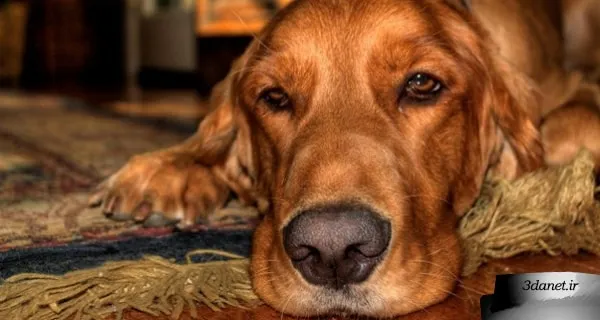
Ian — We live with six rescue dogs. With the exception of one, who was born during a rescue operation for pregnant dogs, all of them came to us from deeply tragic situations, from conditions in which they were severely abused. These dogs are, in fact, sanctuary animals with whom we share our home. We love them dearly, but we firmly believe they should never have existed in the first place.
We oppose the domestication and ownership of companion animals, as these constitute a violation of the fundamental rights of animals.
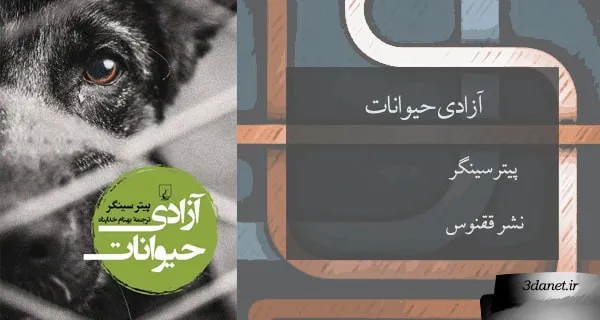
The term ‘animal rights’ has become largely meaningless and vacuous. Anyone who believes that the cages of hens in poultry farms should be slightly larger, or says that calves should live in social units rather than in isolation before being forcibly slaughtered, has defended a position known as ‘animal rights.’ This situation is largely due to the views of Peter Singer, author of Animal Liberation1, who is widely recognized as the father of the animal rights movement.
The problem with attributing the paternal label to Peter Singer is that he is a utilitarian who rejects moral rights entirely and supports measures that, in his view, reduce suffering. In other words, the father of the animal rights movement completely rejects animal rights and bestows his blessing upon cage-free poultry farms, pig farms free of gestation crates, and virtually all the feel-good exploitation promoted by almost every major ‘animal welfare’ charity. Singer is not an advocate of animal rights; he is an advocate of animal welfare. He does not reject the human use of animals per se; he is only concerned with their suffering. In a 2006 interview with Vegan magazine, Singer said he could ‘imagine a world in which people mostly eat plant-based foods, but occasionally treat themselves to an aristocratic meal consisting of local eggs2 or perhaps the meat of animals who, under natural conditions, have a good life according to their species and are, after a time, painlessly killed on the farm.’
We use the term animal rights in a different way, similar to how we use the term human rights in relation to the fundamental rights of humankind. For example, if we say a human has the right to life, we mean that their fundamental interest in continuing to live must be protected, even if using their organs without their consent would save the lives of ten other humans. A right is a way of defending interests. A right protects interests regardless of the consequences. This protection is not absolute and may be forfeited under certain conditions, but it cannot be overridden merely because of its consequences. ‘Nonhuman animals’ have this moral right not to be used exclusively as resources for humans, regardless of whether the treatment is humane or not, even if using animals as replaceable resources allows humans to enjoy desirable outcomes.
When we talk about animal rights, we are primarily talking about one right: the right not to be someone’s property3. The reason is that none of us accepts the enslavement of humans. This does not mean such a thing no longer exists; it does, but no one defends it.
An enslaved human is no longer treated as a person, and this means the slave is no longer a being who matters morally. That is why we do not accept slavery. An enslaved human is something that exists entirely outside the moral community. All the interests of a slave may be valued by another person, namely their owner. The owner may decide to cherish the slave as a member of the family, or provide them with the bare minimum of sustenance and treat them horribly. The fundamental interests of the slave may be deemed worthless.
In England and the United States, there were many laws that were supposedly enacted to regulate race-based slavery. These laws were useless, because regulatory laws only have relevance when a dispute arises between a slave and his owner. It is the owner's victory in all such disputes that constitutes the institution of slavery. Here, no serious challenge threatens the owner's property rights.
The same problem exists with regard to nonhuman beings. If animals are property, they cannot have any intrinsic or inherent value. They have only extrinsic or external value. They are objects whose value we determine. They have no rights. We have the right, as property owners, to value them. We can even choose to accord them no value at all.
There are many laws that ostensibly regulate our use of animals. In fact, the number of these laws is far greater than the laws enacted to regulate slavery. These, too, like the laws that regulated slavery, are useless. These laws only have any bearing when the interests of humans and animals come into conflict. But humans have rights, including the right to own and use their property. Animals are property. When the law attempts to balance human and nonhuman interests, the outcome is predetermined.
Moreover, because animals are personal property, the standard for their welfare will always be very low. Defending the interests of animals entails cost, and this means that these interests will, in most cases, only be defended in situations that yield an economic benefit. It is difficult to find a welfare standard that does not make the exploitation of animals more profitable; for example, laws requiring that large animals be stunned before slaughter reduce damage to the carcass and worker injuries. Keeping calves in smaller social groups instead of individual crates reduces stress and related illnesses, thereby also lowering veterinary costs.
Animal welfare measures increase production costs, but this increase is often very slight (such as replacing conventional cages with "enriched cages" in the European Union) and, considering demand elasticity, rarely affects overall demand. In any case, our treatment of animals we use for food, however "humane" it may be, still remains susceptible to resembling treatment that, if inflicted on a human, would be considered torture. There is no such thing as good, appropriate, and "happy" exploitation.
Although the right "not to be someone's property" is a kind of negative right and is unrelated to any of the positive rights that nonhuman beings might have, recognizing even this single negative right can, as a moral obligation, compel us to abolish institutionalized exploitation. This exploitation necessarily assumes that animals are objects we can use or kill for our own purposes.
Here we wish to digress slightly and say that, although what we are talking about may seem extreme, it is not, in fact, the case. In reality, our conventional beliefs about animals are such that, even without considering rights, we would arrive at almost the same conclusion.
The conventional belief about animals is that using and killing them is morally permissible for humans, but we should not impose unnecessary suffering and death on them. Whatever understanding we have of the concept of necessity in this context, allowing unnecessary suffering and death upon animals for frivolous purposes is incomprehensible. We clearly recognize this in specific contexts; for instance, many people still have a strongly negative reaction to Michael Vick, the American football player who was found to have been involved in dog fighting in 2007. Why, after nearly a decade, are we still angry at Vick? The answer is simple: we consider Vick's actions wrong because his only justification was that he derived pleasure and entertainment from harming those dogs; pleasure and recreation cannot be sufficient justification.
Many people, perhaps most, oppose bullfighting, and even most conservatives in Britain oppose fox hunting. Why? Because these blood sports, by their very definition, involve no necessity that would justify imposing suffering and death on nonhuman animals. No one said that if Vick had been kinder in pitting dogs against each other, he would deserve less blame. None of the opponents of blood sports say these sports should be made kinder, because they involve unnecessary suffering. They oppose such activities outright and advocate for their abolition, because these activities are unethical no matter how they are conducted.
The problem is that 99.999 percent of our uses of animals are, morally speaking, indistinguishable from the activities that most of us protest.
Our greatest use of animals is for food. We kill over sixty billion animals annually for food consumption, and this does not include the nearly one trillion marine animals that humans kill each year. We do not need to eat animals to be healthy. In fact, a growing number of major health authorities, including the National Institutes of Health in the United States, the American Heart Association, the British National Health Service, and the British Dietetic Association, have stated that a sensible vegan diet can be just as nutritious as a diet containing animal foods. Some authorities go even further, saying a vegan diet can be healthier than an omnivorous one. In any case, it cannot be credibly claimed that we need animal products for health. And animal agriculture is an environmental catastrophe.
We use animal products because we enjoy their taste. In other words, we are no different from Vick, except that instead of harming animals ourselves, we pay others to do it for us. Our use of animals for recreation or sport is also unnecessary. The only use of animals that is not clearly frivolous is their use in research to find cures for dangerous diseases. We reject vivisection as morally unjustifiable, even if it were necessary: a claim that becomes problematic, we believe, when it comes to empirical research. But the morality of vivisection compared to the morality of using animals for food, clothing, entertainment, and other purposes requires a more careful analysis. Based on our conventional beliefs, almost all our other uses of animals can readily be considered unethical.
In summary: whether you are an advocate of animal rights and acknowledge that they should have a fundamental, pre-legal right not to be anyone's property, or whether you adhere to conventional and traditional beliefs, the result is the same: essentially all our uses of animals must end.
Saying that animals have a right not to be property means that we are morally obligated not to use them as things, even if this use benefits us. In the discussion of domestic animals, this means we should stop bringing them into existence altogether. We are morally obliged to care for the rights-bearing beings who are alongside us, but on the other hand, we are obliged not to allow more of them to come into existence.
This includes dogs, cats, and other animals that serve us as companions and friends.
We treat the six dogs in our home like respected members of the family. The law supports this decision, because we can value our property however we wish. This is despite the fact that we could use them as guard dogs and keep them outside the house with virtually no emotional relationship. We could, right now, put them in the car and take them to a shelter, where they will be killed if no one adopts them, or we could ask a veterinarian to kill them. The law would support these decisions as well. We are property owners. They are property. We own them.
The reality is that in the United States, most dogs and cats do not die of old age or in homes that love them. They have a home to live in for a relatively short time, and after that they are either given to another owner, taken to a shelter, abandoned, or killed.
It does not matter if we describe the owner of an animal as a "guardian" or "caretaker," as some animal advocates insist. Such a description is meaningless. If you have the legal right to take your dog to a shelter to be killed, or to kill him yourself in a painless manner, then it no longer matters what you call yourself or your dog. Your dog is your property. As far as the law is concerned, those of us who live with our companion animals are their owners, and as long as we provide them with a minimum amount of food, water, and shelter, we have the legal right to treat them as we see fit. Yes, there are limits on the exercise of our property rights, but these limits are consistent with the very little value we place on the interests of our companion animals.
But just as you are unsettled by the horrifying thought of life without your beloved dog, cat, or pet—an animal you cherish as a member of your family—you probably think: "But wait, what if we force everyone to treat their animals the way I treat mine?"
The problem with this response is that, even if we could devise a practical and enforceable plan requiring animal owners to provide a higher level of welfare for them, those animals would still be property. We would still be able to place no value on their lives and kill them or take them to shelters where, if no one assumes guardianship, they will be killed.
You might reply that you are entirely opposed to such a thing as well, and that we should prohibit people from killing animals, except in circumstances where we are tempted to consent to euthanasia, such as terminal illness, very severe pain, etc., and that we should prohibit shelters from killing animals, unless killing the animal is in its own interest.
Your proposal is essentially to abolish the status of animals as property. Such a thing would require that we treat them in a way similar to how we treat human children. In that case, is breeding animals to be our companions and friends acceptable?
Our answer remains a resounding "No."
Developing general standards for how to treat animals as "family members" and untangling all the related issues is, as a practical matter, nearly impossible. Regardless of this, such a position does not accept that the domestication of animals, irrespective of how the animals are treated, itself raises major ethical problems.
Domesticated animals are completely dependent on humans, humans who control every aspect of their lives. Unlike children, who will one day become independent, animals will never become independent. The very reason for domesticating animals is precisely this: we want domestic animals to be dependent on us. They will remain forever in a hell of vulnerability and weakness, relying on us for all their needs. We bred them to be docile and servile, and to possess traits that please us, even though many of these traits are harmful to the animals. We may make them happy in a sense, but this relationship can never be natural or normal. No matter how well we treat them, they do not belong in our world. This is more or less true of all domestic animals. They are always dependent on us. We control their lives forever. They are truly "slave animals." Some of us may be benevolent masters, but we really cannot be anything more than that.
There are also those, like Sue Donaldson and Will Kymlicka, who argue in their book Zoopolis4 (2011) that humans are dependent on one another and ask what is wrong if animals are dependent on us? Human relationships may involve mutual dependence, but this dependence is either based on choice or represents social decisions to care for the more vulnerable members of a community that is bound together and protected by the complex aspects of a social contract. Moreover, the nature of human dependence does not deprive the dependent individual of fundamental rights, rights that are defensible should the dependence prove harmful.
Some people, in response to our position, say that dogs, cats, and other pets have a right to reproduce. Such a position could oblige us to breed them without limit, since we cannot set any restrictions on the reproductive rights of pets. However, regarding the position of those who worry that the end of domestication means the loss of species diversity, it must be said that domestic animals are beings we have created through selective breeding and confinement.
Some critics have claimed that our position concerns only the negative right of "not being someone's property" and does not address the positive rights that animals could have. This observation is correct, but if we recognize this right, the right not to be property, domestication would end entirely. We would be obliged to care for the domestic animals that currently exist, but we would not bring more of them into existence.
If we all accepted the personhood of animals, we would still need to think about the rights of non-domesticated animals living among us and in wild areas. But if we cared enough to stop using domestic animals for food, clothing, and other purposes, we could undoubtedly determine what those positive rights should be. The most important thing is to recognize the negative right of animals not to be property. This act commits us to the abolition of all institutionalized exploitation that leads to their commodification and control by humans.
We love our dogs, but admit it: if the world were a more just and fair world, there would be no pets, and no pasture full of sheep, no barn full of cows and pigs, and no farm full of laying hens. There would be no aquariums or zoos either.
If animals matter morally, we must reconsider every aspect of our relationship with them. The issue we must confront is not whether our exploitation of them is humane, with all the superficial reforms applied to the practices of animal-use industries, but whether we can justify using them at all.
.
.
Notes:
* Gary L. Francione is a professor of law at Rutgers University, where he teaches animal rights theory and law. His latest book, co-authored with Anna Charlton, is titled Animal Rights: The Abolitionist Approach, published in 2015.
* Anna E. Charlton is an adjunct professor at Rutgers University and a co-founder of the Rutgers Animal Rights Law Clinic.
[۱] Animal liberation
[۲] Free-Range Eggs: According to the United States Department of Agriculture definition, producers are entitled to use this label on their eggs only if their animals are not confined solely to indoor spaces and also have access to the outdoors.
[۳] The right not to be property
[۴] Zooplis
.
.
Authors: Gary Francione and Anna Charlton
Translator: Amir Qajargar
This article was published on September 8, 2016, under the title The case against pets on the Aeon website, and the website Tarjomaan translated and published it on January 15, 2017, under the title Why Keeping Pets Is Fundamentally Unethical?
.
.



Discussion2 comments
چرا عقیم و اخته کردن حیوان کاری غیر اخلاقی و نقض آشکار حقوق حیوان است ؟ http://noanimaltesting.ir/?p=1789 کنترل تراکم جمعیتی از طریق رفتار های اجتماعی: یک فرضیه http://noanimaltesting.ir/?p=1037 کانال تلگرام https://t.me/NoAnimalTesting
این هم فایل صوتیاش در شنوتو http://shenoto.com/album/18178 کانال تلگرام شنوتو https://t.me/shenoto