Political Science
Why Should We Participate in Elections?
Politics has no intrinsic nature; it is shaped by the actions of citizens. Therefore, participating in elections is not futile. Such action fosters political awareness and social solidarity, for politics today is interwoven into every sphere of life.
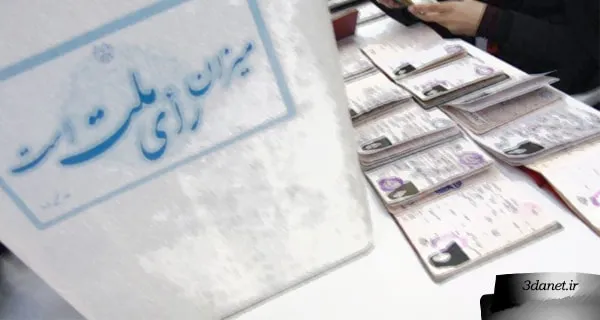
Not participating in elections has many and varied causes or reasons; from emotional, affective, and impulsive causes to strange and perhaps unknown matters. Sometimes theoretical presuppositions are also involved; that is, some individuals hold conceptions and ideas about politics on the basis of which they do not take part in elections and, consequently, consider it worthless and futile. They may even occasionally deride it. One of those theoretical presuppositions, whether conscious or unconscious, is that politics has an essence, a core, or a noumenon that is beyond the reach of ordinary citizens, and therefore members of society cannot play a role in it. For this reason, participating in elections is a vain, pointless, and futile act, and thus it should be avoided.
This presupposition about the nature of politics is entirely incorrect. Such a mistaken view of politics stems from a philosophical error. Politics is completely contrary to what these individuals imagine. The reality is that politics has no essence, core, or noumenon. Politics belongs to the category of act, action, and deed, not to the category of essence and substance. Whatever is considered the core and noumenon of politics is merely and solely one of its layers and phenomena, at most one of its upper layers and stronger phenomena. Politics is entirely phenomenon and appearance, but layered and nested phenomena, not parallel and identical phenomena. For example, the political action of an ordinary citizen is not parallel to the political action of a president. But the important point is that there is no necessary and one-sided causal relationship between these layers. For this reason, just as the upper layers have the capacity to influence the lower layers, the lower layers can also seriously influence the upper layers. Hence, just as the political action of the president affects the citizen, the political action of the citizen is by no means without effect on the president.
In this context, the matter can also be explained from other perspectives. For instance, in the view of Allameh Tabatabai, politics is a construct (i'tibari) and not a real (haqiqi) matter. Accordingly, the rulings of real matters should not be applied to it. Only real matters can have an essence, substance, or noumenon, but constructed matters such as politics are completely devoid of such things.
Considering this point, it must be acknowledged that politics has no fixed determination or unchangeable destiny, nor can it have one. The destiny of politics depends on political activities, and political actions shape the reality of politics. Fundamentally, the participation of citizens is the very essence of politics. In the view of Isaiah Berlin (1908–1997), even the greatest and most influential political figures can rarely grasp the course of the affairs they try to build according to their own plans. For this reason, politics always carries the seed of tragedy within it; for the forces that politics strives to overcome are never fully and completely under human control.
Also, in this context, following such a line of thought, one can offer a reading based on a beautiful and brilliant passage remembered from the masterpieces of Michael Oakeshott's (1901–1990) prose. He says: "In political activity, men sail a boundless and bottomless sea; there is neither harbour for shelter nor floor for anchorage, neither starting-place nor appointed destination. The enterprise is to keep afloat on an even keel; the sea is both friend and enemy; and the seamanship consists in using the resources of a traditional manner of behaviour in order to make a friend of every hostile occasion."
For this reason, no one can claim politics as their own, nor can anyone fully predict it. This is only because, in the arena of politics, everyone is a player and no one can stand at an Archimedean point outside of politics and have complete control over its reins. In all political arenas, the outcome is the sum and resultant of all forces and actions. In other words, it is the result of action and reaction, interaction, and mutual relations among various layers. Today, too, the nature of politics is such that it allows no one to determine the outcome. The ability to do such a thing has been negated due to the possibility of widespread participation, the immense complexity of political currents, and its convoluted and multi-layered character. For this reason, some political thinkers have likened politics to a game of snakes and ladders. Jean-François Lyotard (1924-1998), regarding the nature of politics, insists that politics is not a style, but a multiplicity of styles; because politics is not only inherently pluralistic, but is plurality itself. In his view, politics is not a form of human interaction definable by goals and purposes. On the contrary, politics is the divergence of ends and the multiplicity of purposes. For this reason, the political arena is also considered a space where different, heterogeneous, and thus competing discourses confront one another.
In a word, nothing in politics is predetermined; rather, it is created through the political engagement of individuals.
Moreover, the goal of voting is not merely victory in elections, such that individuals refrain from entering the fray for fear of defeat. Of course, I do not wish to insist on Max Weber's (1864-1920) view that politics gives meaning to life and that life without politics is absurd, but at the very least, political participation is also for knowing and understanding. Thinking seriously about elections and becoming genuinely involved with them fosters the growth of one's political understanding, perception, and acumen. It can also be an excellent opportunity to gain political experience, which can be used by the individual in the future or even shared with others. Secondly, because political action possesses a collective nature and occurs in the public sphere, it creates empathy and solidarity and binds many citizens and groups together. Yes! There are facets of human understanding, experience, and individual and collective life that only flourish through political participation, and elections are one such instance. As Edmund Burke (1729-1797) said: "He that wrestles with us strengthens our nerves and sharpens our skill. Our antagonist is our helper."
The conclusion is that elections, as an effective political action, cannot and should not be ignored or disparaged. On the contrary, they must be taken completely seriously. Let us not forget that today, one cannot live or even take any action without politics. Today, politics has entered all spheres and realms of citizens' lives, and even the private domain of individuals is influenced by politics. Therefore, a citizen, if only for the sake of their own personal destiny, is compelled to engage in political action; because politics is interwoven with all dimensions of their life.
But who should one vote for? This is not a question that can be answered here. I will suffice by quoting one of the sayings of Hannah Arendt (1906-1975) and say that such people should be chosen: "Creative and inherently political elites; individuals who care for something more than personal pleasure and happiness; human beings who desire the joy of public happiness and undertaking responsibility for public affairs; those who do not set goals for people's lives but strive for the realization of their life goals; persons who wish to shoulder responsibility and alleviate the pain and suffering of citizens, not to seize power and possess resources; intellectuals who have a taste and interest in public freedom and welfare, and without it cannot or do not wish to be happy and prosperous."
.
.
Why Should We Participate in Elections?
Author: Ali Ghazalifar
.
.



Discussion3 comments
برا تنوعم که شده مقاله ی یکیو بذارین که موافق تحریم انتخابات باشه . البته اگه جراتشو دارین ! اگه جراتشو ندارین لطفا توضیح بدید کدوم آزادی ما در طول دولت آقای روحانی زیاد شده که هنوز حتی جرات گذاشتن یه مقاله رو ندارین
خب این نظر شماست کهانتخابات و تحریم کنیم. پس خودتون زحمت نوشتن مقاله ای در این خصوص رو بکشید.ما موافق رای ندادن نیستیم.
من هم با علی موافقم. چه اتفاق خجسته ای در دوران حسن روحانی افتاده که ما را دلگرم کند؟ اصولاً دلگرمی در این سیستم، معنادار است؟