Religion
Win Hearts While You Can!
Mystics regard the human heart as God's throne, believing that while the heavens and the earth cannot contain Him, He finds a dwelling in the heart of the faithful believer. Hence, the heart is held more sacred than the Kaaba, and wounding a heart is considered a greater sin than neglecting religious rites.
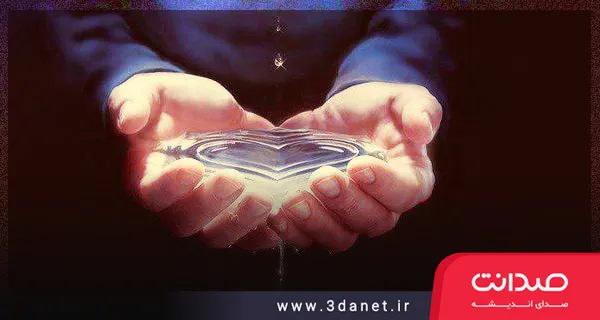
Win Hearts While You Can
Seddiq Qotbi – 20 April 2016
Why did the wise mystics consider “wounding a heart” to be so terribly wrong? Where does all this attention and care for the inner being and essence of human beings come from? Today, such teachings seem to have a mostly romantic and sentimental aspect, and wounding a heart is not considered a great sin. Yet Sa‘di said:
The world is not worth causing a heart to be distressed; beware, do no evil, for no wise person ever has. — By the souls of the enlightened, O Sa‘di, the kingdom of existence is not worth distressing a single soul. — If you gain all the kingdoms of the earth, and snatch the cap of tyranny from the sky, even if you possess the treasures of Korah and the kingdom of Jamshid, it is not worth distressing a single soul.
This emphasis and attention is not unique to Sa‘di: Do not seek to cause hurt, and then do whatever you wish, for in our sacred law there is no sin but this (Hafez) Be mindful not to scratch a heart through inadvertence, with a fingernail that could untie a knot (Sa’eb)
Truly, why is the sanctuary of the heart so revered among mystics? And why is breaking a heart so condemned, while mending one is so praised? The mystics pay attention to a hadith that hadith scholars have, of course, deemed fabricated, and which Saghani included in his “Fabricated Hadiths.” The saying attributed to the Prophet (PBUH) is: “The heart of the believer is the throne of God.” Be that as it may, in the view of the mystics, the content of this saying holds a special appeal and is accepted. Another Divine Hadith with the same theme has gained particular brilliance among mystics, even though hadith researchers have found no basis for it: “God Almighty said: My earth and My heaven cannot contain Me, but the heart of My believing, gentle, peaceable servant contains Me.” (Quoted from: The Revival of the Religious Sciences)
Shams Tabrizi says on the same theme: “You are a boundless universe, what place are the heavens and the earth? ‘My heaven cannot contain Me, nor My earth, but the heart of My believing servant contains Me.’ You will not find Me in the heavens, nor on the Throne.” [Discourses of Shams]
Rumi also pays special attention to this saying: The Prophet said that the Truth has declared, “I do not fit into the vault of high and low; In the earth, the sky, and even the Throne, I do not fit, know this for certain, O dear one. In the believer’s heart I fit, O wonder! If you seek Me, search in those hearts.” (Masnavi: Book One)
‘Ayn al-Quzat Hamadani also says: “The heart of the believer is the throne of God. Whoever circumambulates the heart attains the goal, and whoever mistakes and loses the path of the heart falls so far astray that they never find themselves again. I said, O King, where shall I seek You? And how shall I describe the robe of Your honor? He said, Do not seek Me on the Throne or in the sky; Seek Me near your own heart, for I walk near the heart.” (Tamhidat)
If the “believer’s heart” is the throne of God and the true home of the Lord of Truth, then winning a heart is more precious than going on Hajj, and circumambulating the heart is more valuable than circumambulating the Kaaba. The outward meaning of this expression, with all its poetic sharpness, does not accord with the common understanding of Sharia and religious rulings, but for the mystics, it is nourishment for the soul and strength for insight. The procession of Your beauty does not fit in earth or sky; I am bewildered within the breast how You have made a place. (Abdurrahman Jami)
Shams Tabrizi said: “Did He ever say: ‘We have honored the heavens’? Or ‘We have honored the Throne’? If you go to the Throne, it will be of no use; and if you go above the Throne, and if you go beneath the seven layers of earth, it will be of no use. The door of the heart must open. The life-struggle of all prophets, saints, and the pure was for this; this is what they sought.” (Discourses of Shams)
A story that expresses this mystical preference and prioritization of virtue is narrated within the tale of Bayazid Bastami’s journey to Hajj:
“A man met me on the road and said, ‘Where are you going?’ I said, ‘To Hajj.’ He said, ‘What do you have?’ I said, ‘Two hundred dirhams.’ He said, ‘Come, give them to me, for I have a family to support; and circle around me seven times, for this is your Hajj!’ He said, ‘I did so and returned.’” [Tazkirat al-Awliya]
Rumi has also recounted this same tale: He said: “Make a circumambulation around me seven times, And count this better than the circumambulation of the Hajj. And place those coins before me, O generous one, Know that you have performed the Hajj and attained your desire. So he did; he did not enter that Kaaba, And into this house, none but that Living One entered. Since you have seen me, you have seen God, You have circled the Kaaba of sincerity. Service to me is obedience and praise of God, Lest you think that God is separate from me. Open your eyes well, look upon me, That you may behold the light of God in a human being.” (Masnavi: Book Two)
The emphasis in Rumi’s expression conveys a profound truth in mystical theology. The master tells Bayazid that there is no duality. One must set aside double vision and squinting, and not see God as separate from the human being (“That you may behold the light of God in a human being”). If we are seekers of God, this God cannot be somewhere outside the conscience and heart of human beings. This perspective causes the mystic to regard the station of the human being as so lofty and sublime, and to consider attending to their state as so important and fundamental.
The true house of God is the hearts of His servants, and refraining from heartbreak and paying respectful, loving attention to human hearts is a requisite of such a view and belief. Let us guard the hearts of people, for they are the house of God.
Rumi, of course, was committed to the Sharia, and his intent could in no way have been to dissuade his audience from the obligation of Hajj; his purpose is to draw the attention of believers to the “true house” and the “Kaaba of the heart.” A precious Kaaba, a manifestation of which exists in the nature of every human being, and in the cup of every soul, there is a gleam from the face of the Cupbearer of existence.
O people who have gone on Hajj, where are you, where are you? The Beloved is right here, come, come! Your Beloved is your neighbor, wall to wall, Wandering in the desert, what air are you in? If you see the formless form of the Beloved, You are the master, the house, and the Kaaba. (Rumi’s Ghazals)
Ayn al-Qudat Hamadani says: “To those people who intend the Hajj, tell them: You have performed the Hajj once. The path to God is not to the right, nor to the left, not above, nor below; it is in the heart, and one must seek the heart, then the path of walking. If they have the provisions for this, in God’s name; if not, how long this delusion?” (Tamhidat)
Shams Tabrizi has an unparalleled expression regarding the “Kaaba of the heart”: “After all, you speak ill of the stone-worshipper, who turns his face toward a stone or a carved wall; you too turn your face toward a wall! So this is a mystery that Muhammad, peace be upon him, spoke of, and you do not understand. After all, the Kaaba is in the midst of the world; when all the people of the circle of the world turn their faces toward it, if you remove this Kaaba from the midst, their prostration would be toward each other’s hearts. The prostration of this one upon the heart of that one, the prostration of that one upon the heart of this one!” (Maqalat-e Shams)
Shams Tabrizi says if we remove the Kaaba from the midst, we see that human beings, in truth, prostrate themselves toward each other’s hearts. The Kaaba is but a stone marker, and the true place of prostration is the hearts of believers and the true dwelling place of God.
Circumambulate the Kaaba of the heart, if you have a heart; The heart is the Kaaba of meaning; why do you think it is clay? The circumambulation of the Kaaba of form, God commanded you for that, So that through its means, you might obtain a heart. If you circumambulate the Kaaba on foot a thousand times, God will not accept it if you hurt a heart. Give up your kingdom and wealth, and win a heart, For a heart will give you light in the grave on a dark night. If you bring a thousand bags of gold to the Divine Presence, God will say, “Bring a heart, if you bring anything to Us.” (Rumi’s Ghazals)
Fools venerate the mosque, While striving to oppress the people of heart. That is metaphor, this is reality, O asses, The mosque is nowhere but within the masters. The mosque that is within the saints Is the place of prostration for all; God is there. (Masnavi: Book Two)
In short, in the view of the mystics, the true place of prostration is the human heart, and the devotion that believers show to the Kaaba and the mihrab must be shown to one another’s hearts far more. God made our eyes the place of His manifestation, Come to this house and behold purity. God is in the hearts of the love-stricken; seek Him, Seek the earth, and do not traverse the sky. (Safa-ye Esfahani)
Perhaps with attention to this mystical view, one can better understand why Saadi said: As long as you are able, win a heart; Breaking hearts is no art.



Discussion3 comments
درهم زیبا نغز وپرمعنااصلا اثری ازخودبزرگ بینی وجودندارددرحالیکه بیت بیت آن درهم دنیاخریداردارد من آنچه شرط بلااستفاده باتومیگویم-تنخواه انسانم پند گیر وسوسه ملال
سلام استاد تنها زندگی ممکن و مطلوب، زندگی شجاعانه است و نه زندگی شاد!
شاید به این خاطر که دلهای آدمیان سبدست برای جادادن سیبهای بی نهایت.