Philosophy
A Conversation with Seyed Mohammad Reza Beheshti on the Historical Dictionary of Philosophical Concepts
The Historical Dictionary of Philosophical Concepts, translated by Hosseini Beheshti, is the focus of a conversation about the 'history of concepts' and the necessity of a historical approach in philosophy—an approach that considers the separation of systematic and historical examination of ideas to be artificial, and makes understanding reality contingent upon grasping the evolution of concepts.
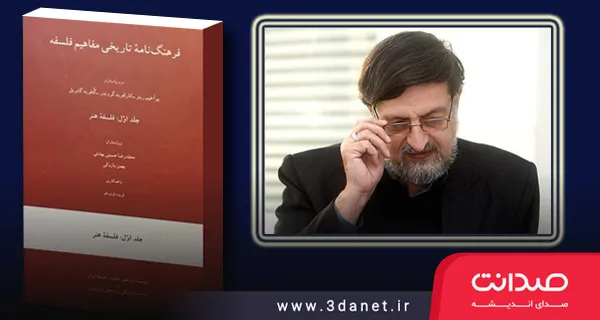
Monireh Panjtani: The Historical Dictionary of Philosophical Concepts is a thirteen-volume collection comprising 3,712 entries in the field of philosophy and its various branches, as well as concepts shared between philosophy and other disciplines. Some experts have called this work the “work of the century.” Dr. Mohammad Reza Hosseini Beheshti, professor of philosophy at the University of Tehran, is the Persian translator and editor of this work. To introduce and critically examine this dictionary in greater detail, I shared my questions with him. Also, in the final part of the conversation, I touched upon his activities at the “Navarghonun Research Institute” and the books he is currently translating and publishing.
The Historical Dictionary of Philosophical Concepts, as its name suggests, is a work concerning the history of concepts; if possible, please explain a little about the term “history of concepts,” which was first used in Hegel’s lectures on the philosophy of history.
As you mentioned, the term “history of concepts” (Begriffsgeschichte) first appears in Hegel’s lectures on the philosophy of history; although it is not certain that Hegel himself coined it, and it may well have taken shape in the transcriptions of these lectures. Of course, the meaning Hegel intends by it—namely, a type of historiography that is reflective and serves as a transition to writing a universal history of philosophy, finding its meaning within the framework of the philosophy of history—differs from what later developed under this title. The first works bearing the character of the history of concepts in the new sense emerged in the twentieth century, particularly in its second half, and became an independent discipline distinct from the historicist perspective in philosophy. In our time, the “history of concepts” considers itself an independent discipline with its own specific method within the study of philosophy. The history of philosophical concepts is not a substitute for philosophy itself or for philosophical thinking—nor is it merely a preparation and prelude to philosophy; just as it is not philology or philosophical linguistics. The “history of philosophical concepts” is a part of philosophy, in the sense that it sees the rational understanding and scientific cognition of the world and reality within a comprehensive and general theory as only possible when we have identified the application of concepts and the manner of their being influenced and exerting influence, and have systematically grasped them within a clear continuity of meanings. The “history of concepts” differs from the history of words and the history of problems, and each of these differs from the others in terms of subject matter and approach. Furthermore, the effort to demonstrate the evolution of concepts and to find the requisite conditions for their formation, as well as the obstacles that must have been removed for these concepts, with their significations, to emerge, also plays a decisive role. Of course, the examination of these conditions takes place in relation to the history of thought and does not adopt psychoanalytic, psychological, sociological, or similar approaches. The “history of concepts” itself requires a detailed discussion, which is beyond the scope of this conversation.
I hope we can examine this topic in detail in another conversation. One of the most important points you need to clarify for us right at the beginning of this conversation is: what exactly does a “historical approach” to philosophy fundamentally mean?
A historical approach to philosophy considers the separation between the systematic or systematic examination of philosophical ideas and the historical examination of these ideas to be an artificial and unsustainable distinction. A philosophy that is not aware of its own historicity is at risk of turning to a systematics detached from time and historicity, and of believing that it has achieved a final understanding of reality. If thought realizes that reality is constantly changing, then the understanding and comprehension of reality must also move in step with it in order to be an understanding befitting this changing reality; otherwise, it loses its relation to this reality or seeks to coercively hold reality within a transtemporal and transhistorical framework of understanding. Such an effort, although it provides a kind of peace of mind (however false) to thought, the truth of the matter is that such thought must disregard a part of reality that remains outside the concept and escapes the grasp of the current conceptual framework. In this way, it loses its understanding of its relation to reality. It is true that it finds peace of mind through this, but it pays a heavy price in return. If we wish to give an example (and we know that every example, on the one hand, brings us closer and, from many aspects, distances us), it is like wanting to catch a fish by a river, but the fish only comes into our hands if we strike it on the head and take away its life and vitality. What is obtained appears to be the same fish, but in truth, it is nothing more than the carcass of that living fish. Kierkegaard once said that concepts, like individuals, have their own history and, like individuals, cannot resist the dominion of time and become transtemporal and transhistorical. Of course, this does not mean that the historical approach necessarily falls into the trap of Historicism or Relativism in its conventional sense. A thought that merely contents itself with collecting what predecessors have said, its philosophy is only the history of philosophy. This is while philosophical work remains an effort to attain living reality and is not merely an archaeology or exhumation or a viewing of a gallery or museum of past thoughts. In the historical approach, if we turn to the history of philosophy, the purpose of reviving the philosophical question is an effort to find the question in an authentic way on our part, not a repetition, even an exact and faithful one, of the thoughts and views of the past. In the 'history of concepts,' we try to understand the semantic implications of concepts in their own context and setting, and also to understand the relationships that exist between concepts (including Complementary, Contrary, and contradictory concepts) in order to reach a more comprehensive understanding of them. In this way, the influence of pre-understandings in the formation of our current understanding and our current encounter with reality also becomes clear, and we gain greater awareness of our present consciousness and our perception of subjects. Thus, the 'history of concepts' aids us in better understanding our own way of thinking, and this in no way means that it replaces our own effort to understand reality.
To compile such a weighty work, the authors must certainly have had a specific research and writing method. Please tell us, what was the authors' method in compiling this dictionary?
The authors' method has been to rely on synchronic and diachronic studies, first establishing the meanings of philosophical words and terms in common usage and at specific points in time, and then, in the works of philosophers, attempting in the same manner to recover the meanings of these philosophical terms and concepts and, by comparing them, to trace the transformations and developments these concepts have undergone. This method draws on the work of philologists and those engaged in historical semantics, and then seeks to arrive at an understanding of these concepts by considering their place within the system of philosophical thought of individual philosophers or philosophical schools. The merit of this method is that it can meticulously trace and document any claim regarding the evolution of concepts. One can confidently say that in few other works can you follow the developments of concepts step-by-step to this extent and document each stage. Furthermore, the authors have endeavored, wherever possible, to quote directly from primary and original sources, and in most cases, in addition to the German translation, they have provided the original text of the passage in whatever language it was written. In some instances, they have not even provided the German translation and have confronted the reader with the exact phrase in the original language.
What exactly are the differences between this method and the writing of the history of philosophy? For example, with the history of philosophy by Copleston or Émile Bréhier?
There are significant differences. Firstly, this dictionary focuses on concepts and refrains from making figures its entries. Secondly, the purpose of writing the entries was by no means to describe philosophical systems or schools. Thirdly, as dictionary writing necessitates, the texts are highly condensed, and the purpose of writing was not prolixity. Fourthly, unlike the work of historians of philosophy, whose aim in composing a history of philosophy is the principal opinions and the system of thought of philosophers and philosophical schools, and which is more pedagogical in nature, the entries of this dictionary serve researchers.
What are its differences and similarities—aside from the scale and breadth of the work—with Jean Wahl's The entries included in the three-volume set published by SAMT, as well as the translated entries published in the three-volume set by the Iranian Institute of Philosophy, were selected through a process proportionate to the assessment of needs and the research work underway at the New Organon Institute itself. In particular, the entries in the three SAMT volumes, which are devoted to metaphysical concepts and terms, were translated in the course of research conducted by the New Organon Institute and required for that research. Both the esteemed SAMT and the Institute of Philosophy, noting the track record of work done, expressed interest in each selecting titles according to their own needs, in agreement with the New Organon Institute. The Institute of Philosophy, recognizing the necessity of such work in the three areas of art, theology, and ethics, requested the translation of these entries in consultation with New Organon. Do you have a plan to translate other entries from this work? The six volumes published by SAMT and the Institute of Philosophy occupied the energy and dedication of the New Organon Institute for nearly ten years, from initial planning to publication, and at present, no new decision has been made regarding the continuation of this work. You can imagine how much effort this work has required, considering the volume of work and the precision applied in its translation and editing. Suffice it to say that each volume was edited and revised five times from start to finish. Of course, the result of these efforts, by God's grace, has been the publication of works that have gradually become points of reference and citation for philosophical research, theses, and scholarly articles, which is a source of satisfaction. For the future, there may well be new ways of utilizing this great work—of whose 3,712 entries, only 146 have been translated into Persian in total—which we hope will come to fruition. You are aware, of course, that the third SAMT volume is still in the process of publication. What do you see as the strengths and weaknesses of this work? We have already spoken of its strengths. But every work, just as it has strengths, also has shortcomings. One of its notable shortcomings is that it has not paid as much attention as it deserves to philosophical thought outside the Western sphere. For instance, while in some cases attention has been paid to the evolution of concepts in the Islamic philosophical tradition, due to a lack of familiarity with this tradition, this level of research is not commensurate with the importance and standing of this tradition within the totality of global philosophical thought—and this is not a statement of exaggeration or self-aggrandizement. Regarding other philosophical traditions, such as the Indian or Chinese philosophical traditions, this attention has been even less. In any case, one can say there is a tendency toward Eurocentrism, which is, of course, to some extent justifiable. We must bear in mind that conducting similar research in other philosophical-cultural spheres naturally requires the dedication of the scholars and researchers of those spheres themselves, and it will certainly broaden the horizons of readers. What is certain is that, by drawing on the method and depth of the work done in this dictionary, one can undertake a major research project in the Islamic-Iranian philosophical tradition, which of course requires extensive preliminary work and must be shouldered. Given that a number of entries are not in this work, does the original publisher have a plan to update it? It is natural that with the expansion of research in various domains of philosophy, as well as its numerous branches and different approaches and methods of philosophical inquiry, any work will sooner or later need revision and updating, and this dictionary is no exception. Particularly, developments in recent decades in the field of philosophy are, in some cases, so rapid that tracking and encompassing them is no simple task. I myself have on several occasions encountered instances where I turned to this reference source, but for research on more recent concepts and terms, I was unable to make proper use of this dictionary. Nevertheless, it must still be said that it possesses relatively good comprehensiveness. The first volume of this dictionary is dedicated to the philosophy of art, containing 14 entries from the set of 160 entries you selected. What was your criterion for choosing these entries? Is there no plan to translate the rest of these entries? The criterion for selecting entries was the agreement of the research councils of the Iranian Institute of Philosophy and the Noarghun Research Institute. There are certainly other important entries in the fields of aesthetics and the philosophy of art that deserve to be translated. As I mentioned, continuing the translation of this dictionary, which is a very arduous task, is not currently on the institute's agenda. However, if the conditions are met, it is worth considering. Given the long time that translations and repeated revisions take, as well as securing the necessary resources for this work, there are other ways to make the content of these entries available to Persian-speaking readers, which we are currently evaluating. Why do we have two first volumes of this dictionary? One is the volume titled Philosophy of Art, a joint publication of the Iranian Institute of Philosophy and the Noarghun Cultural-Research Institute, published in 2010. The other, which also bears the title of the first volume, is a selection of concepts in metaphysics, published in 2007 by SAMT Publications and the Noarghun Institute. This is somewhat problematic, encountering a first volume! The three volumes published by SAMT are dedicated to a set of concepts related to metaphysics and were translated due to another research project of the institute that dealt with research into the general rules of philosophy. Here too, the selection of entries was made with the mutual agreement of both institutes. Naturally, the volumes containing these entries were published with the subtitle Metaphysics, and in this respect, they are completely different in content from the entries translated in the fields of aesthetics and the philosophy of art (Volume 1), theology (Volume 2), and ethics (Volume 3). The contract with the Iranian Institute of Philosophy was concluded at a different time and in specific fields, and for this reason, it naturally had its own volume numbering. Given that the majority of the dictionary's entries have not yet been translated, it was not possible to render all of them. Ultimately, perhaps these two sets can be consolidated in later steps, but at present, such a task is not feasible. In the second part of the conversation, I would like to touch upon the activities of the Noarghun Research Institute. You and your colleagues have been active at the Noarghun Research Institute for about two decades, and to be fair, the output of this institute in various fields of authorship, translation, research, and text reading far exceeds the capacity of a private institute. At the end of our conversation, I would like you to acquaint us a bit more with the activities of this institute. Tell us when and with what aim it was established? The Noarghun Research Institute was formed in 1998 with the presence and collaboration of a group of philosophy professors. The aim was to be able to carry out research work in the field of philosophy, and we ourselves, as individuals who were present in universities, wanted to create a space where we could address the gaps, interests, and needs that existed in the field of philosophy. What were these activities mainly? The Noarghun Research Institute undertook several types of work to monitor the state of philosophy in the country in the form of several projects. 1) It collected and classified all the country's theses and dissertations and their related information. In this work, carried out by the Noarghun Institute in collaboration with the Iranian Institute of Philosophy, theses from all levels—from bachelor's, when this level also had a thesis, to master's theses and doctoral dissertations—from the beginning up to 2007, including both public and private (Azad) universities, were cataloged. For this task, we gathered and classified the information of these theses from various angles. The result of this work is now available in a simpler form on the website of the Iranian Institute of Philosophy. 2) An effort to identify figures working in the field of philosophy, with the aim of providing a good database of these individuals for those interested. 3) For the first time, it undertook the identification of specialized philosophy websites in various fields and languages, the result of which was published as a book titled We are in the process of setting up and equipping the website, and soon, with changes and developments, we will upload this information so that the user can easily access the desired site by clicking on the address. What was the institute's next activity during these years? The fourth activity was the launch and establishment of a digital library; due to the scarcity of non-Persian resources in universities and research centers, access to such a library was essential. In this library, we prepared the major works of about two hundred philosophers in the languages they might have been available in, in the form of independent CDs. This library is still being completed, and we have reached about 60,000 sources. Of course, we did not bring this library to the market and only made it available to research institutions. The institute's fifth activity is moving towards audio works. Interviews broadcast after Heidegger's death have been translated and are to be read and uploaded as oral files on the website. Tell us about the institute's educational activities. For several years, we have been pursuing a project under the title of the Evolution of Philosophical Rules, something similar to what Ritter and his colleagues did regarding concepts, we pursued regarding rules. Dr. Gholamhossein Ebrahimi Dinani had previously done this work in the field of philosophy in three volumes; we took this work beyond the realm of Islamic philosophy and examined nearly 500 philosophical rules across thirty historical stations in the works of various philosophers and schools. Has this work been completed? Part of this work has been done, but its continuation requires more extensive support. The goal was to show that one of the exchanges in the philosophical field is precisely these rules, which have been traced from the period of ancient Greece to the modern era. Later, in the course of the research, we learned that a woman in Germany and a center in Finland are continuing the same work, and we had some minor exchanges with them. Explain more about the forms of the evolution of philosophical rules. The evolution of rules takes three forms: 1) The concepts used in the rules, such as the One, emanation, etc. 2) The rules themselves and their meanings 3) The position of the rule in the thought systems of philosophers or philosophical schools. In fact, the translation of the Historical Dictionary of Philosophical Concepts emerged from this work. To examine the evolution of rules, we translated a series of concepts from Ritter's dictionary, mainly in the field of metaphysics. The SAMT Organization became aware of our activity and suggested we turn these concepts into a technical translation for the use of enthusiasts. As I mentioned earlier, two volumes of this dictionary have been published by the SAMT Organization, and the third volume is in the process of publication. The Iranian Institute of Philosophy also made the same suggestion, and they published three volumes on art, ethics, and theology. Excellent! If you agree, let's discuss the other activities of the New Organon Research Institute. Also, for ten years, we have formed a study circle at the institute, where we read texts together with a number of philosophy instructors. For example, we read Heidegger's Being and Time, and in addition to discussions around the book, we exchange views and strive for greater alignment with one another. This same circle has been working on Hegel's Phenomenology of Spirit for about four years. With this group, we have been able to publish several works, and several others are in the process of publication. Two works have been translated by Dr. Heydari. Several doctoral students are also present in this circle and collaborate with us. I remember you were also working on a timeline! What stage is this work at? Yes. It is very essential for philosophy enthusiasts to become familiar with philosophical ideas in their historical context. The timeline of the history of thought that we have prepared recounts philosophical events in chronological order, accompanied by photos, texts, maps, and diagrams within the context of general culture. How many volumes is this work? It consists of five volumes, the first of which has been completed and is to be jointly published by the Library of the Islamic Consultative Assembly and the University of Tehran Press. The first volume of this work is about 450 pages, in large folio format and in color. This work has been prepared with over 450 sources and the collaboration of 25 authors. What is the order of the volumes? The first volume covers from the beginnings to the rise of Islam, the second from the rise of Islam to the Middle Ages, the third from the Middle Ages to the Renaissance and the modern period, the fourth the modern era, and the fifth the contemporary era. I know that in addition to all your activities at the Navarghonun Institute and teaching at the university, you are engaged in other activities as well. You have been working on the translation of Truth and Method for years. What stage is this work at? The translation work itself was finished a long time ago. More than two-thirds of the translation of this work has been revised, and the final third remains. Is Hermes the publisher of this work? Yes. In addition to this work, the translation of the book The Beginnings of Philosophy in Greece has also been completed. Of course, a heavier task that took up a great deal of time was the translation of the six-volume work Theology and Society in the Second and Third Centuries of the Hijra by Josef van Ess. The translation of this work is also finished, and we are now in the process of editing over four thousand entries. Although I am sure your activities do not end here, in closing, tell us a little about the Institute for Middle Eastern History Studies and the Association for Intercultural Philosophy. Yes. At the Institute for Middle Eastern History Studies, we conducted research on Spain during the Islamic period for a while and signed a contract with a group, which also resulted in a six-part documentary series titled The Splendor of the Middle East; however, it was aired at an inconvenient time on Channel Two. There was another project titled Iran, the Land of Coexistence of Religions and Official Minorities of Iran, concerning the customs, rituals, and life of Iran's official minorities. The result of this research also became a thirteen-part documentary, which was broadcast on one of the foreign-based Iranian channels without our permission. If you agree, let us conclude our conversation with the activities of the 'Association for Intercultural Philosophy.' The meetings of the Intercultural Association were previously held at the Navarghonun Institute and later became independent, and recently it has been registered as a scientific association, with Dr. Ali Asghar Mosleh as its secretary. Currently, its meetings are held every two weeks under the title 'The Other and Xenophobia' at the Institute for Humanities and Cultural Studies. Book Introduction: Historical Dictionary of Philosophical Concepts Editors-in-Chief: Joachim Ritter et al. Editors: Mohammad Reza Beheshti – Bahman Pazouki The Historical Dictionary of Philosophical Concepts is a thirteen-volume collection, the thirteenth volume of which is devoted to indexes. “The publication of the dictionary’s text in twelve thick, large-format volumes began gradually in 1971, and its thirteenth volume was completed in 2004. This German dictionary contains 3,712 entries in the field of philosophical concepts across its various branches, as well as concepts shared between philosophy and other disciplines, including aesthetics and art theory, history and cultural theory, linguistics, literature and rhetoric, ethics, education, political science, psychology, psychoanalysis and psychotherapy, sociology, economics, religious studies, theology and mysticism, mathematics and logic, physics, astronomy, geography, geology, biology, and medicine.” This dictionary was produced under the supervision of Joachim Ritter, Karlfried Gründer, and Gottfried Gabriel, with the collaboration of over 1,500 specialist philosophy professors. In this dictionary, the historical evolution of concepts is presented to readers in a documented manner, accompanied by rich sources and references for further study. The result of this immense research by this group of specialists has led experts to call this work the “work of the century,” which has no parallel not only in the German-speaking world but also in other languages. Mohammad Reza Hosseini Beheshti and Bahman Pazouki are the Persian editors of this work. Three volumes of this work, under the titles Philosophy of Art, Theology, and Ethics, have been published through a joint collaboration between the “Iranian Institute of Philosophy” and the “Navarghon Cultural-Research Institute.” Among the entries in the Philosophy of Art volume, one can mention aesthetics and the aesthetic, the aesthetic object, philosophy of art, art and the artwork, abstract art, and pure art. The first edition of the first volume was published in 2010 in 272 pages. The first edition of the second volume, titled “Theology,” with 258 pages, was made available to those interested in 2012. Among the entries in this volume, one can mention divinity, theology, the moral argument for the existence of God, theism, divine manifestation, and the kingdom of God. The first edition of a selection of concepts in metaphysics from this dictionary was published by “SAMT” Publications in 2007 in 468 pages. The entries in this volume include union, principle, didactic principle, principle of sufficient reason, principle of causality, principle of common sense, axiom, possibility, specific possibility, passivity, and idea. Several other translators have also collaborated on the translation of this collection, among whom Farideh Farnoudfar and Parastoo Khanbani can be mentioned. The “history of philosophical concepts” is a part of philosophy, meaning that it sees the rational understanding and scientific cognition of the world and reality within a comprehensive and general theory as possible only when we have identified the application of concepts and the manner of their being influenced and exerting influence, and have understood them systematically within a clear continuity of meanings. The “history of concepts” differs from the history of words and the history of problems, and each of these differs from the others in terms of subject matter and approach. Furthermore, the effort to demonstrate the evolution of concepts and to find the opportune conditions for their formation, as well as the obstacles that must have been removed for these concepts, with their significations, to emerge, also plays a decisive role. From a historical approach to philosophy, the separation between the systematic examination of philosophical ideas and the historical examination of these ideas is considered an artificial and untenable distinction. A philosophy that is not aware of its own historicity is in danger of turning to a systematicity detached from time and historicity, and of believing that it has achieved a final understanding of reality. If thought realizes that reality is constantly transforming, then the perception of reality and its understanding must also move in step with it, in order to be an understanding befitting this transforming reality; otherwise, it loses its relation to this reality or seeks to coercively hold reality within the framework of a transtemporal and transhistorical understanding. This article was published in a joint collaboration between Anthropology and Culture and Ettelaat-e Hekmat va Marefat Magazine.Subtitle One:
Subtitle Two:


Discussion2 comments
خداوند به اسناد بهشتی و همکاران ایشان که کاری سترگ و ماندگار در حوزه اندیشه انجام میدهند توفیقات روزافزون دهد
حقیقتا دست مریزاد داره کاری بسیار طاقت فرسا و البته نه چندان درآمدزا. ممنون از صدانت بابت انتشار مطلب.