Philosophy
A Critique of the Book The Philosophy of the University with Mohammad Reza Beheshti and Ehsan Shariati
Reza Mahoozi considered the book The Philosophy of the University an opening for philosophical reflection on the university in Iran. Ehsan Shariati, while acknowledging the subject's importance, found the work lacking a proper synthesis and critiqued its reading of Heidegger and the state of the university in Iran.

The seventh session of the "Culture and University" series of meetings was devoted to a critique and review of the book *The Philosophy of the University; Reflections on the University in the World and in Iran*. This book, with an introduction by Manouchehr Ashtiani and featuring works by Khosrow Bagheri, Karim Mojtahedi, Gholamreza Zaker-Salehi, Meysam Sefidkhosh, Ali Paya, Reza Mahoozi, and a number of researchers and thinkers in the field of the philosophy of the university, has been published.
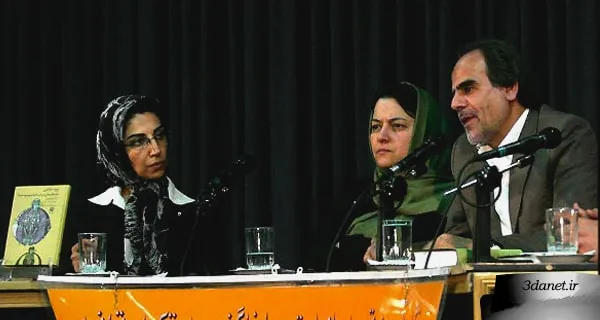
This work was compiled and edited by Reza Mahoozi and published by the Institute for Cultural and Social Studies. This session, attended by Mohammad Reza Hosseini Beheshti, faculty member of the Philosophy Department at the University of Tehran, Ehsan Shariati, researcher and lecturer in philosophy, and Reza Mahoozi, research deputy of the Institute for Cultural and Social Studies and editor and compiler of the book *The Philosophy of the University*, was held on the evening of Monday, October 14, 2019, at the Book House Institute.
In Search of a Healing Prescription
At the beginning of the session, Reza Mahoozi considered the book *The Philosophy of the University* to be an opening chapter for undertaking philosophical reflections on the university in Iran and said: My concern for compiling this book arose from a question I had been grappling with for several years. That question was: why has the institution of science never been taken seriously in Iran from the ground up? One of the ideas that can be offered in this regard is that the foundations of European universities were not planned for or taken seriously in Iran.
Noting that the thread of philosophical studies on the university and education can be traced back to the writings of Plato, specifically his book *The Republic*, he stated: The subject of philosophical reflections on the university is an ancient matter, but what exists specifically and systematically in this field dates back to the last two centuries. The first serious treatise in this field is *The Conflict of the Faculties* by Kant. From Kant's perspective, the specific function of the university is to free science from the constraints of two institutions of power, namely religion and the state. Kant's treatise provided the intellectual groundwork for freeing the university from these two institutions, and the founding of the University of Berlin in 1810 was the objective and external manifestation of this effort. In this approach, the university is an independent, future-oriented institution, and the spirit of the university is built upon the growth of reason.
This researcher in the field of philosophy, drawing a distinction between the German model and the English model of engaging with the category of the university in the 19th century, said: This distinction organized the intellectual debate of the 19th century. In the German approach to the category of the university, what is central is rationality, and in the English approach to this institution, cultivation and honor become central. Mahoozi then reviewed the philosophical approaches to the university in the 20th century and said: In this century, with the opening of a space for the social sciences and the casting of doubt on the foundations of pure science, the dominance of free-market discourse, skepticism about the foundations of modern reason, etc., the position of philosophy faded, and this issue led to the formation of new-style universities, largely influenced by the American discourse, which were based on connection with the free market. This situation caused some philosophers from within the university to cry out about the issue of the university's lack of independence and to call for a re-reading of 19th-century ideas about the university.
The editor of the book *The Philosophy of the University* added: Of course, the return to the 19th-century idea of the university was not complete and total in this period. Critique and critical reason in the second half of the 20th century, which was manifested especially in the philosophical approach of thinkers such as Nussbaum, Derrida, etc., was founded on liberation. Liberation from all the ideologies that had eclipsed the idea of the university.
At the end of his speech, while stating that in the book *The Philosophy of the University*, an attempt has been made to answer three types of questions, Mahoozi formulated these questions as follows: Over these several decades since the formation of the university in its modern form in Iran, have we had even a passing glance at philosophical reflections on the university? Given the current situation, which is clearly not considered a suitable one, is it necessary to address a category called the philosophy of the university? In accordance with our situation, which approach to the philosophy of the university is our healing prescription?
A Book That Does Not Offer Solutions
After Mahouzi, it was Ehsan Shariati's turn to present his critiques of the book *The Philosophy of the University*. He said: This book brings together a diverse collection of material in the field of the philosophy of the university, and this collection is important in that it opens a discussion about the purpose and mission of the university. From this perspective, the book is a groundbreaking opening, as I do not recall such a discussion having been raised in this field before. But in my view, in this book we have not yet entered into the discussion itself. Various dimensions have been placed side by side, but no opportunity has arisen for a synthesis appropriate to our situation to emerge from these diverse theses; this shortcoming can, of course, be attributed to the fact that this work is a first step in this field.
Shariati then, pointing to spelling errors as well as inappropriate equivalents chosen for certain terms and the incorrect recording of the Latin spelling of some terms, assessed the book's compilation as somewhat hasty, and then focused on one of the book's articles dealing with one of Heidegger's addresses. He said it seems the author of this article, Mr. Bijan Abdolkarimi, has not properly engaged with the original text of Heidegger's address. He has based his argument on only four sentences from it and, based on those four sentences, has presented a Fardidian reading of Heidegger's view on the category of the university.
He then turned to Heidegger's address and said: In his address, Heidegger speaks of a grand university reform. He offers a unique definition of the concept of freedom to show why the university must be free and independent from other powers and, indeed, assume the spiritual leadership of other institutions of power. In his approach, freedom is equivalent to the will of the nation. Freedom is both responsibility for every action and the power to make decisions.
Pointing out that, according to the author in the article, Heidegger is one of the five great philosophers of history and the greatest philosopher of the twentieth century, he referred to Heidegger's support for the Nazi regime in Germany and said: The fact that the greatest philosopher makes the greatest political mistake is meaningful and has its roots in the approaches of his thought, and one cannot simply pass over this issue.
In another part of his speech, Shariati, referring to four models of encountering the university, said: There is an approach that wants the university in the service of religion; in another approach, the university is considered to be in the service of the state; and there is a third approach that prioritizes the university in the service of truth. But there is also a fourth approach, heralded by Derrida based on a correct reading of Heidegger. In this idea, the university is unconditional and is not in the service of any specific institution. This idea considers the university to be
A Book Distanced from the Fundamental Question
The third speaker at this session was Mohammad Reza Hosseini Beheshti, a professor at the University of Tehran. At the beginning of his speech, he said: The mere act of compiling a focused piece on the philosophy of the university is commendable, but signs of haste can be observed in the book's compilation. One can find instances in the book that are clearly spoken material and have not been properly transcribed. In places, the equivalents are not appropriate, and almost all the German equivalents written in the book are erroneous.
Beheshti then, noting that the book presents the thoughts of important thinkers on the university, said: In Iran, when we intend to address Kant, we refer to a limited part of his thought, and specifically, Kant's thoughts on the university had not been much discussed in Iran, and this book is commendable from the perspective of addressing this subject. In Iran, Humboldt's thoughts, despite all their importance, had also not been much discussed. Humboldt brought about an important transformation in the conception of culture and education, but we are not familiar with Humboldtian ideas. Humboldtian ideas could have revolutionized our scientific structure.
Reviewing the book's contents, Beheshti said: In this book, in addition to Kant and Humboldt, the thoughts of thinkers such as Hegel, Jaspers, Husserl, Heidegger, Max Weber, Habermas, and Derrida on the university have been considered, and in its second part, articles on the Iranian university have been presented.
This philosophy researcher, mentioning that the title "Philosophy of the University" is questionable, said: Philosophy is the conceptualization of the realities of one's own time, and the university is also a reality of our time. The effort to conceptualize the time is largely visible in the first part of the book, and traces of it can sometimes be found in the second part as well. But some of the book's articles show that we are still distanced from understanding the subject within the realm of a philosopher's thoughts or regarding a concept, and it is sometimes observed that there have been projections in the book about a subject. Regarding Heidegger, it is observed in this book that the primary concepts are still not understood. Four axes of his thought have been considered, which do not seem to be the key and central concepts.
Beheshti, pointing out that the institution of the university emerged with a specific goal-setting, said: One can ask today, what is our situation relative to that goal-setting? Why does it seem that the university has a dysfunctional role in Iran?
This university professor, posing these questions, continued his speech in response as follows: The state of distress in Iran is not unique to the university. If other institutions in Iran functioned properly and only the function of the university institution was dysfunctional, the question of this dysfunction would be correct, but in a situation where this dysfunction can be observed throughout the living structures of Iranians, the questions raised must be taken back one or two degrees.
Beheshti added: In my opinion, the story of dysfunction in structures goes back to the issue of identity. It is this academic identity in which there seems to be a turbulence, and it is part of a whole. One must ask, is the problem we are facing not a more fundamental one? In my view, we are facing a deep anthropological problem. If we have an inconsistency in our speech and behavior, we must return to the fundamental questions related to human identity.
He also said: Engaging with the university must take place in various forms, but the relationship between philosophical questioning and the university needs to be thought through more deeply. We must simplify the questions. We are ambiguous regarding two fundamental questions that play a crucial role in our lives: “Who am I?” and “What do I want?” These two questions are extraordinarily decisive. Our relationship with the world passes through the path of the “I.” If pluralism has any meaning in any field, it has no meaning in the realm of answering the question “Who am I?” If I suffer from multiplicity and ambiguity in the image I have of myself, this matter immediately manifests itself in the affairs of life. This is how we see people who exhibit contradictory behaviors in different aspects of their lives. They act one way when facing colleagues and behave completely the opposite when facing family. If you have an inconsistent image of yourself, not through lying, but genuinely, you will manifest different “I”s.
After explaining the dimensions of the importance of the question “Who am I?”, Beheshti addressed the question “What do I want?” and said: Our ideal, what we want to be, shapes the ground for ethics, and of course, we hardly know what we want, and our constant social dissatisfaction and agitation stem from this not knowing. This ambiguity manifests itself in our thought and action. If we have a disorder in the university, or the parliament, or the government, or anywhere else, we must first ask ourselves what we want from them and what conception we have of them? We must first ask where the university is and what role it should play, so that if it fails to play this role, we can ask what the reasons for this failure were.
He then bridged from his remarks to the book *The Philosophy of the University* and said: We must not halt the philosophical questioning of the university at levels that deprive us of the possibility of asking about the quiddity of the university. If we enter from this perspective, we find the thread with which a book like *The Philosophy of the University* should begin. In some of the articles in this book, the discussion of quiddity has not been taken seriously. Perhaps it has been asked, but we have contented ourselves with layers of answers that have not led to a philosophical questioning of the university. If we arrive at a clarification of this question of what we want from the university, perhaps some questions not raised in this book would not be prioritized. From this perspective, this book can make us realize that perhaps the correct point of entry into the discussion is not the questions raised in this work. In confronting philosophical discussions, we must ask sharp, clear, and precise questions. One must know which question it is that, if we begin with it, we have begun from the most fundamental place. This book is still distant from the fundamental question.
.
Full audio of the critique and review session for the book *The Philosophy of the University*
.



Discussion0 comments
No comments yet; let yours be the first voice.