Religion
A Critique of Critiques of Religious Intellectualism, Mehdi Kampani Zare
Some consider the pairing of intellectualism and religion to be contradictory, whereas the meanings of words are determined by usage, not by arbitrary coinage. Critics, without defining intellectualism, have offered no argument and have merely imposed their own intended meaning.
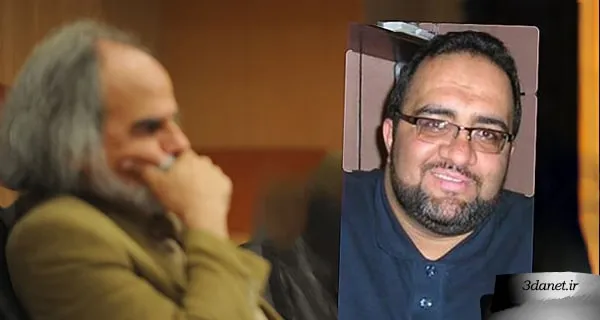
Mehdi Kampani Zare: Some claim that the conjunction of intellectualism and religion and religiosity is fundamentally incorrect and consider the combination “religious intellectualism” to be contradictory. Everyone who studies in this field knows by whom this theory was proposed. What must be said on this matter is that this objection can be used as if, in encountering the words “intellectual” and “intellectualism,” we are faced with explicit and clear meanings, such that when they are conjoined with something like “religion” and “religiosity,” their incongruity can be clearly and obviously discerned, and a verdict issued that they must part ways. If only it were so! If only in the human world words did not have various significations, and homonymy were not a constant source of confusion, and these apparently simple and harmless words would convey to us what they ought to as soon as they are seen! Those who have made such claims are more familiar with modern philosophies than the author of these lines, and what I have read in a broken translation, they have studied in the original language; but it is astonishing that when they are to apply their readings, they forget that the meanings of words and the possibility of their conjunction and combination are a function of usages, and not of choices and fabrications. One can express new meanings for any word, but then one can no longer communicate with others, nor speak an intelligible word, nor hear an intelligible word. Words like intellectual and intellectualism have been used for several centuries in the history of the modern era for a wide range of political, social, cultural, scientific, and human activities, and have accepted various significations; gathering all of them under a single meaning is the very essence of disregard for the history of the usage of this word. It is unclear why those who know that there is no common denominator for this word speak of it not being conjoined with religion and religiosity. If this word had a common denominator, it would not encompass a wide range of theoretical and practical activities in various domains. Now that it has no common denominator for us to bring to light, how is it that we decree it cannot be conjoined with the religious qualifier? Of course, some have tried to point to the core and essence of intellectualism, though the result of their efforts has mostly been the determination of their own intended meaning, rather than a definition covering the numerous instances of usage. I pose this as a question so that my teachers may answer and everyone may benefit. What is the common denominator, or the very essence and extract of the various significations of intellectualism in the history of the last few centuries, that cannot be accompanied by the qualifier “religious”? Of course, we have heard and read answers that, as mentioned, are of the type of determining one’s own intended meaning and even an unwarranted semantic exclusivity for the word. Naturally, a similar task must be undertaken regarding the qualifier “religious” itself and its significations. One cannot not know the definition of something and yet speak of its contradiction and opposition to something else; and one cannot observe the history of the formation of a word and see its various meanings, and still, without reason, cling to a specific and even self-fabricated meaning. I am reminded of a saying of Imam Sadiq (AS) in response to one of the atheists of his time. That atheist denied being a made thing, and the Imam replied to him: Tell me what definition you have of being made, that you say you are not. The Imam then continued, saying to him: If I were to give you a purse and ask whether there is a coin in it or not, if you do not know what a coin is, what answer would you give? The world is larger than that purse, and made things are more numerous than coins. (Al-Kafi, vol. 1, p. 77) Of course, the realm of concepts has even greater capacity for expansion and flexibility than reality. At the end of this piece, it must be said that the author of these lines does not insist on the title “intellectualism”; I only wish to say that the critics have offered no reason for their criticism and have expressed their own desired meaning through an unwarranted exclusivity.
.
.
Mehdi Kampani Zare | Taqrirat Journal, Issue No. 1
.
.


Discussion0 comments
No comments yet; let yours be the first voice.