Religion
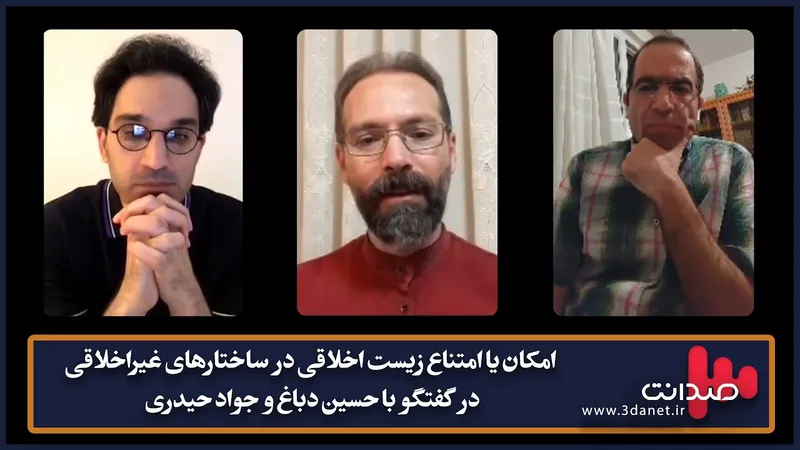
A Critique of Dr. Hossein Dabbagh's Article on Reforming Religious Reform
In his critique of Hossein Dabbagh's article, Seyyed Javad Miri highlights the neglect of historical contexts, the complexity of power relations, and the distinction between reform and heresy, asking whether these concepts are metaphysical or grounded in societal contexts.
On March 17, 2017, Sedanet shared an article by Dr. Hossein Dabbagh titled “Reforming Religious Reform,” which I found open to critique, and I shall endeavor to share my remarks in four sections and a conclusion. I will, of course, share his original text on my channel so that those interested may study the original piece alongside my critique.
1. The first point worthy of reflection is the disregard for “differing characteristics” across temporal, spatial, and societal contexts in the examples that Dr. Dabbagh recklessly juxtaposes and from which he draws conclusions, without addressing what the relationship is between Suhrawardi and philosophy, Luther and Christian theology, and the Egyptian Abu Zayd in the 21st century, and on what basis these have been classified under the umbrella of a single general concept. 2. The second point is the concept of the “official custodians of religion,” which requires further scrutiny; for these custodians—as Dumézil argues—without an alliance with the class of kings/rulers and warriors, were never able to secure their ownership nor exercise their official status. In other words, here we need to understand the complexities of power relations, and these complexities in relation to the “official custodians of religion” have been and remain divergent across different eras and contexts, and they can hardly be classified into a single general category as simply as Mr. Dabbagh is determined to do. 3. The third point is the distinction between religious reform and heresy, which Dr. Dabbagh has taken very much for granted; as it happens, in the history of religions, the boundary between religious reform and heresy is highly muddled and chaotic, and from one perspective, those who were proponents of heresy have taken steps on the path of religious reform, and those who have spoken from the standpoint of religious reform have been proponents of heresy, and a fundamental distinction without reference to a specific context and situation solves no problem. To put it another way, religion itself is a kind of heresy in the sense of innovation in the realm of human knowledge, and to understand this station, we need theories of chaos rather than order-creating theories. 4. The fourth point in Dr. Dabbagh’s article is that, without being able to provide an explanation between reform and heresy, he proceeds to offer “a minimal criterion and touchstone for identifying reformers and reform theories” in Iran; whereas at the outset of his discussion, he had treated the entire history of religions, from Christianity and Islam and various centuries and ages, under his own understanding, but then suddenly jumps to the relationship between tradition and modernity in Iran. It seems to me that here there is an epistemological error in understanding “history,” which is referred to as reading history in a presentist manner, and Mr. Dabbagh has also fallen into this misconception. Concluding Remark In other words, the fundamental question should be whether reform and heresy are metaphysical concepts or are they concerned with power relations in different societal contexts?
.
.
A Critique of Dr. Hossein Dabbagh’s Article on Reforming Religious Reform
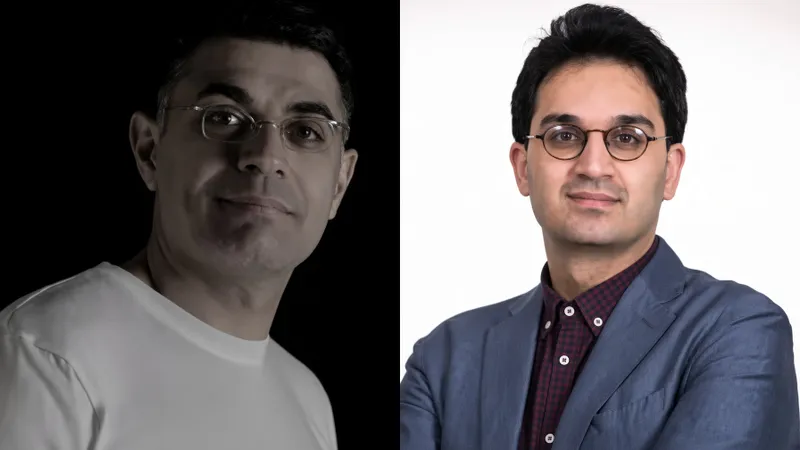
Author: Dr. Seyyed Javad Miri
.
.



Discussion0 comments
No comments yet; let yours be the first voice.