Political Science
A Critique of the Book “How the West Became the West”
The book 'How the West Became the West,' which claims to correct misconceptions about the West, lacks sources and offers a simplistic narrative of history; this critique examines the author's contradictions in denying colonialism and their superficial analysis of anti-Western sentiment.
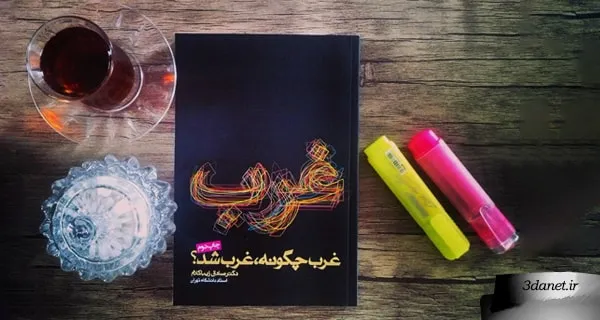
Sadegh Zibakalam has recently published a book titled “How the West Became the West.” In the introduction to this book, he states that it was written for a university class, and therefore the primary audience for this book is students. However, the book has a very ambitious goal; namely, to correct a common and erroneous perception of the West among Iranians. He says that, contrary to what some imagine, the West did not succeed because of plunder, colonialism, and aggression, but rather for other reasons which, in his view, must be understood by examining the history of the West from the Middle Ages to the present day, and his book has been written with this aim.
He laments the deplorable level of our knowledge about the West but considers the main problem to be that “our knowledge of the West is incredibly distorted, fabricated, unreal, and, in a word, constructed by our own mentalities about the West, mentalities derived from our political and ideological opinions and beliefs, without the slightest connection to realities.” This introduction is highly ambitious and creates the impression in the reader that they are about to encounter a world of new insights with a very novel approach. An expectation that will soon give way to disappointment, as Zibakalam, with a very brief examination of the reasons for the formation of anti-Westernism during the Reza Khan era and then anti-Americanism after the revolution, proceeds to a very simplistic and banal narrative from the Middle Ages to the modern era. In this narrative of roughly a thousand years of history, he does not cite even a single source (apart from one of his own works on the Islamic Revolution), and it is unclear whether we should attribute this to the fact that everything he says is considered general knowledge and therefore required no citation, or if there is another reason. This very fact has led to astonishing features in the text of the book: from giving incorrect information to the reader to the extremely superficial treatment of certain issues alongside a pretense of expertise in all subjects and fields of a thousand years of history in this book. Naturally, expecting him to have thoroughly studied a thousand years of history is an unreasonable expectation, and that is precisely why there is a need to refer to other books, specialized books each written as a result of years of research and study on a single subject. The professors at universities in liberal countries, of whom he is fond, publish books in this manner. Instead, Zibakalam has decided to write the book in a journalistic style, and apparently, he is supposed to pull historical truths out of the sack of his own mind. This style of book-writing is strange coming from someone who considers the weakness of the humanities to be among the most important reasons for our problems and for the failure to critique our past assumptions. Sadegh Zibakalam, identifying two phenomena as undesirable in our country under the titles “anti-Westernism” and “anti-Americanism,” offers a very simple answer and a vague answer, respectively, regarding their emergence, which are: the emergence of “anti-Westernism” during the Reza Khan era and with the introduction of the Marxist literature of the Tudeh Party into Iran, and the emergence of “anti-Americanism” after the Iranian Revolution, though no reason or origin is mentioned for the latter. While the expectation was that the book would proceed in a way that provides a precise genealogy of the formation of what he calls “anti-Westernism,” the “Marxist literature” of the Tudeh Party is very simply and without any examination suddenly introduced as the factor behind the formation of this phenomenon, yet regarding the emergence of “anti-Americanism,” he does not even do that. Zibakalam considers the “anti-Westernism” stemming from Marxist literature to be mainly focused on the economic dimension, colonialism, and capitalism, but believes that “anti-Americanism” encompasses all dimensions of Western civilization, from art to science. He does not mention Heidegger and Nietzsche and the influence of their thoughts among a specific group of political elites, even though doing so could help in understanding such a phenomenon. For Nietzsche and Heidegger, unlike Marx, were not committed to Enlightenment ideals and were critics of Western civilization, differing greatly from Marx. He also makes no mention of the religious opposition—not Marxist or Heideggerian—to the introduction of the “Western lifestyle” that took shape during the Pahlavi era. He considers issues such as freedom of speech, the release of prisoners, and civil demands in general to be among the reasons people revolted, and not anti-Americanism. In the book’s introduction, we are told that the cause of the West’s progress is not colonialism, aggression, and plunder, but is rather, in a way, indebted to their efforts. Hence, the question arises in the introduction: could it be that Zibakalam intends to omit parts of history or does not wish to refer to them? For we do not even need to consult history; it is enough to be aware of what is happening in our own world. Currently, American companies are exploiting children and women in East Asia and Latin America, and this plays a direct role in the financial progress of these companies and of America. Understanding this issue is easy; we simply need to read a little about our real world. Yet Zibakalam is aware of the totality of history and sometimes implicitly refers to the colonialism and aggression of Western countries.
For example, he considers one of the reasons Westerners became Western to be their mastery of the sea and says, “Contrary to the belief of many of us who consider Western dominance to be the result of the Industrial Revolution and the expansion of Europe in light of this transformation, the reality is that Western dominance over us came about before that, and in fact more or less from the time Westerners were able to dominate us at sea.” Such statements throughout the book indicate that Zibakalam is aware of the formation of the phenomenon of colonialism and plunder, and by declaring naval power to be the cause of Western “progress,” he commits himself to the belief that colonialism and Western progress are intertwined. Also, in his examination of the Renaissance period, he points to the colonial motivations behind Western political and military advances, that is, the formation of a strong state and army to dominate other lands. In the fifth chapter of the book, he also describes the motivation for Western voyages and discoveries as “mainly economic reasons and motives,” and then briefly refers to the colonialism of European countries, that is, instances where colonialism and access to underground resources, agricultural products, etc., in colonial territories influenced the improvement of Europe’s economic conditions and their progress. But in a section titled “Ethical Considerations of Sea Voyages,” Zibakalam first refers to the crimes of Europeans against the natives of the American continent under the heading “Opponents of Colonialism,” and then proceeds to present “responses” from the “Proponents”! Extremely foolish reasons such as that the American continent did not have that many inhabitants, and consequently the scale of the crime and massacre could not have been that extensive! While it is hoped that in this section, which pertains to ethics, he would say something related to ethics and not whitewash the interests of the colonialists, he says, “One of the cruelties for which no ethical justification seems possible was the revival of slavery,” but even this is disappointing; because he continues, “Of course, their working conditions were naturally not like the era of slavery, but the very act of transferring them as slaves and in conditions similar to slavery could not be ethically defensible.” Perhaps Zibakalam is the only person in the present era who does not consider that period slavery and considers it similar to slavery! Even the Ku Klux Klan will tell you that period was slavery. This complacent literature in the face of the crime and massacre of the natives of the American continent and then a kind of supposedly ethical doubt about “slavery” is only permissible in a country where the humanities have no standing. If Zibakalam uttered such shameful words at any university in the West today, he would certainly be boycotted by his progressive colleagues at the university and no reputation would remain for him, but in Iran, by writing this book, he is counted among the army of lovers of freedom and progress. This is Zibakalam’s critique of our society: “Our knowledge about the West is incredibly distorted, fabricated, unreal, and in a word, constructed from our own mentalities about the West, mentalities derived from our political and ideological opinions and beliefs, without the slightest connection to realities.” A problem that Zibakalam himself suffers from. Zibakalam is recounting a narrative of Western history that is neither his own narrative, nor a non-ideological narrative, but the standard narrative of the white bourgeois man of Western history. He makes no mention that imperialism and slavery found ideological justification in the writings of some Western thinkers. When Zibakalam, in the Enlightenment section, points to one of the principles of liberalism, namely that every person can discern their own good and interest better than others, and says the exceptions to this are minors, the incapacitated and backward, the sick, or children, he does not mention that in the view of many Enlightenment thinkers, women and the natives of the lands they colonized were also considered minors, and therefore decisions were made for them. It is enough to look at Kant’s remarks about women, or take a look at Rousseau’s book “Emile,” or even John Stuart Mill’s remarks about natives, or even the scientific racism rooted in Kant’s writings. Zibakalam does not mention that fundamentally, the “citizen” at that time did not include women. America officially accepted women’s rights and the equality of Black people in the twentieth century, and there is still a very long way to go until real equality. But Zibakalam’s narrative of the West is an ideological narrative, that is, the narrative of the white bourgeois man of his own conquests and successes, with a passing “oh my gosh” in the face of the crimes he has committed, crimes that have led to his current dominance over the world.In the introduction, when Zibakalam says that, contrary to what is accepted in Iran, Westerners did not succeed through plunder and colonialism, he should have indicated exactly whom he has in mind, because even those who have one-sided criticisms of the West would not say that Westerners were fools incapable of thinking and were merely a bunch of savages who achieved such progress by overpowering others. But this book does not merely suffer from the problem of being ideological and distorting history; historical errors can also be seen in the book. For example, he speaks of the discovery of America, Australia, and New Zealand in the Middle Ages! The lack of references to sources throughout the book remains a major problem. Also, Zibakalam's silence regarding his view of history is somewhat strange for an academic book. However, as is evident from the book, Zibakalam's view of history is Marxist, and he tries to explain issues with a focus on classes and the contradictions and conflicts between them, as well as changes in the relations of production (a classic Marxist analysis of feudalism and the bourgeoisie, or his emphasis on an economic explanation of the Protestant Revolution, or the impact of improved economic conditions on reducing the fear of the future and increasing hope in God's mercy and forgiveness, the emphasis on class conflicts in the religious reform section, etc.) At the beginning of the fifth chapter, he also refers to "some historians with a Marxist inclination toward history" but does not name any. Throughout the book, anachronistic claims are also abundant; for example, in the Enlightenment section, he speaks of "the only legitimacy for government is the vote of the people"! The introduction of philosophers takes place in a very strange way in this book. For example, he says that Descartes' mechanical view had no place for "the spirit of spirituality, inspiration, the sixth sense, etc." While it is unclear why, when speaking of Descartes, the sixth sense should be placed alongside the spirit! Whereas Descartes was a dualist who, by introducing the duality of spirit and body, confined the Church to the spirit and scientists to the material world and its laws, and fundamentally, Cartesian dualism is related to this very duality of spirit and body. One can also point to the inclusion of common errors in this book, such as this quote wrongly attributed to Voltaire: "I disapprove of what you say, but I will defend to the death your right to say it." The inappropriate use of the word paradigm is also surprising; he even uses "Western paradigm" and "Saint Augustine's paradigm"! Zibakalam says of Kant, "Without a doubt, among all the thinkers of the Enlightenment, dealing with Kant is the most difficult and complex," and he makes similar comments about Albert Einstein regarding his achievements in physics and many other scientists and philosophers named in the book, without even a single reference to a specialist in those fields. How has Zibakalam gained expertise in history, philosophy, physics, chemistry, warfare and feasting, etc., that he can speak about them in this way! The state of the humanities in our country is truly chaotic! This book, in many parts, is even more general than the Wikipedia encyclopedia, and if we were to ask an operator to compile the course of history from the Middle Ages to modernity from Wikipedia pages, put them together, and publish a book, it might well be richer than the current book. This book is so general that Zibakalam could have written it in two volumes, starting from the Big Bang and reaching the twenty-first century. In Western civilization, regardless of what has happened in history, ideas and institutions have been proposed and created that can be used by other parts of the world as well. To accept this obvious point, there is no need to present a selective narrative of history whose result becomes "Become Western so that you may be saved." As long as our intellectuals are incapable of thinking and merely want to define their rationality in terms of contradiction and reaction to an extremist group, their words cannot be taken seriously. If someone claims to follow reason, they must speak rationally and not be afraid to express it, whether they are subject to attack by the extremist masses or the intellectual masses. If there has been colonialism and crime in the history of the West, one should not be afraid to say so, just as if natural sciences, the rule of law, democracy, etc., are defensible, one should not hesitate to defend them. A non-emotional and non-hysterical reaction to the West is what we need.
None of these observations mean that other peoples of the globe have not committed and do not commit crimes, or that because of the history of colonialism one should not take seriously the beliefs and ideas put forward by Western thinkers, or that Western concepts such as democracy, human rights, and other Western concepts are worthless.
.
.
A Critique of the Book “How the West Became the West” by Sadegh Zibakalam
Zohair Bagheri Type-Parast
.
.


Discussion7 comments
کتاب چگونه غرب شد صادق زیباکلام بدون سند ذکر سند ومنابع می باشد و حاصل تخیلات صادق زیبا کلام است به نظرم صادق زیبا کلام فیلم های تخیلی بسازد موفقیت زیادی بدست می آورد – بومیان آمریکا از شرق اسیا مهاجرت به آمریکا نموده اند که توسط اروپایی ها قتل و عام شده اند –خدایی که در این کتاب به تصویر کشیده شد خدایی ناتوان است که آفریده های خود را رها کرده است در این کتاب باخوش بینی محض به غرب نگریسته شده است و چشم بروی جنایات و خیانت های غرب علیه بشریت بسته شده است - در کل مطالعه کتاب را به دیگران نیز توصیه میکنم به شرطی که کتاب جنایات غرب (مروری بر کارنامه سیاه تمدن غرب در پنج قرن استثمار و غارت جهان) نویسنده مهدی سعیدی نشر اشراق حکمت را بخوانند و مجموعه سخنرانی غرب شناسی استرایژیک استاد دکتر حسن عباسی را بشنوند
صادق زیبا کلام متوجه شده اند که چطور می شود جلبتوجه کرد و سری توسرها درآورد. رادیکالیسم مشاهده شده در ایشان ، عصبانیت ایشان، بلندی صدایشان، وطرفداری از مد روز فایده بسیاری برای ایشان در بر داشته.مخالف خونی و متفاوت سخن گفتن بدون اندیشه وانصاف. هر چی مخاطب مد روزبپسندد.هر چه بلندتر سروصدا کنی بیشتر شنیده می شوی!
سلام نقد خوبی میتوانست باشد اگر با توهین و تقطیع همراه نبود زیبا کلام خود در مورد منابع کتاب در مقدمه سخن گفته و به هیچ وجه در صدد نوشتن تاریخ غرب نیست نقد شما هم حتی یک منبع نداشت و تادلتان بخواهد دروغ داشت
خوب بود. سپاس
چه نکتهسنج و جامع
نقد خوبی بود هم به استعمار و انقیاد اشاره کرد و هم اینها را از ایده های شکل گرفته در غرب تفکیک کرد.
با اینکه کتاب در مورد فرضیه ها و ایرادات مهمی در جامعه فکری ماست، و گزاره های جالبی را هم در ابتدا طرح می کند، اما متاسفانه روشی که دکتر زیباکلام برای تشریح فرضیه ها به کار می گیرند، روشی قشری و جناحی است که بیشتر متن را تبدیل به نوشتاری ژورنالیستی کرده است. به عبارت دیگر انگار ایشان دارند کل این تفسیرها و توضیح ها را برای تسویه حساب شخصی با گروههایی که از لحاظ فکری در مقابلشان قرار می گیرند انجام می دهند. بالاخص اصول گرایان تندرو در زمان فعلی و گروههای مارکسیستی و حزب توده و دکتر شریعتی در نگاهی تاریخی. در حالیکه سوالات و فرضیات متن، ادعاهایی فراگیر و فراجناحی و فراشخصیتی است