Religion
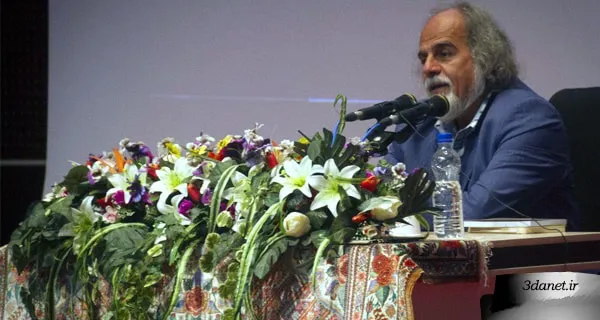
A Lecture by Mostafa Malekian Titled 'Rizq'
Wealth ownership can have negative moral effects, but rizq is the benefit you actually derive from wealth; Mostafa Malekian argues that living as though one's rizq is divinely apportioned is a path to psychological well-being and moral virtue.

In our religious literature, when the topic of rizq (sustenance/provision) comes up, they say it is the benefit you derive from your wealth; matāʿ means benefit. Your wealth is not your rizq; the benefit you derive from your wealth is your rizq. And if from your wealth you only derive benefit from this one pair of shoes, the rest is not actually your rizq; you are merely their owner. Being their owner will, of course, have certain negative consequences—negative moral consequences—for you, but the story of rizq is something else...
.
A Lecture by Mostafa Malekian Titled 'Rizq'
Mostafa Malekian – Year 1393[1]
I will make three points:
The first point is that today in the Persian language, when rizq is mentioned, we take rizq to mean the totality of a person's assets, the totality of their wealth, the totality of their possessions and property. For example, suppose—I am giving an example—my total wealth is ten billion, including movable and immovable property. Then, perhaps today, if someone asks how much rizq God has given so-and-so, they would calculate their wealth and say ten billion. That is, in reality, in our common linguistic usage today, we take rizq to mean wealth, meaning the totality of possessions, the totality of assets, the totality of property, or, most simply, we think the totality of a person's belongings is that person's rizq.
But in the Arabic language—I am not dealing with the Quran at all—in the original Arabic language (meaning I do not want to say this is a Quranic worldview, no), fundamentally in Arabic, if I, for instance, own a palace with 140 rooms, but in my entire life I only use 5 of these rooms and merely own the rest without making any use of them, then in Arabic it is said that so-and-so owns a 140-room palace, but their rizq is 5 rooms.
Rizq means that portion of your property, that portion of your assets, that portion of your possessions, from which you derive benefit. Therefore, it is possible that you, for example, have a monthly income of 10 million, and all 10 million is your rizq. I might also have an income of 10 million, of which 3 million is my rizq; that is, I use 3 million of it, and for the rest, I only pay maintenance and security costs, deriving no benefit from it. And if we conceive of it this way, it is possible that you are far, far wealthier than I am, yet my rizq is much greater than yours. Suppose someone has a monthly wealth of one billion, but the totality of what they use daily in food, drink, clothing, housing, and all such things amounts to 500,000 tomans per month. They have only this 500,000 tomans as rizq, but 10 billion in wealth (property). This is so we do not think that in religious literature—without intending to defend religious literature—when it is said there that rizq is of two kinds: 1- rizqan yaṭlubuka: the rizq that seeks you, and 2- rizqan taṭlubuhu: the rizq that you seek; the rizq that seeks you, no matter how much you flee, will eventually catch you, and the rizq that you seek, no matter how much you pursue it, you will not attain it; from this we should not imagine that the discussion here is about wealth. It has nothing to do with that meaning at all. Their conception was—whether their conception was correct or incorrect—their conception was that rizq is something allotted and unallotted, not wealth. The more you strive, the more wealth you can acquire, but is it possible to also derive the maximum benefit from the wealth you have acquired? No. If, due to a stomach ulcer, out of all this food I can only eat one food, say 50 grams of dry bread, then in reality my rizq in terms of food was, for example, 50 grams of dry bread, even though I could have procured how much (a very large amount of) food, I could have claimed ownership of how much food? The same applies to clothing. Suppose you have 50 pairs of shoes, but one day you realize that over the past 5 years you have regularly used 4 pairs, and you have not used the rest at all. In this case, 4 pairs of shoes are your rizq, but 50 pairs of shoes are your wealth. This is how wealth and rizq truly differ.
From this perspective, in our religious literature, whenever rizq is discussed, they always say it is the benefit you derive from your wealth; matāʿ means benefit. Your wealth is not your rizq; the benefit you derive from your wealth is your rizq. And if from your wealth you only derive benefit from this one pair of shoes, the rest is not actually your rizq; you are merely their owner.
Their being your owners will, of course, have a series of negative effects and consequences—negative moral effects and consequences—for you as well, but the story of rizq is something else. That is one point.
A second point I want to make is this: suppose we do not believe—it has not been proven or demonstrated to us—that one's lifespan is apportioned (maqsum), or that one's rizq is apportioned (maqsum); suppose we do not hold this belief. Just as, if we wanted to provide a proof for these two claims, I do not think anyone could provide a proof that every person has a specific, determined lifespan that will not increase by a single second nor decrease by a single second, and a specific rizq that cannot fluctuate by an epsilon. Suppose we have no proof for it and no reason at all, and because we have no reason, we cannot say we have knowledge of it. But now, let us suppose I have no proof for this claim, and you, Doctor, also have no proof, yet you live as if this statement is true. Even though you have no reason for it, you live as if this statement is true, and I live as if this statement is not true. Even though neither of us has proof for our claim, you say: it is true that these two claims we mentioned about lifespan and rizq have not been proven, but I have resolved to live as if they are true, and I, Mostafa, say that I have resolved to live as if they are false.
Now, the claim is that your psychological well-being, your moral virtue, and your happiness—all three—will be greater than mine. Even though, since the claim was not proven, one could accept either 'A is B' or 'A is not B,' you, having accepted 'A is B,' will have greater moral virtue, psychological well-being, and happiness than I will. Do you know what this means? It means that this claim—that rizq is apportioned or that lifespan is apportioned—has no realistic, theoretical proof, but it does have a pragmatic, practical proof. Those who live this way, like our lay forefathers, our lay ancestors, lived as if—I am not saying all of them were like this, but they were like this more than we are—they lived as if their rizq was apportioned and as if their lifespan was apportioned; they lived both happier than us—in a specific sense of happiness, of course—and their psychological well-being was greater, and their moral virtue was greater. Let me give you another example—after this, I will move on from this discussion. Look, suppose there is no proof whatsoever for this statement: that if your immature child passes away, they will stand at the gate of Paradise, and however much they are urged to enter Paradise, they will say, 'I will not enter Paradise until my parents come.' There is no argument in favor of this statement; indeed, I want to say there is an argument against it—so this statement is not proven. But now suppose—God forbid—you have lost an immature child, and I have also lost an immature child; both our children have died together in an accident. And you believe in this statement, meaning you live as if this statement is true, and I live as if this statement is not true. In your opinion, which of the two of us will bear the calamity better? You will certainly bear it better. Therefore, there are many claims—indeed, in religion, even in mysticism, even in some philosophies—there are many claims for which, from a realistic perspective—that is, from a reality-oriented, theoretical perspective—nothing can be said in their favor, just as nothing can be said against them either, or sometimes something can even be said against them. So, from a realistic and theoretical perspective, this claim is invalid, but they say: if you live as if that belief of yours is true, your life, in terms of happiness, or in terms of psychological well-being, or in terms of moral virtue, or in terms of two of these three, or in terms of all three, will be a more desirable life. Such claims are claims whose theoretical truth has not been proven, but whose practical benefit—their practical utility—has been proven.
Now, if we are someone for whom theoretical issues are very important—whether this stance is good or bad—we have, after all, deprived ourselves of this. Whether it is good for a person to say, "I only seek correspondence with reality—I only seek truth and am not after utility, I am not after practical benefit"—whether this stance is a good one or a bad one, it nonetheless has this effect: it deprives you of many pleasures (in such cases), or many aspects of mental health, or many aspects of moral virtue. Because if I believe that my rizq is apportioned, I will certainly not enter into an unfair competition with you. This is a moral virtue, is it not? I will not cheat you; I will not engage in slacking, short-selling, overpricing, hoarding, theft, embezzlement, fraud, deceit, or bribery—this is from the standpoint of moral virtue. On the other hand, I also have no anxiety, and this is from mental health; they say so-and-so seems to be trying to pull a fast one on you, they might soon seize your property, but because you have no anxiety and possess tranquility—and tranquility is one of the components of mental health, which you also have—you also have happiness. Why? Because when a person possesses something without sorrow over losing it, and deals with what they do not have without sorrow over why they lack it, the sum total of their life's happiness will be greater.
Now, regardless of whether this stance is truly recommendable or not, the fact that you see religion has endured in many cases, or some mysticisms, or some philosophical systems, is because of this practical benefit of theirs, meaning because of the pragmatic approach we adopt rather than a realistic approach; otherwise, if it were just us and theoretical reason, there is no reason whatsoever in favor of that claim, but it does have practical benefit.
Just as there are many other things, outside of religion and creed as well. You have no proof that we have not been dreaming from the day we were born until now; we have no proof. No philosopher to date has been able to argue that we are not dreaming. When we sleep at night, do we not imagine everything in the dream to be real? But the next day, when we wake up, we realize it was all illusions and fabrications of our own mind—leaving that aside for now—what if we have been dreaming during these 70 years we are living here? This is Descartes' famous doubt—what if we are dreaming—no one in the world has yet been able to provide a reason to prove that, no, we are not dreaming; perhaps we are dreaming for 70 years, except our nightly dreams last 7 hours, and that dream of ours lasts 70 years. So we are always dreaming, and at night, it's a dream within a dream, right? No proof has been offered. Yet we live as if we are not dreaming, and this gives us greater mental health and gives us more happiness, even though there is no theoretical reason in its favor, but it has practical benefit. Or Russell's famous example: he said no reason has been offered that each of us, or indeed the entire universe, did not come into existence just 5 minutes ago. Russell said I can claim that the entire universe could have come into existence 5 minutes ago, meaning the universe is 5 minutes old. You say, well, we remember being, say, 30 years old, 40 years old, 50 years old, and our fathers told us that the Earth existed before we were born, and astronomers say that before the Earth came into being, such and such existed... He says, well, it is not at all unlikely that we were all brought into existence 5 minutes ago and these notions were created in our heads, as if a CD were inserted into our heads and we were born with that CD. It is not impossible; no one has yet been able to prove that this is not feasible, but it is practically beneficial for us—to assume that the world did not come into existence 5 minutes ago. Or the example Julian Jaynes gives: you see, if you were to say that every object (of course, when Jaynes said this, it was around 1968-69-70, when his book on the philosophy of physics was being constantly reprinted; now some physicists say, after more than 50 years since that date, that there is a way around this, but at the time his point was truly correct, even if it might be incorrect now). He said that if I tell you now, with every 24 hours that passes in the life of the universe, every object increases by one-tenth in length, width, and thickness, no one can refute this—there is no way—I tell you that with every 24 hours that passes in the life of the universe, all objects increase in length, width, and thickness by one-tenth, meaning 1 meter becomes 1 meter and 10 centimeters, half a meter becomes 55 centimeters, 10 centimeters becomes 11 centimeters (their length, width, and thickness, everything, meaning not just their length or just their thickness, every object's length, width, and thickness each increase by 1/10th). The next day, 1/10th is added to those 1/10ths. 1/10th of 110, 1/10th of 55, 1/10th of 11 centimeters; Jaynes said no argument can refute this. Why? Because you say, well, we measure an object tonight and see it is 100 centimeters, tomorrow night we measure it to see if it is 110 centimeters or 100 centimeters, and from this we understand whether this claim is false or true. He says no, because that meter stick has also increased by 1/10th, and when you place it again, it still shows the same 100 centimeters as yesterday, because it itself has also increased. Therefore, there is no way. But our peace of mind lies in not believing this, and living as if length, width, and thickness do not increase with the age of the universe, and there are countless such cases. I want to say this is not only in the science of mysticism, but in science, mysticism, and some philosophies, this type of reasoning, this type of teaching, is much more prevalent. Statements that have practical benefit, but whose theoretical truth and theoretical rightness are absolutely not established; indeed, perhaps in some cases their contrary is more established. A very good example in the almost materialistic, indeed certainly materialistic, philosophy of David Hume: there are three instances of this, which are three philosophical problems that David Hume posed and no one has yet been able to answer. One is that David Hume said you have no reason to believe that the sun will rise tomorrow morning, or that it will rise from the east.
you could bring a reason why the sun will rise from the east tomorrow, and it does rise. It is possible that it will not rise at all tomorrow, and it is possible that tomorrow it will rise from the west, or from the north, or from the south, but we do not pay attention to this. Right now we make an appointment to go to the mountains at sunrise tomorrow—we make an appointment—even though we have no reason; why? Now, I do not want to repeat Hume's very complex argument, but I will state it in a much simpler way than Hume himself. Anything that occurs for the first time in the world, how many times has it occurred? The first time, by definition. So if it is occurring for the first time, then it had never occurred in the past, but from its past non-occurrences we could not conclude that it will not occur now. Well, perhaps the sun might be rising from the west for the first time; do not say it has not been like this until now and therefore it cannot happen. We say: anything that occurs for the first time in the world is occurring for the first time, meaning it had not occurred throughout the history of the past, but from the history of its past, such a conclusion could not be drawn, correct? And the sun might be just the same; perhaps tomorrow happens to be the first day. Well, this was called the problem of induction, which is a problem that discredits induction. But our life is impossible without induction. Perhaps this year is the first time that oranges are poisonous, but we do not pay attention to this; we eat oranges—with great peace of mind—isn't the first time something occurs the first time? Well, perhaps from this year a toxic substance will appear in them, and it will be the first time it has occurred. Are there not many things in the world that have occurred for the first time, and whenever they occurred for the first time, it was the first time they had occurred, meaning they had not occurred before, and despite not having occurred before, they occurred for the first time. This is the problem of induction.
The problem of causality. Hume said we have no reason at all to believe that when I eat food, it is the cause of my becoming full. There is simply no reason—how can you say that when I eat food, it is the cause of my becoming full? There is no reason, because the possibility that two events always occur together, yet neither is the cause of the other, cannot be ruled out. And in this respect, David Hume has a slight inclination (in this view of his, he is very similar) to our own Ash'arites. Look, let me give you an example: suppose that every time I bring an apple before you with this right hand of mine, one second later I bring an orange before you with this left hand. Suppose it were like this, right? For 20 years, 30 years, 50 years, 100 years, every time I gift you an apple with my right hand, one second later I gift you an orange with my left hand. Gradually, the belief arises in you that the appearance of the apple in Dr. Hadi's right hand is the cause of the appearance of the orange in his left hand. But is it so? Is the apple the cause of the orange? No, you see, two things that occur simultaneously, even if they always occur simultaneously, only show that they have occurred simultaneously. From their simultaneous occurrence, it never follows that one is the cause of the other. Now, perhaps God has also made the world in such a way that whenever God sends food down your throat with one hand, with the other hand He makes you full. The Ash'arites said this to show that you should not pin your hopes on these worldly causes and effects; all of these are from whom? From God. That is, just as in my example the appearance of the apple was not the cause of the appearance of the orange, but rather both were effects of Dr. Hadi's will, here too, do not take one of the simultaneous events as the cause of the other. Both are, in reality, caused by whom? God. This was the view of the Ash'arites. Well, Hume did not believe in God, so he did not want to use this to show that God's hand was at work. He wanted to say that from the mere fact that two phenomena appear simultaneously billions of times, one can never conclude that this is the cause of that, or that is the cause of this. Even though as soon as we see two things always simultaneously, we consider one the cause of the other. Therefore, the principle of causality was also invalid in his view. But Hume himself said—at the end of this discussion of his in his masterpiece, An Enquiry Concerning Human Understanding—at the end, he said: I know that you, the reader, are now convinced that causality in the world has not been proven, but I know that as soon as you close my book, you will continue your life as if the principle of causality holds. Then he says, and why hide it from you, I myself also feel that my room has become stuffy; as soon as I finish this writing, I will go and open my window because I believe opening the window is the cause of the decrease in the room's temperature. But in reality, we have no reason for causality, yet we live as if causality holds. Why? Because if we were to live as if nothing is the cause of anything, we would go mad. We cannot live like this for 24 hours without losing our senses. Therefore, whether through Darwinian evolution or the hand of God, we have been made in such a way that a mechanism operates within us that prevents us from going crazy. They say, adopt the rule that this is the cause of that. Whenever you eat food, it is the cause of your becoming full; whenever you drink water, it is the cause of quenching your thirst.
The third point, and this was also a problem that Hume raised, he said there is no reason that you exist. We said, what do you mean there is no reason that I exist? When I refer to myself, I see that I exist. I remember that I am the same person who fell off a mountain at age five and broke my leg, the same one whom the teacher beat and threw out of the room in the second grade of elementary school, I feel. He said, come and be honest, see whether you feel this or not. Then he gave an example that now that cinema has been invented, we can understand better—though he didn't use the cinema example and used a ship example, which I will also tell you about later—but we can explain the cinema example much better than Hume himself. Suppose there is a screen in a cinema and a cinematograph machine is constantly projecting a film onto this screen. But suppose this cinematograph machine, this device that projects the film onto the screen, can never be turned off. Once this machine is turned on, it can no longer be turned off. If it can no longer be turned off, and I want to see what the color of the screen itself is, what can I do? He says there is no way; the only way is that if I want to see the color of the screen itself, I must be able to turn off the cinematograph machine so that it no longer casts light on the screen, then I can see whether the screen itself is, for example, blue, white, or cream-colored. But if this machine is never turned off, then how can I discern the color of the screen itself? Apparently, it cannot be discerned, because whenever, and no matter how much I want to say, 'O lights, move aside so I can see the screen itself,' well, this machine is casting light on it, and therefore I cannot see the color. Now, with this example, Hume said, come, be honest—Hume placed great importance on honesty—no matter how much you refer to yourselves, you might feel sadness, or you might feel joy, fatigue, thirst, love, hatred, malice, enmity, friendship, contentment; you feel these things. For example, you say, 'I feel thirst,' 'I feel fatigue,' 'sadness,' such and such. But is there ever a time when you feel neither joy, nor sadness, nor fatigue, nor thirst, nor hatred, nor anything at all, and you feel yourself, as if you were the color of the screen itself? Can you feel that? Whenever you refer to yourselves, be fair, what do you feel? You feel that you are tired, for example, or you feel thirsty, or you feel in love, or you feel hopeless, or you feel sleepy. You feel these things. Your existence is never without these colors and films; the color of sadness is cast upon it, the color of joy, the color of fatigue, the color of thirst, the color of being quenched, the color of hunger, the color of satiety. If you could push these aside and say, 'Once, I found myself,' he says you can never do this. We say, well, then we feel that we are the same. Then he says, let me give you an example from which you cannot conclude from that feeling that we are the same—and I will give this last example, and this is my last word on this; of course, I have stated my second point and I have a third point, which I will mention—that example was this: David Hume said, suppose a ship sets sail from the port of London bound for the port of New York (it departs from England, from the port of London, to reach the port of New York in America). It has 100, 200, 500 passengers on board. As it sails, a piece of this ship (a piece of its wood) is found to be rotten. Suppose they remove it and put a new piece in its place. After traveling a bit, they see that an alloy is also deteriorating; they remove that too and put a new alloy in its place. Then they see a spring somewhere else has broken. In short, suppose this ship, bit by bit, slowly, has all its parts break down, but they break down bit by bit and are replaced bit by bit, so that when it reaches New York, suppose no part of the ship that set sail from the port of London remains. He says, in this case, those who saw the passengers off in London inform each other that, thank God, the ship, say the Queen Mary, arrived in New York this morning. Those welcoming them at the port of New York also say, thank God, after 10 or 12 days, the ship that set sail from the port of London has arrived. Everyone says it is the same ship, even though we have removed all its parts bit by bit.
حال اگر این کشتی وسط دریا یک بار آتش گرفته بود، و یا یکبار خورده بود به سخره ای و خورد شده بود و همه ی مسافران افتاده بودند توی دریا و بعد از آن آنها را سوار کشتی دیگری کرده بودند، هم بدرقه کنندگان در لندن و هم استقبال کنندگان در نیویورک می گفتند که آن کشتی کوئین مری که از بین رفت اما توانستند مسافرانمان را سوار کشتی دیگری بکنند و بیایند؛ او می گوید انصافا این دو کشتی مثال ما فرقی با یکدیگر نمی کنند، چه کشتی یکباره آتش بگیرد و مسافران سوار کشتی دیگری بشوند، چه در حالتیی که کشتی ذره ذره خراب شود و تکه ای را بگذارند جایش فرقی که نکرده، به هر حال این کشتی و آن کشتی در هر دوتا مثال دیگر اثری ازشان باقی نیست. ولی در مثال آتش گرفتگی همه می گویند این کشتی غیر از آن کشتی است، اما در مثال تعمیرات تدریجی همه می گویند، همان کشتی است (می گویند کشتی کوئین مری است، اسمش را هم عوض نمی کنند و می گویند همان کشتی کوئین مری). دیوید هیوم می گفت ما هم همینجوریم، اگر ما یکباره همه ی احساساتمان، عواطفمان، هیجاناتمان، باورهامان، خواسته هامان، همه به یکباره نابود می شد آنوقت باید می گفتیم مصطفی اصلا از دنیا رفت و یک موجود دیگر بجایش، یا خدا خلق کرده یا هرچیزی. اما من به تدریج باورم دوتایش از ذهنم می رود و به جایش چهارتا باور دیگر می آید، مثلا ببینید شما کدامیک از باورها را که در 7 سالگیتان داشته اید الان دارید؟ من فکر می کنم غیر از اسم پدر و مادرتان که به عنوان مثال آنوقت می گفتید علی و زهراست و یک چند باور دیگر، باقی باورهای 7 سالگیتان را الان دیگر یکی اش را هم ندارید. یکی از باورهایی را هم که الان دارید در 7 سالگیتان نداشته اید. اما یکهو باورهایتان کمپلت و بصورت دسته جمعی و یک روزه نابود نشده و احساسات و عواطف و هیجانات و خواسته هاتان، یواش یواش معلوم شد یک سری از باورها برایم معلوم شد که باطل است، از ذهنم ریخته ام بیرون و یکسری باورهای جدید آمد، احساسات و عواطفم، یک وقتی مثلا اگر کسی به اسباب بازی هایم دست می زد تا نصف روز خونم خونم را می خورد، یعنی میلم به اسباب بازی بود، بعد یواش یواش و ذره ذره فتیله ی میلم به اسباب بازی پایین کشیده شد، عوضش فتیله ی یک میل دیگر بالا کشیده شد. خواسته ها هم توی زندگی همینجورند، من خواسته های 14 سالگی ام الان تقریبا هیچ کدامشان را ندارم، خواسته های 40 سالگی ام را هم الان کم کم دارم از دست می دهم، اما ذره ذره می روند و می آیند. مثالی بزنم، فرض کنید که مثلا من 50 تا نون خریده باشم و گذاشته باشم توی کوله پشتیم، مثلا مادرم گفته 50 تا نون بخرامشب مهمان داریم و من خریده باشم و به خانه ام بروم، حال اگر دزدی بیاید (یا یکی از رفقای من) یکباره این کوله پشتی را از سرم واکند و در برود و من بروم از نو 50 تا نان بخرم، به مادرم می گویم آن 50 تا نان اولی را که خریده بودم را دزد برد، و من 50 تای دیگر خریدم، اما حالا فرض کنید که بیاید یک عدد از نان ها را بردارد، یکی دیگر بگذارد جایش که شما متوجه نشوید که وزن نان ها سبک شده، نان دومی را هم بردارد و جایش یک نان دیگر بگذارد، نان سوم را هم بردارد، و به تدریج همه ی 50 تا را بردارد و 50 تا نان دیگر بگذارد، الان این 50 تا نان آن 50 تا نان هست یا نیست؟ نیست، ولی به مادرتان نمی گویید که آن 50 تا نان (همه اش عوض شده) چون با خبر نشدید، از آن جهت که بتدریج حاصل شد. هیوم می گفت ما هم همینجوریم، ما یک آدم نیستیم و دلیل نداریم که ما یک آدمیم منتها ذره ذره احساسات و عواطف و هیجاناتمان، باورهامان، خواسته هامان، گفتارمان، کردارمان از دست رفته، چون ذره ذره از دست رفته ما متوجه نمی شویم. آخرین مثال هم بزنم، شما برید توی یک مزرعه ای پای یک بوته ی هندوانه بنشینید و 10 روز به این هندوانه پلک نزنید، 10 روز فقط به این هندوانه بدون وقفه نگاه کنید، مطلقا نمی فهمید این هندوانه توی این 10 روز بزرگ شده، بخواهید بفهمید بزرگ شده باید چه کار کنید؟ باید بیایید هندوانه را ببینید، اندازه اش را به حافظه بسپرید و بروید 10 روز دیگر بیایید، حالا اندازه ی هندوانه ی الان را مقایسه کنید با آن عکسی که در حافظه تان بود، آنوقت می گویید این هندوانه 5 برابر، 10 روز قبلش شده، ولی اگر زل بزنید و به آن نگاه کنید و از حافظه استفاده نکنید اصلا نمی فهمید که هندوانه بزرگ می شود، آنوقت ما هم همینجوریم. هیوم می گفت ما ذره ذره ذره همه چیزمان عوض شده، از سلول های بدن که می دانیم و گفته شده مقاوم ترین سلول ها و طولانی عمرترین سلول های بدن که مغزند هر 8 سال عوض می شوند، این سلول ها که اصلا هر 3 روز یکبار عوض و بدل می شوند، سلول های بدن که هیچ حتی روان ما یعنی احساسات و عواطف و هیجانات ما، باورهامان و خواسته هامان و گفتارمان و کردارمان، از بس ذره ذره (مثل اون نون که یک دونه نون ور میدارند و یکی دیگه جاش می گذارند) ما دیگر الان احساس نمی کنیم که ما اصلا یک آدم دیگری شده ایم و آن آدم سابق دیگر نیستیم، - دیگه خب حالا این اشکال را نمی خواهم بگویم - می خواهم بگویم که پس در فلسفه هم خیلی چیزها هست که ما اگر بدنبال دلیل تئوریک و نظریش بگردیم هیچ دلیلی نداریم، اما انگار روح بشر فهمیده که به صرفه اش نیست که بخواهد به این حرفها بها بدهد، به صرفه اش است که بنا را بر این بگذارد که گویی من یک روح ثابتی دارم و فلان و بهمان.Now, this also exists in religion, so if we consider the apportioned sustenance (rizq-e maqsum) as truly apportioned—meaning, if you live your life as though you have an apportioned sustenance and an apportioned lifespan—you benefit practically; you live more happily, your mental health is preserved, and so is your moral virtue. That is the second point.
And the third point is that this sustenance that is so much talked about in religion and such matters—if the issue of sustenance is truly serious, then, as a rule, it should not be confined only to wealth and lifespan. If, according to the Qur'anic text, "There is not a thing but that its treasuries are with Us, and We do not send it down except in a known measure," if this is the case, then it should not be exclusive to lifespan and wealth. Therefore, your knowledge must also be of the same nature, your social standing must be of the same nature, your fame must be of the same nature—meaning, it should not only apply to your wealth, but also your political power, your social standing, your status and rank, your fame, your popularity, your academic knowledge, these too must be of the same nature. These pertain to your spirit, and your body is the same way: your physical health, your beauty and physical fitness, these too must be of the same nature, and people's affection towards you, this too must be of the same nature. And if this is the case, then, according to that conception, we should not only say such a thing about our lifespan and our wealth; we must also hold the conception that a specific measure has been set for our other blessings as well, and we should not be anxious about the rest of them, nor should we compete over the rest of them, nor should we cheat people over the rest of them—so that, for example, I rise up and become president and you do not. No, know that becoming president, which is one of these seven social desirables, is either apportioned or it is not. If it is apportioned, it will come to you, and if it is not apportioned, even if you strive for a lifetime—we have seen, it has been observed in experiments, that some people keep coming forward—but it is of no use. And if this is the case—of course, I am not defending this religious conception at all, as to whether it is good for us to consider everything apportioned or not, but I want to say—and if we are to hold this conception, then we must also have a relaxed, comfortable, and tranquil state of mind regarding the rest of our affairs.
It is by our contemporary standards that we regard passivity as something very bad and say that people must constantly be active. Whether this is right or wrong itself requires justification. We must actually provide a reason why being passive is worse than being active; the fact that we have all accepted this in modern rationality is no proof of its correctness. We must provide a reason why a person must constantly be active in their life. If a person could be submissive to everything in their life, content with everything, on what grounds do we say otherwise? (I am not saying which is right or which is wrong) but I am saying that whoever wants to advocate either side must have a reason. Yes, in modernity, and again in terms others have used and I am borrowing from them, in Protestant ethics this activity was deemed so important—that very activity which was considered worship in Protestantism—that it brought the West to its present condition. In this sense, we say that this present condition resulted from treating activity as worship, as Luther, Calvin, Zwingli, and others claimed. And of course, if we had not been active, this civilization we now have would not exist—I have no doubt—but the debate is over whether, well, if this civilization did not exist, would we have had a better life or a worse one? This is entirely a matter of debate. Is a life that is all activity better, or a life where everything is met with a kind of contentment and submission? Now, all of you say, 'No, sir, an active life is better.' You are right, I accept that; I myself am like you. But I say that just because all of us modern humans say this is no proof that this claim is true. We have a kind of consensus that a bustling life is better, although sometimes, when we are more honest with ourselves and no longer fear what others say, we say that a passive life is far better than this one. Why? Because when I ask you, 'Why do you knock yourself out?' you say, 'For that.' Then, 'Why do you knock yourself out so much to increase your wealth, and so on and so forth...' There is an example the American writer Whitman gives. He says a man was sitting by the sea, and whenever he got hungry, he would catch a fish, cook it, and eat it. Someone passing by said, 'Are you always lying around here?' He said, 'Yes.' He asked, 'Why are you lying around?' He said, 'So that whenever I get hungry, a source of food is right in front of me.' He said, 'Well, then what do you do with the rest of your time?' He said, 'The rest of the time I look at the sky, I look at the waves, and so on...' He said, 'Well, you fool, you feel good with three of these, but you could catch fifty a day. Catch fifty a day, eat three, and sell forty-seven.' He said, 'Sell them, and then what?' He said, 'Sell them so that gradually you accumulate capital.' He said, 'Accumulate capital, and then what?' He said, 'Gradually you get a little boat, go out to the middle of the sea, and catch bigger fish.' He said, 'And then what happens?' He said, 'Your wealth keeps increasing, then you launch huge ships that go into the depths of the ocean, catching whales and this and that.' He said, 'And then what happens?' He said, 'Such and such and such and such.' He said, 'And then what happens?' He said, 'Nothing, then you can nicely come and sit by the sea; everything is easy for you. Workers are doing your work for you, servants and a retinue, and you yourself sit and look at the ocean, look at the sea.' He said, 'Well, you fool, I am doing that very thing right now.' We too, in certain moments, truly arrive at this point. Of course, we do not show it, because we live in an era where if someone says that activity is bad and passivity is good, well, everyone gets very upset and dislikes it. Otherwise, it is not so; no proof has been established. You say, 'If it were not for those activities, this civilization would not exist now.' I say, 'Yes, this civilization would not exist now; you are right, I accept that. This culture would not exist now either. But did people in that very, very bad previous civilization and that very, very bad previous culture live more happily than us?' This has not yet been proven; that is one point. I want to say that this itself is also a presupposition of our time, meaning it is a presupposition that the spirit of our age affirms. The spirit of our age is the spirit of activity. We tell our children, 'As much as you can, go from this class to that class, from language class go to dance, go to swimming class, go to such and such,' and there is no one to ask, 'Well, after I have done all of these things, what for?' They say, 'Well, dear, so that you can sit and, for example, watch television.' 'Well, I am sitting and watching television right now.'
This one, but there is a second point, and that is that if we had taken this activity from this aspect and directed it toward another aspect, it would have been better—that is, instead of my competing with you in these seven social desirables—in wealth, power, status, rank, social prestige, fame, popularity, and academic knowledge, in which we compete with one another in society—we would now adopt the path of submission and contentment in these seven desirables (in your terms, the path of passivity), and then direct our activity toward psychological desirables; we would say, let us go toward a life that has more tranquility, more joy, more hope, a life in which one is more at peace with oneself, does not have so much inner conflict, does not reproach oneself, does not blame, does not censure, a life that is more meaningful. That is, we would still be active, but we would shift our activity from this aspect to that aspect. I think we might have become much more important human beings (by important I mean great), that is, we might have developed greater souls, so that instead of my competing with Dr. So-and-so over whether he is an assistant professor and I am an instructor, or he has become the university president and I am a university employee, instead of that, I would say that Dr. So-and-so has a truly remarkable tranquility; I, too, will go toward that tranquility. If I want to compete, I will go toward competing in tranquility, in inner joy, in hopefulness, in the meaningfulness of life. For instance, Dr. So-and-so never has any inner conflict; he lives in a state of total peace with himself, in the words of Jesus. How good it would be if I, too, would go and stop beating myself up so much, stop reproaching, stop blaming, stop censuring, stop wrestling with myself, stop throwing myself to the ground, getting up, and fighting with myself again. Well, it is possible that if we reduced our activity somewhat in this direction, we could increase our activity in the direction of psychological desirables, not sociological desirables.
.
.
- - I wanted to ask you, in ancient Greece (...) is there a case where a philosopher was also a physician? I mean in ancient Greece, not in post-Islamic Iran and such?
- - Aristotle; he was also a court physician, besides being the tutor of Philip's son, that is, he was the tutor of Alexander (Alexander was the son of Philip), in addition to this he was also Philip's physician, meaning he was the physician of the father and the tutor of his son, that is, the tutor of Alexander.
- - So in Greece, this tradition that I see among Islamic philosophers originates from them?
- - Of course, in Islamic philosophy too, they are like this until the Islamic Renaissance; from the 7th century onwards, our philosophers are no longer necessarily physicians. In the Islamic Renaissance, that is, from the early 4th century to the late 7th century, it is the case that our philosophers were usually also physicians.
- - Professor, besides these two prominent figures, namely Razi and Ibn Sina, do we have any other person (in the Islamic world) during the period of the 4th to 7th century Islamic Renaissance, do we have any figure besides these two?
- - Yes, Baba Afzal Kashi (Kashani?), he is both a philosopher and a physician.
- - I have looked at the compilations but I never thought so.
- - Yes, he was a physician too.
- - Yesterday, in one of the phrases of the Golestan, we have a phrase where Saadi says that "the ancient philosophers say that although the disturbance of that temperament is the cause of death, never make it a universal reason for destruction." I told the students that apparently this statement that Saadi quotes from the philosophers must be with this awareness that presumably, the philosophers were definitely also physicians.
- - No, Doctor, there is another justification for that, and that justification is that in ancient Greece, philosophy originally comprised 6 parts: the first part was mathematical wisdom, the second part divine wisdom, the third part natural wisdom, the fourth part the wisdom of civil politics, household management, and .
- - The same one that Khajeh Nasir discussed a section of in Akhlaq-e Naseri.
- - Yes, and from this perspective, they considered medicine a part of natural wisdom, meaning it was itself a subcategory of philosophy.
- - I did not mention, nor was I aware of, this precision you pointed out regarding the 6 aspects, but I said there that usually, even if this were not the case, philosophy certainly included some parts of medical knowledge in certain periods.
- - Exactly, yes. In fact, Aristotle called the entire collection of sciences of his time wisdom, then wisdom was divided into three parts: one was theoretical wisdom, which itself had three branches: mathematics, theology, natural sciences; one was practical wisdom, which also had three branches and consisted of: individual ethics (purification of the soul), household management, civil politics; and a third part was called productive wisdom (poetics), which this productive wisdom creates all art and literature.
- - Meaning that art and craft and all these are in that part.
- - Yes, Poetics, in other words, what they call poetics is a translation or rather an Arabized form of poetics. Then, because Islam had opposed poetry, our philosophers from the beginning, in Aristotle's tripartite division, retained the three branches of theoretical wisdom and the three branches of practical wisdom, but did not mention productive wisdom, poetics, because they said if we were to mention it — people like Kindi, Farabi, Ibn Sina, and others — it would be opposition to the Quran, since the Quran severely condemns poets in three places. This poetics constituted the art section, whether written art, which we call literature, or non-written art, which consists of dance, painting, sculpture (statuary), architecture, photography, theater, and cinema. Now, in European languages, we apply poetics to only one of its instances and call it poetry, but Aristotle's Poetics was not only about poetry; it was about all the arts.
- - They placed music separately in the classification under mathematics.
- - The science of music, yes, but the playing of music they placed in poetics. For example, Farabi knew both the science of music and how to play several musical instruments.
- - Ibn Sina was the same; Ibn Sina also had a hand in the classification of melodies and modes and such (was it a bit unclear?).
- - Yes.
- - Farabi apparently did not know medicine.
.
.
[1] .Typist and editor: Mrs. Nematpour
Audio and text source: Mostafa Malekian's Telegram channel
.
.
Audio of Mostafa Malekian's lecture titled Rizq
PDF file of Mostafa Malekian's lecture titled Rizq
.
.

Discussion0 comments
No comments yet; let yours be the first voice.