Religion
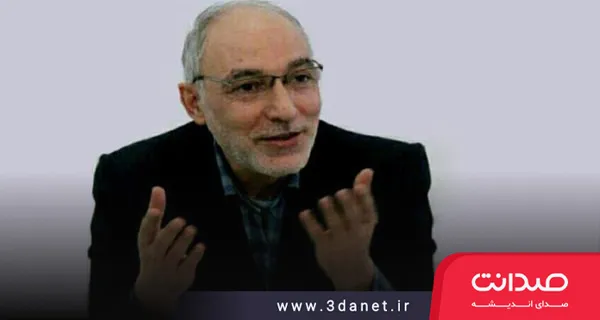
A Moment with the Book Religiosity and Rationality by Reza Babaei
Reza Babaei’s Religion and Rationality is a collection of essays in religious studies that examines the relationship between the religious text and the religious phenomenon. Critiquing text-centrism and emphasising rationality, the author proposes a reformist, spiritual form of religion.

Combining simple, beautiful prose with deep, practical concepts requires an artistry that, in my view, Master Reza Babaei has achieved in the language of his essays. Those familiar with Babaei's pen know that alongside these two qualities, the spirit governing his writings is influenced by a sense of "suffering"—both personal and universal—which is clearly seen and felt throughout his essays. Babaei is a suffering person of faith, whose being is also shaken by the discordant palpitations of social problems. Hence, he sees his entire concern and responsibility as identifying such maladies and afflictions, and since his expertise lies in the field of religion, and most problems in our society are not unrelated to our religion and religiosity, the arrow of his critique, scrutiny, and reform is aimed at the perspective of religion and the religious.
Babaei's pen is so free of any unrefined annotations, and his words are placed together with such particular meticulousness, that I think any kind of writing to introduce his discussions would be an "incongruous" addition and a "futile burden" that would only obscure his work. Thus, my task in introducing *Religiosity and Rationality* seems very difficult and perhaps futile! A book that is "essays in the realm of religious studies and religious pathology," published with this approach and in that same simple yet profound language:
Nevertheless ...
This book is organized into five chapters: "Religion and Religious Texts," "Religion and New Thinking," "Religion and Pathologies," "Religion and Historical Knowledge," and "Ethics, Mysticism, Spirituality."
As the author states in the book's introduction, he seeks "to reach an understanding of the historical texts of religion whose most important characteristic is the coherence of all parts of religion with one another, as well as compatibility with the spirit and goals of the great religions." (p. 12)
The foundation and basis of Babaei's perspective can be found in the first chapter of his book, where he discusses "the religious matter and its relation to the religious text":
"Is everything discussed in religious texts subject to the 'religious matter'? For example, since religious texts have spoken extensively about transactions, must the faithful accept that the economy is under the guardianship and supervision of religion? Do the recommendations of religious texts regarding procreation make it a part of religious issues and duties? Does the existence of slavery rulings in the Quran and narrations mean that the affirmation or negation of slavery is the responsibility of religion?..." (p. 17)
In my view, the opening paragraph of the book clarifies Babaei's approach for his reader. After asking, "What is the religious matter, and what is its relation to religious texts?", he proceeds to separate the two and ultimately presents it to us in six characteristics. These characteristics are the essence of the author's message and his guiding principle:
"- The religious matter has a clear, direct, and close relationship with the sacred/transcendent...
The religious matter is the common ground of all religions and spiritual traditions.
A part of religious texts is a representation of the history and geography of religiosity in the prophetic era...
The history of religions is the encounter of the universal religious matter with specific customs. Therefore, all customary considerations must be taken into account.
The religious matter is highly personal, as it is directed towards the spiritual growth and perfections of the human being.
The religious matter is that in which intention and the aim of seeking nearness [to God] are stipulated, and without which it is meaningless." (p. 19)
When Babaei says: "... text-centrism and unprincipled scripturalism drive the truth of religion into eclipse or lead to Salafism" (p. 23), he is, in fact, expressing the difficult path he has undertaken in this language:
In his articles, Babaei, like a devoted gardener, prunes the branches and leaves of a text-centered, dogmatic, and rigid religion, and speaks to us of the spirit of religion and a meaning whose enduring "message" bears it aloft, and whose "Muslim" "... bows in submission before the spiritual truth of the world ..." (p. 39). It is with this same approach that he criticizes political religion:
"... no one denies the importance of politics in the destiny of society; but religion has responsibilities deeper and more important than governance and politics. The cultivation of the spiritual and moral human being, in the long term, exerts the most profound influence on politics..." (p. 265)
With each article in this book, it is as if the author, with a soft cloth, cleans the mirror of religion from its dulling stains and shows his audience a fresh manifestation of that merciful icon.
"Rationality" is Babaei's plumb line in all this. He wants the conception of religion that occupies his own mind and that of his audience to find the least possible conflict with rationality, and he is, of course, aware of how difficult a path this is.
Along this path, he speaks of "the inherent problems of language," discusses "Islamic secularism," explains "religion as patchwork, religion as infiltrator," writes about the relationship between "religion and violence," and pens dozens of articles of this nature.
Another feature of the book is the tangibility of its discussions and articles, and Babaei's language being free of any kind of generalization and vague writing. Babaei's religion is a religion that ordinary believers at various levels understand, more or less practice such religiosity, and have grasped it with their flesh, skin, and bones...
When Babaei says: "Ijtihad is not the discovery of new ways to resist changes or circumvent them; it is the understanding of newly emerged changes, presenting them to religion, and discovering religion's ruling on them..." (p. 89), he does not leave this discussion in general terms; he provides examples and tries, based on his religious teachings, to show us instances as well.
In articles such as "The Halal and Haram of Muhammad", "After Forty Years", "Islam; the Whip; the Camel", "Islam of Mecca; Islam of Medina", and others, he meticulously demonstrates "casting a fresh look at religion" and takes the lead himself:
For example, in his critique of the punishment of flogging, he writes: "Defenders of the punishment of flogging cite the Quran. Based on narrations as well, the punishment for many moral and social crimes is flogging. But citing the Quran and narrations for punishment by whipping in our time is not very justified; because in early Islam, alternative punishments such as imprisonment in its modern form were neither possible nor common... Proponents of flogging say: the whip is the ruling of the Quran and the command of God, and it should not be abandoned at any cost or for any excuse. One must ask this group: Why can the horse and camel be replaced by tanks and airplanes, but the whip cannot be replaced by prison? Did the Quran not command that you prepare your horses for jihad in the way of God? If the horse is not essential and today tanks and warplanes can be considered instances of ribat al-khayl (horses readied for war), why should we not discard the whip?" (pp. 99-100)
There is no doubt that Babaei's approach is a reformist look at religion from top to bottom. This view springs from a source that assumes the movement of Muhammad (PBUH) was a reform-seeking movement: "History testifies that Islam in the time of the Prophet (PBUH) was a religion of reform, not revolution..." (p. 125), and sees the essence of religions as spirituality: "... as testified by the words and conduct of the prophets, the mission of religion was to bring prosperity to the spiritual life, or both the spiritual and earthly life, of humankind; not to add yet another problem to humanity's insoluble problems. Religion was supposed to come to our aid and untie a knot from our tangled affairs, not to become a difficult and complex equation itself..." (p. 141)
The author of the book dedicates a chapter to religious new-thinking, defending this group and their path wholeheartedly, going so far as to consider religiosity in this era indebted to religious intellectuals:
«The origin of religious intellectualism is the questions of modern man, a person who thinks both of duty and of their fundamental rights; who has one eye on the heavens and one eye on the earth; who does not sacrifice today for the past and historical conflicts; who is intensely utilitarian and result-oriented, and believes in the division of labor; that is, they seek from religion only what they cannot find outside of religion...» (p. 173)
It is based on this very approach that in the chapter "Religion and Pathologies," he extensively, and in numerous articles, reveals the pathologies that endanger religion and sometimes cast it into deviation and far from its intended purpose, and he compassionately unveils them for those concerned. "Thirteen Points on Superstitions" and "Four Signs of the Fanatical" are among the readable articles of this section, the discussion of which does not fit within the scope of these few lines.
I believe each article in this book is born of a pain with which the author was so engaged that it is as if he placed his "heart" within it, and inevitably, the product he has offered settles upon hearts and souls. "The Story of Ali and the Kharijites," "Shi'ism in Two Narrations," and others from the chapter "Religion and Historical Knowledge" are among his most enduring writings, which undoubtedly draw their reader into painful reflection and contemplation. Among these is "Ashura and the Failed Struggle Against Distortion"—would that all those preachers and eulogists for whom Ashura is their marketplace would read this article:
«In Ashura studies, the main pathology lies not in what is said, but in the "unsaid." Preachers, reciters, and eulogists, usually in mourning gatherings for Imam Hussein (AS), raise specific issues, including the debauchery of Yazid, the oppression of the Imam, the cruelty of Shimr and Ibn Sa'd, and the like. These topics and issues are constantly and in great volume expressed from all Ashura pulpits; whereas the important and principal issues of Ashura are not these. For this reason, the pathology of Ashura must begin with "what they do not say," not from the things they do say. For example, in speeches, they speak at length about the courage and bravery of Hussein and his companions, but they do not speak of the Imam's immense and astonishing effort to prevent war and avoid bloodshed until the morning of Ashura and his proposals for peace, or they pass over it fleetingly...» (p. 360)
As has been said many times, the core and kernel of the religion that Babaei and those like him emphasize is "spirituality." A religion from which no meaning can be found, and by which a person cannot make their life meaningful, perhaps the harms of its absence are less than its presence. "Spirituality" is the sole lost thing that religion can, with its own wings, offer more accessibly to people, and it is thus that the author of this book also seeks its song. Babaei has named his final chapter "Ethics, Mysticism, Spirituality" so that in this way, and after the extensive critique, revision, and correction he applies to our conventional religion, he may delve deeper into the main core in this chapter. One must read the articles in full and be filled with the author's profoundly spiritual perspective. The passages where Babaei keeps company with Rumi and the Masnavi and gleans for us from his garden full of meaning are among the most beautiful and spirited parts of his book:
«Mental beliefs and specific religious acts do not make one possess faith. The story of faith is the story of encounter, not of speech, nor of thought, nor even of sacrifice. The capital of faith is the heart, and the heart is the place of encounter. Without personal revelations and private encounters with the living spirit of existence, which occur occasionally and not always, religiosity is a lifeless body...» (p. 383)
«Rumi chose the name love for this type of faith; because love is the event most similar to faith. Love is not lessons, books, notebooks, and repetition; love is a blessed event in the most mysterious part of human existence. Faith, too, if it settles in the soul, renews the soul...» (p. 428)
«The spiritual person has another world within, and lives more in that world than in the earthly world. In their inner world, existence has a purpose, and they too move towards that same purpose. Their pleasures and pains are different. The spiritual person sees God in all the particles of the universe, and in their view, no being and no event is alien... We are not seeking a specific goal in spirituality, because spirituality itself is the goal. Being spiritual has such authenticity and even pleasure that it cannot be a means...» (pp. 445 & 448)
.
.
A Moment with the Book Religiosity and Rationality by Reza Babaei
Author: Masoud Ghorbani
.
.

Discussion2 comments
با سپاس فراوان از ارائه خلاصه مفید و رئوس مطالب کتاب دیانت و عقلانیت زنده یاد استاد رضا بابایی
اسم این سبک مجیزگویی و والگی عرفانی نقد و معرفی کتاب نیست «معتقدم هر یک از مقالات این کتاب زاییده از دردی است که نویسنده چنان درگیر با موضوعش بوده که انگاری “دلِ” خویش را در میان آن نهاده و لاجرم محصولی که عرضه داشته بر دل ها و جان ها می نشیند» آدمی باورش نمیشود در سایت شما چنین جملاتی به عنوان نقد یا معرفی کتاب نقش بسته باشد.