Religion
Sedanet Asks Reza Babaei: Religious Intellectualism and the “Core Problem”
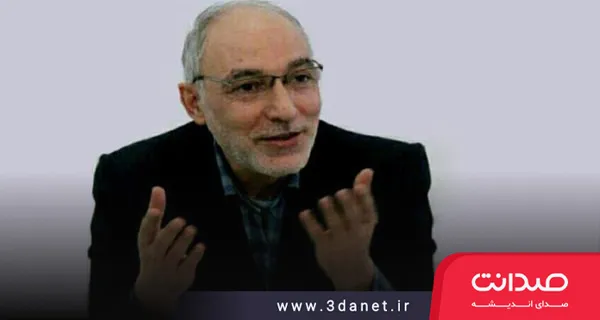
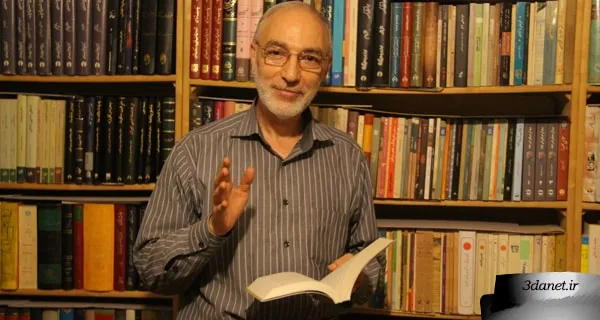
In a response to Sedanet, Reza Babaei argues that the function of religious intellectualism is to reduce the costs of a religious society's transition. He believes Iran's 'principal problem' is the estrangement of tradition and modernity in the realm of language, and that the religious intellectual establishes a dialogue between the two.
Sedanet: The period from the mid-1980s to the late 1990s, which began with the strengthening of Keyhan-e Farhangi and ended with the closure of Kiyan, is usually considered the peak and flourishing era of religious intellectualism. The circulation of Kiyan magazine exceeded 20,000 copies, and estimates indicated that each issue was read by around one hundred thousand people. Alongside Kiyan, other newspapers and magazines were also published, and every article stirred excitement in society and opened new avenues for discussion and dialogue. Nevertheless, from the early 2000s, the role of religious intellectualism in society seemed to gradually fade, and the topics raised by this spectrum no longer ignited a light or stirred passion. On the other hand, it appears that religious intellectuals no longer possessed the flourishing and luminosity of the two previous decades; some moved beyond religious intellectualism, some deemed it to have internal inconsistencies, and others remained in this arena, stumbling and faltering. We, at the Sedanet Cultural Group, believe that a combination of causes and reasons have come together to push religious intellectualism into such obscurity. Now, at the suggestion of some esteemed individuals, we have prepared an inquiry to ask you, the respected expert, to write a brief note for us on: What was religious intellectualism? What happened to it? Why did this happen? And what future is conceivable for it?
Religious intellectualism must be viewed and judged from two perspectives: first, from the perspective of its essence and internal logic, and second, from the perspective of functionalism.
From the first viewpoint, religious intellectualism is fraught with theoretical and discursive challenges; among them: the incompatibility of autonomous reason or modern rationality with some of the theological presuppositions of religious intellectuals, which cannot be easily overlooked; although this incompatibility lies more in the realm of "prescription" and "affirmation" rather than in the sphere of critique and the negative gaze, which is the nature and exigency of intellectualism (whether religious or secular).
The second view is from the perspective of function and the ability to solve the theoretical problems of society in the transitional period. When we look at the functions of religious intellectualism in this arena and period, we find no alternative to it; even if we cannot justify or remedy some of its contradictions and inconsistencies. A religious society, in order to transition from the existing situation to a desirable one, has many passes ahead, in some of which no discourse other than religious intellectualism is effective and path-breaking; just as religious intellectualism has so far been able to reduce the costs of the transitional period and also shorten its duration.
To understand the art of religious intellectualism, we must first speak about the "core problem." What is our core problem in Iran? On which problem should the country's elites focus most of their energy, motivation, and intellectual capital? The conflict between tradition and modernity? Obstacles to development? The mental and objective authority of tradition? Which path will lead us, with the least cost and in the shortest time, to a place where Iranian society can make optimal use of its material and spiritual resources?
In my opinion, Iran's problem today is the estrangement of tradition and modernity in the realm of language, which has made dialogue impossible. On the other hand, the material and spiritual resources of tradition in Iran are so vast and immense that it looks upon modernity with contempt and is not easily willing to engage in dialogue with it. Modernism, in a society where most of its resources, capital, emotions, and motivations are in the hands of tradition, remains at the most superficial layers of modernity and will not attain a status higher than that of tradition's agent in the field of industrial production. Components such as modern rationality, humanism, equal rights, balanced opportunity creation, and the acceptance of individualities—which are the foundations of modernity—are tantamount to subversion for tradition.
On the other hand, modernity, due to the authority it has gained in the world, exerts pressure on indigenous traditions and demands their integration into the modern world. Therefore, modernity brings nothing but subversion for tradition, and for this reason, tradition does not sit at the negotiating table with modernity except after confidence-building and obtaining numerous guarantees. It is in such a complex and difficult situation that society reaches out to institutions that have neither a subversive character nor a motivation to halt at historical stations. Discussing the scientific and rational nature of these institutions is by no means a priority; because their value lies in their power of explanation and responsiveness to the immediate and urgent needs of society.
Sooner or later, modern civilization will sweep through Iran as well. The whole discussion revolves around “lower cost” and “shorter time.” For institution-building in Iran, modern civilization must first learn the language of dialogue with tradition, and the spiritual source of tradition in Iran, or one of its important sources, is the official reading of religion, whose sympathetic critique has been the groundwork and origin of religious intellectualism. If the most important and weightiest task of the intellectual is the insistent invitation to tradition and modernity to sit at the negotiating table, then in these difficult and time-consuming negotiations, religious intellectuals can sometimes better translate the discourse of tradition for modernity and the discourse of modernity for tradition, and bring the two to an understanding on certain changes; for tradition in Iran is so intertwined with religion that any change in it is contingent upon offering a new understanding of religion, which is also the responsibility of religious intellectualism.
.
.
Religious Intellectualism and the “Core Problem”
Author: Reza Babaei
.
.

Discussion0 comments
No comments yet; let yours be the first voice.